I didn’t participate in 2014, but I’ve participated every year since 2015. Only in the last two years have I been able to meet the goal of writing 50,000 words, because I discovered a secret about Nano that isn’t highly advertised—my #1 reason for loving Nano.
My 7 Reasons
I can edit for 50 hours instead of writing 50,000 new words. One hour of editing is the equivalent of writing 1,000 words.
I’m forced to concentrate on just one project rather than my usual 2, 3, or 4 projects.
Forced to concentrate on only one project, it’s likely to be finished and published soon.
My daily writing habits are reinforced.
I work best with deadlines and since I’m an indie author, I have only self-determined deadlines… rarely met. Weekly and monthly deadlines I can handle, but end-date deadlines, I blow right past them. Participating in Nano provides that 50 hours/50,000 words deadline.
I know that thousands of other writers are huddled over the keyboard, doing the same as I am. It’s comforting knowing that.
I enjoy seeing projects I started years ago come to the forefront again and become published books or screenplays.
*****
Purpose: To share and encourage. Writers can express doubts and concerns without fear of appearing foolish or weak. Those who have been through the fire can offer assistance and guidance. It’s a safe haven for insecure writers of all kinds.
Posting: The first Wednesday of every month is officially Insecure Writer’s Support Group day. Post your thoughts on your own blog. Talk about your doubts and the fears you have conquered. Discuss your struggles and triumphs. Offer a word of encouragement for others who are struggling. Visit others in the group and connect with your fellow writer – aim for a dozen new people each time – and return comments. This group is all about connecting.
The question for this month is: What do you consider the best characteristics of your favorite genre?
Because I have a number of favorite genres, that question becomes long in answering. Instead, I’m choosing to write about my favorite month of the year: October.
October’s Glory
As much as I had to see summer end because it means having to shut the windows and doors and blocking the sounds of nature—mostly the birds—I am absolutely thrilled when October arrives. Here are the many reasons why I love it so.
My favorite season, fall, is finally here!
The vibrant and picture-worth colors start arriving. Reds, orange, yellow, lots of various greens and browns, where the trees become a fashion parade of brilliance. Breathtaking around every corner and at every glance. If only those colors could last longer than just a couple weeks.
The air becomes crisp, requiring a light jacket in the morning and evenings. If the temps do warm up a bit, there’s a cool undertone just waiting for the warmer temp to slip up so that it can sneak in again.
The food – Candy corn! Pumpkin pie, the bounty of vegetables from the garden, casseroles, soups, chili!
Cuddling up under a blanket.
SWEATERS! Need I say more?
And, it’s my birthday month. What better way than to celebrate my favorite month, my favorite season, right?
How about you? Do you enjoy October?
*****
Purpose: To share and encourage. Writers can express doubts and concerns without fear of appearing foolish or weak. Those who have been through the fire can offer assistance and guidance. It’s a safe haven for insecure writers of all kinds.
Posting: The first Wednesday of every month is officially Insecure Writer’s Support Group day. Post your thoughts on your own blog. Talk about your doubts and the fears you have conquered. Discuss your struggles and triumphs. Offer a word of encouragement for others who are struggling. Visit others in the group and connect with your fellow writer – aim for a dozen new people each time – and return comments. This group is all about connecting.
The question for this month is: What genre would be the worst one for you to tackle and why?
I write in multiple genres. Basically, I could write in any genre I chose provided my passion remains high; therefore, there isn’t any one genre that would be worse than another, but It wasn’t always that way. In the beginning, I struggled in the fiction genre and had to learn how to find and keep my passion high for those projects.
I’m in a lot of writing forums online, where a good number of the members are relatively new writers. The comments I see repeatedly are:
I’m bored with my characters. What should I do?
I can’t think of anything to write about. Can you (meaning all of us) give me some ideas?
I don’t read [insert genre, like romance, mysteries, sci-fi] and I’m writing one. Is that a problem?
I only write now and then, when I feel like it. How do I become more interested?
What must I do to write every day?
You get the idea. They sound a bit lost, don’t they?
I remember when I first started writing feeling that same way.
I didn’t write every day.
Halfway through a manuscript, I became bored with my characters.
Writer’s block became a constant companion.
My one redemption was that I read a lot. Basically, a book a day, reading both fiction and non-fiction. And when I started writing, I was reading in the genres I wanted to write.
While reading can broaden and deepen your writing skills to a point, it’s about the practice of writing that creates the difference between an experienced writer and an aspiring writer.
Suggestion #1 – If you’re going to be a writer, you need to read more than just the genre you’re writing in. Read fiction and nonfiction, read how-to books about the craft of writing. Read articles and books about writers. Read their blogs. Read everything.
Suggestion #2 – While you’re reading, pay attention to the writing structure, the use of the authors’ words and phrases. Reread passages that take your breath away or have you nodding your head. What are they doing that you’re not doing? I learned more about how to write fiction by reading screenplays than I did by reading other novels. Be willing to diversify.
Suggestion #3 – Write every day. Every. Single. Day. Even if it’s only ten or fifteen minutes to start with. Even if you don’t want to do it. Just do it.
Suggestion #4 – Write every day using the same tools, in the same place. What you’re doing is creating a habit. When I sit at my desk every day, I know that while I may dink around a bit cleaning my desk and answering emails, I will be writing eventually. Even if only for ten minutes on certain days. Most days, once I settle in, I’m writing anywhere from 3-10 hours—writing new words, editing, or polishing.
Suggestion #5 – If you’re not interested in writing in your current WIP, then write something else. Write a blog, or a letter to the universe (no one in particular) where you rant about a problem, which then you destroy the letter afterward. Or better yet, turn your rant into a blog, putting a positive spin on it. Write a list of questions that you then find answers by researching qualitative websites.
Suggestion #6 – Have no ideas on what to write? Then create a list of everything that interests you, or list your complaints, list what you’d love to share with other writers, characters you love, books you love, then list why you love them. Guess what? In generating a list, you’ve spent time writing! Ideas will come from the list-making.
Suggestion #7 – Bored with your characters or their story? Guess what? If you’re bored, so will be your readers. When I’ve lost interest in my characters, that tells me that I don’t know them well enough, yet. As a result, I get stuck (some call it writer’s block) in my story, not knowing what should come next. It means, I need to go back to the beginning and add to their character development, dig deeper into their personalities, ask questions until they’re spilling their guts.
Suggestion #8 – Being stuck means I need to go back and create more conflict for those characters based on their decisions. Once my characters can make me laugh out loud as they dictate dialogue or because of their actions, I know my readers will laugh too. My characters’ ability to make me laugh or turn the page—no matter how many times I’ve read the pages—tells me I have found my passion for that project again.
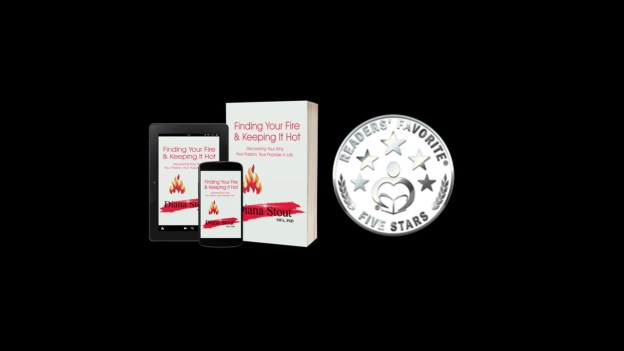
Suggestion #9 – If none of these suggestions are working for you, have you considered reading my book, Finding Your Fire & Keeping It Hot? (available at any bookseller). In it, I share a lot of reasons why your passion has disappeared, more than I could list here.
This book was the foundation of a class I just finished teaching, and where students were saying that my book had changed their lives. They had found their passion to write again.
My desire in writing the book was to share with other writers the research I had done and the steps I took to find and maintain my writing passion, keeping it hot most days.
What’s your writing passion level these days?
Cold and dead?
Somewhat warm?
Or hot like mine?
*****
Purpose: To share and encourage. Writers can express doubts and concerns without fear of appearing foolish or weak. Those who have been through the fire can offer assistance and guidance. It’s a safe haven for insecure writers of all kinds.
Posting: The first Wednesday of every month is officially Insecure Writer’s Support Group day. Post your thoughts on your own blog. Talk about your doubts and the fears you have conquered. Discuss your struggles and triumphs. Offer a word of encouragement for others who are struggling. Visit others in the group and connect with your fellow writer – aim for a dozen new people each time – and return comments. This group is all about connecting.
The question for this month is: When you set out to write a story, do you try to be more original or do you try to give readers what they want?
Writing to Market or Writing From the Heart
My answer to this month’s question is both, depending on the project.
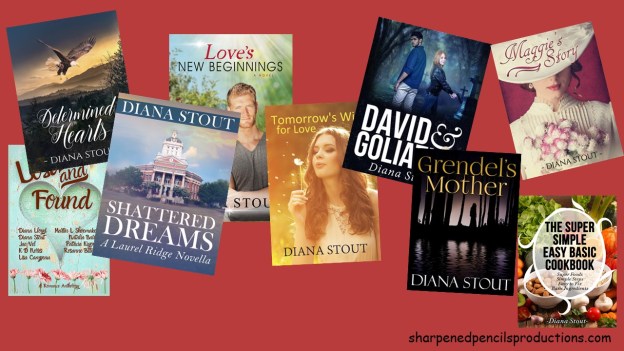
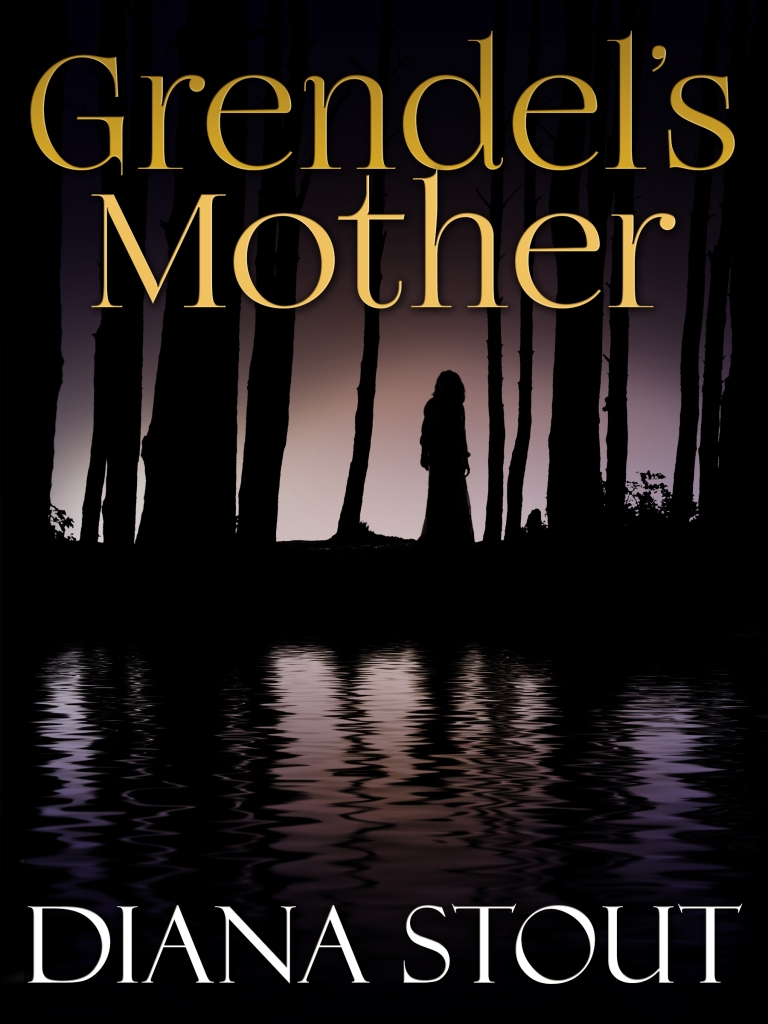
Grendel’s Mother was born from the heart. I gave a female who had no voice in Beowulf—a woman made into a monster—a voice. It was my first book published as an indie publisher.
Two romances, traditionally published in the 90s—were written to market, though my heart was in their locations.
Tomorrow’s Wish for Love, originally published as Tomorrow’s Wishes, is a sweet romance written specifically for Avalon Books who published only to libraries. This book takes place in Grady County, Georgia where I lived for nine years.
Love’s New Beginnings, originally published as New Beginnings, is likewise a sweet romance written for Avalon Books. This book takes place in Calhoun County, Michigan where I was raised and lived currently.
Once I got the rights back, I retitled, revised, and updated them, and gave each a new cover.
Determined Heartswas a book written from my heart, though I had been considering its possible market. It was my second book ever written and it became my first book traditionally sold, published as The Man on the Romance Cover. Once I had the rights back, like the other two romances, I revamped the title, cover, and updated the content.
My cookbook, The Super Simple Easy Basic Cookbook, was born of my lifetime collection of recipes. The bonus of publishing it? Now everyone else had easy access to my recipes…well, for a price.
David & Goliathwas truly born of my heart. It’s a book in screenplay format and is a suspense thriller, a category I’m returning to. D&G was one of three scripts I wrote that year.
Miss Mississippi was a script I plotted to market, having researched that I discovered 7 of the top 10 movies—comedies—that year had men in dresses, but then the writing totally came from the heart. That’s the script I optioned and it still gets interest, though now it needs a massive rewrite.
Finding Your Fire & Keeping It Hot was born both of my heart and written to market. The topic is one I talk a lot about: how to find your passion, your purpose, how Universal Laws operate, and the book is based on my journey of these topics. I’ve had people telling me I needed to write the book, so I finally did.
With students, teachers, and other writers telling me that I needed to write my plagiarism how-not-to book, and my grammar and punctuation book, along with other writing craft topics I’ve taught over the years, these will be upcoming non-fiction how-to books…written from the heart but with the consideration to market.
Writing to market is okay, but writing from the heart is the best because I’m fully engaged and interested as much as the readers will be once I publish the book.
*****
Purpose: To share and encourage. Writers can express doubts and concerns without fear of appearing foolish or weak. Those who have been through the fire can offer assistance and guidance. It’s a safe haven for insecure writers of all kinds.
Posting: The first Wednesday of every month is officially Insecure Writer’s Support Group day. Post your thoughts on your own blog. Talk about your doubts and the fears you have conquered. Discuss your struggles and triumphs. Offer a word of encouragement for others who are struggling. Visit others in the group and connect with your fellow writer – aim for a dozen new people each time – and return comments. This group is all about connecting.
November 3 question – What’s harder to do, coming up with your book title or writing the blurb?
Drafts, Titles, & Blurbs, Oh My!
Writing on some days flows easily. Most days not so much; it feels like I’m writing junk. And then, there are far too many days when writing is a struggle fest. Those are the days when I just have to get it done because of a deadline.
Writing first drafts is the part I like doing the least. It’s a real chore. Often, I’m just gutting it out, with the goal of writing it quickly. FAST!
I much prefer editing. Usually. Well, at least until I’m editing the same story for the fifth time or more. Most fiction regardless of length takes on average about eight rewrites, revisions, and polishing. The highest number was 49 drafts, but that was for my cookbook. All because of the many technicalities that required uniformity.
You may be asking, aren’t rewrites and revisions the same thing?
No, they’re not. Rewriting encompasses rearranging, removing, and adding. A revision is about smaller matters: looking at the sentence structure, choosing the right words, right tense, and correcting other grammar and punctuation issues. The polishing draft is about fixing all errors and getting the formatting correct.
So, everything—books, articles, short stories, even poems—goes through the four-draft process: first draft, rewrite, revise, polish. Thankfully the first draft is a one go-through only. The rewrite can take several drafts, as does the revision, and polishing drafts.
This month’s question refers to the smallest parts of writing a book: the title and blurb. For me, they’re the easiest to write and the most fun, even though they go through the four-draft process, as well.
When coming up with titles, I start with the exercise of what I call Brainstorming 20, an exercise I’ve taught to students and teach to other writers.
Here’s a partial list brainstormed by a group. Recognize what they were looking for?
Awful
Flabby
Snoopy
Scrappy
Hoppy
Weepy
Cranky
Sneezy-Wheezy
Hungry
Lazy
Dumpy
Thrifty
Nifty
Shifty
Woeful
Doleful
Wistful
Soulful
Helpful
Goopy
Gabby
Blabby
Silly
Dippy
Graceful
Neurtsy
Gloomy
Sappy
Crabby
Daffy
Tearful
Gaspy
Busy
Dizzy
Snappy
Hotsy
Jaunty
Puffy
Strutty
Biggy
Biggy-Wiggy
Jumpy
Chesty
Biggo-Eggo
Sneezy, Dopey, Happy, Grumpy, Sleepy, Bashful, and Doc were part of the list, too, the final characters chosen for the 1934 movie, Snow White and the Seven Dwarfs. Are you noticing how some of the names became later comic characters?
I do the same thing when looking for a title; I create a list of 20. The first ten are easy. The next five start becoming a combo of different words from the first ten. The last five are usually more of a struggle but start expressing what I’m really looking for. These last five are also the most original.
As for the blurb, it’s about coming up with an elevator pitch, a one-line summary, which then I can expand with a few more sentences.
Coming up with a title and a blurb can take several days, even a week, and I enjoy writing them immensely.
Are your brainstorming methods anything like mine?
*****
Purpose: To share and encourage. Writers can express doubts and concerns without fear of appearing foolish or weak. Those who have been through the fire can offer assistance and guidance. It’s a safe haven for insecure writers of all kinds.
Posting: The first Wednesday of every month is officially Insecure Writer’s Support Group day. Post your thoughts on your own blog. Talk about your doubts and the fears you have conquered. Discuss your struggles and triumphs. Offer a word of encouragement for others who are struggling. Visit others in the group and connect with your fellow writer – aim for a dozen new people each time – and return comments. This group is all about connecting.
September 1 question – How do you define success as a writer? Is it holding your book in your hand? Having a short story published? Making a certain amount of income from your writing?
Six Paths of Writer Success
While most people believe a writer’s success is by how many books are sold and the money they make, it’s not the only way to identify writer success. There are multiple ways to measure that success. These are a few that I’ve identified.
Path #1: Financial Success – This is the measurement stick most people—readers, critics, and other writers—use to determine if a writer is successful or not. Are they a best-selling author? Did they make the New York Times list? Did they receive a huge advancement?
Path #2: Review Success – The number of reviews readers leave can be a huge measure of success if the bulk of the reviews are positive. Getting notes and messages from fans is always a thrill. It’s the equivalent of Sally Field’s award-winning speech of “They like me!”
My best friend from high school who got a copy of my book a couple days before I got my copies! She’s one of my biggest fans!
Path #3: Word-of-Mouth Success – There’s no better measure of a writer’s project than it getting a lot of reader word-of-mouth promotion. Nothing can top it. Word of mouth praise sells books. And, there’s nothing more fun than seeing friends of my friends stating, “She’s a good writer,” or “I love her writing!”
Path #4: Publication Success – Before writers could become indie publishers, a writer’s success was hinged solely by being accepted by an agent or editor. The only other option open for writers to publish without an agent or editor back then was to use a vanity press, where the writer paid to have the book published, and then the author would go out and peddle the book. It worked for Robert James Waller who self-published his book, The Bridges of Madison County. He filled his trunk with copies and drove across the country giving them away, seeking out radio stations for live interviews.
With the advent of the eBook, independent publishing (self-publishing, indie publishing) became possible. That avenue became a game changer for many writers, including me, even though I had been traditionally published in the 1990s with three of these books, which I retitled and have republished. Today, any writer can get their book(s) published and in any format: print, e-Book, audible, large print, and so forth.
To date, I’ve published eight books and edited a ninth that included one of my short stories, publishing it for a writer’s group that I belong to.
Path #5: Film Rights Success – The dream of any writer of fiction is to see their story on the screen—big or small. I keep hoping and keep writing the scripts.
Path #6: Journey Success – This measure of success is all about self-satisfaction. The first time a writer pens The End, it is a huge achievement of a dream becoming reality. And then, opening a box and seeing a stack of my newest release never gets old. Ever. (Three such past boxes being opened.)
Currently, as I come to the end of writing a how-to nonfiction book and am finishing the small-town romance series I’ve been working on for the last few years, I’m enjoying how my fire is directing and driving me toward my desk every day.
Watching the words pile up, getting into the writing zone, and watching the hours fade into each day’s end are self-satisfying beyond words. Amazingly so. There is no other emotion or feeling like it.
I love all these various moments and events of success. How could I not?
*****
Purpose: To share and encourage. Writers can express doubts and concerns without fear of appearing foolish or weak. Those who have been through the fire can offer assistance and guidance. It’s a safe haven for insecure writers of all kinds!
Posting: The first Wednesday of every month is officially Insecure Writer’s Support Group day. Post your thoughts on your own blog. Talk about your doubts and the fears you have conquered. Discuss your struggles and triumphs. Offer a word of encouragement for others who are struggling. Visit others in the group and connect with your fellow writer – aim for a dozen new people each time – and return comments. This group is all about connecting!
July 7 question – What would make you quit writing?
Getting Back to Normal – But What Does Normal Look Like?
My answer to the question of What would make you quit writing? is simple: my death. Or, being incapacitated to the point I can’t see, can’t type, can’t think.
That said, I did struggle with writing recently. My son-in-law died of Covid-19 on April 29.
At first, I resisted the writing—it was hard to start again—but thanks to the weekly Zoom write-in meetings I had with a group of writers, I was able to find that familiar joyful rhythm again.
The promotions, though… Since April, I’ve not been doing any—not for my books or for my writer friends. I couldn’t even perform a simple retweet.
Every time I tried to do any kind of promotion for my books, I struggled and ended up walking away from it all. I’d purposefully delete the emails with links to share, so I didn’t have to deal with it.
I realized in answering the question for today’s blog that something had to change. I didn’t like the monstrous time I’d spent in the past, promoting with little results to show for it. I wasn’t looking forward to doing it again.
Wanting to put the joy of writing back into the writing and why I do it in the first place, I had to dig down deep. Here’s what I came up with:
I want to depend on and work toward more word-of-mouth advertising, where fans share my books and my self-created promos on social media. If it doesn’t happen, so be it. If it happens slowly, so be it.
I want to become more connected in online writing groups where I can share my experience and knowledge. Even if I get back nothing in return. I’m paying forward the help I’ve received over the years.
I want to spend more time writing, teaching, and coaching than I do promoting.
I want to become part of the 5% of authors who write more than 12 books,[1] where everyone else with fewer books has quit writing. I’ve got 9 so far. When I’m finished with my novella series, I’ll have 15. I’m working on getting them finished.
I acknowledge that being an author—traditional or indie published—is a long game, even though I’ve been writing for 45 years.
I will no longer look at my $15-25 per month royalties as sad, but as progress in this long game from where I started at $0 with the creation of my production company in 2015, and which became a new direction/life for me, a reinvention actually.
I will remind myself upon learning of another author’s promotional success that while it works for them, that doesn’t mean it’ll work for me. I will focus, instead, on those methods that DO work for me. I’ll concentrate on a few methods rather than on many.
I want to thank those who subscribed to my newsletter and have stayed because I have something to offer them.
I want to thank those who subscribed to my newsletter and then unsubscribed because I wasn’t a good fit for them. I’m ecstatic that they gave me a try, because…
I want followers who are genuinely interested in my work and me. I want to have earned that follow.
If putting joy back into my writing is my mission statement, then these ten points are my vision statement, specific steps to make that mission statement a reality.
Based on my vision, I don’t see me quitting anytime soon. In fact, after finishing this blog and scheduling it to publish, I went and did some retweets. The next step is to schedule some of my own promotional posts.
Nope, quitting isn’t on my radar anytime soon.
*****
Purpose: To share and encourage. Writers can express doubts and concerns without fear of appearing foolish or weak. Those who have been through the fire can offer assistance and guidance. It’s a safe haven for insecure writers of all kinds!
Posting: The first Wednesday of every month is officially Insecure Writer’s Support Group day. Post your thoughts on your own blog. Talk about your doubts and the fears you have conquered. Discuss your struggles and triumphs. Offer a word of encouragement for others who are struggling. Visit others in the group and connect with your fellow writer – aim for a dozen new people each time – and return comments. This group is all about connecting!
[1] Jane Friedman’s Electric Speed email newsletter, June 26, 2021.
With almost all of my writing projects from the start of writing the first word, I knew the genre and the form. Romance as a novel or as a short short story. Mystery as a short story or novel series. Poetry as a sestina, haiku, or sonnet. Romance novella series. 400-word column for XYZ (magazine/newspaper), non-fiction. And, so forth.
I say almost, because there’s only been one project that I began writing and had no idea what form it would take—would it be long, short, mid-length? —or the genre it would become. For its first written word, I dubbed it a historical, telling myself that I’d research the genre later. As to the form, I figured the story length itself would be the deciding factor. I suspected it would be a novel, but I wasn’t confident about it.
I knew the story took place in the late 5th century and I knew it would be fiction, based on a character from the world’s first English manuscript that had an unknown author. Those were the only two things I knew for sure.
The genesis moment occurred in the middle of my teaching a women’s study survey class where we were examining stories where women didn’t have a voice. In the middle of one student’s presentation of their book, I had that brilliant “Aha!” moment: Grendel’s mother in Beowulf.
I wrote those four words down and felt an excitement rise within, an excitement I hadn’t felt in while. Four years to be exact. Life had intervened followed by a decision to return to school so I could become degreed where I could teach accredited classes. Up until then, the classes I had been teaching in were either online or through adult enrichment classes at colleges.
Once I started going back to school, I was writing just as much as I had before, if not more, but it was all academic writing or creative writing forced by assignments, which were difficult to write because that deep-down bubbling joy and inspiration was always missing.
There was little time for laying any assignment aside, letting time work any creative juices. Instead, quick revisions and polishing, turning it in for a grade was the diction and process of my writing those days.
That initial excitement of a new idea stayed with me through the rest of that class I was teaching and through the commuting drive home. Walking to my car after class and during the drive home, the title was instant—Grendel’s Mother—and she was already talking to me. I saw flashes of scenes, but I had no idea of order or structure.
The minute I got in the door, I dropped my bookbag, keys, tore off my coat, and went straight to the computer. I didn’t even think about eating. That could wait a few minutes.
Those few minutes turned into an hour where I quickly wrote twenty pages of what I thought was the opening pages of the project. It felt like a book. It felt like a historical book. I saw it as a screenplay, too. The images were vivid, the dialogue clear and crisp.
Strangely, I didn’t have to struggle to discover any of the book’s characters. This is the one and only time where all the characters came fully formed, included their bitterness, goals, and wounds. All of them.
It was magical. I didn’t question anything.
I began to question the historical genre. I did some research. How was Beowulf classified? Medieval Poetry, Norse & Icelandic Sagas, English Literature, Epic Poetry, Mythology & Folk Tales. And then, I saw it: Epic Fantasy.
Not until, I was in the end revision stages—and there were many revisions—did the starting pages change. I changed the beginning to provide a better hook. To provide stronger action. The original beginning—that truly started at the beginning chronologically became the transition from present to past. The new beginning was an extremely active scene, taking place nine months later from the original beginning. The transition occurs as a way to deal with the present pain…and so, she starts remembering.
I even got as far as assigning the genre to YA historical because the heroine is a teenager in the beginning; but then, someone said, no, it’s not a YA because she ages. They were right.
The genre fit.
Grendel’s Mother became a novel and my first indie publication. To date, it’s still my most favorite book that I’ve written and published so far.
***
Purpose: To share and encourage. Writers can express doubts and concerns without fear of appearing foolish or weak. Those who have been through the fire can offer assistance and guidance. It’s a safe haven for insecure writers of all kinds!
Posting: The first Wednesday of every month is officially Insecure Writer’s Support Group day. Post your thoughts on your own blog. Talk about your doubts and the fears you have conquered. Discuss your struggles and triumphs. Offer a word of encouragement for others who are struggling. Visit others in the group and connect with your fellow writer – aim for a dozen new people each time – and return comments. This group is all about connecting!
June 3 question – Writers have secrets! What are one or two of yours, something readers would never know from your work?
While I don’t consider that as a writer I have secrets, I suppose there are some topics not well-known about me. For one…
I enjoy bittersweet endings probably more than I enjoy happily ever after (HEA) endings in romances. Why, I don’t know. A true oxymoron considering I currently write HEA romances.
Some great bittersweet ending movies that I love:
Out of Africa
Message in a Bottle
Somewhere in Time – though it did have a happy ending on the other side, getting there was heartbreaking
The Thorn Birds
Possession
To me, these are great tales of romance, the best of the bittersweet best.
Second, I have collections without realizing I was collecting.
Lighthouses – I have them in every room, except the kitchen. It all started with a crayon drawing my grandmother did of the Biloxi lighthouse when she came to visit me upon my birth. I have wooden shelf lighthouses, ceramic ones, a pillow, blankets, huge pictures on the wall, and more. One day, while looking at one of my posters, my life represented a lighthouse: I was a teacher, sending my light out to those needing it.
Diana’s collection of gem stone hearts
Heart-shaped stones – The first one I received from a boyfriend. One was a gift from my daughter, and the rest I purchased only because I couldn’t walk away from the stone as it spoke to me at that time.
Dragons & The Green Man – The Green Man pieces (I have four) were the result of my medieval studies. I loved the myth because it is a symbol of rebirth, a new cycle of growth and that was my life at the time.
Diana’s collection of dragons.
The dragons were born of my writing Grendel’s Mother. The minute I saw this picture at a renaissance faire, I saw it as Grendel’s mother chatting with the dragon who shares her cave. One-by-one, the other dragons in my collection came from other renaissance faires. With each one, the minute I started walking away, I was draw back to it. Interestingly, once the book was published, no new dinosaurs have drawn me to them, demanding I take them home.
As to other secrets, it’s my characters who hold them tight, having pushed those secrets into the basement of their souls. It takes work to get them talking, to where they trust me to reveal their secrets, the wounds that they’ve carried since childhood.
It’s where our real secrets reside, you know.
I just realized: My characters have more secrets than I do. Some might see this as weird. Not weird to me at all.
Purpose: To share and encourage. Writers can express doubts and concerns without fear of appearing foolish or weak. Those who have been through the fire can offer assistance and guidance. It’s a safe haven for insecure writers of all kinds!
Posting: The first Wednesday of every month is officially Insecure Writer’s Support Group day. Post your thoughts on your own blog. Talk about your doubts and the fears you have conquered. Discuss your struggles and triumphs. Offer a word of encouragement for others who are struggling. Visit others in the group and connect with your fellow writer – aim for a dozen new people each time – and return comments. This group is all about connecting!
Rather than answer the March 4 question posed by the group, I’ve chosen to write about this week’s national recognition on eReading.
It’s Read an eBook Week – March 1-7: What are you reading?
Already, we’re into the third month of a new year. A year where I was going to do more writing and be more organized with my reading.
I have three shelves of double-stacked to-be-read (TBR) books. These are the remainders from last year’s thinning from fives shelves, where I got rid of books I knew I’d never read simply because my tastes have changed over time.
My TBR pile, though, isn’t going down quickly enough to suit me. I think I read only three of them last year, and I have just as many books on my Kindle, which I haven’t touched lately.
And now today, I learned that this week, March 1-7, is Read an eBook Week. Did you know that?
Are you like me with a huge assortment of books on your eReader?
So, here I am again, revisiting my wanting to do better.
And I am. One book at a time.
Right now, I’m finishing Mrs. Poe by Lynn Cullen. An excellent novel about Mrs. Francis Osgood, a poet who fell in love with Edgar Allan Poe and he with her. Osgood, too, became friends with his wife, Virginia, his first cousin whom he married when she was 13 and he was 26. A petite woman who behind the beautiful skirts and seemingly gentile manners was a conniving, jealous creature who wished harm on others, especially Mrs. Osgood–or was she?
Mrs. Poe has been a book difficult to put down. I highly recommend it including the notes at the end of the book.
Now finished, I need to dig into my TBR pile again. What other goodies lurk there for my reading pleasure?
So, what are you reading? Did it come out of your TBR pile?
***
Purpose: To share and encourage. Writers can express doubts and concerns without fear of appearing foolish or weak. Those who have been through the fire can offer assistance and guidance. It’s a safe haven for insecure writers of all kinds!
Posting: The first Wednesday of every month is officially Insecure Writer’s Support Group day. Post your thoughts on your own blog. Talk about your doubts and the fears you have conquered. Discuss your struggles and triumphs. Offer a word of encouragement for others who are struggling. Visit others in the group and connect with your fellow writer – aim for a dozen new people each time – and return comments. This group is all about connecting!