Category Archives: Blogging

A Community of Writers

The Insecure Writer’s Support Group

Congratulations, Founder Alex J. Cavanaugh, as you celebrate IWSG’s 12th anniversary, achieving the status as one of Writer’s Digest 101 Best Websites for Writers!

The question this month asks: When did you discover the IWSG, how do you connect, and how has it helped you?

A Community of Writers

I started a writing blog on May 13, 2010. Called Only for the Brave, originally that was the name of my five-year, weekly newspaper blog-like column I wrote back in the ’70s. Only for the Brave was about life as a writer.

A few years later, I started a second blog, Behind the Scenes, with a focus on the craft of writing. Around 2019, I combined the two into this blog you’re reading now.

During that same time period, my attention was drawn to the IWSG blog as two writer friends—Nancy Gideon and Diane Burton—had posts with the IWSG insignia and linking website each month. By May 2019, I was a member and have been writing monthly IWSG blog posts ever since.

What I like most about this group is that they’re all writers. They’re my tribe of people even though we’re in different seasons of success or angst. It’s comforting knowing that I’m not alone.

Joining this group of bloggers motivates me to put my butt in the chair regularly. Any help we writers can get in that regard is always a plus.

I belong to a number of different communities of writers; this is just one kind of community that can help you as a writer.

*****

Dr. Diana Stout is an award-winning writer in multiple genres and media who enjoys helping other writers. She just published the last book of her Laurel Ridge romance series, Sweet Craving #7. The print book of all seven stories will be published later this month. Also, she’s working on a plotting workbook for writers.

To receive updates and announcements subscribe to her newsletter. Learn more about Dr. Stout at her website, Sharpened Pencils Productions.

Her other blogs are:

  • Into the Core – a blog about her paranormal experiences and from time to time shares how you can strengthen your intuitive abilities.
  • Featured Guests with Diana Stout – an interview blog that features writers, editors, publishers, producers, and other guests who work in the writing industry.

*****

Purpose: To share and encourage. Writers can express doubts and concerns without fear of appearing foolish or weak. Those who have been through the fire can offer assistance and guidance. It’s a safe haven for insecure writers of all kinds!

Posting: The first Wednesday of every month is officially Insecure Writer’s Support Group day. Post your thoughts on your own blog. Talk about your doubts and the fears you have conquered. Discuss your struggles and triumphs. Offer a word of encouragement for others who are struggling. Visit others in the group and connect with your fellow writers. This group is all about connecting!

Author Envy?

The Insecure Writer’s Support Group

This month’s question for March 1 is: Have you ever read a line in a novel or a clever plot twist that caused you to have author envy?

Author Envy?

I read sentences and phrases in books all the time that stop me in my tracks, where I’ll reread the sentence several times, soaking up its art and beauty, its construction and perfection. But, envy? No. Never. Admiration? Always!

An unforgettable read in January comes from Verity by Colleen Hoover. She’s describing the house and ends the paragraph, page 44 with:

Ivy covers the left side of the house, but instead of charming, it’s threatening—like a slow-moving cancer.

And then, the end of the next paragraph, same page:

My mother used to say that houses have a soul, and if that is true, the soul of Verity Crawford’s house is as dark as they come.

I was hooked by the promised creepiness of a dark ride into the terror of Gothic fiction.

My intent when writing is that I, too, can create that kind of artistic beauty for my readers, catching them unaware, anticipating the journey before them.

Currently, I’m finishing the last two novellas in my romance series of Lauren Ridge and am working on a nonfiction book that will help writers, but at the same time, I’m also plotting out a new Nicholas Sparks-like romance and two different Gothic suspense stories. I’m excited to be writing all of these stories.

That said, it’s time for me to return to my word for the year: FOCUS! Get that writing done!

*****

Purpose of The Insecure Writer’s Group: To share and encourage. Writers can express doubts and concerns without fear of appearing foolish or weak. Those who have been through the fire can offer assistance and guidance. It’s a safe haven for insecure writers of all kinds.

Posting: The first Wednesday of every month is officially Insecure Writer’s Support Group Day. Post your thoughts on your own blog. Talk about your doubts and the fears you have conquered. Discuss your struggles and triumphs. Offer a word of encouragement for others who are struggling. Visit others in the group and connect with your fellow writer – aim for a dozen new people each time – and return comments. This group is all about connecting.

Why You Want to Be Passionate About Your Writing: (and 9 suggestions on how to find that passion)

Writing with Passion

By Diana Stout, MFA, PhD

The Insecure Writer’s Support Group

The question for this month is: What genre would be the worst one for you to tackle and why?

I write in multiple genres. Basically, I could write in any genre I chose provided my passion remains high; therefore, there isn’t any one genre that would be worse than another, but It wasn’t always that way. In the beginning, I struggled in the fiction genre and had to learn how to find and keep my passion high for those projects.

I’m in a lot of writing forums online, where a good number of the members are relatively new writers. The comments I see repeatedly are:

  • I’m bored with my characters. What should I do?
  • I can’t think of anything to write about. Can you (meaning all of us) give me some ideas?
  • I don’t read [insert genre, like romance, mysteries, sci-fi] and I’m writing one. Is that a problem?
  • I only write now and then, when I feel like it. How do I become more interested?
  • What must I do to write every day?

You get the idea. They sound a bit lost, don’t they?

I remember when I first started writing feeling that same way.

  • I didn’t write every day.
  • Halfway through a manuscript, I became bored with my characters.
  • Writer’s block became a constant companion.

My one redemption was that I read a lot. Basically, a book a day, reading both fiction and non-fiction. And when I started writing, I was reading in the genres I wanted to write.

While reading can broaden and deepen your writing skills to a point, it’s about the practice of writing that creates the difference between an experienced writer and an aspiring writer.

Suggestion #1 – If you’re going to be a writer, you need to read more than just the genre you’re writing in. Read fiction and nonfiction, read how-to books about the craft of writing. Read articles and books about writers. Read their blogs. Read everything.

Suggestion #2 – While you’re reading, pay attention to the writing structure, the use of the authors’ words and phrases. Reread passages that take your breath away or have you nodding your head. What are they doing that you’re not doing? I learned more about how to write fiction by reading screenplays than I did by reading other novels. Be willing to diversify.

Suggestion #3 – Write every day. Every. Single. Day. Even if it’s only ten or fifteen minutes to start with. Even if you don’t want to do it. Just do it.

Suggestion #4 – Write every day using the same tools, in the same place. What you’re doing is creating a habit. When I sit at my desk every day, I know that while I may dink around a bit cleaning my desk and answering emails, I will be writing eventually. Even if only for ten minutes on certain days. Most days, once I settle in, I’m writing anywhere from 3-10 hours—writing new words, editing, or polishing.

Suggestion #5 – If you’re not interested in writing in your current WIP, then write something else. Write a blog, or a letter to the universe (no one in particular) where you rant about a problem, which then you destroy the letter afterward. Or better yet, turn your rant into a blog, putting a positive spin on it. Write a list of questions that you then find answers by researching qualitative websites.

Suggestion #6 – Have no ideas on what to write? Then create a list of everything that interests you, or list your complaints, list what you’d love to share with other writers, characters you love, books you love, then list why you love them. Guess what? In generating a list, you’ve spent time writing! Ideas will come from the list-making.

Suggestion #7 – Bored with your characters or their story? Guess what? If you’re bored, so will be your readers. When I’ve lost interest in my characters, that tells me that I don’t know them well enough, yet. As a result, I get stuck (some call it writer’s block) in my story, not knowing what should come next. It means, I need to go back to the beginning and add to their character development, dig deeper into their personalities, ask questions until they’re spilling their guts.

Suggestion #8 – Being stuck means I need to go back and create more conflict for those characters based on their decisions. Once my characters can make me laugh out loud as they dictate dialogue or because of their actions, I know my readers will laugh too. My characters’ ability to make me laugh or turn the page—no matter how many times I’ve read the pages—tells me I have found my passion for that project again.

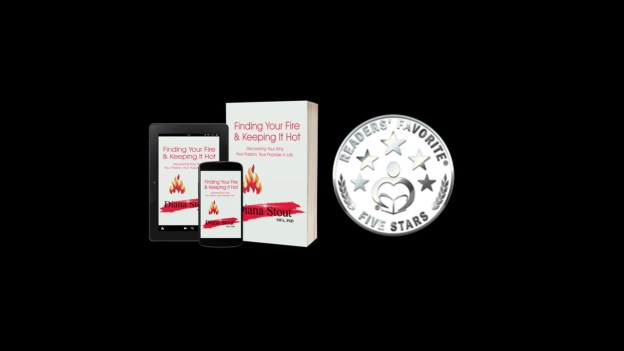
Suggestion #9 – If none of these suggestions are working for you, have you considered reading my book, Finding Your Fire & Keeping It Hot? (available at any bookseller). In it, I share a lot of reasons why your passion has disappeared, more than I could list here.

This book was the foundation of a class I just finished teaching, and where students were saying that my book had changed their lives. They had found their passion to write again.

My desire in writing the book was to share with other writers the research I had done and the steps I took to find and maintain my writing passion, keeping it hot most days.

What’s your writing passion level these days?

  • Cold and dead?
  • Somewhat warm?
  • Or hot like mine?

*****

Purpose: To share and encourage. Writers can express doubts and concerns without fear of appearing foolish or weak. Those who have been through the fire can offer assistance and guidance. It’s a safe haven for insecure writers of all kinds.

Posting: The first Wednesday of every month is officially Insecure Writer’s Support Group day. Post your thoughts on your own blog. Talk about your doubts and the fears you have conquered. Discuss your struggles and triumphs. Offer a word of encouragement for others who are struggling. Visit others in the group and connect with your fellow writer – aim for a dozen new people each time – and return comments. This group is all about connecting.

http://www.insecurewriterssupportgroup.com/

Writing to Market or Writing From the Heart

The Insecure Writer’s Support Group

The question for this month is: When you set out to write a story, do you try to be more original or do you try to give readers what they want?

Writing to Market or Writing From the Heart

My answer to this month’s question is both, depending on the project.

Grendel’s Mother was born from the heart. I gave a female who had no voice in Beowulf—a woman made into a monster—a voice. It was my first book published as an indie publisher.

Two romances, traditionally published in the 90s—were written to market, though my heart was in their locations.

Tomorrow’s Wish for Love, originally published as Tomorrow’s Wishes, is a sweet romance written specifically for Avalon Books who published only to libraries. This book takes place in Grady County, Georgia where I lived for nine years.

Love’s New Beginnings, originally published as New Beginnings, is likewise a sweet romance written for Avalon Books. This book takes place in Calhoun County, Michigan where I was raised and lived currently.

Once I got the rights back, I retitled, revised, and updated them, and gave each a new cover.

Determined Hearts was a book written from my heart, though I had been considering its possible market. It was my second book ever written and it became my first book traditionally sold, published as The Man on the Romance Cover. Once I had the rights back, like the other two romances, I revamped the title, cover, and updated the content.

My cookbook, The Super Simple Easy Basic Cookbook, was born of my lifetime collection of recipes. The bonus of publishing it? Now everyone else had easy access to my recipes…well, for a price.

David & Goliath was truly born of my heart. It’s a book in screenplay format and is a suspense thriller, a category I’m returning to. D&G was one of three scripts I wrote that year.

Miss Mississippi was a script I plotted to market, having researched that I discovered 7 of the top 10 movies—comedies—that year had men in dresses, but then the writing totally came from the heart. That’s the script I optioned and it still gets interest, though now it needs a massive rewrite.

Finding Your Fire & Keeping It Hot was born both of my heart and written to market. The topic is one I talk a lot about: how to find your passion, your purpose, how Universal Laws operate, and the book is based on my journey of these topics. I’ve had people telling me I needed to write the book, so I finally did.

With students, teachers, and other writers telling me that I needed to write my plagiarism how-not-to book, and my grammar and punctuation book, along with other writing craft topics I’ve taught over the years, these will be upcoming non-fiction how-to books…written from the heart but with the consideration to market.

Writing to market is okay, but writing from the heart is the best because I’m fully engaged and interested as much as the readers will be once I publish the book.

*****

Purpose: To share and encourage. Writers can express doubts and concerns without fear of appearing foolish or weak. Those who have been through the fire can offer assistance and guidance. It’s a safe haven for insecure writers of all kinds.

Posting: The first Wednesday of every month is officially Insecure Writer’s Support Group day. Post your thoughts on your own blog. Talk about your doubts and the fears you have conquered. Discuss your struggles and triumphs. Offer a word of encouragement for others who are struggling. Visit others in the group and connect with your fellow writer – aim for a dozen new people each time – and return comments. This group is all about connecting.

It All Began With a Book Report

The Insecure Writer’s Support Group

 January 8 question – What started you on your writing journey? Was it a particular book, movie, story, or series? Was it a teacher/coach/spouse/friend/parent? Did you just “know” suddenly you wanted to write?

 It All Began With a Book Report

 I often quip that I began writing because it was cheaper than seeing a psychiatrist. That statement isn’t far from the truth because that’s when I began writing in earnest due to life’s frustrations. My real start, though, occurred a decade earlier.

In a tenth grade English class when I was fifteen, I had a book report assignment. We could write about a character, the plot, or the setting. I was reading James Michener’s Hawaii at the time and was enamored with his writing, especially the many pages where he detailed the setting, the formation of the islands. I wrote about the setting in about 100 words or so. I remember getting an A- for content and a B+ for grammar. It was the A- I couldn’t believe. I reread what I wrote and was surprised at how lyrical, how detailed my words were. I wrote that?

It didn’t sound like me, and yet it was me. A me that many didn’t know about. Plus, the writing was way better than anything I’d ever written before.

Rereading my words, I remembered the sensation of being taken to another place, a magical place I now recognize as the zone. Up until that time, the zone usually occurred when I was reading. Where I could be transported into a different time, a different place, where the world would fade away.

Looking back at that time now, I find it interesting that 1) neither parent ever read that report, let alone any of my other assignments (EVER.), and 2) that no one saw my fascination with words (mostly reading at that point) where they could help me move into a career that would have suited me better, far better than the path of secretary and bookkeeper, both of which I was good at. I didn’t hate the jobs, but I didn’t love them either. The jobs were a means to an end—earnings to pay the bills. Later, though, those skills would lead me into academia, which I did love.

Through the next fifty years after high school, I would write a lot, in various genres, for various audiences, and in various media. Since my creation of Sharpened Pencils Productions LLC, I have been publishing two books a year.

I have a lot of catching up to do.

So many projects, so little time.

*****

After much pondering and consideration for her New Year’s list of 2020 projects, which includes finishing the last six of the seven Laurel Ridge novellas (covers below), Diana has chosen to finish a grammar handbook, an academic nonfiction text, and a historical screenplay based on a true event.

Insecure Writers Support Group Badge

Purpose: To share and encourage. Writers can express doubts and concerns without fear of appearing foolish or weak. Those who have been through the fire can offer assistance and guidance. It’s a safe haven for insecure writers of all kinds!

Posting: The first Wednesday of every month is officially Insecure Writer’s Support Group day. Post your thoughts on your own blog. Talk about your doubts and the fears you have conquered. Discuss your struggles and triumphs. Offer a word of encouragement for others who are struggling. Visit others in the group and connect with your fellow writer – aim for a dozen new people each time – and return comments. This group is all about connecting!

The Joy of Writing & Knowing When It’s Time to Quit

The Insecure Writer’s Support Group

December 4 question – Let’s play a game. Imagine. Role-play. How would you describe your future writer self, your life and what it looks and feels like if you were living the dream? Or if you are already there, what does it look and feel like? Tell the rest of us. What would you change or improve?

 Rather than answering these questions, I’ve chosen to write about an important topic that came up this past month.

 The Joy of Writing & Knowing When It’s Time to Quit

Throughout my writing career, I’ve seen a few writers who have said, “I’m quitting. It isn’t fun anymore. I’m not selling anything. No one is reading my stuff.” And, then, they do quit.

I’m watching a writer friend saying that they’re giving up writing. Many are rushing to the writer’s side, saying, Oh, no! Don’t quit, or This makes me so sad. It’s nice that they’re being empathic; however, I don’t think these people are listening. This writer is stating a truth, and I believe this writer actually wants someone to say it’s okay to quit or that it’s okay to take a long sabbatical.

A few are saying so but the words are wrapped in subtle positivity where the message of it’s okay to quit is buried in words of You’re talented in so many areas, and Don’t stop being creative.

Yes, there is creativity in all of us. Some are creative with yarn, others paint, others still with trash. Many are creative with food, decorating, playing a musical instrument, singing, and so forth. So many outlets for our creativity.

No one, though, can do everything well.

It can take years of trying and learning before a specific craft or art form is mastered. So, it goes: we try, quit, and try something else until we find that thing that fills us with passion.

There are some writers, though, who get lucky and find their passion and monetary success in a short amount of time. Unfortunately, those are the writers who too many of us compare ourselves to.

That said, writing is not for everyone.

Writing is hard.

Even for those of us who love to write, there are days that it makes us want to scream and cry out, Why am I doing this?

The other day someone was asking me if I’m able to write every day because I’m inspired. Not really. Somewhere along the way, an idea inspired me, but to do the actual first-draft writing, I’m usually gutting out the words. We know these words aren’t great and even somewhat stinky, fodder for the compost pile of prose as they read first written. We stick with it, though, knowing that stinky first words must occur because once shaped, they can become something wonderful—material that others want to read.

Thus, while the original writing comes first, writing is really about the rewriting. Hours and hours of rewriting.

It’s about rewriting, revising, polishing, and proofreading. And, for the self-published…promoting.

These are the parts that most people enamored with writing don’t want to do. Because it’s hard.

We writers don’t write every day because we’re inspired. We write because we put ourselves in the chair, turn on the computer, and just write—one word, one phrase, one sentence, one paragraph, one page at a time.

The joy comes once we get into the zone and where time ceases to exist, which for me can occur after a few paragraphs or a smattering of dialogue. It’s just getting those first words down that is sooooo hard.

Writing is a solitary craft.

  • Write because you have a story to tell.
  • Write because it excites you.
  • Write because you’re amazed that you wrote that.
  • Write because if you don’t, you’ll be miserable.
  • Write because you have a truth to share, characters who want their voices heard.
  • Write because you need to share.
  • Write because there’s no alternative activity or craft that provides the same joy.

Write because you simply have to.

Write because you’re willing to do the work!

A writer should never compare themselves to any other writer. Especially the monies earned, or what we think they’ve earned. Did you know that the average income for a writer is about $5,000 or less per year? AVERAGE!

It’s no mistake that so many writers teach, coach, edit for others, and work at jobs centered around writing. It allows them to earn an income that’s compatible with their passion.

Ultimately, no writer’s journey is the same as another’s.

So, to that writer who is talking about quitting, I say:

Listen to your inner voice, your gut feeling. You and you alone know why you want to quit. If writing isn’t fun, it’ll only make you angrier and more frustrated in the future.

Give yourself permission to know what’s right for you.

There is nothing wrong with saying, this path isn’t for me anymore.

If there’s no joy in what you’re doing, you’re doing the wrong thing.

Me? I’ll never quit writing. I enjoy it that much, even the repetitive, time-consuming, polishing, and proofreading parts.

******

This year, Diana published Love’s New Beginnings and Tomorrow’s Wish for Love. She’s currently writing six novellas all at the same time because they are six couples with six stories, all living in the same community, and who are in and out of each other’s stories, which included the first novella, Shattered Dreams, that is already published. She’s working toward a 2020 publication for all six novellas.

******

Insecure Writers Support Group BadgePurpose: To share and encourage. Writers can express doubts and concerns without fear of appearing foolish or weak. Those who have been through the fire can offer assistance and guidance. It’s a safe haven for insecure writers of all kinds!

Posting: The first Wednesday of every month is officially Insecure Writer’s Support Group day. Post your thoughts on your own blog. Talk about your doubts and the fears you have conquered. Discuss your struggles and triumphs. Offer a word of encouragement for others who are struggling. Visit others in the group and connect with your fellow writer – aim for a dozen new people each time – and return comments. This group is all about connecting!

http://www.insecurewriterssupportgroup.com/

Guest blogger – Keri Kruspe, Part II

As a follow up to Keri’s August 21, 2019 post as a guest blogger, where she talked about the things she wished she’d known before publishing her first book, in today’s post, she talks about the things she did right.

On the Other Hand…things I’ve done right

An Opinion By Keri Kruspe

In my last article, I thoughtfully discussed (okay…I whined) about my frustrations on what I would do differently in launching my writers’ career. Having admitted my mistakes and oopsies, it’s only fair I switch gears and talk about what I felt I did right.

To give some perspective, here is a brief history of how I got here.

Ten years ago, when I finally got off my keister and wrote my first full-length. It was a long one, around 100,000 words. I poured my heart and soul into that story. While it was a sci-fi romance (the genre I currently write-in), I took out my frustrations on the devastating thing that happened to me in my secular career in the banking industry. I had been let go from a company that I had worked for 21 years. I’d grown up at that bank, rising in the ranks to end up a VP in charge of the retail department. I had 300 employees reporting to my direct line.

Then unexpectantly, I got laid off. Depression hit me hard and heavy. To make matters worse, those who I thought were close friends either betrayed me or dropped me like the trash took out itself. Through the shake-up, I learned who my true friends were and found love and acceptance within my family.

But the best thing that helped me overcome my depression was to write that book. In it, I turned the villains in my life into clowns and enjoyed the various ways I killed them off or humiliated them. Ahhh…being a writer has so many perks!

Keri Kruspe - villians

With my novel in my hot little hands, I just knew someone would snap up my masterpiece and I’d be on my way to working as a writer full time.

Long story short, that didn’t happen. I had no idea what was wrong or where to turn to make it right. It took another ten years for me to try again in a more serious vein.

With clear hindsight, I can now share what I’ve done right since then to launch my career as an independent author:

THE JOURNEY IS BETTER WITH FRIENDS

MMRWA REtreat 2019 group photo - original

Members of my Mid-Michigan Romance Writers of America chapter, taken while on their 2019 Retreat From Harsh Reality

When I started again in 2016 to write my novel, I realized going it alone was not the thing to do. As with many author’s, I’m a solitary creature who likes to rely on myself and not depend on others. I thought I could do everything on my own.

But, it didn’t take long to realize what I had done before wasn’t going to work (remember the definition of insanity…). I needed help from other people. I’d been a member of Romance Writers of America since 2008 but didn’t do much with it. Using that as a starting point, I reached out to some of my peers and begun to explore and develop contacts.

TRAINING

Indie publishing was starting to hit its stride when I wrote that first novel in 2008. From what I understand, there wasn’t a lot help around for writers to find their way into self-publishing. Today, there are numerous tools and assistance out there just for the asking.

When I gathered up the courage to ask someone to read my novel, she let me know it needed a lot of work. Especially on Point of View (POV).

I couldn’t understand it. I was an avid reader (my average is 100 books a year and counting!) and writing came second nature to me. After pulling my conceited head out of my rear end, I admitted I needed to dive deep into my chosen craft. To do that, I had to spend the money to get an education. While some classes were free with RWA, to get a better handle on what I was trying to do, I needed something more. I needed a mentor or mentors. That’s where the deeper training comes in. For a personal touch, I found the Barany School of Fiction. Their courses, as well as the bi-monthly online meetings, are a godsend.

The other training I did correctly was to find a course that went step-by-step on what to do once my novel was finished. I needed to know how, when, and where to create and market my book. There are numerous paths to choose from, all you have to do is a little research to find what works best for you. I encourage everyone to go out and look for it.

Keri Kruspe - extra trainingEXTRA TRAINING

I call this section extra because it involves using your downtime to your advantage. For me, that meant using the time where I couldn’t be on the computer but had free time to listen. An example – it takes me a half an hour to get ready for work in the morning (putting on makeup, doing my hair, getting dressed). I used to listen to the TV or music, but now I’ll tune in to a podcast, a class, book, or anything audio that involves being an author.

I’ll do the same when I’m in my car going to work. Here is an extra hour a day that I can continue to listen to what I started that morning.

FARMING OUT WHAT I HATE TO DO

There are certain things in my new career I’ve found I didn’t have time or talent to learn in the beginning. I wanted to spend my time learning how to write before figuring out Photoshop. So, using my contacts, I’ve found someone to do my covers. I also hired a writer’s admin to tweak my website (I did learn the preliminaries on creating it and do the upkeep myself) and to format my novels. I can format, but I confess I hate doing it.

Also, I don’t think a writer should have the final edit on their work. That is a no-brainer for me. While beta/advance readers are wonderful, you still should hire a professional editor. I did and even though it was expensive, having the polished novel was well worth it.

FINAL THOUGHTS

Keri Kruspe - final thoughts.jpgOne of the best things I’m doing as a new author is writing this guest post. I love how I can take a subject that’s bugging me and put it on paper. I hope I’m allowed to keep doing it for a while. After all, writing is my profession of choice.

So…far warning world! I’m in this for the long haul.

***************

Keri Kruspe Pic

Keri Kruspe, author of Otherworldly Romantic Adventures – writing about feisty heroines who aren’t afraid to take chances in life or love.

Keri has been an author since the age of twelve and has always been fascinated with otherworldly stories that end in Happily Ever After. Her current sci-fi romance trilogy, An Alien Exchange (winner 2018 SPF Galaxy award) had its first release winter 2018. The story continues with D’zia’s Dilemma and concludes with Ki’s Redemption.

A native Nevadan, Keri resides with her family in the wilds of Northwest Michigan where she enjoys the stark change in seasons and the pleasures each one brings. An avid reader, Keri loves an enjoyable bottle of red wine, a variety of delicious foods and watching action/adventure movies…usually at the same time. You can find her most days immersed in her fantasy world on her latest novel while foot tappin’ to classic rock. When not absorbed in her writing, Keri works alongside her husband in building their dream home or discovering intelligent life in America in their RV. Join the fun and sign up for her mailing list at www.kerikruspe.com

In a writing galaxy far, far away…

The Insecure Writer’s Support Group

 September 4 question – If you could pick one place in the world to sit and write your next story, where would it be and why?

 In a writing galaxy far, far away…

There are so many places I could list, but after mulling over the question, there’s one that keeps floating to the top of the list.

That one place in the world would need to be a mountaintop where the air is crisp, the skies clear, where the Milky Way shines brightly and the moon brighter still. Where I could look out, across the valley and see lights of civilization, tucked against the mountains, yet far enough away that its daily chaos wasn’t imposed upon me. Where a lake or river spread widely across the rest of that valley disappearing into the sunset between the peaks. Where there were still enough trees to roost and feed the birds and where nature’s creatures roamed freely without fear.

The why? Isn’t it obvious?

Insecure Writers Support Group BadgePurpose: To share and encourage. Writers can express doubts and concerns without fear of appearing foolish or weak. Those who have been through the fire can offer assistance and guidance. It’s a safe haven for insecure writers of all kinds!

Posting: The first Wednesday of every month is officially Insecure Writer’s Support Group day. Post your thoughts on your own blog. Talk about your doubts and the fears you have conquered. Discuss your struggles and triumphs. Offer a word of encouragement for others who are struggling. Visit others in the group and connect with your fellow writer – aim for a dozen new people each time – and return comments. This group is all about connecting!

Failures – Part IV: 7 Lessons of Failure as a Writer

This blog was originally published April 4, 2018, on my Only for the Brave blog, which has been eliminated as I decided to merge the two blogs. Because failure is an important part of success for writers and everyone else, I felt it was worthwhile repeating this post, this series on failure.

*****

7 Lessons of Failure as a Writer

People look at me and see success. Published in multiple media, in multiple genres, with various awards. With an MFA and a Ph.D., too, but there have been many failures along the way.

I have failed so many times I’ve lost count, from beginning, middle, and end.

In the beginning, I couldn’t get anything published. I tried big publications, national publications, regional, and small publications. All submissions boomeranged back. Once in a while, I’d get a handwritten note at the bottom of the mimeographed rejection, saying, I like your voice, or Please submit to us in the future. I learned from others these handwritten notes were excellent rejections because they were encouraging, that I needed do as suggested.

Only after a friend read a couple of my rejected essays and said, “This sounds like Erma Bombeck,” did I realize I needed to approach our local newspaper with a suggestion for a weekly or monthly column. Success! A six-month trial became a five-year career start.

Lesson #1 – If you can’t start big, start small.

When I turned to fiction writing, specifically romance, I already had a number of magazine articles and short story publications. I was reading a romance book a day, thinking how hard can it be? Over time, I found out. I wrote four books, all getting rejections. Even a published writer friend was amazed at the rejections, saying, “It’s like you’re standing on a cliff with only the back of your heels touching. Why aren’t falling off that cliff?”

The most devastating rejections occurred with an editor writing, “I just bought a book like yours last week.” So close, yet so far away.

At 37, I had been writing romances for nine years. I vowed that if I wasn’t published by the time I turned 40, I would quit.

I turned 40. More small magazine publications, but no books. I was getting closer, though. I was winning awards and placing in contests. I had an agent. Then I lost the agent, and then a second one. They were trying to put me into a publishing box I didn’t want to climb into. They were trying to make me into a specific kind of writer that I wasn’t and didn’t want to become.

At 42, I finally published my first book. Two more book publications quickly followed.

Lesson #2 – Don’t quit. Success will come but in its own time. Quit only if you truly have no more interest in pursuing that endeavor. Ever.  

About that time, I turned to scriptwriting. Producers were impressed with my book publications. While I did option one script to a producer for six months for no money, the option ran out. He wanted to renew for another six months, again with no money. I said no. About every two years after that, he would call me, asking what I’d done with the script. I knew I had a good story. (I’m in the process of rewriting and publishing that script now.)

In the meantime, I developed relationships with another five producers, all who loved my writing but couldn’t say yes to my scripts. It became a matter of trying to find the right material. They wanted me to submit anything and everything I was writing.

Lesson #3 – Rejections can be a yes.

One of my first book submissions was a colossal failure. The Senior Editor wrote:

Thank you for submitting BOOK TITLE for our review. We have found that your manuscript does not fit the requirements for PUBLISHER LINE. It is too melodramatic, based on trite misunderstandings among the characters as well as contrived circumstances. Sincerely . . .

So, she tore down the plot and conflict, the characters, the dialogue, and the…wait, there was no comment regarding the setting. Oh, wow, she liked the setting!

I used that setting in another book, with a similar conflict, different plot, different characters, and different dialogue. It sold and was published.

Going back to that rejected manuscript later, I could see that the editor was right.

The writing was horrible.  At least, she saved me from that humiliation. I had mixed tenses, multiple ping-pong points of view, mixed metaphors, wordiness, too much telling, and too many details that added nothing to the story or to the characters. The book was boring.

I should have burned the book, but I didn’t. I started looking at my writing from an editor’s point of view, and that’s when the real learning began.

Lesson #4 – Learn from your mistakes.

Never compare yourself to another writer. Not by their sales numbers, the number of books sold, how fast they can write, how few drafts they have to write, by their having an agent, or being traditionally published.

When you compare yourself to others, you’ll always be a failure.

Ironically, what you don’t see is that others are probably comparing themselves to you and feeling like failures.

Lesson #5 – Don’t compare yourself to others. Ever.

Their journey is not yours. Yes, some get lucky when they are young. Some get lucky with their first book. Some get lucky winning the highest awards. Some get lucky with their self-published book, earning thousands of dollars.

When I published my first book, I was in the right place at the right time. I had a once-in-a-lifetime opportunity to talk to an editor, actually being the first writer to talk to this editor, an editor looking to publish romances. He said, “If you know of anyone who has a manuscript, send them my way.”  When I told him that I had one, he invited me to send it.

He rejected it! Then asked if I had anymore. I did, I sent it, and he published it.

Lesson #6 – Luck is nothing more than a preparedness meeting opportunity.

I’ll never forget a writer who was angry about some contest scores she’d received. When I told her it wasn’t personal, she said, “It’s personal to me!”

I’ll admit that early in my writing career, rejections felt personal. When I started coming back to the rejection and analyzed what was being said more closely, I realized that everything said was true. So, how could it be personal? That criticism was helpful, meant to show me that I had areas that needed improvement.

Here’s the thing: As a writer, you can’t make it personal, all about you. I learned to step back and look at it from their point of view. If I’d been that agent, producer, publisher, reader, etc., I probably would have done the same thing.

Stepping into someone else’s shoes is how you don’t make it personal.

Lesson #7 – Rejections, failures, and criticism aren’t personal.

Failure means what you’re currently doing isn’t working.

That’s it. Nothing more. Nothing personal.

Step back. Rethink what you’re doing. Rethink the path you’re taking.

Then make a change.

Here’s the real secret. No two writers ever arrive at their level of success by taking the same path. It’s different for each and every one of us.

What’s your path going to look like?
Failures – Part II

This blog was originally published December 27, 2017, on my Only for the Brave blog, which is being eliminated as I decided to merge the two blogs. Because failure is an important part of succeeding for writers, I felt it was worthwhile reprinting the series about failure here.

*****

My last post provided a list of successful people who failed early in their careers. Did you see it? If not, you may want see it or revisit the list for inspiration. It’s quite an eye-opening list. (Failures: Part I)

But let’s focus on how we fail and how we need to fail in order to learn.

Consider babies learning to walk. They fall down a lot! No baby ever gets up and starts running. They practice.

Kids learn a sport through practice. After school, on weekends, during games, alone, with others.

Most anyone who plays a musical instrument, do so because they practiced. Same with dancers, painters, anyone learning an art, or a trade. They practice. (I say most because there can be the savant that amazes everyone.)

 Failure Is Part of Practice

We learn when we’re frustrated, when we’re unhappy.

Let that sink in for a moment.

—

We learn when something is hard, when it requires our full attention, our full determination.

We learn most when we fail.

In failure, we learn how to do it right. Edison said, “I learned 999 ways how not to create a light bulb.”

—

So, how does a writer move from failure to success?

  • Keep writing. Finished your first book? Great. Start writing a second one, while you edit the first. Finished your fifth? Great! Start writing the next one, while you edit, polish, submit, or consider making changes on the other three.
  • Be prepared to gets rejections. Maybe lots of them. I can paper the walls of my house with my rejections. Even the best writers still get them. Know that rejections are never personal. Your work just wasn’t a good match (think dating which leads to marriage) for that publication.
  • Enter contests. Placing in a contest is a sign that you’re writing is better than the average. However, different judges could have determined different results. Humbling, isn’t it?
  • Keep writing. Keep practicing.
  • Take classes. I’ve been writing for nearly forty years and I’m still taking class AND learning new things.
  • Get a degree in writing. Getting my BA in creative writing and then an MFA in drama were the best decisions I’ve ever made. One, because I was forced to embrace writers and readings I never would have chosen on my own, and second, the MFA allowed me to get a day job in my favorite passion and that job became fun! That education both broadened and deepened my writing skills.
  • Read everything, especially read outside your genre. Analyze what you read. Stop and think about that phrase you praise.
  • Write and experiment in different genres. If nothing else, try them just for the fun of it. I learned how to write better fiction by learning how to write scripts. I learned how to write better dialogue by writing plays.
  • Find your niche. Most find their niche in a single genre. I finally recognized that my niche is a variety of genres. When I began having success in romance writing, I became bored. I still write romance, but I write fantasy, nonfiction, and other genres, as well. Thus the romance writing is part of the spice again. Variety keeps all genres fun and interesting.
  • Keep writing. Keep practicing.
  • Learn about the business!!! I can’t stress this one enough. If you know the business, you’ll know when someone is trying to scam you.
  • Learn grammar. Yes, learn it. Find an expert who will teach you the rules. Otherwise, be prepared to spend lots of money to line editors who will fix your errors. It’s not a wasted skill. I wasn’t an expert when I began writing, but I became an expert by having to teach others. Seriously, the best way to learn something is to teach it.
  • Read articles, the how-to books, and then ask your questions. Don’t join a forum and ask questions that you could have easily found the answers to.
  • Join writing groups. If nothing else, find a few people and start your own group. There’s nothing more inspiring than meeting with people who talk your language.
  • Find beta readers. People who will read your work and provide honest feedback. Like finding a marriage partner, agent, or editor, it could take a while to find good beta readers. They shouldn’t be relatives or best friends, however, unless they have a degree in English.
  • Become a beta reader yourself. You’ll learn lots by reading the writings of others. You’ll see your mistakes in their work. And you’ll probably discover that you’re writing is better than you thought.

And above all, keep writing. Keep practicing.

If you still keep failing, remember Edison’s lesson of finding 999 ways not to do something. He had to keep changing his process 999 times until he found his success on his 1000th try. Nine hundred-ninety-nine times. Are you willing to go that distance?

Do you have the ability to change up what isn’t working? To put in the hours of practice?

If you do, then you’ll preserve your way to success . . . eventually.

Happy writing!