Embracing Change and Letting Go

For the first time in at least three years, I don’t have a book, a project that I’m currently working on or have touched in over a year.

Last month, I published the grammar book that everyone was asking, “When are you going to publish it?” Interesting how my royalty report isn’t reflecting the desired demand. At least, not yet. That was a book I’d been working on in between other projects for the last half decade.

But, hey, at least Freida McFadden told me that “You’re my new grammar expert!” and gave me permission to use her comment made in public in her readers’ fan group. Even if this book doesn’t turn out to be a best seller, that comment alone—in my mind and seeing it on my first hardcover book—made me a best-seller.

And, an hour ago, I uploaded the last of the three formats (hardcover, paperback, and eBook) for the November 18, 2025 publication of Harbor House: Deadly Intentions, my first psychological thriller. A book whose origins began in summer 2023, and which I thought had been ready for publication October 2024. Boy, was I wrong! To read the origin story, click here.

Why I never pursued romance instead of thrillers in the beginning is beyond me. No, actually, I do know why. There were and are no nearby thriller writing groups—at least not that I’ve found. At the time I began writing books, Romance Writers of America was huge, and there was an area chapter starting up, which I joined.

I learned a lot and have a pile of best-selling writer friends and just as many like me—not best-selling-authors-yet writer friends. The support is incredible.

Two days ago, I participated in my first author get-together through a Potluck Book Sale. In getting ready for my hour of hosting, I learned a few tricks to combining Canva with PowerPoint in creating reusable, promotional graphics. YAY!

I had fun chatting with some of the readers and ended up giving away seven books and sharing three recipes. I’ll definitely do another potluck party in the future.

So, what other significant changes have I made this year? Surprisingly, the theme has been about cutting back or letting go. Less is more mentality. Without providing all the details, the endgame is that I’ll be writing more books, using my time more effectively.

Once I clean some files, clear off my desk, and restock the printer, my plan for 2026 is to:

  • Rewrite the optioned script, Miss Mississippi, and publish it.
  • Plot out the 180-year-old story based on a true event and write it as a book. I always thought it should be a screenplay. I still believe it, but…I think it can gain legs as a novella first. A project I’ve been considering for 30 years.
  • Add another book or two to my Finding Your Fire series.
  • Plot out a story I’ve been mulling for about 20 years that reminds me of Nicholas Sparks’ books and the movie Somewhere in Time.
  • Plot out two thriller ideas that were solidified in a write-in weekend two summers ago.
  • Consider writing Harbor House and the true event story as screenplays.
  • And finally, plot out a 10-second idea that raced past me from start to finish with a shocking ending that came out of the blue while I was playing a game a few days ago. I heard the character talking and could see many of the events. Yup, all in 10 seconds. (I wrote it all down quickly, so I wouldn’t forget.)

All of these projects are nagging at me—as all projects do—with this last one close behind me and whispering in my ear, “You know it’s gotta be me, don’t you?

Posted in Inspiration, Plotting, Publishing, Writing Behind the Scenes | Tagged , , , , , , , | Leave a comment

ChatGPT & The Truth About The 7-Minute Tesla Ritual

I just had an amazing interaction with ChatGPT and want to share what happened to you. I need to make this program my virtual assistant. It could save me hours in research, let alone help me brainstorm my books.

Any grammar issues (and there were only a couple) within ChatGPT’s answers belong to ChatGPT. No editing from me.

At the end is a link to the one-page 7-minute ritual that ChatGPT produced for me.

*****************

Seeing a bunch of posts promoting the “7-minute Tesla ritual,” I asked ChatGPT what it was. ChatGPT took just mere seconds to scour the internet, giving me this summary response. Notice how it properly cites its source.

ChatGPT’s response:

It turns out that there’s no well-documented, widely recognized “7-minute Tesla ritual” linked to Nikola Tesla—what you’ve likely encountered online seems to be a bit of a marketing myth or a viral reinterpretation.

What is circulating out there?

Most of the viral content refers to a “7-second Tesla ritual,” not a 7-minute one. This is connected to a product or concept called “The Money Wave,” which markets a “7-Second Tesla Ritual” as a shortcut to attracting money or abundance using affirmations, visualization, and sound frequencies supposedly inspired by Tesla. OpenPRArtificial Gamer: Beyond the Code

Key aspects as described by the creators:

  • It’s portrayed as a brief mental or meditative exercise, usually involving visualization (imagining money coming into your life) and affirmations. OpenPR+1
  • It’s wrapped in pseudoscientific language—mentioning “vibrational frequency,” “energy psychology,” and vague references to Tesla’s theories.OpenPR+1
  • The instructions are intentionally vague: perform it in a quiet place, close your eyes, feel as though you’ve already got the money—that kind of guided-visualization. OpenPR+1

What critics say:

  • There’s no credible evidence that Nikola Tesla ever promoted a wealth-manifestation technique or ritual. His work focused on electrical engineering and physics—not on visualization or abundance psychology. OpenPR+1
  • The program uses marketing tactics typical of “get-rich-quick” schemes, including lofty promises (“unlock unlimited wealth,” “manifest millions instantly”), inflated testimonials, upsells, and ambiguous origin stories. OpenPR+1
  • User experiences are mixed:
    • Some say it improved their mindset or focus—“adopting The Money Wave has given me a greater sense of financial control”—but not actual financial change. OpenPR
    • Others felt misled, reporting no real outcome despite using the ritual, and complaining about the cost or difficulties securing refunds. OpenPR

Why might the “7-minute Tesla ritual” phrase exist?

It seems likely that the mention of “7 minutes a day” is either a misunderstanding or rebranding of the original 7-second concept—perhaps to make it seem more substantial or resembling a self-help habit. The content itself, however, focuses almost entirely on 7-second practices.Artificial Gamer: Beyond the CodeOpenPR

In summary:

  • There’s no credible historical or scientific basis for a “7-minute Tesla ritual.”
  • The concept you’re seeing is most likely the “7-Second Tesla Ritual” from a program called The Money Wave.
  • It appears to be largely a marketing-driven technique, incorporating visualization, affirmations, and broad claims tied loosely to Tesla’s themes.
  • Results are anecdotal and subjective, with little to no empirical support—and there’s skepticism regarding its legitimacy.

If you’re interested in mindset techniques or meditation routines for focus, clarity, or goal setting, I’d be happy to help you find reasonably backed methods—such as mindfulness practices, proven visualization techniques, or habit-forming routines—that are grounded in psychology rather than marketing hype. Let me know!

*****************

So, I asked, “What are legitimate mindset techniques grounded in psychology” and got this immediate response:

Here are several legitimate, research-backed mindset techniques from psychology that actually have evidence behind them—no mystical “Tesla rituals” required:

1. Growth Mindset Practice

Origin: Carol Dweck’s research at Stanford University

  • What it is: Believing that abilities can be developed through effort, strategies, and feedback.
  • How to apply:
    • Replace “I’m bad at this” with “I’m not good at this yet.”
    • After a setback, identify one specific skill to improve rather than labeling yourself as incapable.
  • Why it works: Encourages persistence, resilience, and higher achievement.
  • Evidence: Dweck’s studies show improved academic and workplace performance when people adopt a growth mindset.

2. Cognitive Reframing

Origin: Cognitive Behavioral Therapy (CBT)

  • What it is: Actively changing the way you interpret a situation to alter emotional and behavioral outcomes.
  • How to apply:
    • When faced with a challenge, write down your automatic thought (“This is impossible”).
    • Ask: Is there another perspective? (“This is hard, but I can break it down into smaller parts”).
  • Why it works: Reduces stress, anxiety, and depressive thinking by altering thought patterns.
  • Evidence: Thousands of clinical trials validating CBT as one of the most effective forms of therapy.

3. Implementation Intentions (“If–Then” Planning)

Origin: Peter Gollwitzer’s research on goal achievement

  • What it is: Creating specific, situational plans to automate action.
  • How to apply:
    • “If it’s 7:00 AM, then I will put on my workout clothes.”
    • “If I feel overwhelmed, then I will take three deep breaths and refocus.”
  • Why it works: Turns good intentions into automatic behaviors, bypassing procrastination.
  • Evidence: Consistently shown to increase follow-through in health, study, and productivity goals.

4. Mindfulness Meditation

Origin: Buddhist traditions, researched extensively in psychology

  • What it is: Training attention to remain in the present moment without judgment.
  • How to apply:
    • Spend 5–10 minutes observing your breath and noticing thoughts without reacting.
  • Why it works: Reduces rumination, improves emotional regulation, increases focus.
  • Evidence: Over 20,000 studies support benefits for mental and physical health.

5. Self-Compassion Practice

Origin: Kristin Neff’s work on self-compassion

  • What it is: Treating yourself with the same kindness you’d give a friend when you make a mistake.
  • How to apply:
    • Notice your inner critic, then rewrite the statement as if you were speaking to a friend.
  • Why it works: Reduces perfectionism, anxiety, and burnout while improving motivation.
  • Evidence: Linked to better resilience, relationships, and emotional well-being.

6. Mental Contrasting

Origin: Gabriele Oettingen’s WOOP method

  • What it is: Imagining your ideal outcome and the obstacles that might prevent it, then planning around them.
  • How to apply:
    • Wish → Outcome → Obstacle → Plan
    • Example: “I want to write daily” → “I’ll feel accomplished” → “I get distracted by my phone” → “I’ll put my phone in another room.”
  • Why it works: Prevents blind optimism by coupling vision with realistic planning.
  • Evidence: Improves follow-through more than positive thinking alone.

If you’d like, I can bundle the most effective parts of these into a daily 7-minute routine that’s entirely science-backed—kind of like a “real Tesla ritual,” but without the pseudoscience. That way, you’d have one short practice that covers motivation, stress management, and focus.

Do you want me to create that 7-minute plan?

*****************

My response was, “Yes, create a 7-minute plan for me.” Instantly, this appeared on screen:

Here’s a science-backed 7-minute daily mindset routine that blends the best from growth mindset, CBT, mindfulness, and implementation intentions—no pseudoscience, just proven methods.

The 7-Minute Daily Mindset Reset

Minute 1 – Center with Mindful Breathing

  • Sit comfortably, close your eyes.
  • Inhale for 4 seconds, hold for 2, exhale for 6.
  • Purpose: Signals your nervous system to relax, primes focus.
    (Evidence: Mindfulness research shows even short breathing exercises reduce stress and improve clarity.)

Minute 2 – Gratitude + Strengths Scan

  • Silently name 1 thing you’re grateful for and 1 personal strength you can use today.
  • Example: “I’m grateful for my supportive friend. I’m resourceful and can find creative solutions.”
  • Purpose: Boosts optimism and confidence.
    (Evidence: Gratitude practices improve mood and resilience.)

Minute 3 – Growth Mindset Reframe

  • Think of one challenge you’re facing today.
  • Ask: “If I were a coach for myself, how would I see this?”
  • Turn “I can’t do this” into “I can’t do this yet—what’s the first step?”
  • Purpose: Encourages learning orientation instead of avoidance.

Minutes 4–5 – Mental Contrasting (WOOP)

  • Wish: What’s your most important goal for today?
  • Outcome: How will it feel when achieved?
  • Obstacle: What might get in your way?
  • Plan: “If [obstacle], then I will [strategy].”
  • Purpose: Turns vague goals into actionable steps.

Minute 6 – Implementation Intentions

  • Create 1 If–Then rule for a habit you want.
  • Example: “If it’s 1 PM, then I will walk for 5 minutes.”
  • Purpose: Pre-programs desired behaviors so they happen without willpower.

Minute 7 – Self-Compassion Check-in

  • Recall a moment yesterday when you were hard on yourself.
  • Imagine you were talking to a friend in the same situation—what would you say?
  • Tell yourself that now.
  • Purpose: Reduces burnout and increases sustainable motivation.

Total Time: 7 minutes
Best Time to Do It: Morning before work/school or after your first coffee/tea.
Expected Benefits: Increased clarity, better focus, resilience under stress, and more consistent action-taking.


If you want, I can make you a printable one-page guide so you can keep this next to your desk or journal and follow it daily without thinking about the steps. That way it becomes automatic.

Do you want me to prepare that for you?

My rely: Yes.

Here’s your printable one-page 7-Minute Mindset Reset guide — simple, visual, and ready to keep by your desk or in your journal.

7-Minute Mindset Reset

(Science-backed daily routine for clarity, motivation & resilience)

🕐 Minute 1 – Mindful Breathing

  • Sit comfortably, close eyes.
  • Inhale 4 sec → Hold 2 sec → Exhale 6 sec.
  • Purpose: Calm nervous system, boost focus.

🕑 Minute 2 – Gratitude + Strengths Scan

  • Name 1 thing you’re grateful for.
  • Name 1 personal strength you can use today.
  • Purpose: Raise optimism & self-belief.

🕒 Minute 3 – Growth Mindset Reframe

  • Identify a challenge.
  • Replace “I can’t” with “I can’t yet—first step is…”
  • Purpose: Shift from avoidance to action.

🕓 Minutes 4–5 – Mental Contrasting (WOOP)

  • W: Wish → Most important goal today.
  • O: Outcome → Feeling when achieved.
  • O: Obstacle → Likely barrier.
  • P: Plan → “If [obstacle], then I will [strategy].”
  • Purpose: Turn intentions into actions.

🕔 Minute 6 – Implementation Intention

  • Create 1 If–Then habit rule.
  • Example: “If it’s 1 PM, then I will walk 5 minutes.”
  • Purpose: Automate good choices.

🕕 Minute 7 – Self-Compassion Check-In

  • Recall a moment of self-criticism.
  • Speak to yourself as you would to a friend.
  • Purpose: Reduce burnout & build resilience.

Tip: Do this every morning before diving into tasks. Consistency wires these habits into your brain.

I can also make this into a clean, minimalist PDF with icons so it’s visually appealing and easy to print or keep on your phone.

Do you want me to design that version for you?

My reply: Yes

Your printable PDF is ready:

📄 Download ChatGTP’s 7-Minute Mindset Reset Ritual

Posted in Writing Behind the Scenes | Tagged , , , , , , , | Leave a comment

Smashing Through Fear

In nature, when an animal is fearful, its life is threatened. Instinctively, it fights, flees, or freezes.

We have those same instincts, but our fears aren’t always life-threatening. Instead, we can feel emotionally or psychologically threatened. We can become fearful when we encounter something new and different or when something we’ve been doing changes suddenly, and we now have to re-invent ourselves or our process.

We can be triggered by an object, a noise, or an event. No one person shares the exact same fears. Our fears are as individual as our fingerprints. We may both fear big dogs, but our fear is born out of our unique experiences.

Another kind of fear is the fear of hurting or disappointing someone. So, we live via the beliefs they have for our lives rather than living our own lives because we don’t want to be criticized for being different. The thing is, they want us to live like them! To be the same as them.

My mother was artistic, creative, and loved anything Hollywood. She knew of the best movies and books and encouraged my interests that were aligned with hers. Her recommendations were spot on.

My father was practical. He pushed me into a safe career, one that I had no passion for and found boring—secretarial work.

At 19, having graduated from a business college and working my extremely boring first full-time job as a secretary, I enrolled in a mail-order writing class. I was told I was wasting my time and my money, and that nothing would come of it. Told this between having sent my money in and waiting for the materials to arrive.

In secret, saying nothing to anyone, I began the class lessons, writing my first book, How to Get Along With Difficult People. Decades later, I realized how that title spoke volumes. I still have that half-finished manuscript on my shelf.

A few years later, I started writing essays, again which I kept it secret. Finally, I shared some of them with Lynn, my then best friend, only because I needed to know if I was any good.

She laughed at different points and said they reminded her of Erma Bombeck. She cheered me on and was the first to say, “Go for it.” So, I approached our local newspaper, proposing a column, and what started as a six-month weekly trial turned into a weekly five-year gig.

As I journeyed along my writing career, venturing into new genres and mediums, and then returned to school mid-life to merge my two passions—writing and teaching—into an academic career, there were naysayers all along the way.

“You’re writing a book? But you don’t have any experience or education.” No, I didn’t. But, I did it anyway. And, I got published.

“You’re writing screenplays? You know nothing about Hollywood.” No, I didn’t. But, I learned and in the process taught others and watched as a few of them got their scripts produced. And then, I optioned one myself.

“You’re going back to school? You’ll be retiring soon.” I did it anyway, saying, “I’ll be retiring with degrees.” Once I began teaching college writing classes—academic, business, and creative—I was in my happy place. The years of sacrifice as a full-time student while working full time was totally worth the career I experienced afterward.

At different points, someone would say, “You’re fearless. You don’t let roadblocks stop you.”

They had no idea how fear-filled I was at every turn. Plus, I failed, oh, so many times.

Reams of rejections from agents, publishers, and producers. And later, my language exams—twice. Then, half of my final written exams for that last degree. So many times, I came close to total failure and was down to my last attempt to pass. I passed, but it was never pretty. I was always reminded of my dissertation chair’s words: Don’t go for perfection. Just get it done.

And then, when indie publishing arrived, I hung back and watched, fearful I’d be overwhelmed and fail at publishing my own books. But, finally, I buckled down and learned. It was a slow, agonizing process. Just as any new endeavor is in the beginning.

Where others see only my successes, I still remember the fears that ran alongside those successes.

In one of her newsletters, Becca Syme, author, coach, and owner of the Better-Faster Academy, mimicked a keystone truth of mine, saying, “Fear is meant to move you, not stop you.”

Brad Pitt’s character in World War Z said, “If you want to survive, you have to move.”

Having watched so many sacrifice their desires to their fears, never moving, I moved through fear, unwilling to buckle under what others thought I should be doing. I didn’t want to live a Zombie-like existence, which would have led to a life full of regrets.

I battled and smashed through my fears. The hard times provided lessons to be learned, which when learned allowed me to forge ahead with changes, readjustments, or reinventing myself. Something I’ve done half a dozen times. Even with my writing and exploring multiple genres and different points of view.

Eventually, I’ll find my readers. I refuse to give in to the fear that they may never find me.

Fear and success. Two sides of the same coin.

Got fears? Do it anyway. Go for it!

Posted in Failures, Persistance, Writing Behind the Scenes | Tagged , , , , , , , , | 2 Comments

Is Negativity or Fear Killing Your Creativity?

Writers tend to burrow into negativity and fear. I see and hear both displayed every day.

  1. “I’m no good. I keep getting rejected.”
  2. “Why is she getting published, and I’m not?”
  3. “AI is horrible. It’s ruining our business.”
  4. “I don’t want to learn how to use a new program.”
  5. “I want to be traditionally published, so they can do the editing and promoting.”
  6. “How am I supposed to deal with crappy ratings?”
  7. “I have to write every day?”

Writers, like people in any other field, tend to repeat what they hear without researching if the information is true or not. Why? Because what they’re hearing falls into what they’re already thinking. Consequently, they create their own self-destruction, spiraling down into more fear or negativity. No wonder they feel

1.Rejections are a normal part of the process. They’re never personal. Maybe your writing does need improvement, but the odds are, your book wasn’t a good fit for them. It’s like shopping for clothes. How many do you try on before you find the one that’s the best style and fit?

      Their goal is to buy the best book possible—the one they know their readers want. They get tens of thousands submissions to choose from.

      2. She got published and you didn’t because she was in the right place, with the right material, at the right time. It’s happened to me twice. It’s happened to other writers who say the same thing. A lot of it is plain luck where preparedness meets opportunity.

      3. AI isn’t horrible. It’s a tool. Just like computers (an AI device) took over typewriters. Like the automobile (another AI device) did for the horse and buggy. They’re all different degrees of AI. It’s a tool that can’t write anything without human intervention. 1) It’s not creative, 2) it spits out only that which you feed it, and 3) it doesn’t have a voice; it’s dry and technical.

      That said, AI is great for brainstorming ideas, for creating promotion blurbs, creating graphics, or coming up with title ideas, finding mistakes.

      4. In not wanting to learn, you’re telling agents, editors, and publishers that you’re not open to criticism, making changes, or wanting to improve. Lean into the learning of what editors really do, the process of books getting published, as an agent, various tools, untried social media, more of the craft of writing especially in other genres, and so forth. Be open to change.

      5. In today’s market, unless you’re a big name, you’ll be promoting your own work regardless if the book is traditionally or indie published.

      6. Agents, editors, and publishers want polished material. Grow your editing and formatting skills.

      7. A bad review isn’t personal. Any review is really about the reviewer, not you. It’s a peek into their likes, dislikes, temperament, and preferences. It’s an opinion, and we all have them. Aren’t there books you don’t like?

      8. Read about writers, how they began, how long it took to become published, their writing habits. Follow their examples.

      Becca Syme, author and owner/coach of the Better-Faster Academy, said in a newsletter, which tapped into a keystone truth of mine, “Fear is meant to move you, not stop you.”

      I would add that negativity always spirals downward. Avoid being negative. Whatever you tell yourself or think, your subconscious believes. It doesn’t know the difference between what is real and not real.

      As I look back over my long career of writing, I’ve had a lot of unknowns, barriers I had to cross and overcome, lots of failures, of rejections, of not making the cuts I had to cross and overcome, lots of failures, of rejections, of not making the cut.

      I learned to work through the failures, to consult with those who had more knowledge, more experience. I read the magazines, the blogs, and the books. I asked for tips on how to succeed and then applied them, even if I disagreed with them at the time. In doing the work, I found they were usually right.

      Be willing to fail, to be rejected. Keep submitting anyway.

      Welcome the critiques, to hear what others think is wrong. It’s the quickest and best way to improve. MFA classes are critique workshops from your peers. You don’t get to get angry and cut them out of your life; you learn to ignore their opinion. However, if two or more are saying the same thing, pay attention!

      Be original, which is guaranteed to attract naysayers.

      Stop comparing yourself to other writers. You’re comparing apples to oranges. Always.

      Every successful writer has failed along the way. All of them.

      Success is built on failure.

      Success is built on practicing. Every. Day.

      Every successful writer was once a beginner, wading into the unknown, and learning how.

      Every successful writer was at one time unknown.

      Confront your fear. Smash it, tame it, remove it, or simply go over it.

      Live for the journey.

      That’s how you overcome the fear and leave the negativity behind.

      Join my two-week master class, Finding Your Writing Fire & Keeping It Hot June 9-20, 2025.Limited to 25, it’s a class that will show you how to get the flow going again, how to rekindle the passion you felt when you began the project, how to get unstuck, where to find accountability, how the Universal Laws can help or hinder, and more.Built on lessons from my, Finding Your Fire & Keeping it Hot book, this class focuses on your writing and brings the joy of writing back into your life again.

      Have you subscribed to my announcement-only newsletter? Click here.

      Posted in Failures, Persistance | Tagged , , , , , , , , , , | Leave a comment

      The Secret Joy of Writing & When Lightning Strikes

      Every business has practices that participants try to follow, believing they are best practices.

      Writing is no exception. Large numbers of blogs and books are written on how to launch a book. And, each includes a long checklist that starts months before publication. After publication, there’s more promoting: newsletters, more blogs, book signings, blog tours, social media participation, ads, and more.

      Not to mention, joining writing organizations, attending conferences, subscribing to newsletters, and taking classes.

      Truthfully, the list of things a writer should do, whether indie or traditionally published, is overwhelming.

      Most writers say their joy comes from the writing. I don’t know of a writer, yet, who says they love promoting their books.

      I’m no exception. My joy comes from writing, teaching, and helping other writers.

      After much analysis of how I spent my time in 2023 (60% promoting, 30% writing, 10% everything else), I realized that to flip those numbers, I needed to make drastic changes. I began asking questions like, Do I really want to do this? Do I need to do it?

      I concluded that…

      I’ll do book signings when readers clamor for them.

      I have a newsletter, but it’s an announcement-only newsletter, which means I send them out only a few times a year. Producing a regular newsletter doesn’t work for me.

      I’m on social media, but I don’t like doing videos or podcasts. So, I’m highly active on only a few platforms.

      I still have big goals, but better yet, I have great writing habits that move me toward achieving them.

      As a result of my changes, in 2024, I spent 80% of my time writing and 10% promoting. Because I believe a backlist is important, I wanted to produce more.

      Finally, I stopped comparing my activities to other writers. I allowed myself to be different, to do me. Now, I only compare myself to how I’m doing this year compared to last year.

      And when I read a book from an unknown (to me) author, I took comfort in later discovering her method was even more extreme than mine.

      The Tale of One Author Who Did It Her Way and Still Does

      After I read one book by this author, a book she’d published after about 15 other books, I learned she had written about 24 books total, so far. I found her 30,000 members strong fan group of mostly readers and some writers and joined.

      I began reading her earlier books. While they weren’t as riveting as the first one I read, as I moved through her backlist, I could see how her writing improved.

      Her print and eBooks were sold only through Amazon. She was an indie author who did no book signings, no interviews, no publicity, and minimum advertising on Amazon.

      Suddenly, her fan base blew up and her books started hitting the best-seller lists. At one time, she had three books in the top ten. Publishers began seeking her out, republishing her books.

      Now, her fan group has 170,000 members. She has two publishers with print books everywhere and audiobooks online in libraries. She continues to be in the top ten of the best-selling lists, and she still participates in her Facebook group where she started. She’s vowed her eBooks will always remain in Kindle Unlimited. Today, she has an agent, and her most popular book is being made into a movie.

      While she doesn’t do book signings, she does sign books that are sold through the bookstores, plus she sells bookplates that are signed. They’re just one product on her website, products readers requested,

      Lightning struck because she authored great stories readers wanted to read. She wrote for pure enjoyment, then started publishing them just to share. She wasn’t interested in making money; she already had a career—as a doctor.

      She did her.

      She’s my role model.

      Her name is Freida McFadden.

      While I’d love to be earning a living from my writing and don’t have a secondary career anymore, I’m doing me and trying to manifest my own lightning strike. Thus, my focus is to author great stories and to share what I’ve learned. Hopefully, one day, I’ll have a rabid fan base, as well.

      In the meantime, I’m excited every time I open a box of newly published books and find immense joy in the writing.

      Your takeaway: Take time to try different activities, but stick to those activities that are a good fit energy- and money-wise for you. Activities that leave you feeling joyful and excited to be a writer.

      Posted in #amwriting, Writer at Work, writing, Writing Behind the Scenes | Tagged , , , , , , | 3 Comments

      Let No One Destroy the Dream Maker

      Martin Luther King, Jr. said, “No person has the right to rain on your dreams.”

      I had a best friend who claimed to be a romance writer, though she never finished a story that I knew of, never submitted anything, and spent more time quilting than she did writing. She liked to talk about writing, though, and she was great at brainstorming.

      When I became interested in screenwriting, she did, too. She liked coming up with ideas. Then, I began working with half a dozen different producers who liked my voice, liked my writing. They wanted to see anything and everything I wrote. It became a matter of finding the property that would be a good fit for them.

      When I optioned a screenplay with a Canadian producer who had ties to Hollywood, she told me it wouldn’t go anywhere. She stated that I’d never sell a script because I didn’t live in Hollywood, wasn’t young enough, and wasn’t the right sex.

      I was in my 40s!

      I asked her why she would stomp on someone’s dreams like that?

      Crickets.

      Later, I discovered her mother had stomped on her dreams of being a clothing designer. So, she became an office assistant for NASA, a job her mother approved of but which my friend hated. She retired as soon as she possibly could. Quilting, a part-time hobby for much of her life, now became her full-time hobby, along with the care of her many cats.

      While that optioned screenplay ended up not going anywhere—which is true for many optioned screenplays—just getting it optioned was an enormous step in the multi-step process of a script being filmed.

      I still have hope for that script. Why?

      Because it performed decently in contests and still garners excitement when I’m asked what is it about and I provide its logline pitch. Currently, it’s a project that needs a facelift.

      And now, after a 30-year hiatus from screenwriting—due to a divorce, a return to school, and a career of academic teaching, during which I was writing Grendel’s Mother, retired, and became an indie publisher of 20 books, I’m finally back.

      In coming back, I’ve rejoined Scriptwriter’s Network, a screenwriting organization I belonged to decades ago, during which I judged their screenwriting contests for a decade.

      As a result of coming back, I’ve been invited to do a webinar on October 19, with the Network’s president who is hosting the event. I was thrilled to be asked and am honored to present and hopefully help other writers.

      I feel like I’ve come home.

      Back when my best friend stomped on my dream, I knew her stomp wasn’t about me. It was all about her. She wanted me to live the same script she was forced to live. The adage of misery likes company was the subconscious core of her words.

      She wasn’t the only one who tried to talk me out of my creative writing or going back to school. They all said the same thing: that I was wasting my time, wasting my money. There were others, but her voice was the loudest and most consistent.

      I ignored the advice and continued onward, listening instead to the little voice that had cheered me on, whispering that it was okay to follow my passion. I knew from experience that my little voice was never wrong.

      My dreams were about publishing books, being able to help other writers, presenting, becoming an acclaimed screenwriter and best-selling author. So far, I’ve achieved most of my goals. The big monster goals are still goals to achieve, but I continue to work and strive toward them. Always listening to that little voice from within.

      When my stepfather was nearing the end of his life, we had a great many talks about life, and I asked him if he’d had any regrets. Immediately, he replied with a sad, resigned expression, “I wish I had lived my own life, making my own decisions.”

      Don’t let others stomp on your dreams. Age doesn’t matter. Follow your passion, and if that passion doesn’t pay the bills, take whatever day job(s) that will pay your bills, while you pursue your passion at the same time. Having other responsibilities can slow you down, as it did me from time to time, but the key is to never give it up.

      It’s never too late to start. The joy you receive is beyond words. You’ll never regret the pursuit.

      I sure don’t regret the unusual path I took. While it hasn’t always been easy or always fun, it’s been interesting and lesson filled. And, I’ve met a lot of incredible people along the way. Every success, no matter how small, has been a win.

      Currently, I’m writing a psychological paranormal thriller novel and plan to publish it by the end of the year; plus, I plan to write it as a screenplay, too. Other screenplays will follow, along with a continuation of my Finding Your Fire series.

      What about you? Are you living the life you always desired? Are you ready to start living that life now, even if only for fifteen minutes a day?

      Posted in #amwriting, Goals, Persistance, writing, Writing with Passion | Tagged , , , , , , , , | 2 Comments

      Getting UnStuck

      There are times when you have to stop and assess your surroundings because you’re feeling anxious, stuck, or disorganized.

      The past two weeks was one of those times.

      Last March, after my historical gothic romance novella, Harbor House: Say You Will was published in an anthology, I took all my storyboard Post-it notes[1] from the psychological paranormal thriller, Harbor House: Last Blood, that occurs in the same location with the same family but 100 years later and typed the notes into a treatment/synopsis outline, giving myself an October publication deadline.

      Even though I was finishing the publication of CPE, its companion workbook, and two audiobooks—all projects I had started the year before, and knew I’d be teaching a two-week Master Class, had a blog commitment, and was going to a weekend writing workshop, I figured I could get the book written and edited by summer’s end.

      So, I made announcements of my intent to publish Harbor House: Last Blood in October.

      What I didn’t expect was the time it would take to finish those three preceding projects. As I worked on them, the outline sat on my desk, gnawing at me, the characters screaming, “It’s our turn. NOW!”

      Between then and last week, I was able to write 75% of the first draft. A good beginning, but, I noticed since returning from the weekend workshop that my writing had slowed. I was struggling. I began to doubt I could make the October deadline. After all, it was now August, and the first draft wasn’t finished.

      I had to get past a scene that didn’t feel right. So, I went ahead and wrote it, and then later that night, I knew I had to delete it totally. Instead of having a dog poisoned, it would be found locked in a distant room, which appears to have been on purpose. Problem solved.

      So, I was writing again, but I was still dragging my feet. Why?

      Looking around, I sensed it was my surroundings. My bookcases were messy. The energy (Chi) was stagnant and getting caught in corners.

      In the end, I took a few days to…

      • Cull my books—no more double-stacked shelves!
      • Move my desk a bit, giving myself more room to move around.
      • Clean off my desk.
      • Move my published books to shelves behind me, so that my profile on Zoom is more professional.
      • Organize my binders so that the projects published are together and the projects to be finished are on a different shelf.
      • File loose papers into their proper binders or in file folders.

      As I worked, I felt the Chi in the room swirling. Energy in motion.

      I had been stuck mentally because my projects were stuck (messed up) physically. My environment had been affecting my creativity.

      How about you? Do you find you have to clean things out to feel motivated again or to feel refreshed? Do you find changing your surroundings leads to better creativity?


      [1] I write about my storyboard Post-it notes method of plotting in my how-to book, CPE: Character, Plot, & Emotion, which has an accompanying workbook with full plotting sheets as an aid. Sold only on Amazon at https://www.amazon.com/CPE-Character-Emotion-Diana-Stout/dp/B0D2TQ7ZG8.

      Posted in Motivation, Struggling to write, Writer at Work, Writing Behind the Scenes | Tagged , , | 7 Comments

      Gratitude and Manifestation: A Writer’s Journey of Abundance

      What I’m posting today is a journey. It evolved over time and may appear a bit fractured, but trust me: it’ll come together in the end. As all good stories do. And, I’m posting it on two of my blogs: Behind the Scenes with Diana Stout, MFA, PhD because the story concerns my writing and life as a writer; and Into the Core: One Woman’s Mystic Journey because this story deals with my intuitive, mystical side where manifesting and gratitude play a huge role.

      March 13, 2023

      I’m doing a 30-day manifestation exercise with my niece, Heather. Part of the ritual is to record 10 things you’re thankful for and then list what you’d like to manifest. Thirty days.

      I started my notebook on this date, which, incidentally, is my deceased Mom’s birthday. I’ll clue you in on the importance of that memory in a minute.

      Each day, before I made my list of 10 things for which I was grateful, I’d reread a passage that basically said, for those things you are grateful, you will have abundance. For the things where there is no gratitude, what you have will be taken away.

      Later, I added: Nothing will change until you are grateful.

      After our daily exercise concluded, I was still recording daily gratitudes plus journaling events and opportunities I’d been manifesting, along with lessons I was learning.

      That night, a group of writers interested in writing a story for an anthology to be published through the Greater Detroit Romance Writers, of which I’m a member, was discussed.

      I’ve had an idea for a Gothic based on a spooky house for a long time. The Uninvited with Ray Milland, Ruth Hussey, Donald Crisp, and Gail Russel, a black and white movie released in 1944, was my inspiration. (Great movie!) I was in 9th grade when Mom introduced me to that movie and that genre. I would start inhaling every book published by Victoria Holt, Dorothy Eden, Phyllis Whitney, and Mary Stewart.

      According to Lori A. Paige in her book, The Gothic Romance Wave: A Critical History of the Mass Market Novels, 1960-1993, her research discovered that these mass market books were published in the late 60s and 70s during what is known as the second wave of the woman’s rights era. It was during that time, I was reading everything those authors published. Paige says:

      In Jane Eyre, the work on which most mass market gothic romances were based, the hero and heroine (at least upon first glance) represent the two extremes of Victorian psychology, sentimentality, and brutish cynicism, which heightens the conflict (as well as the attract) between them.

      What drew me to the Gothics were the haunted houses. The heroines weren’t active or strong but were passive and cowered in fear a lot. The heroes, at first thought to be creatures of the night as vampires or werewolves, would come to their aid and rescue them from the true source of evil—the house and its ghosts. The books’ covers showed women running away from the houses.

      I realized by volunteering to do an anthology novelette, it could be my entry into a full-length Gothic novel where I would change the story after I got the rights back four months after publication. I already had the house. Now, I just needed some ghosts.

      The novelette, Harbor House: Say You Will, was written and turned in by the August due date for an original October publication, which in September got moved to January 2024.

      Summer 2023

      While writing the story through the summer, I was reading Freida McFadden’s psychological thrillers. I was hooked on the old-time Gothic feel of the books, at least those that had big mysterious houses out in the middle of nowhere.

      And then, inspiration hit.

      Why not turn the historical Gothic novelette into a modern-day psychological thriller? Better yet, let the Gothic story stand as it was, set in the 1920s, and turn the thriller into a story of the same family 100 years later?

      I could now write an old-fashioned Gothic-style story but with added psychological thriller and paranormal elements.

      Fall 2023

      While at a weekend writing retreat, I created a rough outline of Harbor House: Last Blood on a storyboard, brainstorming with a writer friend.

      I put it aside to work on CPE: Characters, Plot, & Emotion. Another idea I’d been manifesting for a while. The spark of its real-time creation is another story to tell.

      March 2024

      During a three-week period in March, while waiting for a testimonial for the CPE book, I created a more detailed outline, including the setups and payoffs, the triggers, the symbolism, and other little details that enrich a story. The story was ready to write, but first I had to finish and publish CPE and its companion book, the CPE Workbook.

      May 26, 2024

      I wrote the Epilogue and Chapter 1 to Harbor House: Last Blood.

      Needing to prep for an online class I’d be teaching the first two weeks in June became a priority. Henceforth, any writing would be toward that class. The story would have to wait again.

      June 9, 2024

      The class ended, and I began writing Harbor House: Last Blood in earnest.

      Today, Tuesday, June 18, 2024

      A week later, I have now written 25% of the first draft. I’m on track to have the first draft finished by July 4. That leaves me July and August to rewrite, revise, and polish before handing it over to some beta readers.

      So far, this is the best story I’ve created. As it should be.

      The novelette, Harbor House: Say You Will is currently not in print, but I’m publishing it as a stand-alone book later this summer or early fall. To be followed by Harbor House: Last Blood in October.

      Manifesting isn’t always instant. Many of my manifestations have germinated decades earlier… waiting for the right conditions to flower and grow. Though, it is fun to watch those manifesting desires that occur rapidly.

      So, what does any of this have to do with gratitude?

      • I’m thankful for the ability to write fast.
      • I’m thankful for the ideas that flow my way.
      • I’m thankful for finally knowing that I have found my true genre. Even if this late in life.
      • I’m especially thankful for my followers, fans, and friends.
      • I’m thankful for the opportunity to share this story with you.

      How about you? What are you grateful for, and what are you manifesting?

      Posted in Writer at Work, Writing Behind the Scenes, Writing with Passion | Tagged , , , , , | 2 Comments

      Procrastination Preparation

      I’m teaching a Master Class for two weeks, starting Monday, Avoiding (& Using) Procrastination.

       As I went over the lessons, updating and rewriting some sentences, I got to review the content again. I’m always amazed at the science of procrastination. We’re told we’re awful people if we procrastination, but the science behind why we do it is eye-opening.

      Then add the complexities of our actions that can include triggers and anxiety, and well, procrastination becomes a well-used recipe for disaster.

      After I researched the topic more thoroughly, I discovered I could be in full control of my procrastination: choosing when to use it or choosing to dismantle its hold.

      The best part of teaching any class for me is seeing my students’ aha moments. When they suddenly realize they have empowerment over a myth that they once considered as truth.

      • Do you struggle with procrastination?
      • Would you like to have super powers to dismantle its hold on you?
      • Would you like to learn how to change your perception and actions of procrastination forever in just a few minutes a day for two weeks?

      There’s still time to join the class!

      To learn more or to register, go to https://writeruniv.com/master-class-using-avoiding-procrastination/.

      Posted in Struggling to write, teaching, Writer at Work, Writing Behind the Scenes | Tagged , , , , , , , | Leave a comment

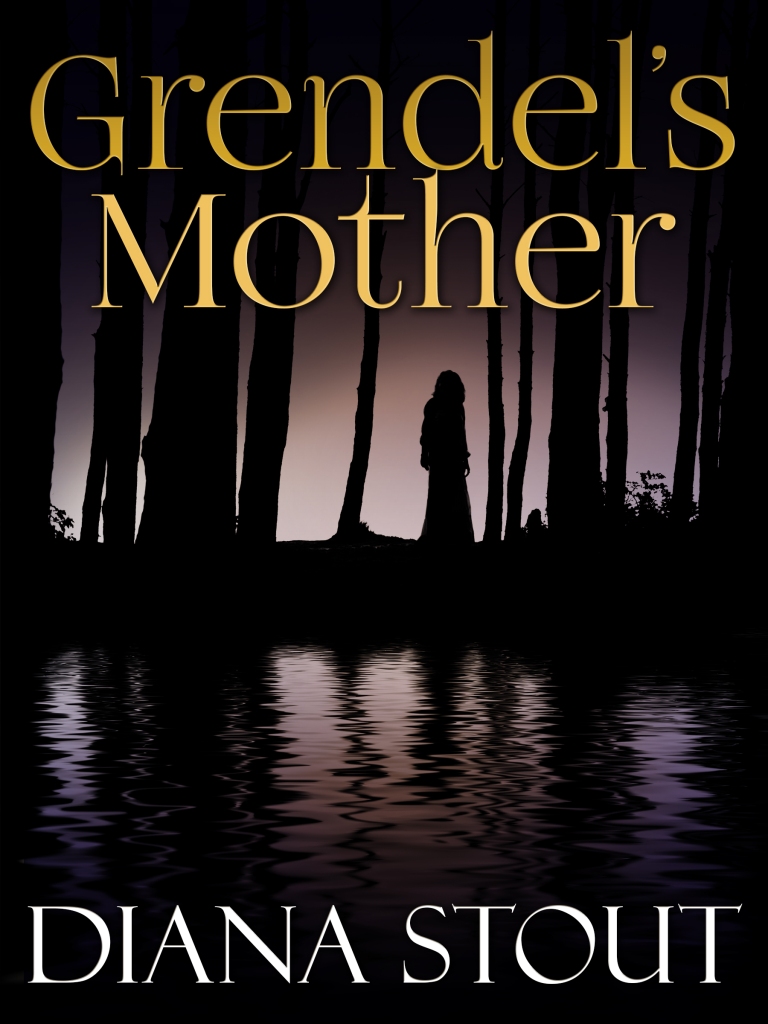
      Grendel’s Mother and The Mistakes I Made as a First-Time Indie Author

      Back when magazines were delivered by mail or purchased on the newsstands—obviously pre-internet–one magazine, Calling All Girls which later merged with Young Miss, had a column called, “Was My Face Red!” The column consisted of letters by readers who revealed embarrassing moments. Some were funny, some sad, but they all had one thing in common: they showed how human we all are, reinforcing that we all make mistakes.

      Well, I’m here to make a confession—a big one.

      Recently, I discovered that my first indie-published book, Grendel’s Mother, was a bit of a mess.

      A couple years after it was published, I saw a review by a German reader who commented on two characters’ names that were misspelled in the book. Sometimes Angus was Agnus. Sometimes Erik was Eric or Erick.

      Fortunately, I was able to make the repairs to the names and provide a cleaner copy to Amazon and Ingram right after that reveal.

      Or, so I thought.

      Turns out there were more issues than just two names being misspelled. Now, I understand why there was silence from certain individuals, people who normally always have an opinion about a book.

      During a recent experience of listening to Grendel’s Mother, preparing it to be listed as an audiobook on Amazon, I was stunned to hear the errors:

      • Missing words
      • Correctly spelled words but not the right word, such as again when it should have been against.
      • Repetition of words… in the same sentence.
      • Unclear meaning
      • and more.

      Is my face ever red!

      I didn’t know. No one said a word. Did they just not want to tell me, didn’t know how to tell me, or did they not see the errors themselves?

      I’ll never know the answers, but I can only imagine how some might have been embarrassed for me. I wish I could have known then what I know now, but that’s a fruitless wish. The mistakes I made back then:

      • I had no beta readers, no proofreaders. Just me.
      • I didn’t reread the book multiple times. Multiple as in a dozen or more, until I stopped finding errors.
      • I suspect auto-correct may have been turned on.
      • I didn’t read it aloud.
      • I was in a hurry. The worst possible reason ever.

      When I discovered all of these errors recently, I beat myself up for a few minutes, and then, I started to work the problem. I ran the story through the process I use today.

      The one thing I don’t do anymore is be in a hurry. I take my time.

      I figured it’d take me a week to fix Grendel’s Mother. It took me three weeks.

      I’m happy to report that the audio version is now live!

      To you readers who left glowing reviews, THANK YOU! To you readers who were brave enough to reveal the errors or flaws, THANK YOU! You made me want to be a better proofreader.

      I appreciate you all!

      How about you? Do you have any publishing or writing-related Was My Face Red stories you’d like to share?

      Posted in Grendel's Mother - Book, Persistance, Struggling to write, Writer at Work, Writing Behind the Scenes | Tagged , , , | 3 Comments