
Category Archives: Writing with Passion

Let No One Destroy the Dream Maker

Martin Luther King, Jr. said, “No person has the right to rain on your dreams.”

I had a best friend who claimed to be a romance writer, though she never finished a story that I knew of, never submitted anything, and spent more time quilting than she did writing. She liked to talk about writing, though, and she was great at brainstorming.

When I became interested in screenwriting, she did, too. She liked coming up with ideas. Then, I began working with half a dozen different producers who liked my voice, liked my writing. They wanted to see anything and everything I wrote. It became a matter of finding the property that would be a good fit for them.

When I optioned a screenplay with a Canadian producer who had ties to Hollywood, she told me it wouldn’t go anywhere. She stated that I’d never sell a script because I didn’t live in Hollywood, wasn’t young enough, and wasn’t the right sex.

I was in my 40s!

I asked her why she would stomp on someone’s dreams like that?

Crickets.

Later, I discovered her mother had stomped on her dreams of being a clothing designer. So, she became an office assistant for NASA, a job her mother approved of but which my friend hated. She retired as soon as she possibly could. Quilting, a part-time hobby for much of her life, now became her full-time hobby, along with the care of her many cats.

While that optioned screenplay ended up not going anywhere—which is true for many optioned screenplays—just getting it optioned was an enormous step in the multi-step process of a script being filmed.

I still have hope for that script. Why?

Because it performed decently in contests and still garners excitement when I’m asked what is it about and I provide its logline pitch. Currently, it’s a project that needs a facelift.

And now, after a 30-year hiatus from screenwriting—due to a divorce, a return to school, and a career of academic teaching, during which I was writing Grendel’s Mother, retired, and became an indie publisher of 20 books, I’m finally back.

In coming back, I’ve rejoined Scriptwriter’s Network, a screenwriting organization I belonged to decades ago, during which I judged their screenwriting contests for a decade.

As a result of coming back, I’ve been invited to do a webinar on October 19, with the Network’s president who is hosting the event. I was thrilled to be asked and am honored to present and hopefully help other writers.

I feel like I’ve come home.

Back when my best friend stomped on my dream, I knew her stomp wasn’t about me. It was all about her. She wanted me to live the same script she was forced to live. The adage of misery likes company was the subconscious core of her words.

She wasn’t the only one who tried to talk me out of my creative writing or going back to school. They all said the same thing: that I was wasting my time, wasting my money. There were others, but her voice was the loudest and most consistent.

I ignored the advice and continued onward, listening instead to the little voice that had cheered me on, whispering that it was okay to follow my passion. I knew from experience that my little voice was never wrong.

My dreams were about publishing books, being able to help other writers, presenting, becoming an acclaimed screenwriter and best-selling author. So far, I’ve achieved most of my goals. The big monster goals are still goals to achieve, but I continue to work and strive toward them. Always listening to that little voice from within.

When my stepfather was nearing the end of his life, we had a great many talks about life, and I asked him if he’d had any regrets. Immediately, he replied with a sad, resigned expression, “I wish I had lived my own life, making my own decisions.”

Don’t let others stomp on your dreams. Age doesn’t matter. Follow your passion, and if that passion doesn’t pay the bills, take whatever day job(s) that will pay your bills, while you pursue your passion at the same time. Having other responsibilities can slow you down, as it did me from time to time, but the key is to never give it up.

It’s never too late to start. The joy you receive is beyond words. You’ll never regret the pursuit.

I sure don’t regret the unusual path I took. While it hasn’t always been easy or always fun, it’s been interesting and lesson filled. And, I’ve met a lot of incredible people along the way. Every success, no matter how small, has been a win.

Currently, I’m writing a psychological paranormal thriller novel and plan to publish it by the end of the year; plus, I plan to write it as a screenplay, too. Other screenplays will follow, along with a continuation of my Finding Your Fire series.

What about you? Are you living the life you always desired? Are you ready to start living that life now, even if only for fifteen minutes a day?

Gratitude and Manifestation: A Writer’s Journey of Abundance

What I’m posting today is a journey. It evolved over time and may appear a bit fractured, but trust me: it’ll come together in the end. As all good stories do. And, I’m posting it on two of my blogs: Behind the Scenes with Diana Stout, MFA, PhD because the story concerns my writing and life as a writer; and Into the Core: One Woman’s Mystic Journey because this story deals with my intuitive, mystical side where manifesting and gratitude play a huge role.

March 13, 2023

I’m doing a 30-day manifestation exercise with my niece, Heather. Part of the ritual is to record 10 things you’re thankful for and then list what you’d like to manifest. Thirty days.

I started my notebook on this date, which, incidentally, is my deceased Mom’s birthday. I’ll clue you in on the importance of that memory in a minute.

Each day, before I made my list of 10 things for which I was grateful, I’d reread a passage that basically said, for those things you are grateful, you will have abundance. For the things where there is no gratitude, what you have will be taken away.

Later, I added: Nothing will change until you are grateful.

After our daily exercise concluded, I was still recording daily gratitudes plus journaling events and opportunities I’d been manifesting, along with lessons I was learning.

That night, a group of writers interested in writing a story for an anthology to be published through the Greater Detroit Romance Writers, of which I’m a member, was discussed.

I’ve had an idea for a Gothic based on a spooky house for a long time. The Uninvited with Ray Milland, Ruth Hussey, Donald Crisp, and Gail Russel, a black and white movie released in 1944, was my inspiration. (Great movie!) I was in 9th grade when Mom introduced me to that movie and that genre. I would start inhaling every book published by Victoria Holt, Dorothy Eden, Phyllis Whitney, and Mary Stewart.

According to Lori A. Paige in her book, The Gothic Romance Wave: A Critical History of the Mass Market Novels, 1960-1993, her research discovered that these mass market books were published in the late 60s and 70s during what is known as the second wave of the woman’s rights era. It was during that time, I was reading everything those authors published. Paige says:

In Jane Eyre, the work on which most mass market gothic romances were based, the hero and heroine (at least upon first glance) represent the two extremes of Victorian psychology, sentimentality, and brutish cynicism, which heightens the conflict (as well as the attract) between them.

What drew me to the Gothics were the haunted houses. The heroines weren’t active or strong but were passive and cowered in fear a lot. The heroes, at first thought to be creatures of the night as vampires or werewolves, would come to their aid and rescue them from the true source of evil—the house and its ghosts. The books’ covers showed women running away from the houses.

I realized by volunteering to do an anthology novelette, it could be my entry into a full-length Gothic novel where I would change the story after I got the rights back four months after publication. I already had the house. Now, I just needed some ghosts.

The novelette, Harbor House: Say You Will, was written and turned in by the August due date for an original October publication, which in September got moved to January 2024.

Summer 2023

While writing the story through the summer, I was reading Freida McFadden’s psychological thrillers. I was hooked on the old-time Gothic feel of the books, at least those that had big mysterious houses out in the middle of nowhere.

And then, inspiration hit.

Why not turn the historical Gothic novelette into a modern-day psychological thriller? Better yet, let the Gothic story stand as it was, set in the 1920s, and turn the thriller into a story of the same family 100 years later?

I could now write an old-fashioned Gothic-style story but with added psychological thriller and paranormal elements.

Fall 2023

While at a weekend writing retreat, I created a rough outline of Harbor House: Last Blood on a storyboard, brainstorming with a writer friend.

I put it aside to work on CPE: Characters, Plot, & Emotion. Another idea I’d been manifesting for a while. The spark of its real-time creation is another story to tell.

March 2024

During a three-week period in March, while waiting for a testimonial for the CPE book, I created a more detailed outline, including the setups and payoffs, the triggers, the symbolism, and other little details that enrich a story. The story was ready to write, but first I had to finish and publish CPE and its companion book, the CPE Workbook.

May 26, 2024

I wrote the Epilogue and Chapter 1 to Harbor House: Last Blood.

Needing to prep for an online class I’d be teaching the first two weeks in June became a priority. Henceforth, any writing would be toward that class. The story would have to wait again.

June 9, 2024

The class ended, and I began writing Harbor House: Last Blood in earnest.

Today, Tuesday, June 18, 2024

A week later, I have now written 25% of the first draft. I’m on track to have the first draft finished by July 4. That leaves me July and August to rewrite, revise, and polish before handing it over to some beta readers.

So far, this is the best story I’ve created. As it should be.

The novelette, Harbor House: Say You Will is currently not in print, but I’m publishing it as a stand-alone book later this summer or early fall. To be followed by Harbor House: Last Blood in October.

Manifesting isn’t always instant. Many of my manifestations have germinated decades earlier… waiting for the right conditions to flower and grow. Though, it is fun to watch those manifesting desires that occur rapidly.

So, what does any of this have to do with gratitude?

  • I’m thankful for the ability to write fast.
  • I’m thankful for the ideas that flow my way.
  • I’m thankful for finally knowing that I have found my true genre. Even if this late in life.
  • I’m especially thankful for my followers, fans, and friends.
  • I’m thankful for the opportunity to share this story with you.

How about you? What are you grateful for, and what are you manifesting?

Wow, Do I Have a Story to Tell You!

Last night, I met with an agent online and chatted about a major, new idea I’m working on.

I left the meeting last night with goosebumps.

I went to bed not a hundred percent confident which of my dozen projects I should concentrate on next, as I’m in the process of publishing the last book in my Laurel Ridge romance series this weekend, and which will get finished once I post this blog.

Plus, I have a historical gothic romance coming out in an anthology this October, which earmarks my turn into a new genre, writing Gothics, much like Verity by Colleen Hoover, My Cousin Rachel by Daphne du Maurier, and other gothic writers: Phyllis A Whitney, Mary Stewart, and Victoria Holt.

And then, I woke up and received two signs from the other side of the veil.

Click here to read the entire story about what I was told to do!

Why You Want to Be Passionate About Your Writing: (and 9 suggestions on how to find that passion)

Writing with Passion

By Diana Stout, MFA, PhD

The Insecure Writer’s Support Group

The question for this month is: What genre would be the worst one for you to tackle and why?

I write in multiple genres. Basically, I could write in any genre I chose provided my passion remains high; therefore, there isn’t any one genre that would be worse than another, but It wasn’t always that way. In the beginning, I struggled in the fiction genre and had to learn how to find and keep my passion high for those projects.

I’m in a lot of writing forums online, where a good number of the members are relatively new writers. The comments I see repeatedly are:

  • I’m bored with my characters. What should I do?
  • I can’t think of anything to write about. Can you (meaning all of us) give me some ideas?
  • I don’t read [insert genre, like romance, mysteries, sci-fi] and I’m writing one. Is that a problem?
  • I only write now and then, when I feel like it. How do I become more interested?
  • What must I do to write every day?

You get the idea. They sound a bit lost, don’t they?

I remember when I first started writing feeling that same way.

  • I didn’t write every day.
  • Halfway through a manuscript, I became bored with my characters.
  • Writer’s block became a constant companion.

My one redemption was that I read a lot. Basically, a book a day, reading both fiction and non-fiction. And when I started writing, I was reading in the genres I wanted to write.

While reading can broaden and deepen your writing skills to a point, it’s about the practice of writing that creates the difference between an experienced writer and an aspiring writer.

Suggestion #1 – If you’re going to be a writer, you need to read more than just the genre you’re writing in. Read fiction and nonfiction, read how-to books about the craft of writing. Read articles and books about writers. Read their blogs. Read everything.

Suggestion #2 – While you’re reading, pay attention to the writing structure, the use of the authors’ words and phrases. Reread passages that take your breath away or have you nodding your head. What are they doing that you’re not doing? I learned more about how to write fiction by reading screenplays than I did by reading other novels. Be willing to diversify.

Suggestion #3 – Write every day. Every. Single. Day. Even if it’s only ten or fifteen minutes to start with. Even if you don’t want to do it. Just do it.

Suggestion #4 – Write every day using the same tools, in the same place. What you’re doing is creating a habit. When I sit at my desk every day, I know that while I may dink around a bit cleaning my desk and answering emails, I will be writing eventually. Even if only for ten minutes on certain days. Most days, once I settle in, I’m writing anywhere from 3-10 hours—writing new words, editing, or polishing.

Suggestion #5 – If you’re not interested in writing in your current WIP, then write something else. Write a blog, or a letter to the universe (no one in particular) where you rant about a problem, which then you destroy the letter afterward. Or better yet, turn your rant into a blog, putting a positive spin on it. Write a list of questions that you then find answers by researching qualitative websites.

Suggestion #6 – Have no ideas on what to write? Then create a list of everything that interests you, or list your complaints, list what you’d love to share with other writers, characters you love, books you love, then list why you love them. Guess what? In generating a list, you’ve spent time writing! Ideas will come from the list-making.

Suggestion #7 – Bored with your characters or their story? Guess what? If you’re bored, so will be your readers. When I’ve lost interest in my characters, that tells me that I don’t know them well enough, yet. As a result, I get stuck (some call it writer’s block) in my story, not knowing what should come next. It means, I need to go back to the beginning and add to their character development, dig deeper into their personalities, ask questions until they’re spilling their guts.

Suggestion #8 – Being stuck means I need to go back and create more conflict for those characters based on their decisions. Once my characters can make me laugh out loud as they dictate dialogue or because of their actions, I know my readers will laugh too. My characters’ ability to make me laugh or turn the page—no matter how many times I’ve read the pages—tells me I have found my passion for that project again.

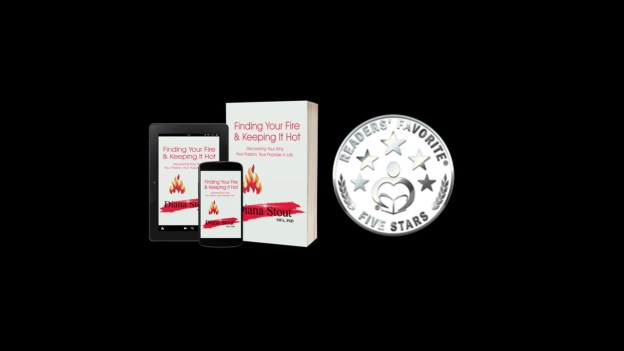
Suggestion #9 – If none of these suggestions are working for you, have you considered reading my book, Finding Your Fire & Keeping It Hot? (available at any bookseller). In it, I share a lot of reasons why your passion has disappeared, more than I could list here.

This book was the foundation of a class I just finished teaching, and where students were saying that my book had changed their lives. They had found their passion to write again.

My desire in writing the book was to share with other writers the research I had done and the steps I took to find and maintain my writing passion, keeping it hot most days.

What’s your writing passion level these days?

  • Cold and dead?
  • Somewhat warm?
  • Or hot like mine?

*****

Purpose: To share and encourage. Writers can express doubts and concerns without fear of appearing foolish or weak. Those who have been through the fire can offer assistance and guidance. It’s a safe haven for insecure writers of all kinds.

Posting: The first Wednesday of every month is officially Insecure Writer’s Support Group day. Post your thoughts on your own blog. Talk about your doubts and the fears you have conquered. Discuss your struggles and triumphs. Offer a word of encouragement for others who are struggling. Visit others in the group and connect with your fellow writer – aim for a dozen new people each time – and return comments. This group is all about connecting.

http://www.insecurewriterssupportgroup.com/