
In today’s Writers in the Storm blog, Joseph Lallo talks about “Restarting Old Projects / Continuing a Series After a Hiatus,” saying, “Chances are good that any author who’s been at it long enough will have at least one project that’s been simmering for years, either in an unfinished state or begging for a follow-up.”
I wish I had only one project that’s been simmering for years. Instead, I have dozens! Extremely prolific in the ‘90s, most projects were drafted and not polished. Those that were finished weren’t finding a home, as this was well before indie publishing, when one needed an agent—a difficult task to achieve.
Fortunately, I managed to get published with two different publishers, and having made lots of cold calls to Hollywood producers, I was working with half a dozen who wanted to see everything and anything I did. But then in 1998, a divorce, a move across the country, and then returning to school as a non-traditional student, my creative writing got put on hold for fifteen years.
Oh, I was writing. More academic than creative, but I did manage to write papers with topics I could later use for more projects. Silly me. Adding to the pile of unfinished ideas.
I’d been teaching professionally for a decade, and it was two years after receiving my Ph.D. that I was let go from my job—two years before I could officially retire with full benefits. Two years later, I officially retired, and within months, I created my production company and became an indie publisher. The first book was Grendel’s Mother, an idea generated after studying Beowulf in three different classes and realizing Grendel’s mother had no voice. My book gave her one.
After that, I began pulling projects off the shelf, blowing off the dust, and giving them life.
It’s been quite the journey.
Looking at my list of books published, they all have ties to earlier projects I’d written or had been teaching since the ‘90s, except for last year’s publication, Harbor House: Deadly Intentions. That story was a new historical Gothic novella for an anthology, published in 2024, which I then tied into a newly written contemporary story, allowing me to create a split-time thriller.
The current thriller I’m working on, Buried Trash: A Shelby Hale Thriller, is a mystery series resurrection from the ‘90s that I’m turning into a thriller. It’s the characters who hooked and convinced me to make the conversion.
From that 1996 manuscript, let me introduce you to the main character…
I’m Shelby Shawn Sherman Roberts, one month shy of turning thirty-nine. I hate gossips and love cotton candy. I’m slim, with shoulder-length dark hair and brown eyes. I squint too much (need glasses), drive too fast, and laugh too loud.
My first name belonged to my grandfather, and my mother protested it being hung on me, but Dad told her, “It’ll make her strong.” The only thing it did for me was get me a bloody nose or a black eye every first week of school until I entered fifth grade and I was finally able to return the favor. I guess Dad was right, after all.
Mom named me Shawn after her first actual boyfriend. The one that made her toes tingle when he kissed her, she said. In her mind that was what love was all about. Of course, Stuart, my ex-to-be, never did make my toes tingle. I thought he did once, but then I realized he was standing on my foot.
I’m constantly asked—or rather used to being asked when I was single—if I was related to that Sherman. I guess my Southern accent lends one to think I don’t mind hearing that question. It was usually asked by some drunk fraternity boy who always had a leer on his face. You’d have thought I’d have learned my lesson and stopped going to those kinds of parties. What can I say? I was young. I was more stupid then.
Come to think of it, I met Stuart at one of those parties.
While she starts out as Shelby Shawn Sherman Roberts, she changes her last name to Hale. A name she creates for herself now that she’s creating a new life and moving back to her small hometown and a pecan orchard she inherited some time ago. Her plan is to live in the trailer her ex installed on the property when she first inherited it.
And then, her first morning back from Atlanta—after the court appearance to finalize the divorce and collect the rest of her belongings—she finds a body in her trash can.
From the current rewrite, the book begins:
Had I known ahead of time that what I’d find in my trash can would put my life in danger, I would have done the smart thing: say nothing, not call the sheriff—my best friend and my first husband for all of about a month when we were 19—and let the garbage truck pick up the trash, as usual, letting the truck empty its contents into the country landfill.
Unfortunately, I’m not known for doing the smart thing. I react, not thinking things through well enough.
It’s how I ended up married three times.
I’m 38 and starting over.
Again.
The potential for this book to become a series is there, but it’ll depend on the readers. Hopefully, it’ll garner enough fans who want to read more.
Be sure to follow me here, and then go subscribe to my What’s New with Dr. Diana? announcement-only newsletter/blog on my website, so you can follow my progress via email. I plan to publish Buried Trash in the fall or late summer. With over 25k words already written and the story plot revised, my goal is to finish the first draft this month.

How to Become Obsessed With Your WIP Again
The Insecure Writer’s Support Group
How to Become Obsessed With Your WIP Again
(WIP = work in progress)
As a new writer, every story I started began with excitement for either the character, the plot, or both.
After a few chapters, though, the writing became a chore. Soon, writer’s block would set in. It pained me to not be working on it. Not wanting to work on it.
Sound like where you’ve been or where you are now?
Through trial and error, I discovered the secret to finding excitement again for every project should I lose interest. To finding that original fire I started with.
Now, anytime I’m struggling with any WIP, I know exactly what to do, which are two things, and they’re tied together.
- Go back to the characters
- Go back to the plot
Going back to the characters
The characters and I sit down for a long meeting. Sometimes these meetings take several days. I let them talk on paper, while I record what they’re saying. They can talk about anything they desire.
After a while, I’m noticing that their mood is changing. They’re remembering…events where I can see hidden emotions, so I start probing with questions like: How did you feel about that? Did you ever resolve your feeling or talk to that person later? Why not? What would they have done differently if given the opportunity? And, so forth.
Soon, they’re talking about their wounds, the hurt(s) they’ve suffered. In talking about them, we can both see how the hurt led to their beliefs, their goals, and even their choice of partners and friends. They have their aha moments in these discussions.
Which leads us to going back to plot
We become a team as we examine the plotline and how we can have them butt up against their wound several times. What events we need to include.
They want to overcome that which has been holding them back. They want to become a better person. So, they help me layer in the emotions, the plants and payoffs, and create the necessary tension that leads to page-turning stories.
As I write the story, they become actors in their own stories. Interesting scenario, right?
Of course, we’re all crossing our fingers that we’ve created a memorable story, both in my writing and their acting.
*****
As I finish writing Sweet Cravings #7 of the Laurel Ridge romance series, the last book, I find myself saddened that my adventures with these seven couples is coming to an end. They’ve become a family of friends, strongly connected for past last few years, making me laugh at their hijinks and teasing. Me wishing I could run around with them.
But now, new characters in new projects are waiting backstage, eager to make their appearance. These new characters know the drill. They know we’ll be chatting for several days first, building both their arc and the plotline before word one is written.
No more getting stuck in the middle anymore for this writer.
It’s my secret to staying obsessed with every story I write. Wanna give it a try?
*****
Dr. Diana Stout is an award-winning writer in multiple genres and media who enjoys helping other writers.
She’s teaching a Master Class, Punctuation and Grammar Made Easy, in January 2024, with limited seating. Enroll now if you’re interested!
Be sure to subscribe to her From the Desk of Diana Stout MFA PhD newsletter to receive updates and announcements on her classes and publications.
Learn more about Dr. Stout at her website, Sharpened Pencils Productions.
Follow her new Facebook account here: DrDiana Stout. (She’s the only Dr Diana in Facebook – Her Diana Stout account was hacked where she no longer has access, so you’ll want to unfollow that account.)
*****

Purpose: To share and encourage. Writers can express doubts and concerns without fear of appearing foolish or weak. Those who have been through the fire can offer assistance and guidance. It’s a safe haven for insecure writers of all kinds!
Posting: The first Wednesday of every month is officially Insecure Writer’s Support Group day. Post your thoughts on your own blog. Talk about your doubts and the fears you have conquered. Discuss your struggles and triumphs. Offer a word of encouragement for others who are struggling. Visit others in the group and connect with your fellow writers. This group is all about connecting!

The Secret Mystery Behind Deep POV
The Secret Mystery Behind Deep POV
There have been a lot of discussion lately about Deep POV with different blogs and articles asking:
- What is Deep POV?
- Why should I care?
- Why should I learn it?
- What does it look like?
While Deep POV may appear like a new topic, it’s actually been around for a long, long time. You know the adage of what goes around comes around, right? Some say Deep POV appeared 20 years ago, others say 40; in any regard, Deep POV has come around again.
Aristotle’s three-act structure—four equal acts as the second act is two parts—was recycled into a template by Syd Fields for screenwriters.
Joseph Campbell’s hero’s journey was recycled into a writer-friendly how-to/reference book by Christopher Vogler’s The Writer’s Journey.
Both Fields and Vogler’s work and their structural pieces and parts have been renamed, recycled just enough to be a tad different, and re-introduced as something new by writers turned instructors, mentors, speakers, or entrepreneurs. All of today’s programs and models can be traced back to someone else’s prior work or discovery.
Likewise, Deep POV was recycled from an earlier named element/style of writing.
Deep POV occurs when the reader experiences the main character’s actions, thoughts, and decisions up close and personal. As in their head and heart, feeling their joy and their pain.
Have you figured out what Deep POV really is yet?
As a new writer, you learned about Deep POV while attending your first writer’s conference, while reading your first how-to book regarding the craft of writing fiction, while reading about it in your first writing magazine subscription. You’ve been reading about it in blogs and articles for years, and hear its advice in any gathering of writers talking about the craft. You just knew it under a different name.
So, what does Deep POV look like?
Example #1:
He walked into the conference room, noticing all his employees were seated at the table. “This is crap,” he said angrily, throwing down mock-ups of the print ads for their newest client. “You can do better than this.” He turned and left the room, wondering if his being angry would make a difference in their performance.
Example #2:
The door thudded again the wall. All heads turned toward him as he strode into the conference room and was at the huge table in three steps. With jerky thrusts, he tossed each of the print ads for their newest client down the center of the table, each sliding the length, coming to a stop at the edge opposite him. While they had glanced at each page as it slid down the table, now their gazes were back on him, their eyes wide with fear. Good. Now to make them pee their pants. “Stop giving me this crap or heads are going to roll.” He spun on his heels and with huge steps, strode out of the room the same way he came in. He smiled as he headed for his office. Maybe now they’d do their jobs.
Which example has your attention? Did your eyes widen while reading the second?
These two examples are the difference between using Deep POV and not using it.
To speak of Deep POV in its earlier term, this is the difference between SHOW vs. TELL
Shocked?
In the first example, we’re being told how he feels through the use of the dialogue tag, he said angrily. We watch his actions as if he’s on stage and we’re sitting in the audience.
In the second example, there is no tag. None. Surprised? Did you notice?
In the second example, we experience his actions and his feelings as they happen. We aren’t being told anything. It’s as if we’re in his head, on stage right beside him, or in his head. We’re feeling and moving as he feels and moves.
We don’t have to be told he’s angry. We can feel the anger.
Look at the books that you’re reading: Are you being told being shown? How many dialogue tags are there?
A big clue when telling occurs is the added use of adverbs (-ly words) in the dialogue tags and words like thought, felt, wondered.
I don’t know about you, but I welcome the book that I can’t put down because I’ve become that character—I’m in their head, feeling their emotions with their thoughts becoming mine. I become emotionally invested in the characters.
Versus the book I can’t get into because I’m being told how they feel, thus I’m not emotionally invested. It becomes too easy to put the book down and not finish it. Anymore, if I’m not emotionally hooked or curious within the first few pages, I can’t read it.
Showing creates page-turning books that grip you and then don’t let go.
What type of books are you reading or writing? Those with a Deep POV or those without?

How to Write When Struggling – Part 1
When struggling with characters, plot, interest, or the writing
In wanting to write a new blog, I started going through my TO BE WRITTEN file of blog ideas. I came across a copy of Maggie Doonan’s blog, “4 Signs It’s Time to Quit a Writing Project,” remembering how much I had originally disagreed with each one of those signs even though much of what she had to say was good advice. Those 4 signs in her blog are:
- You’re struggling to flesh out your characters
- You can’t get the plot to make sense
- You’re not excited by the story
- You’re finding writing harder than normal
I think in the beginning of my writing career that I might have agreed with that list but I rarely threw anything out. In thinking about my own writing career and projects that I started, put aside, and ended up working on later, I disagree with each one of those signs and here’s why.
When struggling with characters
In the early days of my writing when there was no Internet, I submitted through the mail. One particular rejection that I still remember forty years later was that my characters were flat.
Having flat characters is a common problem for both new and experienced writers. My characters are always flat in the beginning. Why? Because I don’t know enough about them. Oh, I might know their hair color, height, their goal for the story, and the external conflict they’ll face, and possibly even an internal conflict, also known as their wound—usually emotional or psychological—but I don’t know why they have that internal conflict, that angst, that deep, dark wound that is buried so deep and is so secret that it drives every bit of their goals, words, and actions.
My job is to go digging. Or, as I call it: journaling. I write in first person as if I’m that person, writing a journal/diary entry. Usually, it starts with where *I* went to school, what I like to do, who my friends are, and by the time I’m into the second page—of a single-spaced document—I’m fully in that character’s head. I have become them. I’m able to feel their emotions and start asking questions as if I was a third person interviewer, How did you feel when that happened? What did you do? Why do you think you’ve hung onto those feelings all this time? And, so forth.
By the time, I’m done, I often have three-to-four full pages. I’m exhausted. But, I always discover that deepest, darkest secret they never want anyone learning. I learn how it drives every decision they’re making now. That secret/wound becomes their character arc, the thing they have to resolve before they can achieve their external goal, which will include getting the girl or guy if the story is a romance. If not a romance, it’s a toss-up whether the story will be bittersweet or happily ever after.
When struggling with plot
Generally, I discovered I was struggling with plot because I didn’t know my characters well enough. After all, without character, there is no plot. Their external goal drives their initial action(s), but it’s their internal wound that drives their reactions both in thought and deed.
If I was still struggling with plot after going back and digging deeper into my characters psyche, then I don’t have enough external conflict coming at them. I don’t have a conflict equal to their strengths and knowledge. Every main character has to have an adversary that has a great chance of taking that character’s goal away from them. Dealing with plot is all about heaping on the drama, the tragic events, the problematic people.
When I’m struggling with interest in the story
If I’m becoming bored with the story, it’s either because I don’t know my character(s) well enough or I don’t have enough drama blocking their way.
Plus, if I’m bored with the story, readers will be bored, too.
The only way to fix my characters is to work with them, digging deep into inner cores until I’ve fallen in love with them and want to be with them even when away from the computer because they’ve become more interesting than even my best friends.
If they can make me laugh, make me sigh, or make me cry, then that disinterest has disappeared.
I know I’ve succeeded falling in love with them when I forget to eat, lose track of time when at the computer, and when I wake up wanting to be at the computer as soon as possible.
When I’m struggling to write
I’ll admit that I can be a procrastinator, one who is highly side-tracked with the ring of new mail, seeing the number of notifications sitting in Facebook or Twitter. I can get lost in the rabbit hole of research of some new science, a moment in history I never knew about, or as in today’s news, the political scene, or the new numbers of this pandemic virus that has a stranglehold on most of us.
Generally, when I’m struggling, it’s because I’ve allowed myself to be distracted.
To create a better writing habit again, I now have an accountability partner. Most every day, we communicate by video or text where we set our writing goals, and then at the end of the day, we message each other, stating what we did, whether we met those goals or not. As a result, both of us are writing far more than we’ve done in the past.
Is there ever a time I leave a project behind?
Rarely.
Some projects have taken time. Grendel’s Mother, which I published in 2016, was a ten-year project from start to finish. For most of that time, in two different large chunks of time as in years, it sat on the shelf. The first time was because I was stuck with the plot. I discovered I needed to do more research. I went and reread Beowulf again and got some more ideas. The second time was because I’d returned to school for my last degree.
Another project was a children’s novel I had written. The story was cute, but not interesting enough. Also, it had been the first full novel I had written and served as a learn-as-you-go project. I wrote it when my oldest daughter was in fourth grade. Three decades later, she’s teaching fourth-grade and when helping me go through my shelves one day, she said that the characters were still memorable. At least I got that element right back then! Today, we’re planning on rewriting it together adding some sci-fi to the plot…someday.
There were two short-short children’s stories that I finally and recently tossed. The market just isn’t there for me. Plus, I wasn’t interesting in investing any more time in them.
Also, I tossed out a number of ideas that didn’t have any real writing behind them. They were just ideas and today, I have no enthusiasm for them.
My first romance ever written—the one where the characters were flat? I recycled the setting, leaving behind the characters and plot and wrote a different romance. Traditionally published in 1997, I revised and updated it, changed the cover, and the title from New Beginnings to Love’s New Beginnings, publishing it last year. The book got a 5-star review rating from Kat Henry Doran, the owner of Wild Women Reviews.
All this said, these past few months have not been normal. I, too, have struggled to write during March and April. Eventually, in May, I found my way.
My next blog will talk about how I’ve been able most of the time to overcome this unusual time as we cope with a dangerous virus. They may be tricks you can use both in the normal and abnormal times.

The Surprising Secret of Developing Characters
The Insecure Writer’s Support Group
The question this month is: Has your writing ever taken you by surprise? For example, a positive and belated response to a submission you’d forgotten about or an ending you never saw coming?
The Surprising Secret of Developing Characters
I’m such a plotter one would think that I’m never surprised. The truth is that with every story I’m always surprised. The words that come out of my characters’ mouths are smart, engaging, and laugh out loud funny. So much so, I’m usually laughing aloud while writing, with my laughter surprising those around me whether other writers at a write-in or strangers in a coffee shop.
Often, I find my characters’ banter doesn’t require tags because the characters each have a distinctive voice, so it’s easy to know who is talking. The advantage is because we know who is speaking tags aren’t required. Thus, the writing becomes action and dialogue, with some narrative now and then rather than all the time. Even then, I try to keep the narrative down to a minimum.
Once I know the bare-bones outline of a story—how it begins and how it ends—I spend a lot of time finding out who my characters are. Many writers will interview their characters wanting to know about their background: where they went to school, what’s their favorite color, favorite music, favorite TV program, and so forth.
To me, while I want to know my character’s physicalities—such as hair and eye color, height, their job, their tangible goal—it’s more important for me to know their pain, their wound(s), the deep dark secret they don’t want anyone knowing.
To discover this information, I become the character. I do so by writing character journals. I start out saying my (their) name, where they’re from, and so forth. These various details will take up half a page and then, suddenly, I (the character) will say something that begs a question of what do you mean by that, or what happened, or how did that make you feel? That’s when the character goes deep. By now, I’m talking (writing) in that character’s voice. My voice and my thoughts are no longer my own, but theirs. I’m seeing through their eyes, feeling their pain. And, the writing becomes a stream of consciousness in their desire to reveal everything that hurts. Everything that up until this moment, has remained a secret that they can’t live with anymore.
By the time they’ve run out words, I’m holding three-to-five single-spaced typed pages. I have their goals, their essence, their true character—not the one that others in the book get to see and have seen forever, but the one they struggle to overcome.
It’s that pain that drives the character, which in turn drives their response in word and deed, which then drives the plot forward. It’s these elements that then help me plot out the middle, the important emotional points that spin the story into different directions.
It’s that pain that becomes the character arc, the thing that the character must overcome in order to win the girl, get the job, get the prize, and to finally obtain self-respect. It’s the thing the character will no longer have to face in their future.
It’s character pain that attracts readers. They want to see how a character will resolve their wound because that wound could be their own.
It’s character pain that engages readers, that makes them turn the pages. The suffering, the action, the pain.
It’s the pain overcome that provides a satisfying end to any story regardless of how the story ends: happily ever after or bittersweet.
The secret of developing characters is much like an iceberg. It’s not about the ice we see above the surface, the ice a character has shown us up until now; it’s about the ice we don’t see, the ice below the surface, the ice we get to learn about. How deep that ice goes, how big of a problem the ice really is.
So, when it comes to developing characters, the secret I share with you is this: Go Deep.
 Purpose: To share and encourage. Writers can express doubts and concerns without fear of appearing foolish or weak. Those who have been through the fire can offer assistance and guidance. It’s a safe haven for insecure writers of all kinds!
Posting: The first Wednesday of every month is officially Insecure Writer’s Support Group day. Post your thoughts on your own blog. Talk about your doubts and the fears you have conquered. Discuss your struggles and triumphs. Offer a word of encouragement for others who are struggling. Visit others in the group and connect with your fellow writer – aim for a dozen new people each time – and return comments. This group is all about connecting!
Personal Traits and Deepening Characters
The Insecure Writer’s Support Group
July question: What personal traits have you written into your character(s)?
Personal Traits & Deepening Characters
Currently writing a romance series of seven novellas, I’m starting the first draft of the fourth novella, Buried Hearts.
The first one, Shattered Dreams, is already published, with first drafts for the second and third, Burning Desire and Arrested Pleasures respectively written.
Because I’m writing the last first drafts of the last six before any more are published, it meant plotting the stories and creating the characters all at the same time.
Seven couples, seven romances, seven stories, with either the hero or heroine, if not both, all went to school together. Most were in the same graduating class, with two of them a class ahead of the rest. Some are best friends, some dated in high school, some wanted to date the other in high school but didn’t.
In Buried Hearts, Clint Anderson, a life-long resident of Laurel Ridge where all the stories take place, is giving a fiftieth wedding anniversary party for his parents and has hired balloonist, Gabriella (Gabby) King. He gets to know Gabby during the flight with his parents, and he’s smitten.
A long time ago, I learned when developing strong and interesting characters, I need to go deep. Down into the dark where their secrets are hidden. Secrets they haven’t talked about and feel ashamed to let others learn.
I learned that those secrets, those wounds drive that character. That secret determines how they act, what they do, what they wish for. Because I know all these things before I write word one, I’ve become a monster plotter.
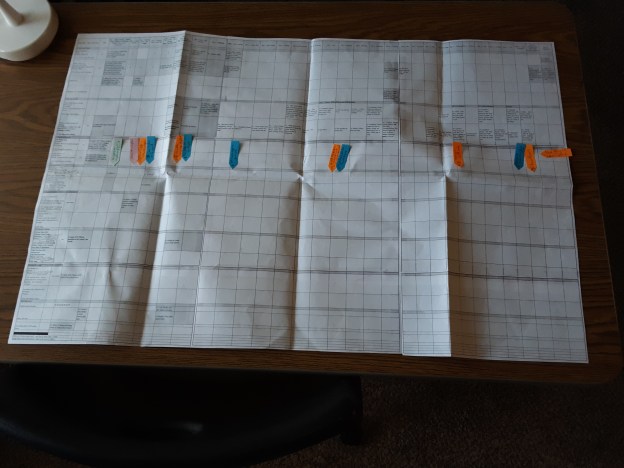
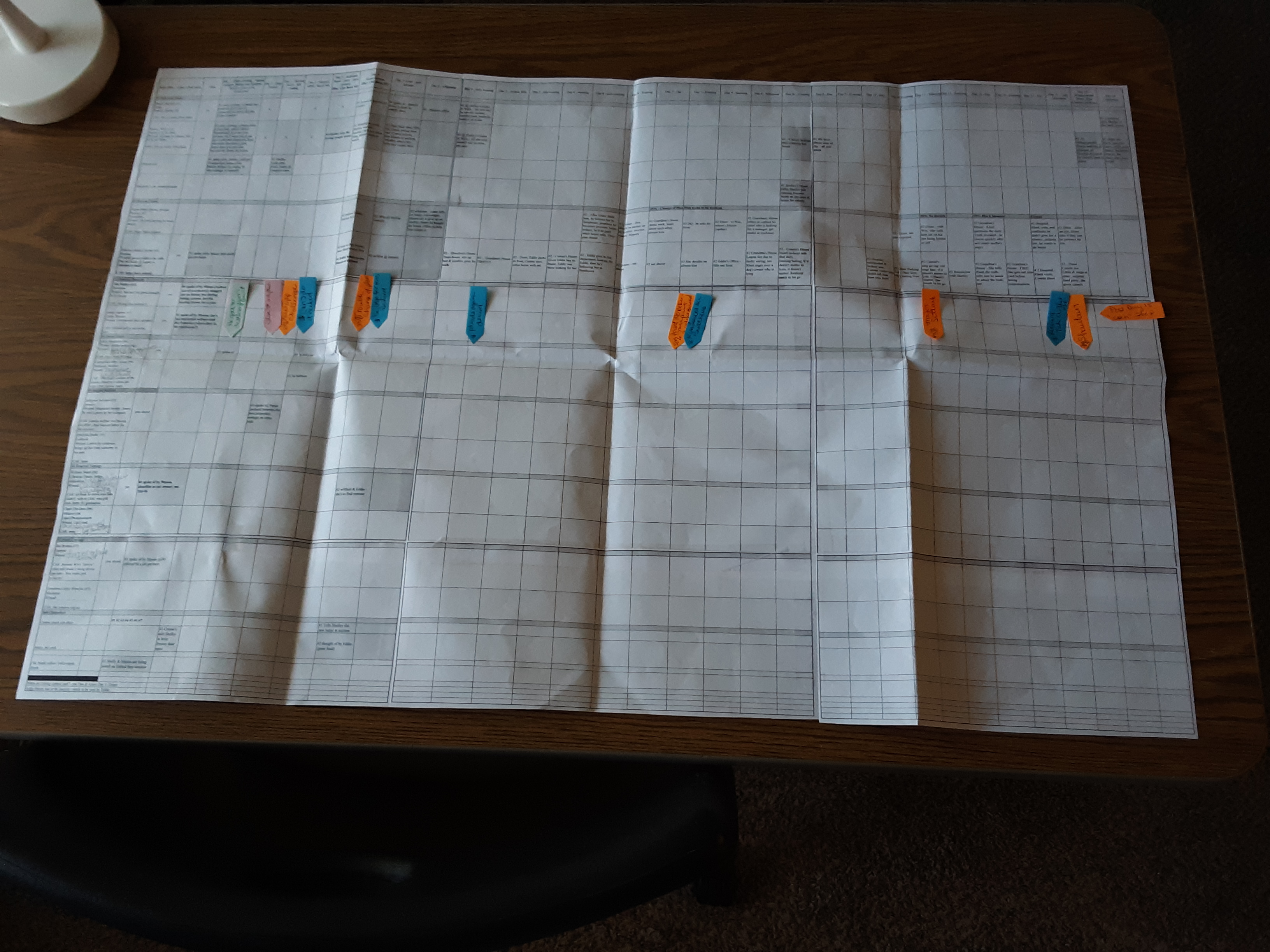
Because all seven novellas take place within the same time period, I’m now in the process of plotting out their events on a monster spreadsheet. Did I tell you how much I love spreadsheets?
Purpose: To share and encourage. Writers can express doubts and concerns without fear of appearing foolish or weak. Those who have been through the fire can offer assistance and guidance. It’s a safe haven for insecure writers of all kinds!
Posting: The first Wednesday of every month is officially Insecure Writer’s Support Group day. Post your thoughts on your own blog. Talk about your doubts and the fears you have conquered. Discuss your struggles and triumphs. Offer a word of encouragement for others who are struggling. Visit others in the group and connect with your fellow writer – aim for a dozen new people each time – and return comments. This group is all about connecting!
If My Characters Feel So Real, How Can They Be Imaginary?
My life as a writer has provided me many meetings—some fun and some strange.
Fun meetings involve other writers, some best-selling authors, new authors, and many writes in between. Many have become friends.
Other fun meetings involve readers. Their enthusiasm is catching, and they always have great ideas regarding my characters, which always leads me down a path of thoughtful consideration.
I’ve met and become friends with lots of characters, too. Many of these characters that I’ve read about were created by other writers, and some of these characters came into my life via my hand. I wish I could say that I fully created them. They mostly just pop into my life, fully formed, wanting me to write down their stories.
Such was the meeting of yesterday’s character. Only this character is dark and sinister—not the usual, traditional, likeable character that I want to get to know. Generally, I have to probe to learn about my characters—particularly the wounds they are struggling to overcome, which creates the conflict in the stories. Just as in real life, the wounds are buried deep, so it takes time—often weeks—to reveal these wounds.
But this guy was different. He wasn’t hiding a thing.
So there I was, at one of my favorite restaurants in this small community. The place was crowded, every booth and table taken with people standing at the door waiting.
While waiting for my order to arrive, I was reading, as I typically do when dining alone. I was reading Gillian Flynn’s Dark Places, a thriller for sure. Most definitely, it’s a dark story, and I was hooked, oblivious to everyone else around me.
All of a sudden this imaginary character—a drop-dead gorgeous hunk of a man with dark hair and dark eyes—sat down opposite me and said, “I know you.”
And then, he just stared. Waiting. Watching. And sharing his story.
The story, which includes a shocking ending, spewed from his mind to mine telepathically and with a gaze that never wavered. Seeing the end of the story, I broke out in goosebumps and felt my skin crawl.
I have other commitments, I argued.
He didn’t care. He’s wasn’t interested in knowing what I’m already working on, what my plan of writing projects looks like for the rest of the year.
Nope, it’s didn’t matter.
His wound was easy to see. No digging needed on my part.
He’s scary. He’s dark. He’s shallow and yet deep. He’s the bad boys of bad boys, but not in a good way or a fun way. He’s not someone you want in your house at all. That kind of scary.
Looks like I’ll be working on several projects, simultaneously. I have no choice. To get rid of him I have to write the story, and I’m not willing to postpone or abandon the others—even if for a short time.
A story that is going to lead me into the dark, spooky corners of an individual or two, who feels as real as any breathing, talking, blood-in-their-veins person in my life.
I can hardly wait.
::shudder::

