
Category Archives: Failures

Smashing Through Fear

In nature, when an animal is fearful, its life is threatened. Instinctively, it fights, flees, or freezes.

We have those same instincts, but our fears aren’t always life-threatening. Instead, we can feel emotionally or psychologically threatened. We can become fearful when we encounter something new and different or when something we’ve been doing changes suddenly, and we now have to re-invent ourselves or our process.

We can be triggered by an object, a noise, or an event. No one person shares the exact same fears. Our fears are as individual as our fingerprints. We may both fear big dogs, but our fear is born out of our unique experiences.

Another kind of fear is the fear of hurting or disappointing someone. So, we live via the beliefs they have for our lives rather than living our own lives because we don’t want to be criticized for being different. The thing is, they want us to live like them! To be the same as them.

My mother was artistic, creative, and loved anything Hollywood. She knew of the best movies and books and encouraged my interests that were aligned with hers. Her recommendations were spot on.

My father was practical. He pushed me into a safe career, one that I had no passion for and found boring—secretarial work.

At 19, having graduated from a business college and working my extremely boring first full-time job as a secretary, I enrolled in a mail-order writing class. I was told I was wasting my time and my money, and that nothing would come of it. Told this between having sent my money in and waiting for the materials to arrive.

In secret, saying nothing to anyone, I began the class lessons, writing my first book, How to Get Along With Difficult People. Decades later, I realized how that title spoke volumes. I still have that half-finished manuscript on my shelf.

A few years later, I started writing essays, again which I kept it secret. Finally, I shared some of them with Lynn, my then best friend, only because I needed to know if I was any good.

She laughed at different points and said they reminded her of Erma Bombeck. She cheered me on and was the first to say, “Go for it.” So, I approached our local newspaper, proposing a column, and what started as a six-month weekly trial turned into a weekly five-year gig.

As I journeyed along my writing career, venturing into new genres and mediums, and then returned to school mid-life to merge my two passions—writing and teaching—into an academic career, there were naysayers all along the way.

“You’re writing a book? But you don’t have any experience or education.” No, I didn’t. But, I did it anyway. And, I got published.

“You’re writing screenplays? You know nothing about Hollywood.” No, I didn’t. But, I learned and in the process taught others and watched as a few of them got their scripts produced. And then, I optioned one myself.

“You’re going back to school? You’ll be retiring soon.” I did it anyway, saying, “I’ll be retiring with degrees.” Once I began teaching college writing classes—academic, business, and creative—I was in my happy place. The years of sacrifice as a full-time student while working full time was totally worth the career I experienced afterward.

At different points, someone would say, “You’re fearless. You don’t let roadblocks stop you.”

They had no idea how fear-filled I was at every turn. Plus, I failed, oh, so many times.

Reams of rejections from agents, publishers, and producers. And later, my language exams—twice. Then, half of my final written exams for that last degree. So many times, I came close to total failure and was down to my last attempt to pass. I passed, but it was never pretty. I was always reminded of my dissertation chair’s words: Don’t go for perfection. Just get it done.

And then, when indie publishing arrived, I hung back and watched, fearful I’d be overwhelmed and fail at publishing my own books. But, finally, I buckled down and learned. It was a slow, agonizing process. Just as any new endeavor is in the beginning.

Where others see only my successes, I still remember the fears that ran alongside those successes.

In one of her newsletters, Becca Syme, author, coach, and owner of the Better-Faster Academy, mimicked a keystone truth of mine, saying, “Fear is meant to move you, not stop you.”

Brad Pitt’s character in World War Z said, “If you want to survive, you have to move.”

Having watched so many sacrifice their desires to their fears, never moving, I moved through fear, unwilling to buckle under what others thought I should be doing. I didn’t want to live a Zombie-like existence, which would have led to a life full of regrets.

I battled and smashed through my fears. The hard times provided lessons to be learned, which when learned allowed me to forge ahead with changes, readjustments, or reinventing myself. Something I’ve done half a dozen times. Even with my writing and exploring multiple genres and different points of view.

Eventually, I’ll find my readers. I refuse to give in to the fear that they may never find me.

Fear and success. Two sides of the same coin.

Got fears? Do it anyway. Go for it!

Is Negativity or Fear Killing Your Creativity?

Writers tend to burrow into negativity and fear. I see and hear both displayed every day.

  1. “I’m no good. I keep getting rejected.”
  2. “Why is she getting published, and I’m not?”
  3. “AI is horrible. It’s ruining our business.”
  4. “I don’t want to learn how to use a new program.”
  5. “I want to be traditionally published, so they can do the editing and promoting.”
  6. “How am I supposed to deal with crappy ratings?”
  7. “I have to write every day?”

Writers, like people in any other field, tend to repeat what they hear without researching if the information is true or not. Why? Because what they’re hearing falls into what they’re already thinking. Consequently, they create their own self-destruction, spiraling down into more fear or negativity. No wonder they feel

1.Rejections are a normal part of the process. They’re never personal. Maybe your writing does need improvement, but the odds are, your book wasn’t a good fit for them. It’s like shopping for clothes. How many do you try on before you find the one that’s the best style and fit?

      Their goal is to buy the best book possible—the one they know their readers want. They get tens of thousands submissions to choose from.

      2. She got published and you didn’t because she was in the right place, with the right material, at the right time. It’s happened to me twice. It’s happened to other writers who say the same thing. A lot of it is plain luck where preparedness meets opportunity.

      3. AI isn’t horrible. It’s a tool. Just like computers (an AI device) took over typewriters. Like the automobile (another AI device) did for the horse and buggy. They’re all different degrees of AI. It’s a tool that can’t write anything without human intervention. 1) It’s not creative, 2) it spits out only that which you feed it, and 3) it doesn’t have a voice; it’s dry and technical.

      That said, AI is great for brainstorming ideas, for creating promotion blurbs, creating graphics, or coming up with title ideas, finding mistakes.

      4. In not wanting to learn, you’re telling agents, editors, and publishers that you’re not open to criticism, making changes, or wanting to improve. Lean into the learning of what editors really do, the process of books getting published, as an agent, various tools, untried social media, more of the craft of writing especially in other genres, and so forth. Be open to change.

      5. In today’s market, unless you’re a big name, you’ll be promoting your own work regardless if the book is traditionally or indie published.

      6. Agents, editors, and publishers want polished material. Grow your editing and formatting skills.

      7. A bad review isn’t personal. Any review is really about the reviewer, not you. It’s a peek into their likes, dislikes, temperament, and preferences. It’s an opinion, and we all have them. Aren’t there books you don’t like?

      8. Read about writers, how they began, how long it took to become published, their writing habits. Follow their examples.

      Becca Syme, author and owner/coach of the Better-Faster Academy, said in a newsletter, which tapped into a keystone truth of mine, “Fear is meant to move you, not stop you.”

      I would add that negativity always spirals downward. Avoid being negative. Whatever you tell yourself or think, your subconscious believes. It doesn’t know the difference between what is real and not real.

      As I look back over my long career of writing, I’ve had a lot of unknowns, barriers I had to cross and overcome, lots of failures, of rejections, of not making the cuts I had to cross and overcome, lots of failures, of rejections, of not making the cut.

      I learned to work through the failures, to consult with those who had more knowledge, more experience. I read the magazines, the blogs, and the books. I asked for tips on how to succeed and then applied them, even if I disagreed with them at the time. In doing the work, I found they were usually right.

      Be willing to fail, to be rejected. Keep submitting anyway.

      Welcome the critiques, to hear what others think is wrong. It’s the quickest and best way to improve. MFA classes are critique workshops from your peers. You don’t get to get angry and cut them out of your life; you learn to ignore their opinion. However, if two or more are saying the same thing, pay attention!

      Be original, which is guaranteed to attract naysayers.

      Stop comparing yourself to other writers. You’re comparing apples to oranges. Always.

      Every successful writer has failed along the way. All of them.

      Success is built on failure.

      Success is built on practicing. Every. Day.

      Every successful writer was once a beginner, wading into the unknown, and learning how.

      Every successful writer was at one time unknown.

      Confront your fear. Smash it, tame it, remove it, or simply go over it.

      Live for the journey.

      That’s how you overcome the fear and leave the negativity behind.

      —

      Join my two-week master class, Finding Your Writing Fire & Keeping It Hot June 9-20, 2025.Limited to 25, it’s a class that will show you how to get the flow going again, how to rekindle the passion you felt when you began the project, how to get unstuck, where to find accountability, how the Universal Laws can help or hinder, and more.Built on lessons from my, Finding Your Fire & Keeping it Hot book, this class focuses on your writing and brings the joy of writing back into your life again.

      Have you subscribed to my announcement-only newsletter? Click here.

      How to Write When Struggling – Part 1

      When struggling with characters, plot, interest, or the writing

      In wanting to write a new blog, I started going through my TO BE WRITTEN file of blog ideas. I came across a copy of Maggie Doonan’s blog, “4 Signs It’s Time to Quit a Writing Project,” remembering how much I had originally disagreed with each one of those signs even though much of what she had to say was good advice. Those 4 signs in her blog are:

      1. You’re struggling to flesh out your characters
      2. You can’t get the plot to make sense
      3. You’re not excited by the story
      4. You’re finding writing harder than normal

      I think in the beginning of my writing career that I might have agreed with that list but I rarely threw anything out. In thinking about my own writing career and projects that I started, put aside, and ended up working on later, I disagree with each one of those signs and here’s why.  

      When struggling with characters

      In the early days of my writing when there was no Internet, I submitted through the mail. One particular rejection that I still remember forty years later was that my characters were flat.

      Having flat characters is a common problem for both new and experienced writers. My characters are always flat in the beginning. Why? Because I don’t know enough about them. Oh, I might know their hair color, height, their goal for the story, and the external conflict they’ll face, and possibly even an internal conflict, also known as their wound—usually emotional or psychological—but I don’t know why they have that internal conflict, that angst, that deep, dark wound that is buried so deep and is so secret that it drives every bit of their goals, words, and actions.

      My job is to go digging. Or, as I call it: journaling. I write in first person as if I’m that person, writing a journal/diary entry. Usually, it starts with where *I* went to school, what I like to do, who my friends are, and by the time I’m into the second page—of a single-spaced document—I’m fully in that character’s head. I have become them. I’m able to feel their emotions and start asking questions as if I was a third person interviewer, How did you feel when that happened? What did you do? Why do you think you’ve hung onto those feelings all this time? And, so forth.

      By the time, I’m done, I often have three-to-four full pages. I’m exhausted. But, I always discover that deepest, darkest secret they never want anyone learning. I learn how it drives every decision they’re making now. That secret/wound becomes their character arc, the thing they have to resolve before they can achieve their external goal, which will include getting the girl or guy if the story is a romance. If not a romance, it’s a toss-up whether the story will be bittersweet or happily ever after.

      When struggling with plot

      Generally, I discovered I was struggling with plot because I didn’t know my characters well enough. After all, without character, there is no plot. Their external goal drives their initial action(s), but it’s their internal wound that drives their reactions both in thought and deed.

      If I was still struggling with plot after going back and digging deeper into my characters psyche, then I don’t have enough external conflict coming at them. I don’t have a conflict equal to their strengths and knowledge. Every main character has to have an adversary that has a great chance of taking that character’s goal away from them. Dealing with plot is all about heaping on the drama, the tragic events, the problematic people.

      When I’m struggling with interest in the story

      If I’m becoming bored with the story, it’s either because I don’t know my character(s) well enough or I don’t have enough drama blocking their way.

      Plus, if I’m bored with the story, readers will be bored, too.

      The only way to fix my characters is to work with them, digging deep into inner cores until I’ve fallen in love with them and want to be with them even when away from the computer because they’ve become more interesting than even my best friends.

      If they can make me laugh, make me sigh, or make me cry, then that disinterest has disappeared.

      I know I’ve succeeded falling in love with them when I forget to eat, lose track of time when at the computer, and when I wake up wanting to be at the computer as soon as possible.

      When I’m struggling to write

      I’ll admit that I can be a procrastinator, one who is highly side-tracked with the ring of new mail, seeing the number of notifications sitting in Facebook or Twitter. I can get lost in the rabbit hole of research of some new science, a moment in history I never knew about, or as in today’s news, the political scene, or the new numbers of this pandemic virus that has a stranglehold on most of us.

      Generally, when I’m struggling, it’s because I’ve allowed myself to be distracted.

      To create a better writing habit again, I now have an accountability partner. Most every day, we communicate by video or text where we set our writing goals, and then at the end of the day, we message each other, stating what we did, whether we met those goals or not. As a result, both of us are writing far more than we’ve done in the past.

      Is there ever a time I leave a project behind?

      Rarely.

      Some projects have taken time. Grendel’s Mother, which I published in 2016, was a ten-year project from start to finish. For most of that time, in two different large chunks of time as in years, it sat on the shelf. The first time was because I was stuck with the plot. I discovered I needed to do more research. I went and reread Beowulf again and got some more ideas. The second time was because I’d returned to school for my last degree.

      Another project was a children’s novel I had written. The story was cute, but not interesting enough. Also, it had been the first full novel I had written and served as a learn-as-you-go project. I wrote it when my oldest daughter was in fourth grade. Three decades later, she’s teaching fourth-grade and when helping me go through my shelves one day, she said that the characters were still memorable. At least I got that element right back then! Today, we’re planning on rewriting it together adding some sci-fi to the plot…someday.

      There were two short-short children’s stories that I finally and recently tossed. The market just isn’t there for me. Plus, I wasn’t interesting in investing any more time in them.

      Also, I tossed out a number of ideas that didn’t have any real writing behind them. They were just ideas and today, I have no enthusiasm for them.

      My first romance ever written—the one where the characters were flat? I recycled the setting, leaving behind the characters and plot and wrote a different romance. Traditionally published in 1997, I revised and updated it, changed the cover, and the title from New Beginnings to Love’s New Beginnings, publishing it last year. The book got a 5-star review rating from Kat Henry Doran, the owner of Wild Women Reviews.

      All this said, these past few months have not been normal. I, too, have struggled to write during March and April. Eventually, in May, I found my way.

      My next blog will talk about how I’ve been able most of the time to overcome this unusual time as we cope with a dangerous virus. They may be tricks you can use both in the normal and abnormal times.

      Failures – Part IV: 7 Lessons of Failure as a Writer

      This blog was originally published April 4, 2018, on my Only for the Brave blog, which has been eliminated as I decided to merge the two blogs. Because failure is an important part of success for writers and everyone else, I felt it was worthwhile repeating this post, this series on failure.

      *****

      7 Lessons of Failure as a Writer

      People look at me and see success. Published in multiple media, in multiple genres, with various awards. With an MFA and a Ph.D., too, but there have been many failures along the way.

      I have failed so many times I’ve lost count, from beginning, middle, and end.

      In the beginning, I couldn’t get anything published. I tried big publications, national publications, regional, and small publications. All submissions boomeranged back. Once in a while, I’d get a handwritten note at the bottom of the mimeographed rejection, saying, I like your voice, or Please submit to us in the future. I learned from others these handwritten notes were excellent rejections because they were encouraging, that I needed do as suggested.

      Only after a friend read a couple of my rejected essays and said, “This sounds like Erma Bombeck,” did I realize I needed to approach our local newspaper with a suggestion for a weekly or monthly column. Success! A six-month trial became a five-year career start.

      Lesson #1 – If you can’t start big, start small.

      When I turned to fiction writing, specifically romance, I already had a number of magazine articles and short story publications. I was reading a romance book a day, thinking how hard can it be? Over time, I found out. I wrote four books, all getting rejections. Even a published writer friend was amazed at the rejections, saying, “It’s like you’re standing on a cliff with only the back of your heels touching. Why aren’t falling off that cliff?”

      The most devastating rejections occurred with an editor writing, “I just bought a book like yours last week.” So close, yet so far away.

      At 37, I had been writing romances for nine years. I vowed that if I wasn’t published by the time I turned 40, I would quit.

      I turned 40. More small magazine publications, but no books. I was getting closer, though. I was winning awards and placing in contests. I had an agent. Then I lost the agent, and then a second one. They were trying to put me into a publishing box I didn’t want to climb into. They were trying to make me into a specific kind of writer that I wasn’t and didn’t want to become.

      At 42, I finally published my first book. Two more book publications quickly followed.

      Lesson #2 – Don’t quit. Success will come but in its own time. Quit only if you truly have no more interest in pursuing that endeavor. Ever.  

      About that time, I turned to scriptwriting. Producers were impressed with my book publications. While I did option one script to a producer for six months for no money, the option ran out. He wanted to renew for another six months, again with no money. I said no. About every two years after that, he would call me, asking what I’d done with the script. I knew I had a good story. (I’m in the process of rewriting and publishing that script now.)

      In the meantime, I developed relationships with another five producers, all who loved my writing but couldn’t say yes to my scripts. It became a matter of trying to find the right material. They wanted me to submit anything and everything I was writing.

      Lesson #3 – Rejections can be a yes.

      One of my first book submissions was a colossal failure. The Senior Editor wrote:

      Thank you for submitting BOOK TITLE for our review. We have found that your manuscript does not fit the requirements for PUBLISHER LINE. It is too melodramatic, based on trite misunderstandings among the characters as well as contrived circumstances. Sincerely . . .

      So, she tore down the plot and conflict, the characters, the dialogue, and the…wait, there was no comment regarding the setting. Oh, wow, she liked the setting!

      I used that setting in another book, with a similar conflict, different plot, different characters, and different dialogue. It sold and was published.

      Going back to that rejected manuscript later, I could see that the editor was right.

      The writing was horrible.  At least, she saved me from that humiliation. I had mixed tenses, multiple ping-pong points of view, mixed metaphors, wordiness, too much telling, and too many details that added nothing to the story or to the characters. The book was boring.

      I should have burned the book, but I didn’t. I started looking at my writing from an editor’s point of view, and that’s when the real learning began.

      Lesson #4 – Learn from your mistakes.

      Never compare yourself to another writer. Not by their sales numbers, the number of books sold, how fast they can write, how few drafts they have to write, by their having an agent, or being traditionally published.

      When you compare yourself to others, you’ll always be a failure.

      Ironically, what you don’t see is that others are probably comparing themselves to you and feeling like failures.

      Lesson #5 – Don’t compare yourself to others. Ever.

      Their journey is not yours. Yes, some get lucky when they are young. Some get lucky with their first book. Some get lucky winning the highest awards. Some get lucky with their self-published book, earning thousands of dollars.

      When I published my first book, I was in the right place at the right time. I had a once-in-a-lifetime opportunity to talk to an editor, actually being the first writer to talk to this editor, an editor looking to publish romances. He said, “If you know of anyone who has a manuscript, send them my way.”  When I told him that I had one, he invited me to send it.

      He rejected it! Then asked if I had anymore. I did, I sent it, and he published it.

      Lesson #6 – Luck is nothing more than a preparedness meeting opportunity.

      I’ll never forget a writer who was angry about some contest scores she’d received. When I told her it wasn’t personal, she said, “It’s personal to me!”

      I’ll admit that early in my writing career, rejections felt personal. When I started coming back to the rejection and analyzed what was being said more closely, I realized that everything said was true. So, how could it be personal? That criticism was helpful, meant to show me that I had areas that needed improvement.

      Here’s the thing: As a writer, you can’t make it personal, all about you. I learned to step back and look at it from their point of view. If I’d been that agent, producer, publisher, reader, etc., I probably would have done the same thing.

      Stepping into someone else’s shoes is how you don’t make it personal.

      Lesson #7 – Rejections, failures, and criticism aren’t personal.

      Failure means what you’re currently doing isn’t working.

      That’s it. Nothing more. Nothing personal.

      Step back. Rethink what you’re doing. Rethink the path you’re taking.

      Then make a change.

      Here’s the real secret. No two writers ever arrive at their level of success by taking the same path. It’s different for each and every one of us.

      What’s your path going to look like?

      Failures – Part III

      To continue my “Failures” series, this post was originally published on my Only for the Brave blog on January 9, 2018.  And now, I’ve added more thoughts.

      Failure According to Sue Grafton

      As I considered my next blog in this series, I came across this article in my mailbox and thought I would inject a small part of it here, between my writings, because Sue Grafton confirms what I wrote about in “Failures Part II,” in that we learn by failing.

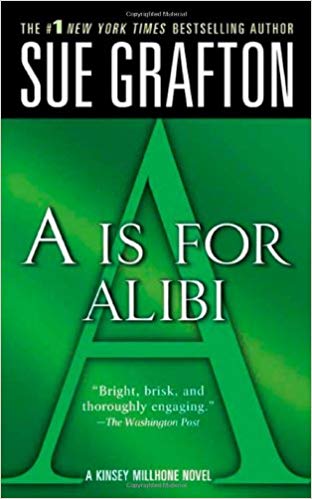
      Sue is the best-selling and award-winning author of the famous alphabet murder mystery series, with Kinsey Millhone as the protagonist: A is for Alibi, B is for Burglar, C is for Corpse…

      Here are Sue’s own words about what constitutes success and why failing is important. The source link for her quoted words is below.

      What has made you so successful?

      I hope it is because I try to be honest, and I try not to sell anything. I just try to let the work take care of itself….

      What advice do you have for newer writers?

      My big gripe about newer writers is they’re not willing to put the time in. Somebody’ll write one book and they’re asking me who my agent and my editor are, and I’m thinking, Don’t you worry, sweetheart, you’re not any good yet. Give yourself time to get better. Writing is really hard to master. You learn by failing over and over, but a lot of people don’t care for that, thanks. I always wish new writers the greatest good fortune. It’s a helluva journey—I’ll tell you that.

      “You learn by failing over and over.”  She’s also confirming that if we write a good story, the writing will sell itself.

      Reading her words, I’m being reminded once again, and again by an expert writer, that I need not focus on the selling but that I need to focus on the writing.

      No amount of advertising can sell a mediocre book. However, a great story will sell itself because readers can’t help but tell others how great it is. There’s no advertising like word-of-mouth advertising. Recommendations are priceless.

      —

      Guest Column. “W Is for Writer: A 2010 interview with Sue Crafton (1940=2017).” Web blog post. There are No Rules. Writer’s Digest, 31 Dec. 2017. Web. 9 Jan 2018.

      http://www.writersdigest.com/editor-blogs/there-are-no-rules/interviews/w-writer-2010-interview-sue-grafton-writers-digest

      Failures – Part II

      This blog was originally published December 27, 2017, on my Only for the Brave blog, which is being eliminated as I decided to merge the two blogs. Because failure is an important part of succeeding for writers, I felt it was worthwhile reprinting the series about failure here.

      *****

      My last post provided a list of successful people who failed early in their careers. Did you see it? If not, you may want see it or revisit the list for inspiration. It’s quite an eye-opening list. (Failures: Part I)

      But let’s focus on how we fail and how we need to fail in order to learn.

      Consider babies learning to walk. They fall down a lot! No baby ever gets up and starts running. They practice.

      Kids learn a sport through practice. After school, on weekends, during games, alone, with others.

      Most anyone who plays a musical instrument, do so because they practiced. Same with dancers, painters, anyone learning an art, or a trade. They practice. (I say most because there can be the savant that amazes everyone.)

       Failure Is Part of Practice

      We learn when we’re frustrated, when we’re unhappy.

      Let that sink in for a moment.

      —

      We learn when something is hard, when it requires our full attention, our full determination.

      We learn most when we fail.

      In failure, we learn how to do it right. Edison said, “I learned 999 ways how not to create a light bulb.”

      —

      So, how does a writer move from failure to success?

      • Keep writing. Finished your first book? Great. Start writing a second one, while you edit the first. Finished your fifth? Great! Start writing the next one, while you edit, polish, submit, or consider making changes on the other three.
      • Be prepared to gets rejections. Maybe lots of them. I can paper the walls of my house with my rejections. Even the best writers still get them. Know that rejections are never personal. Your work just wasn’t a good match (think dating which leads to marriage) for that publication.
      • Enter contests. Placing in a contest is a sign that you’re writing is better than the average. However, different judges could have determined different results. Humbling, isn’t it?
      • Keep writing. Keep practicing.
      • Take classes. I’ve been writing for nearly forty years and I’m still taking class AND learning new things.
      • Get a degree in writing. Getting my BA in creative writing and then an MFA in drama were the best decisions I’ve ever made. One, because I was forced to embrace writers and readings I never would have chosen on my own, and second, the MFA allowed me to get a day job in my favorite passion and that job became fun! That education both broadened and deepened my writing skills.
      • Read everything, especially read outside your genre. Analyze what you read. Stop and think about that phrase you praise.
      • Write and experiment in different genres. If nothing else, try them just for the fun of it. I learned how to write better fiction by learning how to write scripts. I learned how to write better dialogue by writing plays.
      • Find your niche. Most find their niche in a single genre. I finally recognized that my niche is a variety of genres. When I began having success in romance writing, I became bored. I still write romance, but I write fantasy, nonfiction, and other genres, as well. Thus the romance writing is part of the spice again. Variety keeps all genres fun and interesting.
      • Keep writing. Keep practicing.
      • Learn about the business!!! I can’t stress this one enough. If you know the business, you’ll know when someone is trying to scam you.
      • Learn grammar. Yes, learn it. Find an expert who will teach you the rules. Otherwise, be prepared to spend lots of money to line editors who will fix your errors. It’s not a wasted skill. I wasn’t an expert when I began writing, but I became an expert by having to teach others. Seriously, the best way to learn something is to teach it.
      • Read articles, the how-to books, and then ask your questions. Don’t join a forum and ask questions that you could have easily found the answers to.
      • Join writing groups. If nothing else, find a few people and start your own group. There’s nothing more inspiring than meeting with people who talk your language.
      • Find beta readers. People who will read your work and provide honest feedback. Like finding a marriage partner, agent, or editor, it could take a while to find good beta readers. They shouldn’t be relatives or best friends, however, unless they have a degree in English.
      • Become a beta reader yourself. You’ll learn lots by reading the writings of others. You’ll see your mistakes in their work. And you’ll probably discover that you’re writing is better than you thought.

      And above all, keep writing. Keep practicing.

      If you still keep failing, remember Edison’s lesson of finding 999 ways not to do something. He had to keep changing his process 999 times until he found his success on his 1000th try. Nine hundred-ninety-nine times. Are you willing to go that distance?

      Do you have the ability to change up what isn’t working? To put in the hours of practice?

      If you do, then you’ll preserve your way to success . . . eventually.

      Happy writing!

      Failures – Part I

      This blog was originally published November 27, 2017, on my Only for the Brave blog, which is being eliminated as I decided to merge the two blogs. Because failure is an important part of succeeding for writers, I felt it was worthwhile reprinting the series about failure here.

      *****

      So many times, I’ve witnessed students and new writers exclaim that successful writers never failed.

      That’s when I would share this list of successful people who failed early in their careers.

      When I shared this list with my students, immediately I had their attention. I knew what they were thinking: well, if that person could fail and still be successful, then there’s hope for me!

      Everyone, absolutely everyone, unless they are a savant, start their craft as a beginner and will encounter failures.

      Yes, there are exceptions, but they are few, and more often than not they will experience failure somewhere else in their career. Or they’ll stop with that one huge successful book fearing failure if they continue. Margaret Mitchell, who wrote Gone with the Wind, was one such person. Truman Capote, of In Cold Blood, was yet another.

      Here’s a list of successful people who failed:

      • Dr. Seuss was rejected 23 times.
      • Michael Jordon was cut from high school basketball.
      • Henry Ford went broke 5 times.
      • Helen Keller graduated cum laude from Radcliffe College, became a famous author & lecturer.
      • Albert Einstein was rejected by the University of Bern on his Ph.D. dissertation saying it was irrelevant and fanciful. (And if not for his wife who typed the papers and submitted them, he never would have been published.)
      • Richer Hooker worked 7 years on M*A*S*H and was rejected by 21 publishers.
      • Babe Ruth struck out 1330 times.
      • Walt Disney was fired by a newspaper for lack of ideas.
      • Beethoven’s violin teacher declared him hopeless as a composer.
      • IBM, GE, RCA all rejected the Xerox machine.
      • Parker Brothers turned down Trivia Pursuit.
      • Bette Davis, Clark Gable, Maurice Chevalier, Shirley Temple, and Laurence Olivier all failed their screen tests.
      • Fred Astaire was cited in a memo by MGM executive after his first screen tests in 1933 that he “can’t act, slightly bald. Can dance a little.”
      • John Grisham’s book, A Time to Kill, was rejected by 28 publishers.
      • William Golding’s book, Lord of the Flies, was rejected 21 times.
      • Pearl Buck’s book, The Good Earth, was rejected 14 times.
      • George B. Shaw’s first five novels were rejected.
      • Mary Higgins Clark’s first short story was rejected 40 times.
      • Louis L’Armour’s first story was rejected 350 times.
      • Stephen King was rejected 41 times before his first manuscript was accepted.

      Doesn’t this list give you hope? Sure did me!

      Bottom line: The only ones who really fail are those who give up!