Tag Archives: #Iamwriting

Guest blogger – Keri Kruspe, Part II

As a follow up to Keri’s August 21, 2019 post as a guest blogger, where she talked about the things she wished she’d known before publishing her first book, in today’s post, she talks about the things she did right.

On the Other Hand…things I’ve done right

An Opinion By Keri Kruspe

In my last article, I thoughtfully discussed (okay…I whined) about my frustrations on what I would do differently in launching my writers’ career. Having admitted my mistakes and oopsies, it’s only fair I switch gears and talk about what I felt I did right.

To give some perspective, here is a brief history of how I got here.

Ten years ago, when I finally got off my keister and wrote my first full-length. It was a long one, around 100,000 words. I poured my heart and soul into that story. While it was a sci-fi romance (the genre I currently write-in), I took out my frustrations on the devastating thing that happened to me in my secular career in the banking industry. I had been let go from a company that I had worked for 21 years. I’d grown up at that bank, rising in the ranks to end up a VP in charge of the retail department. I had 300 employees reporting to my direct line.

Then unexpectantly, I got laid off. Depression hit me hard and heavy. To make matters worse, those who I thought were close friends either betrayed me or dropped me like the trash took out itself. Through the shake-up, I learned who my true friends were and found love and acceptance within my family.

But the best thing that helped me overcome my depression was to write that book. In it, I turned the villains in my life into clowns and enjoyed the various ways I killed them off or humiliated them. Ahhh…being a writer has so many perks!

Keri Kruspe - villians

With my novel in my hot little hands, I just knew someone would snap up my masterpiece and I’d be on my way to working as a writer full time.

Long story short, that didn’t happen. I had no idea what was wrong or where to turn to make it right. It took another ten years for me to try again in a more serious vein.

With clear hindsight, I can now share what I’ve done right since then to launch my career as an independent author:

THE JOURNEY IS BETTER WITH FRIENDS
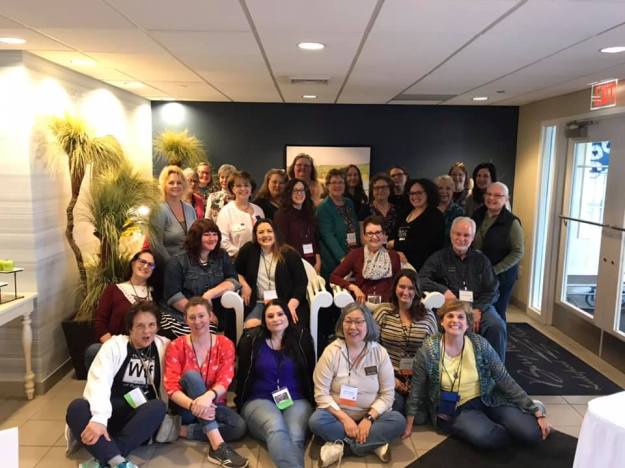
MMRWA REtreat 2019 group photo - original

Members of my Mid-Michigan Romance Writers of America chapter, taken while on their 2019 Retreat From Harsh Reality

When I started again in 2016 to write my novel, I realized going it alone was not the thing to do. As with many author’s, I’m a solitary creature who likes to rely on myself and not depend on others. I thought I could do everything on my own.

But, it didn’t take long to realize what I had done before wasn’t going to work (remember the definition of insanity…). I needed help from other people. I’d been a member of Romance Writers of America since 2008 but didn’t do much with it. Using that as a starting point, I reached out to some of my peers and begun to explore and develop contacts.

TRAINING

Indie publishing was starting to hit its stride when I wrote that first novel in 2008. From what I understand, there wasn’t a lot help around for writers to find their way into self-publishing. Today, there are numerous tools and assistance out there just for the asking.

When I gathered up the courage to ask someone to read my novel, she let me know it needed a lot of work. Especially on Point of View (POV).

I couldn’t understand it. I was an avid reader (my average is 100 books a year and counting!) and writing came second nature to me. After pulling my conceited head out of my rear end, I admitted I needed to dive deep into my chosen craft. To do that, I had to spend the money to get an education. While some classes were free with RWA, to get a better handle on what I was trying to do, I needed something more. I needed a mentor or mentors. That’s where the deeper training comes in. For a personal touch, I found the Barany School of Fiction. Their courses, as well as the bi-monthly online meetings, are a godsend.

The other training I did correctly was to find a course that went step-by-step on what to do once my novel was finished. I needed to know how, when, and where to create and market my book. There are numerous paths to choose from, all you have to do is a little research to find what works best for you. I encourage everyone to go out and look for it.

Keri Kruspe - extra trainingEXTRA TRAINING

I call this section extra because it involves using your downtime to your advantage. For me, that meant using the time where I couldn’t be on the computer but had free time to listen. An example – it takes me a half an hour to get ready for work in the morning (putting on makeup, doing my hair, getting dressed). I used to listen to the TV or music, but now I’ll tune in to a podcast, a class, book, or anything audio that involves being an author.

I’ll do the same when I’m in my car going to work. Here is an extra hour a day that I can continue to listen to what I started that morning.

FARMING OUT WHAT I HATE TO DO

There are certain things in my new career I’ve found I didn’t have time or talent to learn in the beginning. I wanted to spend my time learning how to write before figuring out Photoshop. So, using my contacts, I’ve found someone to do my covers. I also hired a writer’s admin to tweak my website (I did learn the preliminaries on creating it and do the upkeep myself) and to format my novels. I can format, but I confess I hate doing it.

Also, I don’t think a writer should have the final edit on their work. That is a no-brainer for me. While beta/advance readers are wonderful, you still should hire a professional editor. I did and even though it was expensive, having the polished novel was well worth it.

FINAL THOUGHTS

Keri Kruspe - final thoughts.jpgOne of the best things I’m doing as a new author is writing this guest post. I love how I can take a subject that’s bugging me and put it on paper. I hope I’m allowed to keep doing it for a while. After all, writing is my profession of choice.

So…far warning world! I’m in this for the long haul.

***************
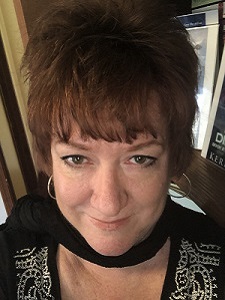
Keri Kruspe Pic

Keri Kruspe, author of Otherworldly Romantic Adventures – writing about feisty heroines who aren’t afraid to take chances in life or love.

Keri has been an author since the age of twelve and has always been fascinated with otherworldly stories that end in Happily Ever After. Her current sci-fi romance trilogy, An Alien Exchange (winner 2018 SPF Galaxy award) had its first release winter 2018. The story continues with D’zia’s Dilemma and concludes with Ki’s Redemption.

A native Nevadan, Keri resides with her family in the wilds of Northwest Michigan where she enjoys the stark change in seasons and the pleasures each one brings. An avid reader, Keri loves an enjoyable bottle of red wine, a variety of delicious foods and watching action/adventure movies…usually at the same time. You can find her most days immersed in her fantasy world on her latest novel while foot tappin’ to classic rock. When not absorbed in her writing, Keri works alongside her husband in building their dream home or discovering intelligent life in America in their RV. Join the fun and sign up for her mailing list at www.kerikruspe.com

Failures – Part IV: 7 Lessons of Failure as a Writer

This blog was originally published April 4, 2018, on my Only for the Brave blog, which has been eliminated as I decided to merge the two blogs. Because failure is an important part of success for writers and everyone else, I felt it was worthwhile repeating this post, this series on failure.

*****

7 Lessons of Failure as a Writer

People look at me and see success. Published in multiple media, in multiple genres, with various awards. With an MFA and a Ph.D., too, but there have been many failures along the way.

I have failed so many times I’ve lost count, from beginning, middle, and end.

In the beginning, I couldn’t get anything published. I tried big publications, national publications, regional, and small publications. All submissions boomeranged back. Once in a while, I’d get a handwritten note at the bottom of the mimeographed rejection, saying, I like your voice, or Please submit to us in the future. I learned from others these handwritten notes were excellent rejections because they were encouraging, that I needed do as suggested.

Only after a friend read a couple of my rejected essays and said, “This sounds like Erma Bombeck,” did I realize I needed to approach our local newspaper with a suggestion for a weekly or monthly column. Success! A six-month trial became a five-year career start.

Lesson #1 – If you can’t start big, start small.

When I turned to fiction writing, specifically romance, I already had a number of magazine articles and short story publications. I was reading a romance book a day, thinking how hard can it be? Over time, I found out. I wrote four books, all getting rejections. Even a published writer friend was amazed at the rejections, saying, “It’s like you’re standing on a cliff with only the back of your heels touching. Why aren’t falling off that cliff?”

The most devastating rejections occurred with an editor writing, “I just bought a book like yours last week.” So close, yet so far away.

At 37, I had been writing romances for nine years. I vowed that if I wasn’t published by the time I turned 40, I would quit.

I turned 40. More small magazine publications, but no books. I was getting closer, though. I was winning awards and placing in contests. I had an agent. Then I lost the agent, and then a second one. They were trying to put me into a publishing box I didn’t want to climb into. They were trying to make me into a specific kind of writer that I wasn’t and didn’t want to become.

At 42, I finally published my first book. Two more book publications quickly followed.

Lesson #2 – Don’t quit. Success will come but in its own time. Quit only if you truly have no more interest in pursuing that endeavor. Ever.  

About that time, I turned to scriptwriting. Producers were impressed with my book publications. While I did option one script to a producer for six months for no money, the option ran out. He wanted to renew for another six months, again with no money. I said no. About every two years after that, he would call me, asking what I’d done with the script. I knew I had a good story. (I’m in the process of rewriting and publishing that script now.)

In the meantime, I developed relationships with another five producers, all who loved my writing but couldn’t say yes to my scripts. It became a matter of trying to find the right material. They wanted me to submit anything and everything I was writing.

Lesson #3 – Rejections can be a yes.

One of my first book submissions was a colossal failure. The Senior Editor wrote:

Thank you for submitting BOOK TITLE for our review. We have found that your manuscript does not fit the requirements for PUBLISHER LINE. It is too melodramatic, based on trite misunderstandings among the characters as well as contrived circumstances. Sincerely . . .

So, she tore down the plot and conflict, the characters, the dialogue, and the…wait, there was no comment regarding the setting. Oh, wow, she liked the setting!

I used that setting in another book, with a similar conflict, different plot, different characters, and different dialogue. It sold and was published.

Going back to that rejected manuscript later, I could see that the editor was right.

The writing was horrible.  At least, she saved me from that humiliation. I had mixed tenses, multiple ping-pong points of view, mixed metaphors, wordiness, too much telling, and too many details that added nothing to the story or to the characters. The book was boring.

I should have burned the book, but I didn’t. I started looking at my writing from an editor’s point of view, and that’s when the real learning began.

Lesson #4 – Learn from your mistakes.

Never compare yourself to another writer. Not by their sales numbers, the number of books sold, how fast they can write, how few drafts they have to write, by their having an agent, or being traditionally published.

When you compare yourself to others, you’ll always be a failure.

Ironically, what you don’t see is that others are probably comparing themselves to you and feeling like failures.

Lesson #5 – Don’t compare yourself to others. Ever.

Their journey is not yours. Yes, some get lucky when they are young. Some get lucky with their first book. Some get lucky winning the highest awards. Some get lucky with their self-published book, earning thousands of dollars.

When I published my first book, I was in the right place at the right time. I had a once-in-a-lifetime opportunity to talk to an editor, actually being the first writer to talk to this editor, an editor looking to publish romances. He said, “If you know of anyone who has a manuscript, send them my way.”  When I told him that I had one, he invited me to send it.

He rejected it! Then asked if I had anymore. I did, I sent it, and he published it.

Lesson #6 – Luck is nothing more than a preparedness meeting opportunity.

I’ll never forget a writer who was angry about some contest scores she’d received. When I told her it wasn’t personal, she said, “It’s personal to me!”

I’ll admit that early in my writing career, rejections felt personal. When I started coming back to the rejection and analyzed what was being said more closely, I realized that everything said was true. So, how could it be personal? That criticism was helpful, meant to show me that I had areas that needed improvement.

Here’s the thing: As a writer, you can’t make it personal, all about you. I learned to step back and look at it from their point of view. If I’d been that agent, producer, publisher, reader, etc., I probably would have done the same thing.

Stepping into someone else’s shoes is how you don’t make it personal.

Lesson #7 – Rejections, failures, and criticism aren’t personal.

Failure means what you’re currently doing isn’t working.

That’s it. Nothing more. Nothing personal.

Step back. Rethink what you’re doing. Rethink the path you’re taking.

Then make a change.

Here’s the real secret. No two writers ever arrive at their level of success by taking the same path. It’s different for each and every one of us.

What’s your path going to look like?

Failures – Part III

To continue my “Failures” series, this post was originally published on my Only for the Brave blog on January 9, 2018.  And now, I’ve added more thoughts.

Failure According to Sue Grafton

As I considered my next blog in this series, I came across this article in my mailbox and thought I would inject a small part of it here, between my writings, because Sue Grafton confirms what I wrote about in “Failures Part II,” in that we learn by failing.

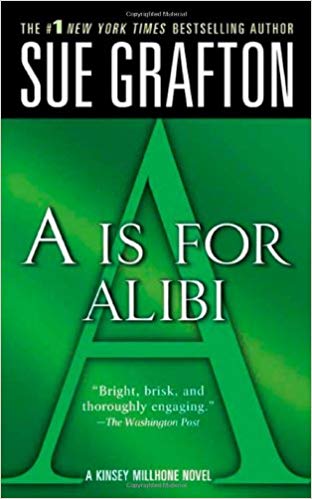
Sue is the best-selling and award-winning author of the famous alphabet murder mystery series, with Kinsey Millhone as the protagonist: A is for Alibi, B is for Burglar, C is for Corpse…

Here are Sue’s own words about what constitutes success and why failing is important. The source link for her quoted words is below.

What has made you so successful?

I hope it is because I try to be honest, and I try not to sell anything. I just try to let the work take care of itself….

What advice do you have for newer writers?

My big gripe about newer writers is they’re not willing to put the time in. Somebody’ll write one book and they’re asking me who my agent and my editor are, and I’m thinking, Don’t you worry, sweetheart, you’re not any good yet. Give yourself time to get better. Writing is really hard to master. You learn by failing over and over, but a lot of people don’t care for that, thanks. I always wish new writers the greatest good fortune. It’s a helluva journey—I’ll tell you that.

“You learn by failing over and over.”  She’s also confirming that if we write a good story, the writing will sell itself.

Reading her words, I’m being reminded once again, and again by an expert writer, that I need not focus on the selling but that I need to focus on the writing.

No amount of advertising can sell a mediocre book. However, a great story will sell itself because readers can’t help but tell others how great it is. There’s no advertising like word-of-mouth advertising. Recommendations are priceless.

—

Guest Column. “W Is for Writer: A 2010 interview with Sue Crafton (1940=2017).” Web blog post. There are No Rules. Writer’s Digest, 31 Dec. 2017. Web. 9 Jan 2018.

http://www.writersdigest.com/editor-blogs/there-are-no-rules/interviews/w-writer-2010-interview-sue-grafton-writers-digest

The Surprising Secret of Developing Characters

The Insecure Writer’s Support Group

 The question this month is:  Has your writing ever taken you by surprise? For example, a positive and belated response to a submission you’d forgotten about or an ending you never saw coming?

 The Surprising Secret of Developing Characters

I’m such a plotter one would think that I’m never surprised. The truth is that with every story I’m always surprised. The words that come out of my characters’ mouths are smart, engaging, and laugh out loud funny. So much so, I’m usually laughing aloud while writing, with my laughter surprising those around me whether other writers at a write-in or strangers in a coffee shop.

Often, I find my characters’ banter doesn’t require tags because the characters each have a distinctive voice, so it’s easy to know who is talking. The advantage is because we know who is speaking tags aren’t required. Thus, the writing becomes action and dialogue, with some narrative now and then rather than all the time. Even then, I try to keep the narrative down to a minimum.

Once I know the bare-bones outline of a story—how it begins and how it ends—I spend a lot of time finding out who my characters are. Many writers will interview their characters wanting to know about their background: where they went to school, what’s their favorite color, favorite music, favorite TV program, and so forth.

To me, while I want to know my character’s physicalities—such as hair and eye color, height, their job, their tangible goal—it’s more important for me to know their pain, their wound(s), the deep dark secret they don’t want anyone knowing.

To discover this information, I become the character. I do so by writing character journals. I start out saying my (their) name, where they’re from, and so forth. These various details will take up half a page and then, suddenly, I (the character) will say something that begs a question of what do you mean by that, or what happened, or how did that make you feel? That’s when the character goes deep. By now, I’m talking (writing) in that character’s voice. My voice and my thoughts are no longer my own, but theirs. I’m seeing through their eyes, feeling their pain. And, the writing becomes a stream of consciousness in their desire to reveal everything that hurts. Everything that up until this moment, has remained a secret that they can’t live with anymore.

By the time they’ve run out words, I’m holding three-to-five single-spaced typed pages. I have their goals, their essence, their true character—not the one that others in the book get to see and have seen forever, but the one they struggle to overcome.

It’s that pain that drives the character, which in turn drives their response in word and deed, which then drives the plot forward. It’s these elements that then help me plot out the middle, the important emotional points that spin the story into different directions.

It’s that pain that becomes the character arc, the thing that the character must overcome in order to win the girl, get the job, get the prize, and to finally obtain self-respect. It’s the thing the character will no longer have to face in their future.

It’s character pain that attracts readers. They want to see how a character will resolve their wound because that wound could be their own.

It’s character pain that engages readers, that makes them turn the pages. The suffering, the action, the pain.

It’s the pain overcome that provides a satisfying end to any story regardless of how the story ends: happily ever after or bittersweet.

The secret of developing characters is much like an iceberg. It’s not about the ice we see above the surface, the ice a character has shown us up until now; it’s about the ice we don’t see, the ice below the surface, the ice we get to learn about. How deep that ice goes, how big of a problem the ice really is.

So, when it comes to developing characters, the secret I share with you is this: Go Deep.


Insecure Writers Support Group BadgePurpose: To share and encourage. Writers can express doubts and concerns without fear of appearing foolish or weak. Those who have been through the fire can offer assistance and guidance. It’s a safe haven for insecure writers of all kinds!

Posting: The first Wednesday of every month is officially Insecure Writer’s Support Group day. Post your thoughts on your own blog. Talk about your doubts and the fears you have conquered. Discuss your struggles and triumphs. Offer a word of encouragement for others who are struggling. Visit others in the group and connect with your fellow writer – aim for a dozen new people each time – and return comments. This group is all about connecting!