Category Archives: Inspiration

Embracing Change and Letting Go

For the first time in at least three years, I don’t have a book, a project that I’m currently working on or have touched in over a year.

Last month, I published the grammar book that everyone was asking, “When are you going to publish it?” Interesting how my royalty report isn’t reflecting the desired demand. At least, not yet. That was a book I’d been working on in between other projects for the last half decade.

But, hey, at least Freida McFadden told me that “You’re my new grammar expert!” and gave me permission to use her comment made in public in her readers’ fan group. Even if this book doesn’t turn out to be a best seller, that comment alone—in my mind and seeing it on my first hardcover book—made me a best-seller.

And, an hour ago, I uploaded the last of the three formats (hardcover, paperback, and eBook) for the November 18, 2025 publication of Harbor House: Deadly Intentions, my first psychological thriller. A book whose origins began in summer 2023, and which I thought had been ready for publication October 2024. Boy, was I wrong! To read the origin story, click here.

Why I never pursued romance instead of thrillers in the beginning is beyond me. No, actually, I do know why. There were and are no nearby thriller writing groups—at least not that I’ve found. At the time I began writing books, Romance Writers of America was huge, and there was an area chapter starting up, which I joined.

I learned a lot and have a pile of best-selling writer friends and just as many like me—not best-selling-authors-yet writer friends. The support is incredible.

Two days ago, I participated in my first author get-together through a Potluck Book Sale. In getting ready for my hour of hosting, I learned a few tricks to combining Canva with PowerPoint in creating reusable, promotional graphics. YAY!

I had fun chatting with some of the readers and ended up giving away seven books and sharing three recipes. I’ll definitely do another potluck party in the future.

So, what other significant changes have I made this year? Surprisingly, the theme has been about cutting back or letting go. Less is more mentality. Without providing all the details, the endgame is that I’ll be writing more books, using my time more effectively.

Once I clean some files, clear off my desk, and restock the printer, my plan for 2026 is to:

  • Rewrite the optioned script, Miss Mississippi, and publish it.
  • Plot out the 180-year-old story based on a true event and write it as a book. I always thought it should be a screenplay. I still believe it, but…I think it can gain legs as a novella first. A project I’ve been considering for 30 years.
  • Add another book or two to my Finding Your Fire series.
  • Plot out a story I’ve been mulling for about 20 years that reminds me of Nicholas Sparks’ books and the movie Somewhere in Time.
  • Plot out two thriller ideas that were solidified in a write-in weekend two summers ago.
  • Consider writing Harbor House and the true event story as screenplays.
  • And finally, plot out a 10-second idea that raced past me from start to finish with a shocking ending that came out of the blue while I was playing a game a few days ago. I heard the character talking and could see many of the events. Yup, all in 10 seconds. (I wrote it all down quickly, so I wouldn’t forget.)

All of these projects are nagging at me—as all projects do—with this last one close behind me and whispering in my ear, “You know it’s gotta be me, don’t you?

Are You a New Writer?

The Insecure Writer’s Support Group

The January 3 question: Do you follow back your readers on BookBub or do you only follow back other authors?

Are You a New Writer?

Rather than talk about who I follow on BookBub, because it’s the new year, I decided to address new writers, instead. I guess that’s the teacher in me: new year, new semester, ­new students.

I remember back to when I was a new writer, too. What I share with you are the things that best helped me as a new writer.

Read anything and everything. Read from writers you admire, notice their style, their voice. Read specific genres. Read across the genres. Read all the how-to books you can. Not only the newest publications, but older books, too.

Write a lot. Don’t worry about structure with your first drafts. Don’t edit or delete; just write. Write scenes of your desired genre. Or, just write whatever comes to mind and not worry about genre. Don’t worry about completing a book at this point. Instead, concentrate on making the dialogue sound true and creating believable characters.

Follow writers you admire. Learn about their process, any advice they offer. Take everything with a grain of salt, however, because no two writers follow the same process.

Subscribe to writing newsletters and writing blog; they’ll provide how-to information you need. Use that which sounds good for you.

Look for a critique partner or critique group you can join. In the beginning, you’ll be swapping writings with anyone and everyone. In time, you’ll want to vet them just as they should be vetting you. You want someone who will be honest, telling you what doesn’t work and why. Ideally, you want someone who writes in your genre or is knowledgeable about your genre.

Above all else, be open to hearing comments about your work and suggestions of how you can improve it. You don’t have to like everything suggested or even use it; and, don’t defend your work either. Just say thank you. What they provide and how they provide it will determine if you want to continue critiquing with them.

Attend conferences and make connections. Attending a conference is no place to be shy. Introduce yourself and then ask about their writing. People love to talk about themselves! Create elevator pitches, too. Don’t know what they are? Google elevator pitch. If you go with a group, don’t sit with them at every event. Sit away from them from so you can meet new people.

Create a business card. Make it simple. List yourself as a writer with contact information. That’s all you need.

Don’t think about a publisher or agent, yet. It’s too early. You’re just getting started. That said, any opportunity to hear an agent or publisher talk, sign up! Call it research; it’s a way to determine what kind of agent you want and what kind house you want to publish with. Don’t discount becoming an indie publisher, though. Do the research to compare your options.

Enter contests: local, regional, and national. Choose those that provide some kind of feedback. Consider who’s judging the contests, too. Consider if you were to win, would you get to meet with an agent, publisher, or production companies?

Find a writer’s group nearby or online and attend regularly. Check out past meetings to see what presentations they offered. You want a writer’s group that will help you grow as a writer, a group that provides you with quality takeaway.

If you are in a writing group, consider becoming a volunteer. It’s a great way to make connections. However, any volunteer work you do will take time away from your writing. Be prepared.

Learn and master basic grammar and punctuation. Both agents and publishers want polished work; meaning, reasonably clean work, not work riddled with errors on every page.

And, I can’t repeat this direction often enough: WRITE A LOT! The more you write, the better you’ll become. Practice writing is no different from practicing the piano, hitting the ball, or riding the wave. Dedicated, regular practice improves!

Check out my Recommended Reading page on my website! I’ve got a great list of how-to resources and am adding to the list every month.

And, one last reminder about my two-week Master Class, Punctuation and Grammar Made Easy, starting Jan 6, 2024 with limited seating. So, sign up now! There may still be a seat or two left.

*****

Dr. Diana Stout appreciates her readers and fans and would love for you to sign up for her announcement only newsletter. She promises that your mailbox will love you because the newsletter is only sent out with new release information, discounts, freebies, and giveaways. And, if the season is right, she might provide a recipe from her own cookbook.

Learn more about Dr. Stout at her website, Sharpened Pencils Productions.

*****

Purpose: To share and encourage. Writers can express doubts and concerns without fear of appearing foolish or weak. Those who have been through the fire can offer assistance and guidance. It’s a safe haven for insecure writers of all kinds!

Posting: The first Wednesday of every month is officially Insecure Writer’s Support Group day.

How to Stay Positive

The Insecure Writer’s Support Group

Instead of answering this month’s question, which is an AI question, I queried a writer friend and asked, What would you most like to read about in a blog right now? Her response was, “Staying Positive.”

How to Stay Positive

As writers, when the world’s toxicity seeps into our homes, our thoughts, and feelings, writing can become more difficult. It’s harder to concentrate, to focus.

So, what can you do to stay more positive?

  • Take a shower. Let the toxicity go down the drain!
  • Create a playlist that lifts your spirits and matches the mood of your current work in progress and play it when writing.
  • Take a walk in nature. Listen to the sounds, become one with nature.
  • List things you’re grateful for every day.
  • Start a positivity diary. List of all the good things that have ever happened in your life. Keep that list handy and keep adding to it. Refer to it as needed.
  • Don’t drink. Alcohol is a depressant.
  • Journal. Write your feelings out on paper. It’s about opening the dam of feelings and thoughts, venting on paper. Afterward, burn it, shred it, or tear into tiny pieces and flush down the toilet. Or, save it, and give those feelings to a character!
  • Stop worrying—99% of what we worry about never comes to pass.
  • When tired, take a nap or take a break.
  • Do something different.
  • Find a way to laugh. Start saving funny videos. Follow those people! Watch a comedy series or a funny movie.
  • Do a search for flash mob dances or orchestras on social media.
  • Dance! Alone for the length of a song.
  • Blow up an imaginary balloon, blowing your feelings, thoughts, and problems into the balloon. Then, release it to the Universe. Imagine yourself outside, seeing it rise above the houses and disappear into the clouds.
  • Perform some self-talk.
  • Plant something. Get your hands into the soil.
  • Go to a playground and swing or play in the sandbox.
  • Spend time with people who make you laugh, with whom you feel good about yourself when you leave their company.
  • Put positive affirmations on your bathroom mirror, at your desk, or in other places that you frequent and will see often. Change them up as needed.
  • Give someone a compliment.
  • Don’t take things personally.
  • Drive a new route home.
  • Buy yourself some flowers.
  • Do something differently. Drive a different route, go into an unknown store.
  • Eat out alone with a book. Enjoy your own company.
  • List goals you want to achieve. Break down a goal into manageable chunks—something you can do in 10 or 15 minutes. As you achieve them, cross them off!
  • Remove the triggers!

One of the best things I did to stay positive was to remove anything in my home that triggered me, immediately taking me back to a toxic event or conversation, which I started reliving, noticing my feelings and thoughts became a downward toxic spiral. Even though I had reconciled or had moved past it! Those triggers included clothing, knickknacks, furniture, and especially photographs.

Staying positive requires action on your part.

We are what we say, what we think, and what we DO!

*****

Purpose: To share and encourage. Writers can express doubts and concerns without fear of appearing foolish or weak. Those who have been through the fire can offer assistance and guidance. It’s a safe haven for insecure writers of all kinds!

Posting: The first Wednesday of every month is officially Insecure Writer’s Support Group day. Post your thoughts on your own blog. Talk about your doubts and the fears you have conquered. Discuss your struggles and triumphs. Offer a word of encouragement for others who are struggling. Visit others in the group and connect with your fellow writers. This group is all about connecting!

Where Do My Story Ideas Come From?

The Insecure Writer’s Support Group

This month’s question revolves around someone saying, “99% of my story ideas come from dreams. Where do yours predominantly come from?”

Where Do My Story Ideas Come From?

I’m frequently asked where I get my story ideas and the answer can be covered in one word:

Everywhere

Here’s a sampling of some of the places I get my ideas from.

  • Dreams – but only two ideas have come from a dream. Really dark crime-filled dreams, one of which had me questioning reality. So vivid, I woke up wondering how it was that no one had found the body yet.
  • Conversations – mostly those I overhear in the booth next to me.
  • Books – a location, situation, or just a sentence can send me on a what if adventure.
  • Movies – especially those that have been redone in a creatively different way. I’m spurred by the originality that has me going down the what if rabbit hole.
  • Voices – yes, the ones I hear. It’s amazing how a character starts whispering in my ear, inspired by any of these other ideas, and starts laying out their idea of the storyline.
  • Landscapes & locations – the possibilities that pop up are magical
  • Old Houses – I don’t know what it is, but the minute I see certain old houses, lighthouses, bridges, and other structures, I hear/see the story too. It’s as if I’ve stepped into another era.

If you see me reading, then suddenly looking up and staring out the window… a new story has come to mind.

If I lived to be 300, I would never get to write all the stories that have been gifted to me.

So many stories to tell, so little time.

Purpose: To share and encourage. Writers can express doubts and concerns without fear of appearing foolish or weak. Those who have been through the fire can offer assistance and guidance. It’s a safe haven for insecure writers of all kinds!

Posting: The first Wednesday of every month is officially Insecure Writer’s Support Group day. Post your thoughts on your own blog. Talk about your doubts and the fears you have conquered. Discuss your struggles and triumphs. Offer a word of encouragement for others who are struggling. Visit others in the group and connect with your fellow writers. This group is all about connecting!

A Writing Career Path: Finding the Joy

While writing a book wasn’t the start of my writing career, I do remember when I decided to write a book and how the excitement of possibilities appealed to me.

At the time, I was reading a book a day—mostly romances. Those slim, Silhouette and Harlequin romance books that had new titles every month. The books read fast and left me feeling good and filled with hope.

How hard could it be to write them?

Actually, it was way harder than I had imagined. While it looks easy, it really isn’t. It took me a year and a half to write that first book. Selling it was another matter altogether.

It took writing five books to learn about determination, needing a plan (more like an outline), diligence, and sheer grit. Along with agony and disappointment.

I was writing the first few books in an era where there were no computers, only typewriters. Where you had to have an agent in order to submit your manuscript to the publisher. And, where all manuscripts were mailed via USPS, where it could take months or a year to hear back from the agent, let alone the publisher.

Thankfully, the computer came into being amid writing those books. Rewriting became easier. Not much else became easier, though.

Early in my career, I was successful in writing short nonfiction via a newspaper column and then magazine articles. Writing nonfiction, whether creative nonfiction, academic, or technical came easy and still does. I was published in nonfiction within a couple years.

Writing fiction, however, was much harder and required a lot of trial and error. I wrote piles of romance short stories before attempting my first novel.

I remember taking one of those Harlequin books and wrapping it using the brown paper from a paper bag like we used to do with school textbooks, and I put my book’s title on the cover along with my name. I planted that book in front of my typewriter.

I had a goal.

It would take 12 years before I would publish my first book. I nearly gave up in the 10th year. Why? I had sworn that if I hadn’t published a book by the time I was 40, I’d stop trying. When I turned 40, I was too close to quit.

In fact, one author friend said, “Diana, it’s like your heels are on the edge of the cliff and yet you don’t fall off the cliff. I don’t get why you aren’t published.” My heels had been on that cliff for over seven years.

I didn’t get it either. I’d had two agents come and go, I placed in contests, and every editor said they loved my writing, but…

At 42, it took my being in the right place at the right time to connect with an editor whose publication house was entering the romance genre for me to become a published author. My book was their introduction into the field and they hyped that book heavily.

Two more books published with another house followed quickly, with a sale of a fourth book to yet another house.

Since then, it’s been a fun-filled journey of writing—screenplays, stage plays, poetry, academic writing, a dissertation, more contests, more awards, blogging, and becoming an indie publisher where I’ve now published 14 books, with plans for several more publications this year; Tangled Passions, the fifth book in a series of seven was published on Valentine’s Day.

My writing career has endured the highs and the lows for over fifty years, and finally, after much experimentation and meeting various challenges, I’m finding the genres where my writing joy truly thrives.

Looking back, I’m grateful for the entire journey. It’s been quite the process where the joys outweighed the disappointments. Even the frustrations were short-lived.

May everyone experience such joy.

*****

This year, Dr. Stout expects to publish the last two romance novellas in the Laurel Ridge Novella series, a writer’s resource book, a historical Gothic romance for an anthology, along with a comedy screenplay. Additionally, she’s plotting a Gothic novel and finishing up several other writer resource books. In June, she’ll be teaching a two-week Master Class, “Using (& Avoiding) Procrastination.” To learn more, click here. If interested, sign up soon! Class is limited to 25.

*****

Purpose of The Insecure Writer’s Group: To share and encourage. Writers can express doubts and concerns without fear of appearing foolish or weak. Those who have been through the fire can offer assistance and guidance. It’s a safe haven for insecure writers of all kinds. Posting: The first Wednesday of every month is officially Insecure Writer’s Support Group Day. Post your thoughts on your own blog. Talk about your doubts and the fears you have conquered. Discuss your struggles and triumphs. Offer a word of encouragement for others who are struggling. Visit others in the group and connect with your fellow writer – aim for a dozen new people each time – and return comments. This group is all about connecting.

Finding My Way Through the Genre Wilderness

With almost all of my writing projects from the start of writing the first word, I knew the genre and the form. Romance as a novel or as a short short story. Mystery as a short story or novel series. Poetry as a sestina, haiku, or sonnet. Romance novella series. 400-word column for XYZ (magazine/newspaper), non-fiction. And, so forth.

I say almost, because there’s only been one project that I began writing and had no idea what form it would take—would it be long, short, mid-length? —or the genre it would become. For its first written word, I dubbed it a historical, telling myself that I’d research the genre later. As to the form, I figured the story length itself would be the deciding factor. I suspected it would be a novel, but I wasn’t confident about it.

I knew the story took place in the late 5th century and I knew it would be fiction, based on a character from the world’s first English manuscript that had an unknown author. Those were the only two things I knew for sure.

The genesis moment occurred in the middle of my teaching a women’s study survey class where we were examining stories where women didn’t have a voice. In the middle of one student’s presentation of their book, I had that brilliant “Aha!” moment: Grendel’s mother in Beowulf.

I wrote those four words down and felt an excitement rise within, an excitement I hadn’t felt in while. Four years to be exact. Life had intervened followed by a decision to return to school so I could become degreed where I could teach accredited classes. Up until then, the classes I had been teaching in were either online or through adult enrichment classes at colleges.

Once I started going back to school, I was writing just as much as I had before, if not more, but it was all academic writing or creative writing forced by assignments, which were difficult to write because that deep-down bubbling joy and inspiration was always missing.

There was little time for laying any assignment aside, letting time work any creative juices. Instead, quick revisions and polishing, turning it in for a grade was the diction and process of my writing those days.

That initial excitement of a new idea stayed with me through the rest of that class I was teaching and through the commuting drive home. Walking to my car after class and during the drive home, the title was instant—Grendel’s Mother—and she was already talking to me. I saw flashes of scenes, but I had no idea of order or structure.

The minute I got in the door, I dropped my bookbag, keys, tore off my coat, and went straight to the computer. I didn’t even think about eating. That could wait a few minutes.

Those few minutes turned into an hour where I quickly wrote twenty pages of what I thought was the opening pages of the project. It felt like a book. It felt like a historical book. I saw it as a screenplay, too. The images were vivid, the dialogue clear and crisp.

Strangely, I didn’t have to struggle to discover any of the book’s characters. This is the one and only time where all the characters came fully formed, included their bitterness, goals, and wounds. All of them.

It was magical. I didn’t question anything.

I began to question the historical genre. I did some research. How was Beowulf classified? Medieval Poetry, Norse & Icelandic Sagas, English Literature, Epic Poetry, Mythology & Folk Tales. And then, I saw it: Epic Fantasy.

Not until, I was in the end revision stages—and there were many revisions—did the starting pages change. I changed the beginning to provide a better hook. To provide stronger action. The original beginning—that truly started at the beginning chronologically became the transition from present to past. The new beginning was an extremely active scene, taking place nine months later from the original beginning. The transition occurs as a way to deal with the present pain…and so, she starts remembering.

I even got as far as assigning the genre to YA historical because the heroine is a teenager in the beginning; but then, someone said, no, it’s not a YA because she ages. They were right.

The genre fit.

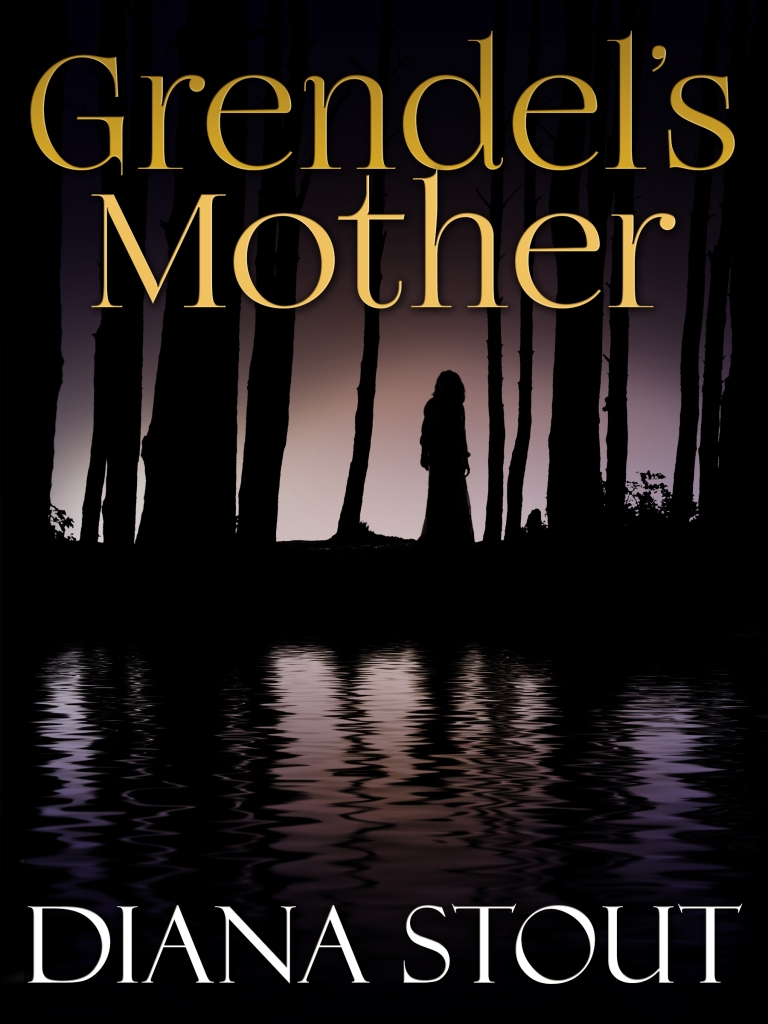
Grendel’s Mother became a novel and my first indie publication. To date, it’s still my most favorite book that I’ve written and published so far.

***

Purpose: To share and encourage. Writers can express doubts and concerns without fear of appearing foolish or weak. Those who have been through the fire can offer assistance and guidance. It’s a safe haven for insecure writers of all kinds!

Posting: The first Wednesday of every month is officially Insecure Writer’s Support Group day. Post your thoughts on your own blog. Talk about your doubts and the fears you have conquered. Discuss your struggles and triumphs. Offer a word of encouragement for others who are struggling. Visit others in the group and connect with your fellow writer – aim for a dozen new people each time – and return comments. This group is all about connecting!

How to Write When Struggling – Part 1

When struggling with characters, plot, interest, or the writing

In wanting to write a new blog, I started going through my TO BE WRITTEN file of blog ideas. I came across a copy of Maggie Doonan’s blog, “4 Signs It’s Time to Quit a Writing Project,” remembering how much I had originally disagreed with each one of those signs even though much of what she had to say was good advice. Those 4 signs in her blog are:

  1. You’re struggling to flesh out your characters
  2. You can’t get the plot to make sense
  3. You’re not excited by the story
  4. You’re finding writing harder than normal

I think in the beginning of my writing career that I might have agreed with that list but I rarely threw anything out. In thinking about my own writing career and projects that I started, put aside, and ended up working on later, I disagree with each one of those signs and here’s why.  

When struggling with characters

In the early days of my writing when there was no Internet, I submitted through the mail. One particular rejection that I still remember forty years later was that my characters were flat.

Having flat characters is a common problem for both new and experienced writers. My characters are always flat in the beginning. Why? Because I don’t know enough about them. Oh, I might know their hair color, height, their goal for the story, and the external conflict they’ll face, and possibly even an internal conflict, also known as their wound—usually emotional or psychological—but I don’t know why they have that internal conflict, that angst, that deep, dark wound that is buried so deep and is so secret that it drives every bit of their goals, words, and actions.

My job is to go digging. Or, as I call it: journaling. I write in first person as if I’m that person, writing a journal/diary entry. Usually, it starts with where *I* went to school, what I like to do, who my friends are, and by the time I’m into the second page—of a single-spaced document—I’m fully in that character’s head. I have become them. I’m able to feel their emotions and start asking questions as if I was a third person interviewer, How did you feel when that happened? What did you do? Why do you think you’ve hung onto those feelings all this time? And, so forth.

By the time, I’m done, I often have three-to-four full pages. I’m exhausted. But, I always discover that deepest, darkest secret they never want anyone learning. I learn how it drives every decision they’re making now. That secret/wound becomes their character arc, the thing they have to resolve before they can achieve their external goal, which will include getting the girl or guy if the story is a romance. If not a romance, it’s a toss-up whether the story will be bittersweet or happily ever after.

When struggling with plot

Generally, I discovered I was struggling with plot because I didn’t know my characters well enough. After all, without character, there is no plot. Their external goal drives their initial action(s), but it’s their internal wound that drives their reactions both in thought and deed.

If I was still struggling with plot after going back and digging deeper into my characters psyche, then I don’t have enough external conflict coming at them. I don’t have a conflict equal to their strengths and knowledge. Every main character has to have an adversary that has a great chance of taking that character’s goal away from them. Dealing with plot is all about heaping on the drama, the tragic events, the problematic people.

When I’m struggling with interest in the story

If I’m becoming bored with the story, it’s either because I don’t know my character(s) well enough or I don’t have enough drama blocking their way.

Plus, if I’m bored with the story, readers will be bored, too.

The only way to fix my characters is to work with them, digging deep into inner cores until I’ve fallen in love with them and want to be with them even when away from the computer because they’ve become more interesting than even my best friends.

If they can make me laugh, make me sigh, or make me cry, then that disinterest has disappeared.

I know I’ve succeeded falling in love with them when I forget to eat, lose track of time when at the computer, and when I wake up wanting to be at the computer as soon as possible.

When I’m struggling to write

I’ll admit that I can be a procrastinator, one who is highly side-tracked with the ring of new mail, seeing the number of notifications sitting in Facebook or Twitter. I can get lost in the rabbit hole of research of some new science, a moment in history I never knew about, or as in today’s news, the political scene, or the new numbers of this pandemic virus that has a stranglehold on most of us.

Generally, when I’m struggling, it’s because I’ve allowed myself to be distracted.

To create a better writing habit again, I now have an accountability partner. Most every day, we communicate by video or text where we set our writing goals, and then at the end of the day, we message each other, stating what we did, whether we met those goals or not. As a result, both of us are writing far more than we’ve done in the past.

Is there ever a time I leave a project behind?

Rarely.

Some projects have taken time. Grendel’s Mother, which I published in 2016, was a ten-year project from start to finish. For most of that time, in two different large chunks of time as in years, it sat on the shelf. The first time was because I was stuck with the plot. I discovered I needed to do more research. I went and reread Beowulf again and got some more ideas. The second time was because I’d returned to school for my last degree.

Another project was a children’s novel I had written. The story was cute, but not interesting enough. Also, it had been the first full novel I had written and served as a learn-as-you-go project. I wrote it when my oldest daughter was in fourth grade. Three decades later, she’s teaching fourth-grade and when helping me go through my shelves one day, she said that the characters were still memorable. At least I got that element right back then! Today, we’re planning on rewriting it together adding some sci-fi to the plot…someday.

There were two short-short children’s stories that I finally and recently tossed. The market just isn’t there for me. Plus, I wasn’t interesting in investing any more time in them.

Also, I tossed out a number of ideas that didn’t have any real writing behind them. They were just ideas and today, I have no enthusiasm for them.

My first romance ever written—the one where the characters were flat? I recycled the setting, leaving behind the characters and plot and wrote a different romance. Traditionally published in 1997, I revised and updated it, changed the cover, and the title from New Beginnings to Love’s New Beginnings, publishing it last year. The book got a 5-star review rating from Kat Henry Doran, the owner of Wild Women Reviews.

All this said, these past few months have not been normal. I, too, have struggled to write during March and April. Eventually, in May, I found my way.

My next blog will talk about how I’ve been able most of the time to overcome this unusual time as we cope with a dangerous virus. They may be tricks you can use both in the normal and abnormal times.

A Writing Dream

The Insecure Writer’s Support Group

July 1 question – There have been many industry changes in the last decade, so what are some changes you would like to see happen in the next decade?

A Writing Dream

Ideally, I would love to be able to think of a scene and that scene getting typed up grammatically correct and formatted perfectly just by my thinking it. Diction would be okay if I didn’t have to insert period, comma, new paragraph, and so forth.

Given all that, I don’t see it happening…

When I first started writing, I would read about various writing retreats – homes that had been turned into a permanent writer’s retreat, where a writer could come for a week, two weeks, or a month at a time and just write.

Ernest Hemingway had his own retreat in Key West. Something like that could work. Or, a castle in England, Wales, or Ireland; yes, that could work, too.

In my mind’s eye, though, I see a big rambling Victorian-like house with a large wrap-around porch, with someone cooking the meals, someone else cleaning the rooms, gardener, and general maintenance person. And best of all, a setting that I’d never get tired of. Mountains in the background, a lake, large river, or even an ocean in the foreground, with the house up on a bluff out of rising waters’ way.

All I’d have to do is mentor, teach, and write.

Yup, if I ever become successful enough where I’m able to have my own private retreat and a writer’s retreat where I could teach and pay forward everything I’ve ever learned and bring in other writers to teach…that would be ideal. The last thing on my bucket list.

Of course, you did notice that my literary success has to come first, right?

Posting: The first Wednesday of every month is officially Insecure Writer’s Support Group day. Post your thoughts on your own blog. Talk about your doubts and the fears you have conquered. Discuss your struggles and triumphs. Offer a word of encouragement for others who are struggling. Visit others in the group and connect with your fellow writer – aim for a dozen new people each time – and return comments. This group is all about connecting!

Pictures Worth More Than a Thousand Words

I’m one of those writers who finds stories everywhere: from conversations, articles I’ve read, seeing something in nature, from words a character in another story utters, from looking outside my window, from songs, from reading a list of poisons, visiting websites on history, and so forth.

The ideas that have lasted over decades, though, have come from pictures. Ironically, I still haven’t written a story from those ideas. Yet. I suspect because the ideas are still formulating.

I have two postcards propped against some books on a shelf, which I look at every time I’m sitting at my desk. Their inspiration is a dark mystery or even darker suspense/thriller. I found them in San Francisco in 1989 while attending a writer’s conference. On Halloween night in 1998, I started writing a screenplay where I scared myself so much, I put it away and haven’t returned to it since. Though, I haven’t stopped thinking about it. It’s time to get it back out and finish it!

During my first marriage, when decorating parties were the trend, I bought this set of three pictures in the 70s. They remind me of the English cottages and countryside, where I think of other times. They’ve hung on my office or bedroom wall in every home I’ve lived, and I look at them every day. A time travel always comes to mind that ties into a song that came out in the 70s, too. Every time I hear the song, the plot becomes more developed. It’s time I write that story, too!

So, why aren’t I sharing these pictures with you? I will when I write the stories. I wouldn’t want to give everything away right now, would I?

***

Insecure Writers Support Group BadgePurpose: To share and encourage. Writers can express doubts and concerns without fear of appearing foolish or weak. Those who have been through the fire can offer assistance and guidance. It’s a safe haven for insecure writers of all kinds!

Posting: The first Wednesday of every month is officially Insecure Writer’s Support Group day. Post your thoughts on your own blog. Talk about your doubts and the fears you have conquered. Discuss your struggles and triumphs. Offer a word of encouragement for others who are struggling. Visit others in the group and connect with your fellow writer – aim for a dozen new people each time – and return comments. This group is all about connecting!

It All Began With a Book Report

The Insecure Writer’s Support Group

 January 8 question – What started you on your writing journey? Was it a particular book, movie, story, or series? Was it a teacher/coach/spouse/friend/parent? Did you just “know” suddenly you wanted to write?

 It All Began With a Book Report

 I often quip that I began writing because it was cheaper than seeing a psychiatrist. That statement isn’t far from the truth because that’s when I began writing in earnest due to life’s frustrations. My real start, though, occurred a decade earlier.

In a tenth grade English class when I was fifteen, I had a book report assignment. We could write about a character, the plot, or the setting. I was reading James Michener’s Hawaii at the time and was enamored with his writing, especially the many pages where he detailed the setting, the formation of the islands. I wrote about the setting in about 100 words or so. I remember getting an A- for content and a B+ for grammar. It was the A- I couldn’t believe. I reread what I wrote and was surprised at how lyrical, how detailed my words were. I wrote that?

It didn’t sound like me, and yet it was me. A me that many didn’t know about. Plus, the writing was way better than anything I’d ever written before.

Rereading my words, I remembered the sensation of being taken to another place, a magical place I now recognize as the zone. Up until that time, the zone usually occurred when I was reading. Where I could be transported into a different time, a different place, where the world would fade away.

Looking back at that time now, I find it interesting that 1) neither parent ever read that report, let alone any of my other assignments (EVER.), and 2) that no one saw my fascination with words (mostly reading at that point) where they could help me move into a career that would have suited me better, far better than the path of secretary and bookkeeper, both of which I was good at. I didn’t hate the jobs, but I didn’t love them either. The jobs were a means to an end—earnings to pay the bills. Later, though, those skills would lead me into academia, which I did love.

Through the next fifty years after high school, I would write a lot, in various genres, for various audiences, and in various media. Since my creation of Sharpened Pencils Productions LLC, I have been publishing two books a year.

I have a lot of catching up to do.

So many projects, so little time.

*****

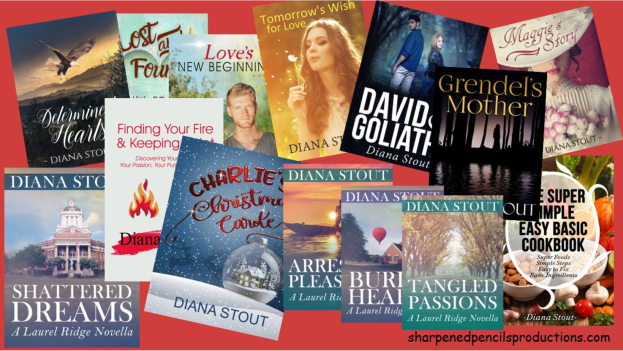
After much pondering and consideration for her New Year’s list of 2020 projects, which includes finishing the last six of the seven Laurel Ridge novellas (covers below), Diana has chosen to finish a grammar handbook, an academic nonfiction text, and a historical screenplay based on a true event.

Insecure Writers Support Group Badge

Purpose: To share and encourage. Writers can express doubts and concerns without fear of appearing foolish or weak. Those who have been through the fire can offer assistance and guidance. It’s a safe haven for insecure writers of all kinds!

Posting: The first Wednesday of every month is officially Insecure Writer’s Support Group day. Post your thoughts on your own blog. Talk about your doubts and the fears you have conquered. Discuss your struggles and triumphs. Offer a word of encouragement for others who are struggling. Visit others in the group and connect with your fellow writer – aim for a dozen new people each time – and return comments. This group is all about connecting!