
Tag Archives: Grendel’s Mother

Grendel’s Mother and The Mistakes I Made as a First-Time Indie Author

Back when magazines were delivered by mail or purchased on the newsstands—obviously pre-internet–one magazine, Calling All Girls which later merged with Young Miss, had a column called, “Was My Face Red!” The column consisted of letters by readers who revealed embarrassing moments. Some were funny, some sad, but they all had one thing in common: they showed how human we all are, reinforcing that we all make mistakes.

Well, I’m here to make a confession—a big one.
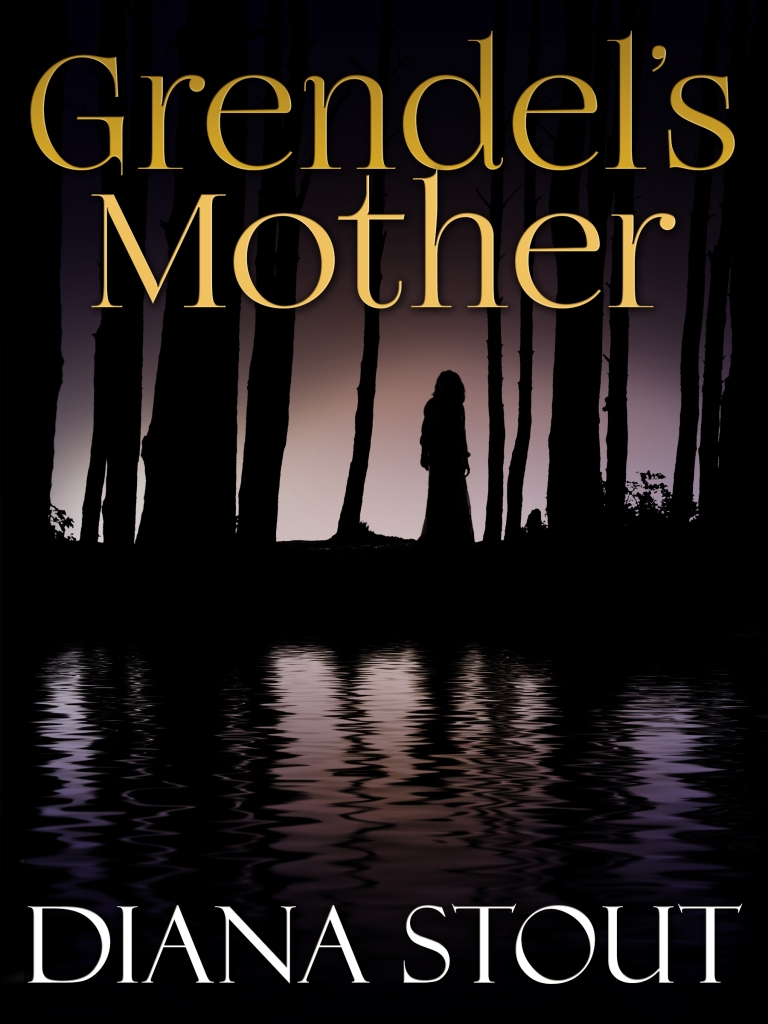
Recently, I discovered that my first indie-published book, Grendel’s Mother, was a bit of a mess.

A couple years after it was published, I saw a review by a German reader who commented on two characters’ names that were misspelled in the book. Sometimes Angus was Agnus. Sometimes Erik was Eric or Erick.

Fortunately, I was able to make the repairs to the names and provide a cleaner copy to Amazon and Ingram right after that reveal.

Or, so I thought.

Turns out there were more issues than just two names being misspelled. Now, I understand why there was silence from certain individuals, people who normally always have an opinion about a book.

During a recent experience of listening to Grendel’s Mother, preparing it to be listed as an audiobook on Amazon, I was stunned to hear the errors:

  • Missing words
  • Correctly spelled words but not the right word, such as again when it should have been against.
  • Repetition of words… in the same sentence.
  • Unclear meaning
  • and more.

Is my face ever red!

I didn’t know. No one said a word. Did they just not want to tell me, didn’t know how to tell me, or did they not see the errors themselves?

I’ll never know the answers, but I can only imagine how some might have been embarrassed for me. I wish I could have known then what I know now, but that’s a fruitless wish. The mistakes I made back then:

  • I had no beta readers, no proofreaders. Just me.
  • I didn’t reread the book multiple times. Multiple as in a dozen or more, until I stopped finding errors.
  • I suspect auto-correct may have been turned on.
  • I didn’t read it aloud.
  • I was in a hurry. The worst possible reason ever.

When I discovered all of these errors recently, I beat myself up for a few minutes, and then, I started to work the problem. I ran the story through the process I use today.

The one thing I don’t do anymore is be in a hurry. I take my time.

I figured it’d take me a week to fix Grendel’s Mother. It took me three weeks.

I’m happy to report that the audio version is now live!

To you readers who left glowing reviews, THANK YOU! To you readers who were brave enough to reveal the errors or flaws, THANK YOU! You made me want to be a better proofreader.

I appreciate you all!

How about you? Do you have any publishing or writing-related Was My Face Red stories you’d like to share?
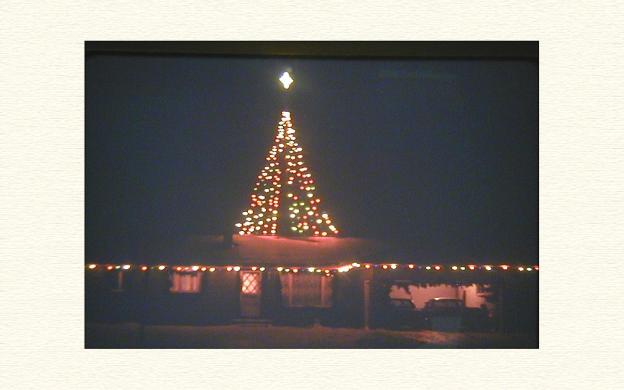
Six Reasons Why Writing Is Like Christmas

The Insecure Writer’s Support Group

December 1 question – In your writing, what stresses you the most? What delights you?

Six Reasons Why Writing Is Like Christmas

Writing a book, like Christmas, is a major event. One that takes planning and a lot of forethought if we’re going to produce a product that goes off without a hitch. Both writing and Christmas can equal amounts of stress and delight.

Reason #1 – the idea

It all begins with that first idea.

For writers, it begins with genre, theme, a character, a plot’s beginning or ending, or even a scene in the middle of the book. Sometimes it begins with a what if question.

For Christmas, it generally begins with what am I going to get everyone?

Reason #2 – the planning

For writers who are plotters, the idea becomes an outline. For writers who are pantsers, there is no planning; their idea takes form as the writing occurs, and if they’re lucky, they don’t go wandering down any primrose paths that force them to backtrack to where they got away from the story’s journey. (The Christmas equivalent of having to return a purchased gift and changing your mind about it.)

For Christmas, this is where the planners’ stress begins in thinking about where to find that perfect present. The equivalent of pantsers at Christmas are those who shop with no list or wait until Christmas Eve to start.

Reason #3 – the execution (doing)

For writers, enthusiasm for the initial idea takes the writer only so far. After that more planning or just gutting it out is required—getting through the dreaded sagging middle. This is where procrastination is heavy, where avoidance is practiced to an art.

For Christmas, this is where writers will turn, most happily, allowing that writing procrastination to continue by performing legitimate tasks of the masses because there’s a definitive deadline: shopping, backing, decorating, wrapping, and drinking lots of hot chocolate. (Did I just synopsize a Hallmark Christmas movie?)

Reason #4 – the gathering

For writers, the gathering occurs as characters come together and start driving the plot toward the story’s conclusion. They gather because of a crime, a dead body, a family celebration where long-time secrets are revealed, and other plots of conflict and stress. So many gatherings, so many activities.

For Christmas, the gathering of presents needing to be wrapped occurs, then the gathering of people’s schedules and arranging the details of trips to Granny’s house or to the beach for a family Christmas vacation.

Reason #5 – the waiting

Anticipation builds.

For indie writers who have submitted the book, the wait for final acceptance of the uploaded file begins, and if accepted, then the wait to official publication—one to three days. For traditional writers, they’ve submitted the book to their agent/publisher and are now awaiting the final yes of publication, which could be anywhere from a few weeks to over a year, depending on the publisher’s schedule.

For Christmas, kids can hardly wait for Santa to arrive. Parents, grandparents, other relatives, and friends are eager for the gathering of people, football games, and the way-more-than-we-needed food. And of course, some just can’t wait for the holiday to be over with, already.

Reason #6 – the big day

For writers, the big day is when that box filled with newly published copies of the book arrives, and it’s opened with excitement and joyous sounds of delight about how pretty it looks. All that hard work culminated into this tangible object that has the writer’s name stamped on the cover and spine.

For Christmas, it’s about the wrappings quickly ripped and shredded revealing the surprise inside to squeals of joy and delight. All followed by the smells and tastes of traditional meals and chatter around the table.

For me, when my high school best friend, Sharon, received her copy of my first indie-published book before I received mine, posting this picture online with obvious excitement, it was just like Christmas. A big day for both of us.

*****

Purpose: To share and encourage. Writers can express doubts and concerns without fear of appearing foolish or weak. Those who have been through the fire can offer assistance and guidance. It’s a safe haven for insecure writers of all kinds.

Posting: The first Wednesday of every month is officially Insecure Writer’s Support Group day. Post your thoughts on your own blog. Talk about your doubts and the fears you have conquered. Discuss your struggles and triumphs. Offer a word of encouragement for others who are struggling. Visit others in the group and connect with your fellow writer – aim for a dozen new people each time – and return comments. This group is all about connecting.

Finding My Way Through the Genre Wilderness

With almost all of my writing projects from the start of writing the first word, I knew the genre and the form. Romance as a novel or as a short short story. Mystery as a short story or novel series. Poetry as a sestina, haiku, or sonnet. Romance novella series. 400-word column for XYZ (magazine/newspaper), non-fiction. And, so forth.

I say almost, because there’s only been one project that I began writing and had no idea what form it would take—would it be long, short, mid-length? —or the genre it would become. For its first written word, I dubbed it a historical, telling myself that I’d research the genre later. As to the form, I figured the story length itself would be the deciding factor. I suspected it would be a novel, but I wasn’t confident about it.

I knew the story took place in the late 5th century and I knew it would be fiction, based on a character from the world’s first English manuscript that had an unknown author. Those were the only two things I knew for sure.

The genesis moment occurred in the middle of my teaching a women’s study survey class where we were examining stories where women didn’t have a voice. In the middle of one student’s presentation of their book, I had that brilliant “Aha!” moment: Grendel’s mother in Beowulf.

I wrote those four words down and felt an excitement rise within, an excitement I hadn’t felt in while. Four years to be exact. Life had intervened followed by a decision to return to school so I could become degreed where I could teach accredited classes. Up until then, the classes I had been teaching in were either online or through adult enrichment classes at colleges.

Once I started going back to school, I was writing just as much as I had before, if not more, but it was all academic writing or creative writing forced by assignments, which were difficult to write because that deep-down bubbling joy and inspiration was always missing.

There was little time for laying any assignment aside, letting time work any creative juices. Instead, quick revisions and polishing, turning it in for a grade was the diction and process of my writing those days.

That initial excitement of a new idea stayed with me through the rest of that class I was teaching and through the commuting drive home. Walking to my car after class and during the drive home, the title was instant—Grendel’s Mother—and she was already talking to me. I saw flashes of scenes, but I had no idea of order or structure.

The minute I got in the door, I dropped my bookbag, keys, tore off my coat, and went straight to the computer. I didn’t even think about eating. That could wait a few minutes.

Those few minutes turned into an hour where I quickly wrote twenty pages of what I thought was the opening pages of the project. It felt like a book. It felt like a historical book. I saw it as a screenplay, too. The images were vivid, the dialogue clear and crisp.

Strangely, I didn’t have to struggle to discover any of the book’s characters. This is the one and only time where all the characters came fully formed, included their bitterness, goals, and wounds. All of them.

It was magical. I didn’t question anything.

I began to question the historical genre. I did some research. How was Beowulf classified? Medieval Poetry, Norse & Icelandic Sagas, English Literature, Epic Poetry, Mythology & Folk Tales. And then, I saw it: Epic Fantasy.

Not until, I was in the end revision stages—and there were many revisions—did the starting pages change. I changed the beginning to provide a better hook. To provide stronger action. The original beginning—that truly started at the beginning chronologically became the transition from present to past. The new beginning was an extremely active scene, taking place nine months later from the original beginning. The transition occurs as a way to deal with the present pain…and so, she starts remembering.

I even got as far as assigning the genre to YA historical because the heroine is a teenager in the beginning; but then, someone said, no, it’s not a YA because she ages. They were right.

The genre fit.

Grendel’s Mother became a novel and my first indie publication. To date, it’s still my most favorite book that I’ve written and published so far.

***

Purpose: To share and encourage. Writers can express doubts and concerns without fear of appearing foolish or weak. Those who have been through the fire can offer assistance and guidance. It’s a safe haven for insecure writers of all kinds!

Posting: The first Wednesday of every month is officially Insecure Writer’s Support Group day. Post your thoughts on your own blog. Talk about your doubts and the fears you have conquered. Discuss your struggles and triumphs. Offer a word of encouragement for others who are struggling. Visit others in the group and connect with your fellow writer – aim for a dozen new people each time – and return comments. This group is all about connecting!

A New Year Means New Opportunities: But Wait It’s February Already!

Okay, I admit it, I’m a bit behind. But since there’s a meme on Facebook that says January was a practice month, that 2019 started with February, I’m on time!

Because it is the new year, it’s time to talk about goals. Or rather about goal-making.

Not successful at achieving your goals? Maybe I can help.

The SMART goal approach is becoming a hot item among writers; well, at least with two, Maris Soule and Diane Burton I know through my writer’s group, Mid-Michigan Romance Writers of America (MMRWA). In fact, both recently blogged about making 2019 goals using the SMART method.

I learned about SMART goals when I taught English classes at Davenport University, a business college. Our students saw the SMART goals methodology used in most of their classes. All the committees I worked on used them, too. In those committees, spreadsheets were used to identify and then track our goals.

Is it any wonder I learned to love spreadsheets? Well, actually, no. I was already in love with spreadsheets before my academic employment. My love for spreadsheets occurred when I was working at W.K. Kellogg Institute for food & nutrition research, where I was a liaison between the cooks there and the procurement department at Kellogg headquarters. I had a wonderful supervisor who taught me how to create cell formulas and create pages that talked to each other. Some of those skills I was able to teach to my academic peers, and now I continue teaching those skills to my writer friends.

I’m big on goals. So are Tony Robbins, Wayne Dyer, and Norman Vincent Peale. These three men, through their books which I read in my 20s, showed me the value of having SMART goals, even though they weren’t called SMART back then. Well, at least, not in their books.

I’m a fan of making to-do lists, too. Daily ones. So, naturally, my goals end up on my daily to-do lists. I have a master lifetime list of goals, a yearly list, which then gets broken down into monthly, weekly, and daily goals.

Do I achieve all these goals? Heavens no. But, here’s the secret. Because of these lists, I achieve way more than I if I didn’t have goals or the lists.

Only when I start getting specific with the weekly and daily tasks is when I start crossing off items. The more items I cross off the list, the more I want to do. It’s truly addictive. And, there’s something magical about writing the goals down. If you’re already a list maker, you already know the best part of any list is crossing it off the items. It’s a rare day, though, when I cross off all tasks.

So, what is the SMART goal?  It’s an acronym for:

Specific

Measurable

Action Oriented

Realistic

Time Bound

SMART goals are why I love our writing group spreadsheet so much, because it’s a way to Measure the Specific, Time-Bound, Action-Oriented, Realistic, monthly, writing goals we individually set up. I use present tense verbs, or as infinitives (To + Verb) when writing the goals:

  • To finish editing [book title]
  • To clean out files
  • Research [book title]
  • Write one chapter of [book title]

I then take those goals and break them down into daily, sizeable chunks, doable in 10-15 minutes, others in an hour or so and place them in planner’s calendar. In the years I’ve been doing this, there’s only one month where I completed all the goals. Most of the time, I feel good to accomplished half of them.

Without the spreadsheet, without the SMART goals, I wouldn’t be doing much. Yup, I’m that lazy. That forgetful. Get that sidetracked. I refer to my list multiple times throughout the day.

Bottom line, it really doesn’t take a new year to create new opportunities. Each day is a new opportunity to start a SMART goal, even at 11:55 p.m.  After all, a lot can be done in five minutes. Such as creating a goals list for the year.

So, what are my goals for this year?

  • To republish two of my first three books published. The first one, Determined Hearts, is already published.
  • To plot out the four remaining novellas in my Laurel Ridge novella series. The first one, Shattered Dreams, is published. #2 & #3 have the first drafts written. Ideally, I’d like to write the first drafts for the remaining four, then start publishing them at the end of this year and next.
  • To edit 2-3 screenplays and publish them. My first screenplay, David & Goliath is already published.
  • To sort materials for writing how-to series
  • To plot out a historical (can’t decide if as a novel or a screenplay)
  • To write quarterly blogs (A huge improvement over last year’s few postings)
  • To schedule on calendar promotional days throughout the year. DONE!!! (On these days, I’ll spend creating Facebook, Twitter, and Pinterest promotional posts and/or ads. During 2018, I recognized I was doing promotions 80% of the time, writing only 20%. I want to flip those percentages.)

Actually, I do have a few more goals, but you get the idea. And you can see how I cross them off and write DONE at the end of the line. It’s both thrilling and fulfilling to write DONE.

And, that’s what this blog is: DONE! One-quarter of the way done for this quarter’s blogs.

So, how about you? Do you use SMART goals? Does this blog make you want to try using them?

Part II – Genesis & Development of Grendel’s Mother

The choices I made and why.

So, I had an idea for this book, Grendel’s Mother, and I had 20 or so pages written.

I knew how my story started, and I knew how it would end, but I had only a vague idea about a few special events in the middle.  During the next few years, I would add scenes that I would write out and then file away.  I’d jot notes on napkins, scraps of paper, and on the backs of bookmarks.  Everything went into a file folder.  Then, in 2006, I took all these bits of scenes and dialogues and strung them together, and developed a detailed outline.

I worked on her characterization: her dreams, desires, fears, and flaws.  I knew she would be young.  At first, I had her as fourteen, but then realized that would be too young, so I made her fifteen.  She was a precocious creature, thinking the rules didn’t really apply to her.  Consequently, that thinking always got her into trouble.

In 2009, I began my Ph.D, so once again, all creative writing came to a halt while I wrote academic papers.  With my Ph.D. in hand, I had to make a decision: would I continue writing academically or would I return to my creative writing roots?  I couldn’t do both while working full-time, with most of my time spent teaching, grading papers, and as an administrator for the English Department.

I choose creative writing with the support of my supervisor.  In earnest, the draft writing began.

The writing was not easy.  I found myself jumping from first person to third person but predominately, I was writing in first person.  Which should I use?

I was using both present and past tense.  Again, I found myself asking, which should I use?

I decided not to make a decision until I completed the first draft.  In the end, the book became a first-person, present-tense story, except for a brief period when Grendel’s mother goes back in time, which starts in past tense and then evolves into present tense again because the story brings that back story into the present.

While I had given this character a name, I realized mid-way through the first draft that her name hadn’t been used.  Should it be said?  Was it necessary to know her name?  I ended up naming her but her name is never mentioned in the story.  I chose this route deliberately, even when as a child, Grendel asks his mother what is her name?  She tells him to call her what he always has—Mother.

My outline didn’t include Beowulf characters, not until   Grendel becomes a teenager and starts fighting Hrothgar’s thanes.  While Hrothgar is mentioned early in the story, the others—the thanes and Beowulf—don’t appear until Grendel tangles with them.  In the end, this story is a stand-alone tale of a woman who stands alone, as the only daughter in a large family of brothers, as an outcast from her community, sacrificed to a dragon, and who creates a home in the wilderness, becoming one with Nature, where she gives birth and raises her son.

A reader doesn’t require prior knowledge of Beowulf to understand the story, and yet the story is made richer with that knowledge.  Because I was concerned about readers not having prior Beowulf knowledge, when I was looking for Beta readers, I chose one reader with no knowledge, one with some, and one who had good knowledge of Beowulf.

In the end, all three readers agreed:  it didn’t matter if the reader had Beowulf knowledge or not.

Interestingly enough, the reader with no knowledge has since gone out and purchased Seamus Heaney’s translation in her desire to know more about the epic poem.

Purposefully, I designed this story as a literary and commercial work of art.  While literary, it can easily rest on a traditional mainstream bookstore shelf.  My desire was to craft a story that would appeal to audiences of both young adult, new adults, and adults in general, much like The Maze Runner, The Hunger Games, The Divergent series, and others books have achieved.

So how long did it take me to finish that first draft?

Once I made the determination that I would finish it as soon as possible, with the help of both in-person and virtual write-ins that I attended, I was able to complete the first draft, revised it, and polish it in just a few months.

It was during my writing of Grendel’s Mother that I learned that Beowulf was J.R.R. Tolkien’s inspiration for The Hobbit, that George R. R. Martin’s, The Game of Thrones series was inspired by Tolkien.  And, I have to imagine that many works of today’s fiction and TV series were similarly inspired.

Grendel’s Mother: Its Genesis and Development

Part I: The Genesis

There is no question about this project: it was huge.

The initial idea was huge.  The fact that I wrote 20 pages that same night in an hour’s time was huge.  In fact, those pages were the first major creative writing I had undertaken in four years.  Up until then, most all of my writing endeavors were driven by the college classes I was taking.

The fact that it took me ten years to write the book was huge, as were many of the events that interfered with its writing:  my college education, starting a new career field, the deaths of my father, my sister, and then my mother.

Once I was able to return to my creative writing, I knew finishing this book was central to my continued success as a creative writer.  At the time, I vowed I would work on nothing else, creatively, until this book was finished.  I kept that promise.

I kept that promise.

As much as I wanted to work on other projects, I knew my next career move, which would be full-time writing, was based on my finishing this project that had been consuming me for a decade.  There wasn’t a day when I wasn’t thinking about it, how it would be a great book for high school or college classrooms.  How readers would have a different perspective on the oldest Old English written story.  How I could give a voice to a woman who had no voice in the original literature and who was talking to me loudly nearly every day.

And so, late in 2015, the book was completed – a major dream, a major goal.  That achievement was a major event because the writing was not easy and the journey was fraught with obstacles.

In the mid-90s, following that success of writing and publishing several romances, I became a screenwriter where I was working with a handful of producers who wanted to see everything I wrote.  As they told me, they loved my writing.  Now it was about finding a good fit with my ideas.

Instead, my life and my work took a hundred-and-eighty-degree turn.  A divorce had me entering the workforce full time, but I no longer wanted to work in an office or perform bookkeeping, both of which I’d done my entire adult life.  While I was good at both jobs, they weren’t my passion.

Several events and almost two years later, I entered college, starting with my associate degree.  As a result, I was writing all the time.  I watched as my thinking changed about classical literature, including poetry; and then, the first class into my bachelor degree changed my thinking in a major way.  The class, part of the medieval program at Western Michigan University was “Heroes and Villains” where I encountered Beowulf for the first time.

The Graduate Teaching Assistant, Rhonda McDaniel, who was my teacher was delightful.  She challenged my ideas and cheered me on all at the same time.  We had many engaging conversations both during office hours and in class.  Because of Rhonda, I wanted to pursue a minor in Medieval Studies.  I would lack that achievement by one class, but in my heart of hearts I became a medievalist and still am.

I would study Beowulf twice more, both times with different and engaging professors.  Today, Beowulf is still one of my favorite books.

It was after these studies of Beowulf and as I began my third year of my master’s degree in creative writing, that I began teaching a Women’s Studies survey course, where we discussed women’s issues including books written by women or with a woman as a protagonist.  A major recurring topic was how women did not have a voice in many instances in history or in literature.  It was that thought during that fall 2006 semester that I realized Grendel’s mother had no voice.

All day I thought about her.

That night I sat down, in an hour’s time, I wrote the first twenty pages.  I ignored everything to do with proper and grammatically correct writing and watched as the words poured from my fingers, through the computer keys, and onto the pages.

The euphoria I felt afterward was incredible.  I’d found the zone again, not realizing how much I had been missing it.

Those pages became the genesis, which I titled that night and it’s a title that has not changed: Grendel’s Mother.

 (to be continued Part II – The Development of the Story: The Choices I Made and Why)