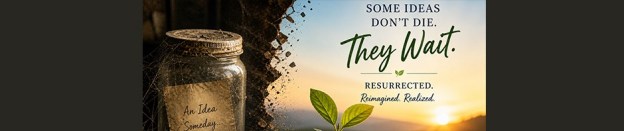
In today’s Writers in the Storm blog, Joseph Lallo talks about “Restarting Old Projects / Continuing a Series After a Hiatus,” saying, “Chances are good that any author who’s been at it long enough will have at least one project that’s been simmering for years, either in an unfinished state or begging for a follow-up.”
I wish I had only one project that’s been simmering for years. Instead, I have dozens! Extremely prolific in the ‘90s, most projects were drafted and not polished. Those that were finished weren’t finding a home, as this was well before indie publishing, when one needed an agent—a difficult task to achieve.
Fortunately, I managed to get published with two different publishers, and having made lots of cold calls to Hollywood producers, I was working with half a dozen who wanted to see everything and anything I did. But then in 1998, a divorce, a move across the country, and then returning to school as a non-traditional student, my creative writing got put on hold for fifteen years.
Oh, I was writing. More academic than creative, but I did manage to write papers with topics I could later use for more projects. Silly me. Adding to the pile of unfinished ideas.
I’d been teaching professionally for a decade, and it was two years after receiving my Ph.D. that I was let go from my job—two years before I could officially retire with full benefits. Two years later, I officially retired, and within months, I created my production company and became an indie publisher. The first book was Grendel’s Mother, an idea generated after studying Beowulf in three different classes and realizing Grendel’s mother had no voice. My book gave her one.
After that, I began pulling projects off the shelf, blowing off the dust, and giving them life.
It’s been quite the journey.
Looking at my list of books published, they all have ties to earlier projects I’d written or had been teaching since the ‘90s, except for last year’s publication, Harbor House: Deadly Intentions. That story was a new historical Gothic novella for an anthology, published in 2024, which I then tied into a newly written contemporary story, allowing me to create a split-time thriller.
The current thriller I’m working on, Buried Trash: A Shelby Hale Thriller, is a mystery series resurrection from the ‘90s that I’m turning into a thriller. It’s the characters who hooked and convinced me to make the conversion.
From that 1996 manuscript, let me introduce you to the main character…
I’m Shelby Shawn Sherman Roberts, one month shy of turning thirty-nine. I hate gossips and love cotton candy. I’m slim, with shoulder-length dark hair and brown eyes. I squint too much (need glasses), drive too fast, and laugh too loud.
My first name belonged to my grandfather, and my mother protested it being hung on me, but Dad told her, “It’ll make her strong.” The only thing it did for me was get me a bloody nose or a black eye every first week of school until I entered fifth grade and I was finally able to return the favor. I guess Dad was right, after all.
Mom named me Shawn after her first actual boyfriend. The one that made her toes tingle when he kissed her, she said. In her mind that was what love was all about. Of course, Stuart, my ex-to-be, never did make my toes tingle. I thought he did once, but then I realized he was standing on my foot.
I’m constantly asked—or rather used to being asked when I was single—if I was related to that Sherman. I guess my Southern accent lends one to think I don’t mind hearing that question. It was usually asked by some drunk fraternity boy who always had a leer on his face. You’d have thought I’d have learned my lesson and stopped going to those kinds of parties. What can I say? I was young. I was more stupid then.
Come to think of it, I met Stuart at one of those parties.
While she starts out as Shelby Shawn Sherman Roberts, she changes her last name to Hale. A name she creates for herself now that she’s creating a new life and moving back to her small hometown and a pecan orchard she inherited some time ago. Her plan is to live in the trailer her ex installed on the property when she first inherited it.
And then, her first morning back from Atlanta—after the court appearance to finalize the divorce and collect the rest of her belongings—she finds a body in her trash can.
From the current rewrite, the book begins:
Had I known ahead of time that what I’d find in my trash can would put my life in danger, I would have done the smart thing: say nothing, not call the sheriff—my best friend and my first husband for all of about a month when we were 19—and let the garbage truck pick up the trash, as usual, letting the truck empty its contents into the country landfill.
Unfortunately, I’m not known for doing the smart thing. I react, not thinking things through well enough.
It’s how I ended up married three times.
I’m 38 and starting over.
Again.
The potential for this book to become a series is there, but it’ll depend on the readers. Hopefully, it’ll garner enough fans who want to read more.
Be sure to follow me here, and then go subscribe to my What’s New with Dr. Diana? announcement-only newsletter/blog on my website, so you can follow my progress via email. I plan to publish Buried Trash in the fall or late summer. With over 25k words already written and the story plot revised, my goal is to finish the first draft this month.

The Secret Joy of Writing & When Lightning Strikes
Every business has practices that participants try to follow, believing they are best practices.
Writing is no exception. Large numbers of blogs and books are written on how to launch a book. And, each includes a long checklist that starts months before publication. After publication, there’s more promoting: newsletters, more blogs, book signings, blog tours, social media participation, ads, and more.
Not to mention, joining writing organizations, attending conferences, subscribing to newsletters, and taking classes.
Truthfully, the list of things a writer should do, whether indie or traditionally published, is overwhelming.
Most writers say their joy comes from the writing. I don’t know of a writer, yet, who says they love promoting their books.
I’m no exception. My joy comes from writing, teaching, and helping other writers.
After much analysis of how I spent my time in 2023 (60% promoting, 30% writing, 10% everything else), I realized that to flip those numbers, I needed to make drastic changes. I began asking questions like, Do I really want to do this? Do I need to do it?
I concluded that…
I’ll do book signings when readers clamor for them.
I have a newsletter, but it’s an announcement-only newsletter, which means I send them out only a few times a year. Producing a regular newsletter doesn’t work for me.
I’m on social media, but I don’t like doing videos or podcasts. So, I’m highly active on only a few platforms.
I still have big goals, but better yet, I have great writing habits that move me toward achieving them.
As a result of my changes, in 2024, I spent 80% of my time writing and 10% promoting. Because I believe a backlist is important, I wanted to produce more.
Finally, I stopped comparing my activities to other writers. I allowed myself to be different, to do me. Now, I only compare myself to how I’m doing this year compared to last year.
And when I read a book from an unknown (to me) author, I took comfort in later discovering her method was even more extreme than mine.
—
The Tale of One Author Who Did It Her Way and Still Does
After I read one book by this author, a book she’d published after about 15 other books, I learned she had written about 24 books total, so far. I found her 30,000 members strong fan group of mostly readers and some writers and joined.
I began reading her earlier books. While they weren’t as riveting as the first one I read, as I moved through her backlist, I could see how her writing improved.
Her print and eBooks were sold only through Amazon. She was an indie author who did no book signings, no interviews, no publicity, and minimum advertising on Amazon.
Suddenly, her fan base blew up and her books started hitting the best-seller lists. At one time, she had three books in the top ten. Publishers began seeking her out, republishing her books.
Now, her fan group has 170,000 members. She has two publishers with print books everywhere and audiobooks online in libraries. She continues to be in the top ten of the best-selling lists, and she still participates in her Facebook group where she started. She’s vowed her eBooks will always remain in Kindle Unlimited. Today, she has an agent, and her most popular book is being made into a movie.
While she doesn’t do book signings, she does sign books that are sold through the bookstores, plus she sells bookplates that are signed. They’re just one product on her website, products readers requested,
Lightning struck because she authored great stories readers wanted to read. She wrote for pure enjoyment, then started publishing them just to share. She wasn’t interested in making money; she already had a career—as a doctor.
She did her.
She’s my role model.
Her name is Freida McFadden.
While I’d love to be earning a living from my writing and don’t have a secondary career anymore, I’m doing me and trying to manifest my own lightning strike. Thus, my focus is to author great stories and to share what I’ve learned. Hopefully, one day, I’ll have a rabid fan base, as well.
In the meantime, I’m excited every time I open a box of newly published books and find immense joy in the writing.
—
Your takeaway: Take time to try different activities, but stick to those activities that are a good fit energy- and money-wise for you. Activities that leave you feeling joyful and excited to be a writer.

Getting UnStuck
There are times when you have to stop and assess your surroundings because you’re feeling anxious, stuck, or disorganized.
The past two weeks was one of those times.
Last March, after my historical gothic romance novella, Harbor House: Say You Will was published in an anthology, I took all my storyboard Post-it notes[1] from the psychological paranormal thriller, Harbor House: Last Blood, that occurs in the same location with the same family but 100 years later and typed the notes into a treatment/synopsis outline, giving myself an October publication deadline.
Even though I was finishing the publication of CPE, its companion workbook, and two audiobooks—all projects I had started the year before, and knew I’d be teaching a two-week Master Class, had a blog commitment, and was going to a weekend writing workshop, I figured I could get the book written and edited by summer’s end.
So, I made announcements of my intent to publish Harbor House: Last Blood in October.
What I didn’t expect was the time it would take to finish those three preceding projects. As I worked on them, the outline sat on my desk, gnawing at me, the characters screaming, “It’s our turn. NOW!”
Between then and last week, I was able to write 75% of the first draft. A good beginning, but, I noticed since returning from the weekend workshop that my writing had slowed. I was struggling. I began to doubt I could make the October deadline. After all, it was now August, and the first draft wasn’t finished.
I had to get past a scene that didn’t feel right. So, I went ahead and wrote it, and then later that night, I knew I had to delete it totally. Instead of having a dog poisoned, it would be found locked in a distant room, which appears to have been on purpose. Problem solved.
So, I was writing again, but I was still dragging my feet. Why?
Looking around, I sensed it was my surroundings. My bookcases were messy. The energy (Chi) was stagnant and getting caught in corners.
In the end, I took a few days to…
- Cull my books—no more double-stacked shelves!
- Move my desk a bit, giving myself more room to move around.
- Clean off my desk.
- Move my published books to shelves behind me, so that my profile on Zoom is more professional.
- Organize my binders so that the projects published are together and the projects to be finished are on a different shelf.
- File loose papers into their proper binders or in file folders.
As I worked, I felt the Chi in the room swirling. Energy in motion.
I had been stuck mentally because my projects were stuck (messed up) physically. My environment had been affecting my creativity.
How about you? Do you find you have to clean things out to feel motivated again or to feel refreshed? Do you find changing your surroundings leads to better creativity?
[1] I write about my storyboard Post-it notes method of plotting in my how-to book, CPE: Character, Plot, & Emotion, which has an accompanying workbook with full plotting sheets as an aid. Sold only on Amazon at https://www.amazon.com/CPE-Character-Emotion-Diana-Stout/dp/B0D2TQ7ZG8.
Gratitude and Manifestation: A Writer’s Journey of Abundance
What I’m posting today is a journey. It evolved over time and may appear a bit fractured, but trust me: it’ll come together in the end. As all good stories do. And, I’m posting it on two of my blogs: Behind the Scenes with Diana Stout, MFA, PhD because the story concerns my writing and life as a writer; and Into the Core: One Woman’s Mystic Journey because this story deals with my intuitive, mystical side where manifesting and gratitude play a huge role.
March 13, 2023
I’m doing a 30-day manifestation exercise with my niece, Heather. Part of the ritual is to record 10 things you’re thankful for and then list what you’d like to manifest. Thirty days.
I started my notebook on this date, which, incidentally, is my deceased Mom’s birthday. I’ll clue you in on the importance of that memory in a minute.
Each day, before I made my list of 10 things for which I was grateful, I’d reread a passage that basically said, for those things you are grateful, you will have abundance. For the things where there is no gratitude, what you have will be taken away.
Later, I added: Nothing will change until you are grateful.
After our daily exercise concluded, I was still recording daily gratitudes plus journaling events and opportunities I’d been manifesting, along with lessons I was learning.
That night, a group of writers interested in writing a story for an anthology to be published through the Greater Detroit Romance Writers, of which I’m a member, was discussed.
I’ve had an idea for a Gothic based on a spooky house for a long time. The Uninvited with Ray Milland, Ruth Hussey, Donald Crisp, and Gail Russel, a black and white movie released in 1944, was my inspiration. (Great movie!) I was in 9th grade when Mom introduced me to that movie and that genre. I would start inhaling every book published by Victoria Holt, Dorothy Eden, Phyllis Whitney, and Mary Stewart.
According to Lori A. Paige in her book, The Gothic Romance Wave: A Critical History of the Mass Market Novels, 1960-1993, her research discovered that these mass market books were published in the late 60s and 70s during what is known as the second wave of the woman’s rights era. It was during that time, I was reading everything those authors published. Paige says:
In Jane Eyre, the work on which most mass market gothic romances were based, the hero and heroine (at least upon first glance) represent the two extremes of Victorian psychology, sentimentality, and brutish cynicism, which heightens the conflict (as well as the attract) between them.
What drew me to the Gothics were the haunted houses. The heroines weren’t active or strong but were passive and cowered in fear a lot. The heroes, at first thought to be creatures of the night as vampires or werewolves, would come to their aid and rescue them from the true source of evil—the house and its ghosts. The books’ covers showed women running away from the houses.
I realized by volunteering to do an anthology novelette, it could be my entry into a full-length Gothic novel where I would change the story after I got the rights back four months after publication. I already had the house. Now, I just needed some ghosts.
The novelette, Harbor House: Say You Will, was written and turned in by the August due date for an original October publication, which in September got moved to January 2024.
Summer 2023
While writing the story through the summer, I was reading Freida McFadden’s psychological thrillers. I was hooked on the old-time Gothic feel of the books, at least those that had big mysterious houses out in the middle of nowhere.
And then, inspiration hit.
Why not turn the historical Gothic novelette into a modern-day psychological thriller? Better yet, let the Gothic story stand as it was, set in the 1920s, and turn the thriller into a story of the same family 100 years later?
I could now write an old-fashioned Gothic-style story but with added psychological thriller and paranormal elements.
Fall 2023
While at a weekend writing retreat, I created a rough outline of Harbor House: Last Blood on a storyboard, brainstorming with a writer friend.
I put it aside to work on CPE: Characters, Plot, & Emotion. Another idea I’d been manifesting for a while. The spark of its real-time creation is another story to tell.
March 2024
During a three-week period in March, while waiting for a testimonial for the CPE book, I created a more detailed outline, including the setups and payoffs, the triggers, the symbolism, and other little details that enrich a story. The story was ready to write, but first I had to finish and publish CPE and its companion book, the CPE Workbook.
May 26, 2024
I wrote the Epilogue and Chapter 1 to Harbor House: Last Blood.
Needing to prep for an online class I’d be teaching the first two weeks in June became a priority. Henceforth, any writing would be toward that class. The story would have to wait again.
June 9, 2024
The class ended, and I began writing Harbor House: Last Blood in earnest.
Today, Tuesday, June 18, 2024
A week later, I have now written 25% of the first draft. I’m on track to have the first draft finished by July 4. That leaves me July and August to rewrite, revise, and polish before handing it over to some beta readers.
So far, this is the best story I’ve created. As it should be.
The novelette, Harbor House: Say You Will is currently not in print, but I’m publishing it as a stand-alone book later this summer or early fall. To be followed by Harbor House: Last Blood in October.
Manifesting isn’t always instant. Many of my manifestations have germinated decades earlier… waiting for the right conditions to flower and grow. Though, it is fun to watch those manifesting desires that occur rapidly.
So, what does any of this have to do with gratitude?
- I’m thankful for the ability to write fast.
- I’m thankful for the ideas that flow my way.
- I’m thankful for finally knowing that I have found my true genre. Even if this late in life.
- I’m especially thankful for my followers, fans, and friends.
- I’m thankful for the opportunity to share this story with you.
How about you? What are you grateful for, and what are you manifesting?
Procrastination Preparation
I’m teaching a Master Class for two weeks, starting Monday, Avoiding (& Using) Procrastination.
As I went over the lessons, updating and rewriting some sentences, I got to review the content again. I’m always amazed at the science of procrastination. We’re told we’re awful people if we procrastination, but the science behind why we do it is eye-opening.
Then add the complexities of our actions that can include triggers and anxiety, and well, procrastination becomes a well-used recipe for disaster.
After I researched the topic more thoroughly, I discovered I could be in full control of my procrastination: choosing when to use it or choosing to dismantle its hold.
The best part of teaching any class for me is seeing my students’ aha moments. When they suddenly realize they have empowerment over a myth that they once considered as truth.
- Do you struggle with procrastination?
- Would you like to have super powers to dismantle its hold on you?
- Would you like to learn how to change your perception and actions of procrastination forever in just a few minutes a day for two weeks?
There’s still time to join the class!
To learn more or to register, go to https://writeruniv.com/master-class-using-avoiding-procrastination/.

Grendel’s Mother and The Mistakes I Made as a First-Time Indie Author
Back when magazines were delivered by mail or purchased on the newsstands—obviously pre-internet–one magazine, Calling All Girls which later merged with Young Miss, had a column called, “Was My Face Red!” The column consisted of letters by readers who revealed embarrassing moments. Some were funny, some sad, but they all had one thing in common: they showed how human we all are, reinforcing that we all make mistakes.
Well, I’m here to make a confession—a big one.
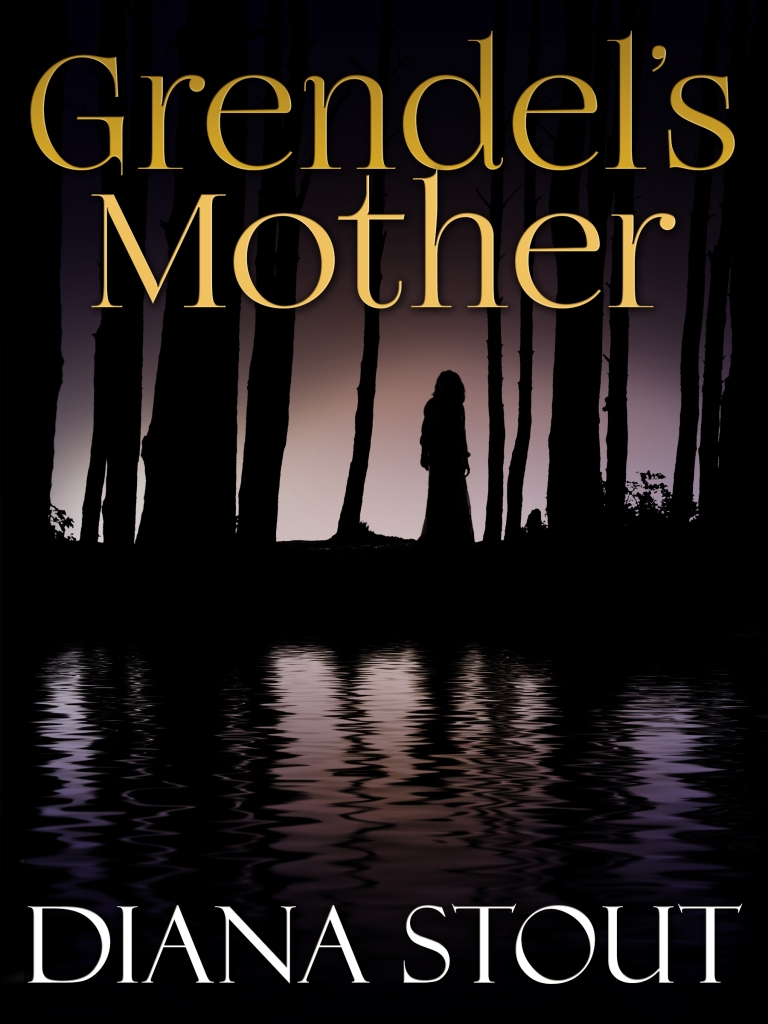
Recently, I discovered that my first indie-published book, Grendel’s Mother, was a bit of a mess.
A couple years after it was published, I saw a review by a German reader who commented on two characters’ names that were misspelled in the book. Sometimes Angus was Agnus. Sometimes Erik was Eric or Erick.
Fortunately, I was able to make the repairs to the names and provide a cleaner copy to Amazon and Ingram right after that reveal.
Or, so I thought.
Turns out there were more issues than just two names being misspelled. Now, I understand why there was silence from certain individuals, people who normally always have an opinion about a book.
During a recent experience of listening to Grendel’s Mother, preparing it to be listed as an audiobook on Amazon, I was stunned to hear the errors:
- Missing words
- Correctly spelled words but not the right word, such as again when it should have been against.
- Repetition of words… in the same sentence.
- Unclear meaning
- and more.
Is my face ever red!
I didn’t know. No one said a word. Did they just not want to tell me, didn’t know how to tell me, or did they not see the errors themselves?
I’ll never know the answers, but I can only imagine how some might have been embarrassed for me. I wish I could have known then what I know now, but that’s a fruitless wish. The mistakes I made back then:
- I had no beta readers, no proofreaders. Just me.
- I didn’t reread the book multiple times. Multiple as in a dozen or more, until I stopped finding errors.
- I suspect auto-correct may have been turned on.
- I didn’t read it aloud.
- I was in a hurry. The worst possible reason ever.
When I discovered all of these errors recently, I beat myself up for a few minutes, and then, I started to work the problem. I ran the story through the process I use today.
The one thing I don’t do anymore is be in a hurry. I take my time.
I figured it’d take me a week to fix Grendel’s Mother. It took me three weeks.
I’m happy to report that the audio version is now live!
To you readers who left glowing reviews, THANK YOU! To you readers who were brave enough to reveal the errors or flaws, THANK YOU! You made me want to be a better proofreader.
I appreciate you all!
How about you? Do you have any publishing or writing-related Was My Face Red stories you’d like to share?

The One Book Review Every Author Wants
The Insecure Writer’s Support Group
The December 6 question: Book reviews are for the readers. When you leave a book review, do you review for the Reader or the Author? Is it about what you liked and enjoyed about your reading experience, or do you critique the author?
The One Book Review Every Author Wants
In my opinion, book reviews are for readers.
Ideally, the reviews should be about the writing: is the plot good, are the characters likable? Is it a book you enjoyed?
If you didn’t enjoy it, what in particular didn’t you like about it? How it ended? That words unknown to you were used? That there were grammar and punctuation errors on every page?
What’s sad is when a reviewer leaves a 1 star and states that the package arrived torn and the book destroyed. That review has nothing to do with the writing and everything to do with the shipping, of which the author has no control or involvement. So why penalize the author with that type of review?
I may read a book that isn’t my cup of tea but that doesn’t mean the writing isn’t any good. In most cases, the writing is incredible; it’s just that I’m becoming bored because as a writer, I know how it’s going to end. So, I skip to the last chapter and read it. Yup, sure enough. I want to read a book that stirs my emotions or has me guessing as to its outcome.
The thing is, I would never leave a bad review because of my own biases. I leave a review because the writing is good, giving it a good score, putting my bias aside. I know many other readers would enjoy it.
I’ll promote good writing every time. Reviews are subjective and each review is just one person’s opinion, that person’s opinion.
I’ve learned if one friend recommends a book, I probably won’t read it. Her likes and mine aren’t the same. However, if another friend recommends a book, I’ll check it out; she and I are reading similar genres and get excited about the same type of book—the psychological thriller.
The one review that can’t be bought is the word-of-mouth review. When your friend excitedly calls you and asks: Have you read XYZ yet? OMG, I couldn’t put it down. I was up until 3 a.m. last night finishing it!
The last books I read like that were The Martian by Andy Wier, Verity by Colleen Hoover, and Never Lie by Frieda McFadden. These are books I’d like to write; they’re intense and page-turners! They’re the standard I’d like to achieve and books that I highly recommend word-of-mouth.
For some fun reading, to clear my reading palette from the thriller intensity, I enjoy reading Amish romances by Mindy Steel and Sarah Price whose books are based on Jane Austen’s books and a few fairy tales.
What were your last few page-turner books?
*****
Dr. Diana Stout appreciates her readers and fans. One day she hopes to write a book that generates so much word-of-mouth advertising, thus motivating sales that she finally hits the milestone of earning the title of best-selling author and cross that goal off her bucket list.
Learn more about Dr. Stout at her website, Sharpened Pencils Productions.
Purpose: To share and encourage. Writers can express doubts and concerns without fear of appearing foolish or weak. Those who have been through the fire can offer assistance and guidance. It’s a safe haven for insecure writers of all kinds!
Posting: The first Wednesday of every month is officially Insecure Writer’s Support Group day. Post your thoughts on your own blog. Talk about your doubts and the fears you have conquered. Discuss your struggles and triumphs. Offer a word of encouragement for others who are struggling. Visit others in the group and connect with your fellow writers. This group is all about connecting!

4 Reasons Why I Participate in NaNoWriMo
The Insecure Writer’s Support Group
The November 1 question: November is National Novel Writing Month. Have you ever participated? If not, why not?
4 Reasons Why I Participate in NaNoWriMo
I’ve been a participant in November’s National Novel Writing Month since 2013, although not in 2014. All total, I have participated for nine years, ten if we add next month’s event.
During eight of those years, I worked on writing and then later editing my Laurel Ridge romance series of seven stories. It was during 2016’s NaNoWriMo, after the spring publication of the first story, that I discovered I had a timeline nightmare with the other six stories. I spent the rest of 2016 and a good part of 2017 mapping out the remaining six stories.
Once I had the timeline properly mapped out, I spent 2017-2022 writing first drafts and then editing them, publishing #2, #3, and #4 in 2022, and #5, #6, and #7 earlier this year. All were first published as eBooks, and just last month, I published the bundled eBook version and print book.
During that five-year period, I published six additional books consisting of a cookbook, two screenplays, a nonfiction how-to book, and reprinted two romances. I was editing the novellas in between these other books.
Besides the November event, I attended Camp NaNoWriMo in April and July 2022.
- I participate every year and am adding other monthly camps because:
- It creates accountability.
- I write faster with a goal and deadlines.
- I get to buddy up with other writers.
- I like to look back over past years’ goals that are now published.
Since 2013, this will be the first time I won’t be working on a romance. This time I’m working on a how-to plotting book/workbook for writers. For now, the title is a secret; I don’t want to give too much away. Not yet.
My goal is to finish the book this year, hopefully publishing it this year. Even though it’s not a big book, I’m hoping it’ll make a big impact and be helpful to writers who struggle with sagging middles and who’d like to write faster.
By the time you read this, November’s NaNoWriMo will have started. I can’t wait.
Are you joining us this year? Want to become a buddy with me? I’m listed by my name.
*****
Purpose: To share and encourage. Writers can express doubts and concerns without fear of appearing foolish or weak. Those who have been through the fire can offer assistance and guidance. It’s a safe haven for insecure writers of all kinds!
Posting: The first Wednesday of every month is officially Insecure Writer’s Support Group day. Post your thoughts on your own blog. Talk about your doubts and the fears you have conquered. Discuss your struggles and triumphs. Offer a word of encouragement for others who are struggling. Visit others in the group and connect with your fellow writers. This group is all about connecting!


Where Do My Story Ideas Come From?
The Insecure Writer’s Support Group
This month’s question revolves around someone saying, “99% of my story ideas come from dreams. Where do yours predominantly come from?”
Where Do My Story Ideas Come From?
I’m frequently asked where I get my story ideas and the answer can be covered in one word:
Everywhere
Here’s a sampling of some of the places I get my ideas from.
- Dreams – but only two ideas have come from a dream. Really dark crime-filled dreams, one of which had me questioning reality. So vivid, I woke up wondering how it was that no one had found the body yet.
- Conversations – mostly those I overhear in the booth next to me.
- Books – a location, situation, or just a sentence can send me on a what if adventure.
- Movies – especially those that have been redone in a creatively different way. I’m spurred by the originality that has me going down the what if rabbit hole.
- Voices – yes, the ones I hear. It’s amazing how a character starts whispering in my ear, inspired by any of these other ideas, and starts laying out their idea of the storyline.
- Landscapes & locations – the possibilities that pop up are magical
- Old Houses – I don’t know what it is, but the minute I see certain old houses, lighthouses, bridges, and other structures, I hear/see the story too. It’s as if I’ve stepped into another era.
If you see me reading, then suddenly looking up and staring out the window… a new story has come to mind.
If I lived to be 300, I would never get to write all the stories that have been gifted to me.
So many stories to tell, so little time.
Purpose: To share and encourage. Writers can express doubts and concerns without fear of appearing foolish or weak. Those who have been through the fire can offer assistance and guidance. It’s a safe haven for insecure writers of all kinds!
Posting: The first Wednesday of every month is officially Insecure Writer’s Support Group day. Post your thoughts on your own blog. Talk about your doubts and the fears you have conquered. Discuss your struggles and triumphs. Offer a word of encouragement for others who are struggling. Visit others in the group and connect with your fellow writers. This group is all about connecting!
A Writing Career Path: Finding the Joy
While writing a book wasn’t the start of my writing career, I do remember when I decided to write a book and how the excitement of possibilities appealed to me.
At the time, I was reading a book a day—mostly romances. Those slim, Silhouette and Harlequin romance books that had new titles every month. The books read fast and left me feeling good and filled with hope.
How hard could it be to write them?
Actually, it was way harder than I had imagined. While it looks easy, it really isn’t. It took me a year and a half to write that first book. Selling it was another matter altogether.
It took writing five books to learn about determination, needing a plan (more like an outline), diligence, and sheer grit. Along with agony and disappointment.
I was writing the first few books in an era where there were no computers, only typewriters. Where you had to have an agent in order to submit your manuscript to the publisher. And, where all manuscripts were mailed via USPS, where it could take months or a year to hear back from the agent, let alone the publisher.
Thankfully, the computer came into being amid writing those books. Rewriting became easier. Not much else became easier, though.
Early in my career, I was successful in writing short nonfiction via a newspaper column and then magazine articles. Writing nonfiction, whether creative nonfiction, academic, or technical came easy and still does. I was published in nonfiction within a couple years.
Writing fiction, however, was much harder and required a lot of trial and error. I wrote piles of romance short stories before attempting my first novel.
I remember taking one of those Harlequin books and wrapping it using the brown paper from a paper bag like we used to do with school textbooks, and I put my book’s title on the cover along with my name. I planted that book in front of my typewriter.
I had a goal.
It would take 12 years before I would publish my first book. I nearly gave up in the 10th year. Why? I had sworn that if I hadn’t published a book by the time I was 40, I’d stop trying. When I turned 40, I was too close to quit.
In fact, one author friend said, “Diana, it’s like your heels are on the edge of the cliff and yet you don’t fall off the cliff. I don’t get why you aren’t published.” My heels had been on that cliff for over seven years.
I didn’t get it either. I’d had two agents come and go, I placed in contests, and every editor said they loved my writing, but…
At 42, it took my being in the right place at the right time to connect with an editor whose publication house was entering the romance genre for me to become a published author. My book was their introduction into the field and they hyped that book heavily.
Two more books published with another house followed quickly, with a sale of a fourth book to yet another house.
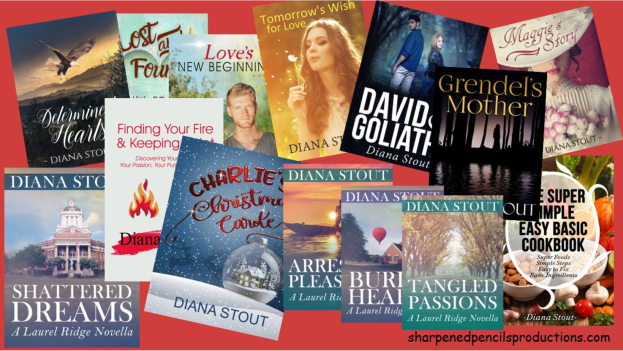
Since then, it’s been a fun-filled journey of writing—screenplays, stage plays, poetry, academic writing, a dissertation, more contests, more awards, blogging, and becoming an indie publisher where I’ve now published 14 books, with plans for several more publications this year; Tangled Passions, the fifth book in a series of seven was published on Valentine’s Day.
My writing career has endured the highs and the lows for over fifty years, and finally, after much experimentation and meeting various challenges, I’m finding the genres where my writing joy truly thrives.
Looking back, I’m grateful for the entire journey. It’s been quite the process where the joys outweighed the disappointments. Even the frustrations were short-lived.
May everyone experience such joy.
*****
This year, Dr. Stout expects to publish the last two romance novellas in the Laurel Ridge Novella series, a writer’s resource book, a historical Gothic romance for an anthology, along with a comedy screenplay. Additionally, she’s plotting a Gothic novel and finishing up several other writer resource books. In June, she’ll be teaching a two-week Master Class, “Using (& Avoiding) Procrastination.” To learn more, click here. If interested, sign up soon! Class is limited to 25.
*****
Purpose of The Insecure Writer’s Group: To share and encourage. Writers can express doubts and concerns without fear of appearing foolish or weak. Those who have been through the fire can offer assistance and guidance. It’s a safe haven for insecure writers of all kinds. Posting: The first Wednesday of every month is officially Insecure Writer’s Support Group Day. Post your thoughts on your own blog. Talk about your doubts and the fears you have conquered. Discuss your struggles and triumphs. Offer a word of encouragement for others who are struggling. Visit others in the group and connect with your fellow writer – aim for a dozen new people each time – and return comments. This group is all about connecting.

