Category Archives: Writer at Work

October’s Glory

The Insecure Writer’s Support Group

The question for this month is: What do you consider the best characteristics of your favorite genre?

Because I have a number of favorite genres, that question becomes long in answering. Instead, I’m choosing to write about my favorite month of the year: October.

October’s Glory

As much as I had to see summer end because it means having to shut the windows and doors and blocking the sounds of nature—mostly the birds—I am absolutely thrilled when October arrives. Here are the many reasons why I love it so.

My favorite season, fall, is finally here!

The vibrant and picture-worth colors start arriving. Reds, orange, yellow, lots of various greens and browns, where the trees become a fashion parade of brilliance. Breathtaking around every corner and at every glance. If only those colors could last longer than just a couple weeks.

The air becomes crisp, requiring a light jacket in the morning and evenings. If the temps do warm up a bit, there’s a cool undertone just waiting for the warmer temp to slip up so that it can sneak in again.

The food – Candy corn! Pumpkin pie, the bounty of vegetables from the garden, casseroles, soups, chili!

Cuddling up under a blanket.

SWEATERS! Need I say more?

And, it’s my birthday month. What better way than to celebrate my favorite month, my favorite season, right?

How about you? Do you enjoy October?

*****

Purpose: To share and encourage. Writers can express doubts and concerns without fear of appearing foolish or weak. Those who have been through the fire can offer assistance and guidance. It’s a safe haven for insecure writers of all kinds.

Posting: The first Wednesday of every month is officially Insecure Writer’s Support Group day. Post your thoughts on your own blog. Talk about your doubts and the fears you have conquered. Discuss your struggles and triumphs. Offer a word of encouragement for others who are struggling. Visit others in the group and connect with your fellow writer – aim for a dozen new people each time – and return comments. This group is all about connecting.

Writing Highs and Lows

The Insecure Writer’s Support Group

The question for this month is:  It’s the best of times; it’s the worst of times. What are your writer highs (the good times)? And what are your writer lows (the crappy times)?

Writing Highs and Lows

In the beginning…

It was a good thing I didn’t know of the lows that were to come because those lows could have fractured my early naive passion for wanting to be an author.

As it was, I started with my own insecure low, not believing I could write a novel. That I needed to start small and work my way up.

So, I did, starting with magazine articles and short stories (pre-internet days) and a newspaper column, traveling a path that today has me as an indie publisher.

The highs are:

  • Seeing my name in print, my words on the page.
  • Getting a phone call early on in my career from a complete stranger, an older gentleman from Oklahoma who shared my husband’s first name and my former last name, and who wanted my help in finding his own inspiration based on my inspirational article he’d just read.
  • Learning of readers who look forward to my next book or who just read one of my books and liked/loved it.
  • Helping other writers, sharing with them what I’ve learned.
  • Opening a box of newly published books. Opening those boxes never gets old.
  • Seeing my book on a library or bookstore shelf.
  • Being driven to write the next story, with characters following me around, plots wanting further development, and projects clamoring to be finished.
  • Sending a finished project out into the universe.
  • Being alone in my workspace and being surrounded by books. This was a vision I always had from the beginning.
  • Being able to have a day job that embraced my writing passion. It happened when I became a professor of writing.

In the early days, I saw rejections as a low. Today, I view rejections as paths of not where I want to be or go. The rejection simply means my work isn’t a good fit for that publisher or producer. Nothing more, nothing less.

Likewise, if I don’t place well in a contest, that simply means that there were different stories that grabbed the judges’ attention more. It didn’t mean that my work sucked. Only that it didn’t fit what they were looking for or enjoyed reading.

Today, the lows are:

  • Needing more reviews. The few I have are GREAT! Sadly, to deal with a platform’s algorithms, I need more of them.
  • Wanting more sales. While I’m okay with not being a best-selling author yet, more sales would indicate that I’m reaching more readers, which is my ultimate goal. With so many books out there today, it’s a big ocean we authors are sailing within.
  • Needing to hire an assistant. One of the tasks of writing I prefer not to do is all of the promotional work that is required. I’d rather turn that over to a creative assistant, allowing my time to develop new stories and just write.
  • Wishing I lived closer to more writers. Lately, I’ve dreamed of owning a big Victorian house with a wrap-around porch, which I could turn into a writer’s retreat haven, a place where I could mentor and coach, and where I could other writers who are looking for an inspiration landscape in which to write. Where I could be surrounded by writers more often than not.

In the end, some of my lows aren’t really lows but are wishes, instead. Even though I’ve achieved many of my dreams, I’m still dreaming. Are you?

*****

Purpose: To share and encourage. Writers can express doubts and concerns without fear of appearing foolish or weak. Those who have been through the fire can offer assistance and guidance. It’s a safe haven for insecure writers of all kinds.

Posting: The first Wednesday of every month is officially Insecure Writer’s Support Group day. Post your thoughts on your own blog. Talk about your doubts and the fears you have conquered. Discuss your struggles and triumphs. Offer a word of encouragement for others who are struggling. Visit others in the group and connect with your fellow writer – aim for a dozen new people each time – and return comments. This group is all about connecting.

An introduction

Asked to write an introduction to a Facebook writer’s group recently, Not wanting to write the usual intro composed of achievement, instead, I wrote…

She steps out from the center of the crowd, several dozen individuals all clamoring for individual attention. She’s listening, waiting for that one voice to stand out. Those standing closest to her, whisper. She nods, acknowledging. They are the once-was, having passed through that thin veil of death. Some guide, some want messages passed on to those still alive. Some are waiting (for her), others are hoping to get another chance (will they return to reunite?). The others–the shouters–clamor that their story be told. It’s their turn. She listens for that one voice that will provide that missing element that will raise their story above all others, providing her with that hook, that aha element that connects the character/story tissues.

She is Diana. The eclectic mystic, intuitive, observant, learner. The writer who follows her goosebumps, knowing they are the true path toward that shiny golden Oscar. The deciders had loved her voice but the projects presented weren’t quite the fit they sought. “But, send us everything you write,” they instructed.

So close.

Then, as life does, interference jungled that path and took her to the land of depth and breadth. She emerged the wiser, with creds and authority. And now, she has returned to the land of creation, embracing the cacophony of voices all clamoring for individual attention as she chooses the next story, the unfolding adventure that mysteriously and magickly arises from the synapses mist and fog, listening to those who have gone before and point the way.

To learn more about Diana’s portfolio, awards, presentations, blogs, and more, visit her website, the center of the wheel from which all paths, like spokes of the wheel, extend.

 www.sharpenedpencilsproductions.com

The Secret Mystery Behind Deep POV

The Secret Mystery Behind Deep POV

There have been a lot of discussion lately about Deep POV with different blogs and articles asking:

  • What is Deep POV?
  • Why should I care?
  • Why should I learn it?
  • What does it look like?

While Deep POV may appear like a new topic, it’s actually been around for a long, long time. You know the adage of what goes around comes around, right? Some say Deep POV appeared 20 years ago, others say 40; in any regard, Deep POV has come around again.

Aristotle’s three-act structure—four equal acts as the second act is two parts—was recycled into a template by Syd Fields for screenwriters.

Joseph Campbell’s hero’s journey was recycled into a writer-friendly how-to/reference book by Christopher Vogler’s The Writer’s Journey.

Both Fields and Vogler’s work and their structural pieces and parts have been renamed, recycled just enough to be a tad different, and re-introduced as something new by writers turned instructors, mentors, speakers, or entrepreneurs. All of today’s programs and models can be traced back to someone else’s prior work or discovery.

Likewise, Deep POV was recycled from an earlier named element/style of writing.

Deep POV occurs when the reader experiences the main character’s actions, thoughts, and decisions up close and personal. As in their head and heart, feeling their joy and their pain.

Have you figured out what Deep POV really is yet?

As a new writer, you learned about Deep POV while attending your first writer’s conference, while reading your first how-to book regarding the craft of writing fiction, while reading about it in your first writing magazine subscription. You’ve been reading about it in blogs and articles for years, and hear its advice in any gathering of writers talking about the craft. You just knew it under a different name.

So, what does Deep POV look like?

Example #1:

He walked into the conference room, noticing all his employees were seated at the table. “This is crap,” he said angrily, throwing down mock-ups of the print ads for their newest client. “You can do better than this.” He turned and left the room, wondering if his being angry would make a difference in their performance.

Example #2:

The door thudded again the wall. All heads turned toward him as he strode into the conference room and was at the huge table in three steps. With jerky thrusts, he tossed each of the print ads for their newest client down the center of the table, each sliding the length, coming to a stop at the edge opposite him. While they had glanced at each page as it slid down the table, now their gazes were back on him, their eyes wide with fear. Good. Now to make them pee their pants. “Stop giving me this crap or heads are going to roll.”  He spun on his heels and with huge steps, strode out of the room the same way he came in. He smiled as he headed for his office. Maybe now they’d do their jobs.

Which example has your attention? Did your eyes widen while reading the second?

These two examples are the difference between using Deep POV and not using it.

To speak of Deep POV in its earlier term, this is the difference between SHOW vs. TELL

Shocked?

In the first example, we’re being told how he feels through the use of the dialogue tag, he said angrily. We watch his actions as if he’s on stage and we’re sitting in the audience.

In the second example, there is no tag. None. Surprised? Did you notice?

In the second example, we experience his actions and his feelings as they happen. We aren’t being told anything. It’s as if we’re in his head, on stage right beside him, or in his head. We’re feeling and moving as he feels and moves.

We don’t have to be told he’s angry. We can feel the anger.

Look at the books that you’re reading: Are you being told being shown? How many dialogue tags are there?

A big clue when telling occurs is the added use of adverbs (-ly words) in the dialogue tags and words like thought, felt, wondered.

I don’t know about you, but I welcome the book that I can’t put down because I’ve become that character—I’m in their head, feeling their emotions with their thoughts becoming mine. I become emotionally invested in the characters.

Versus the book I can’t get into because I’m being told how they feel, thus I’m not emotionally invested. It becomes too easy to put the book down and not finish it. Anymore, if I’m not emotionally hooked or curious within the first few pages, I can’t read it.

Showing creates page-turning books that grip you and then don’t let go.

What type of books are you reading or writing? Those with a Deep POV or those without?

Finding Your Fire & Keeping It Hot

Finding Your Fire & Keeping It Hot

A new year and a new me! What an explosion of events and opportunities that have come my way the last couple of months!!! And, I’m on fire, as a result!

Truly ironic on a night of fireworks as we usher in the new year. It’s 2 a.m. and I just finished the final edits of my newest book, Finding Your Fire & Keeping It Hot. It goes out tomorrow for a second round of beta readers. It’s a how-to book a number of friends and writer friends have been asking me to write, and it’ll the first of a series of how-to books.

This book is one of the projects going on my New Year’s Eve of 2022 to-do list. You probably do a list of New Year’s Resolutions. I’ve always created a to-do list for the year. Way more fun than resolutions! And, these multiple explosions that have been happening are all going on that list!

2022 is going to be a happening year!

I’m in the process of creating a newsletter where subscribers are going to get the first reveal of these exciting happenings, which includes a sneak peek and details of my mystery, the first in what I expect to be a series.

To those who are wondering about my Laurel Ridge novella series, yes, I’m in the process of finishing the series this year—publishing the entire series. Details will be in the newsletter.

And, don’t forget – I’m teaching Time Management for Writers in February through Laurie Schnebly’s WriterUniv website. It’s a class for writers and anyone else who wants to manage their time better. To enroll or to get more details, go here.

You can subscribe to my newsletter here and follow me on my Facebook author page here so that you don’t miss any of my upcoming announcements and postings.

May 2022 be a successful and happy year for us all!

The Secret of Writing: Why You Want At Least Four Drafts

Even though I’d been writing for nearly thirty years and writing various drafts, it wasn’t until I returned to school, learning how to teach college composition that I discovered the different drafts each had a name and a purpose.

Once I started following the nature of each draft, I found my writing changed. Surprisingly, I was writing faster, better, and with less confusion.

In summary, writing is all about the rewriting. The act of writing is all about the first draft. The drafts that follow are about editing, with each editing draft pertaining to a certain set of editing details.

Personally, I don’t know of any writer—student or pro—whose work is publishable or ready for grading with only one draft.

So, what are these four different drafts and what purpose does each one serve?

THE FIRST DRAFT

This draft is the first completed draft where pure writing takes place, where creativity is at work. You want to write this draft quickly. Stream of consciousness is the best way to describe this draft.

Plotters will follow their outline as they write this draft. Pansters just let the writing flow with no thought of an outline, let alone knowing how the story will end.

Holes are allowed, as are misspellings, incorrect grammar, and wordiness. The rule in writing a first draft is to never go back and fix anything. All fixes will occur in the following drafts.

To stop and fix anything while writing this first draft means you are stopping the creative process and are now in editing mode, which is an entirely different skill set and is guaranteed to stop the creative process in its tracks.

Have you ever been writing where it’s gone fairly smooth, and then suddenly, you realize something isn’t right, so you stop to look back at what you wrote before, only to start writing again only to find that you can’t? That you lost your train of thought? That the creativity is gone?

Yup, that’s because you went from the skill set of creative writing to the skill set of editing. They’re two different modes of writing from two different parts of the brain—one is creative and one is technical. You can be in one or the other but not both at the same time.

When writing your first draft, the goal is to stay in the creative brain, so no editing allowed!

THE SECOND DRAFT: the Rewrite

This draft is where the big rewriting occurs. It’s about organization and high order concerns where you’re moving paragraphs and pages around, where you’re making major additions and deletions. This draft is about making sure you have a theme and a thesis statement for nonfiction. That you have a great beginning hook for fiction. That your meaning is clear, that the writing contains originality with a consistent flow of your idea, where you’re not wandering around aimlessly.

THE THIRD DRAFT: the Revision

This draft still pertains to high orders but in a smaller fashion. Now, you’re looking at paragraphs and sentence structure. Are the paragraphs too long? Not long enough? Is a deeper point of view needed? Are you telling or showing? Does the paragraph move the story or theme forward, does it reveal character or their motive? Does everything make sense?

This draft deals with wordiness, repetition, word choice, parallelism, voice, and use of tense (consistency).

For college papers, this draft is about checking the citations, as well. Are any missing? Are the citations correct? Is the paraphrasing correct? Are quotes being used correctly? Are all graphics cited and with captions?

Don’t be surprised if your work is still changing quite a bit at this point. Generally, this is the draft that can have multiple drafts. Why? Because you keep finding things to change.

THE FOURTH DRAFT: the Polishing

This draft is where the polishing occurs, where the low-order concerns are addressed: punctuation, grammar, and formatting.

Polishing is everything. Don’t be misled thinking that because these issues are called low-order concerns that they’re not important. They’re highly important and can make the difference between a sloppy manuscript, paper, or résumé and one that looks professionally finished.

*****

While I’m able to write a first draft fairly fast now, I can have several rewrite drafts, half a dozen revision drafts, and several polishing drafts. Once I finally stop finding errors, that’s when I know the manuscript is finished.

It’s not unusual for my manuscripts and screenplays to have a minimum of a dozen or more total drafts before they’re ready for publication. It’s these editing drafts where I spend the most time.

So, how many drafts does your work go through before you’re ready to submit?
Drafts, Titles, & Blurbs, Oh My!

The Insecure Writer’s Support Group

November 3 question – What’s harder to do, coming up with your book title or writing the blurb?

Drafts, Titles, & Blurbs, Oh My!

Writing on some days flows easily. Most days not so much; it feels like I’m writing junk. And then, there are far too many days when writing is a struggle fest. Those are the days when I just have to get it done because of a deadline.  

Writing first drafts is the part I like doing the least. It’s a real chore. Often, I’m just gutting it out, with the goal of writing it quickly. FAST!

I much prefer editing. Usually. Well, at least until I’m editing the same story for the fifth time or more. Most fiction regardless of length takes on average about eight rewrites, revisions, and polishing. The highest number was 49 drafts, but that was for my cookbook. All because of the many technicalities that required uniformity.

You may be asking, aren’t rewrites and revisions the same thing?

No, they’re not. Rewriting encompasses rearranging, removing, and adding. A revision is about smaller matters: looking at the sentence structure, choosing the right words, right tense, and correcting other grammar and punctuation issues. The polishing draft is about fixing all errors and getting the formatting correct.

So, everything—books, articles, short stories, even poems—goes through the four-draft process: first draft, rewrite, revise, polish. Thankfully the first draft is a one go-through only. The rewrite can take several drafts, as does the revision, and polishing drafts.

This month’s question refers to the smallest parts of writing a book: the title and blurb. For me, they’re the easiest to write and the most fun, even though they go through the four-draft process, as well.

When coming up with titles, I start with the exercise of what I call Brainstorming 20, an exercise I’ve taught to students and teach to other writers.

Here’s a partial list brainstormed by a group. Recognize what they were looking for?

Awful

Flabby

Snoopy

Scrappy

Hoppy

Weepy

Cranky

Sneezy-Wheezy

Hungry

Lazy

Dumpy

Thrifty

Nifty

Shifty

Woeful

Doleful

Wistful

Soulful

Helpful

Goopy

Gabby

Blabby

Silly

Dippy

Graceful

Neurtsy

Gloomy

Sappy

Crabby

Daffy

Tearful

Gaspy

Busy

Dizzy

Snappy

Hotsy

Jaunty

Puffy

Strutty

Biggy

Biggy-Wiggy

Jumpy

Chesty

Biggo-Eggo

Sneezy, Dopey, Happy, Grumpy, Sleepy, Bashful, and Doc were part of the list, too, the final characters chosen for the 1934 movie, Snow White and the Seven Dwarfs. Are you noticing how some of the names became later comic characters?

I do the same thing when looking for a title; I create a list of 20. The first ten are easy. The next five start becoming a combo of different words from the first ten. The last five are usually more of a struggle but start expressing what I’m really looking for. These last five are also the most original.

As for the blurb, it’s about coming up with an elevator pitch, a one-line summary, which then I can expand with a few more sentences.

Coming up with a title and a blurb can take several days, even a week, and I enjoy writing them immensely.

Are your brainstorming methods anything like mine?

*****

Purpose: To share and encourage. Writers can express doubts and concerns without fear of appearing foolish or weak. Those who have been through the fire can offer assistance and guidance. It’s a safe haven for insecure writers of all kinds.

Posting: The first Wednesday of every month is officially Insecure Writer’s Support Group day. Post your thoughts on your own blog. Talk about your doubts and the fears you have conquered. Discuss your struggles and triumphs. Offer a word of encouragement for others who are struggling. Visit others in the group and connect with your fellow writer – aim for a dozen new people each time – and return comments. This group is all about connecting.

Decluttering an Office and Finding Gold!

Decluttering an Office and Finding Gold !

I don’t know of any writer who doesn’t either have a collection of files—online and/or hardcopy.

Personally, I’m a hardcopy writer, meaning I want hardcopies of my material to read and edit. It’s how my career began, and I like being able to spread the manuscript pages out in front of me rather than switching screens or scrolling.

The problem is: the paperwork accumulates. Scraps of papers—even a few napkins—with ideas start piling up.

To make a long story short, I had the equivalent of three file-cabinet drawers worth of story-idea files—some started and some finished with a rough draft.

I had three shelves full of other projects in three-ring binders: screenplays, plays, three mystery series, and several how-to manuscripts, all having multiple drafts written. Some even had beta reader drafts with comments.

The files were arranged alphabetically by title. And, everything but the plays and poetry had been written in the 1990s. I was more prolific at that time than I had remembered. Extremely prolific.

I pulled every project, every file, every binder out of the drawers and off the shelves and started sorting it all, first by category, and then genre. What I discovered was that I had distinctive groupings of novels, short stories, plays, screenplays, academic papers & presentations, poetry, and nonfiction.

I found one letter from a well-known Hollywood production company where a staff member had written that I was a “writer to watch.” (Talk about gold!) Sadly, at that time I had to shift my focus from creative writing to academic writing. I had returned to school fulltime while working fulltime. There was no room for the love of my life then–screenwriting.

It took me three days to fully sort everything. From this sorting, I now have these pure-gold projects to work on:

  • A collection of short stories—romance and mystery—and short plays.
  • Screenplays to rewrite, a few others to plot and write out for contest entries or publication, including a horror idea that I started on Halloween night in 1998, scaring myself so much, I had to put it away and have only now taken it out again. Another new genre is a time travel romance—a story I’ve been wanting to tell for decades based on an idea that came from a song.
  • Book-length mysteries! Two series and a stand-alone.
  • A collection of my paranormal experiences, which I started as my Into the Core blog a decade ago with the intent of turning those blogs into a book. The blog is ready to be turned into a book as there are so many other blogs first-draft written.
  • A collection of how-to books. Ideas I had decades ago. At the time, I didn’t have the authority. Now, I do. NOTE: I’m now nearly finished writing the first one, hoping to publish it yet this year. If not, then at the beginning of next year.

I’m going to become that “writer to watch” again.

Six Paths of Writer Success

The Insecure Writer’s Support Group

September 1 question – How do you define success as a writer? Is it holding your book in your hand? Having a short story published? Making a certain amount of income from your writing?

Six Paths of Writer Success

While most people believe a writer’s success is by how many books are sold and the money they make, it’s not the only way to identify writer success. There are multiple ways to measure that success. These are a few that I’ve identified.

Path #1: Financial Success – This is the measurement stick most people—readers, critics, and other writers—use to determine if a writer is successful or not. Are they a best-selling author? Did they make the New York Times list? Did they receive a huge advancement?

Path #2: Review Success – The number of reviews readers leave can be a huge measure of success if the bulk of the reviews are positive. Getting notes and messages from fans is always a thrill. It’s the equivalent of Sally Field’s award-winning speech of “They like me!”

My best friend from high school who got a copy of my book a couple days before I got my copies! She’s one of my biggest fans!

Path #3: Word-of-Mouth Success – There’s no better measure of a writer’s project than it getting a lot of reader word-of-mouth promotion. Nothing can top it. Word of mouth praise sells books. And, there’s nothing more fun than seeing friends of my friends stating, “She’s a good writer,” or “I love her writing!”

Path #4: Publication Success – Before writers could become indie publishers, a writer’s success was hinged solely by being accepted by an agent or editor. The only other option open for writers to publish without an agent or editor back then was to use a vanity press, where the writer paid to have the book published, and then the author would go out and peddle the book. It worked for Robert James Waller who self-published his book, The Bridges of Madison County. He filled his trunk with copies and drove across the country giving them away, seeking out radio stations for live interviews.

With the advent of the eBook, independent publishing (self-publishing, indie publishing) became possible. That avenue became a game changer for many writers, including me, even though I had been traditionally published in the 1990s with three of these books, which I retitled and have republished. Today, any writer can get their book(s) published and in any format: print, e-Book, audible, large print, and so forth.

To date, I’ve published eight books and edited a ninth that included one of my short stories, publishing it for a writer’s group that I belong to.

Path #5: Film Rights Success – The dream of any writer of fiction is to see their story on the screen—big or small. I keep hoping and keep writing the scripts.

Path #6: Journey Success – This measure of success is all about self-satisfaction. The first time a writer pens The End, it is a huge achievement of a dream becoming reality. And then, opening a box and seeing a stack of my newest release never gets old. Ever. (Three such past boxes being opened.)

Currently, as I come to the end of writing a how-to nonfiction book and am finishing the small-town romance series I’ve been working on for the last few years, I’m enjoying how my fire is directing and driving me toward my desk every day.

Watching the words pile up, getting into the writing zone, and watching the hours fade into each day’s end are self-satisfying beyond words. Amazingly so. There is no other emotion or feeling like it.

I love all these various moments and events of success. How could I not?

*****

Purpose: To share and encourage. Writers can express doubts and concerns without fear of appearing foolish or weak. Those who have been through the fire can offer assistance and guidance. It’s a safe haven for insecure writers of all kinds!

Posting: The first Wednesday of every month is officially Insecure Writer’s Support Group day. Post your thoughts on your own blog. Talk about your doubts and the fears you have conquered. Discuss your struggles and triumphs. Offer a word of encouragement for others who are struggling. Visit others in the group and connect with your fellow writer – aim for a dozen new people each time – and return comments. This group is all about connecting!

Going Wide…Maybe

I can be so stupid sometimes.

Up until now, all of my eBooks have been published on Amazon and through their Amazon Select program, which means it’s sold exclusively through Amazon’s Kindle Unlimited (KU) program. Instead of buying books, those Amazon readers who pay a monthly fee get to read it and any other books they desire for no other charge.  

Up until now, half of my eBook royalties have come from pages getting read. The other option author have to sell their eBooks would be to go wide, which means remove it from KU, though I can still sell it on Amazon as an eBook and selling it through additional distributors. The best places that my research revealed and was highly approved of by other authors was to use Draft2Digital (D2D) and Smashwords, the latter only because D2D doesn’t distribute to it. D2D does distribute to digital stores: Barnes & Noble, Kobo, Apple, Tolino, and Vivlio; the subscription service of Scribd; and Kobo plus territories: Belgium, Netherlands, and Canada.

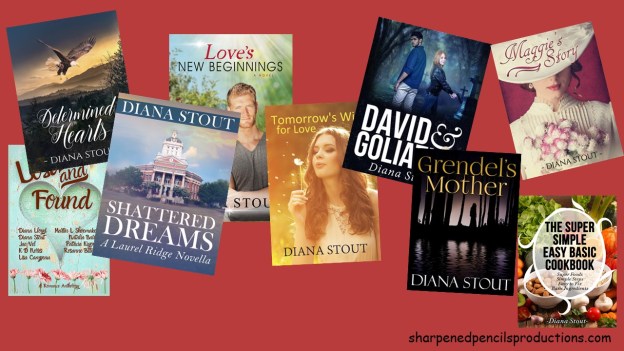
But, which eBook(s) did I want to start with, experiment with? I did some investigative research. One of my books, Grendel’s Mother, does extremely well with pages read and eBooks purchased through Amazon. My romances: Love’s New Beginnings, Tomorrow’s Wishes, and Determined Hearts do not. So, it had to be one of these latter three.

When you put an eBook into KU, you do so for 90 days. I’ve always chosen to have that 90 days renewed automatically. This time, I unclicked that auto-renewal box for the first one that would renew: Love’s New Beginnings.

Then, I went to D2D and uploaded the book. I put in my desired publication date, which would be the day after it came out of KU. I pushed the publish button thinking it wouldn’t publish until my indicated date.

To my horror, the book published immediately as a preorder book! No, no, no! Turn it off, turn it off!  

I scurried like a frantic squirrel in the road with an oncoming car: where to go?

Ten minutes later, I saw the panic button I needed to push. It said DELIST. I clicked on it. Immediately, my book was delisted. No more preorders.

A huge sigh of relief.

The day it was free from KU came and went. I kept checking D2D to see how the book was doing.

No sales. Nothing.

What??? How can that be? I had the publishing date correct.

Today, two weeks and a day later, I went back into D2D to check on the book. Still no sales. And then, I saw it.

DELISTED

Stupid! You have to republish it!

I pushed the publish button. Everything turned green. Yay.