Category Archives: Blogging

Failures – Part I

This blog was originally published November 27, 2017, on my Only for the Brave blog, which is being eliminated as I decided to merge the two blogs. Because failure is an important part of succeeding for writers, I felt it was worthwhile reprinting the series about failure here.

*****

So many times, I’ve witnessed students and new writers exclaim that successful writers never failed.

That’s when I would share this list of successful people who failed early in their careers.

When I shared this list with my students, immediately I had their attention. I knew what they were thinking: well, if that person could fail and still be successful, then there’s hope for me!

Everyone, absolutely everyone, unless they are a savant, start their craft as a beginner and will encounter failures.

Yes, there are exceptions, but they are few, and more often than not they will experience failure somewhere else in their career. Or they’ll stop with that one huge successful book fearing failure if they continue. Margaret Mitchell, who wrote Gone with the Wind, was one such person. Truman Capote, of In Cold Blood, was yet another.

Here’s a list of successful people who failed:

  • Dr. Seuss was rejected 23 times.
  • Michael Jordon was cut from high school basketball.
  • Henry Ford went broke 5 times.
  • Helen Keller graduated cum laude from Radcliffe College, became a famous author & lecturer.
  • Albert Einstein was rejected by the University of Bern on his Ph.D. dissertation saying it was irrelevant and fanciful. (And if not for his wife who typed the papers and submitted them, he never would have been published.)
  • Richer Hooker worked 7 years on M*A*S*H and was rejected by 21 publishers.
  • Babe Ruth struck out 1330 times.
  • Walt Disney was fired by a newspaper for lack of ideas.
  • Beethoven’s violin teacher declared him hopeless as a composer.
  • IBM, GE, RCA all rejected the Xerox machine.
  • Parker Brothers turned down Trivia Pursuit.
  • Bette Davis, Clark Gable, Maurice Chevalier, Shirley Temple, and Laurence Olivier all failed their screen tests.
  • Fred Astaire was cited in a memo by MGM executive after his first screen tests in 1933 that he “can’t act, slightly bald. Can dance a little.”
  • John Grisham’s book, A Time to Kill, was rejected by 28 publishers.
  • William Golding’s book, Lord of the Flies, was rejected 21 times.
  • Pearl Buck’s book, The Good Earth, was rejected 14 times.
  • George B. Shaw’s first five novels were rejected.
  • Mary Higgins Clark’s first short story was rejected 40 times.
  • Louis L’Armour’s first story was rejected 350 times.
  • Stephen King was rejected 41 times before his first manuscript was accepted.

Doesn’t this list give you hope? Sure did me!

Bottom line: The only ones who really fail are those who give up!
Personal Traits and Deepening Characters

The Insecure Writer’s Support Group

July question: What personal traits have you written into your character(s)?

Personal Traits & Deepening Characters

Currently writing a romance series of seven novellas, I’m starting the first draft of the fourth novella, Buried Hearts.

The first one, Shattered Dreams, is already published, with first drafts for the second and third, Burning Desire and Arrested Pleasures respectively written.

Because I’m writing the last first drafts of the last six before any more are published, it meant plotting the stories and creating the characters all at the same time.

Seven couples, seven romances, seven stories, with either the hero or heroine, if not both, all went to school together. Most were in the same graduating class, with two of them a class ahead of the rest. Some are best friends, some dated in high school, some wanted to date the other in high school but didn’t.

In Buried Hearts, Clint Anderson, a life-long resident of Laurel Ridge where all the stories take place, is giving a fiftieth wedding anniversary party for his parents and has hired balloonist, Gabriella (Gabby) King. He gets to know Gabby during the flight with his parents, and he’s smitten.

A long time ago, I learned when developing strong and interesting characters, I need to go deep. Down into the dark where their secrets are hidden. Secrets they haven’t talked about and feel ashamed to let others learn.

I learned that those secrets, those wounds drive that character. That secret determines how they act, what they do, what they wish for. Because I know all these things before I write word one, I’ve become a monster plotter.

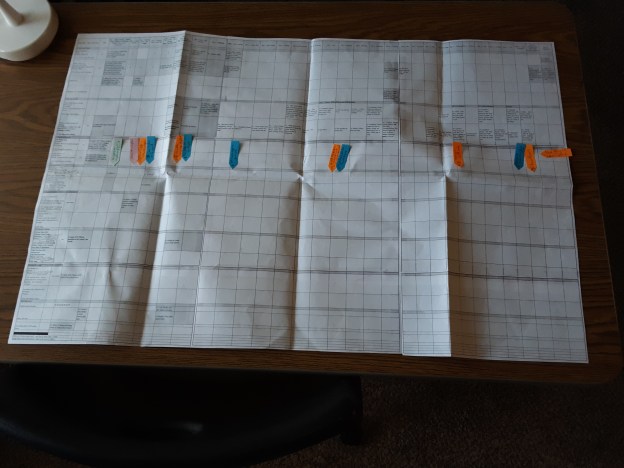
Because all seven novellas take place within the same time period, I’m now in the process of plotting out their events on a monster spreadsheet. Did I tell you how much I love spreadsheets?

Plotting spreadsheet

Insecure Writers Support Group BadgePurpose: To share and encourage. Writers can express doubts and concerns without fear of appearing foolish or weak. Those who have been through the fire can offer assistance and guidance. It’s a safe haven for insecure writers of all kinds!

Posting: The first Wednesday of every month is officially Insecure Writer’s Support Group day. Post your thoughts on your own blog. Talk about your doubts and the fears you have conquered. Discuss your struggles and triumphs. Offer a word of encouragement for others who are struggling. Visit others in the group and connect with your fellow writer – aim for a dozen new people each time – and return comments. This group is all about connecting!


Making a Difference

Have you ever uttered, “Why bother? It won’t make a difference,” or something like that?

Yeah, I have. Lots of times.

When I started writing and putting my work out in the public forum, I figured few would read my writing, but make a difference? Nah.

Every now and then, a person here and there would contact me via the phone or USPS (pre-Internet), telling me how my published piece affected them that day. As a blessing. As something they needed to hear. As something that made them think. As a reminder. Or, as pure entertainment that took them away from their problem(s) for a bit of time.

I didn’t think too much of those incidences as they were few and far between, though they did make me smile, and I’d put them in my scrapbook. I still didn’t believe I was making a difference. Me? From small town U.S.A.? Who the heck was I to think I could make a difference?

Years later, I started teaching. I watched as students became unblocked. They told me how they were loving writing again or loved writing for the first time ever. That they now understood grammar and punctuation better. Or, how the teacher from grade school or high school who had told them that they’d never be a writer had done them a disservice.

Because of an earlier experience during my bachelor’s degree where I was shown that I was plagiarizing, despite what I had been taught in high school, I became more and more interested in the subject, discovering it was huge problem but little publicized. I started teaching my students on how to avoid plagiarism because I saw them making the same mistake I had made. I wanted plagiarism to never be an issue for them, because not knowing was never an accepted excuse; being accused of plagiarism had and still has dire consequences.

At the time, I had a co-worker who said about my focus on helping students avoid plagiarism and taking the concern university-wide, “Why are you trying to hard? It’s not like you’re going to change the world.”

I forged ahead anyway, because I cared.

My students showed me I was making a difference via their papers. They told me, too. At least, I was making a difference in a small area of the world: my classrooms.

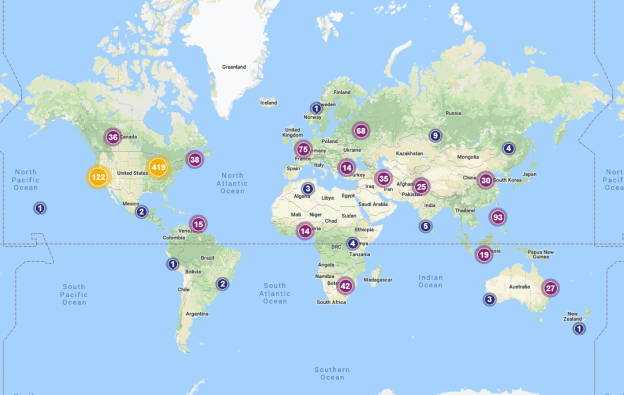
And then later, I graduated with my last degree having written a dissertation, Teaching Students About Plagiarism: What It Looks Like and How It Is Measured, that I chose to make as a free publication, because of the research discovery I made regarding two major studies. One study was pre-Internet, the other post-Internet, where the percentage of actual plagiarism had not changed, which countered those who said the Internet was to blame. That discovery begged the question that became my book’s topic. In publishing the book, I asked to received a monthly summary of its activity.

The book was published in June 2013. To date it has been downloaded 1,499 times to 246 different educational, commercial, organizational, governmental, military, and library institutions in 81 different countries across both North and South America, Europe, Asia, and Australia.

Had I not requested that monthly summary, I would have never known the extent of its reach.

Have I made a difference? I’d like to think so, both as a writer and as a scholar in this case.

Believe it or not, we all make a difference, regardless of our field of work or where we live: as parents, teachers, military, fire, police, utilities, clerks, assistants, medical, artists, entertainers, rescue, therapists, non-profits, neighbors, communities, and as citizens.

We ALL make a difference and in many different ways throughout our individual lifetimes.

One of the ways where I’ve made a difference just happens to show up on a world-wide map.

So, to those of you who have others trying to stomp on your dreams, your ambitions, your goals, your work…

Ignore the noise and follow your own path.

As a Writer Should I Blog? What Should I Write?

Often, when a new writer finds out that I blog, I’m asked one or more of the following questions:

Should I blog?

Blogging has different definitions depending on whom you ask. I liken blogging to the old newspaper and magazine columns that we used to read: humor essays, advice columns, recipes, parental or marriage advice, and so forth. For me, blogs should entertain or provide information.

It’s one thing to have a blog that only promotes your work, and it’s another to have a website that features your books, your presentations, your book signings, and where you have a blog, too.

What should I blog about?

1) Your blog should be entertaining or provide information. Entertain by telling a story or provide helpful information about what you do. Share what you know or how you do it. Share stories that involve other writers or your travels. Read other blogs to see what they do. Which ones hold your interest and why?

2) Write each blog so that includes a beginning, a middle, and an end, whether in telling a story or providing information.

3) If your goal is to have readers return to your blog, do you have a place where they can subscribe?

Can I talk about my book at all?

 Most certainly! But in a blog, do it in a way that entertains or provides information about its creation. Anecdotes help sell books but only if you can make that information entertaining. Readers and writers are interested in how you spend your time, what you do every day.

Do I have to blog?

Blogging isn’t for everyone, and not all writers blog. In fact, have you noticed that big-name writers have promotional websites but no blogs. How come? They’re busy writing!!!

I used to write a weekly newspaper column and I remember the time it took to produce those columns. I swore when I began blogging that I would not become a slave to the blog, but guess what? I’ve done just that.

My goal at the beginning of the year was to post in each blog each month. Well, duh! In doing the math, I’m writing a blog a week!  And it’s starting to take away from my story-writing time! So, I’m changing my schedule. I’m going to return to writing the blogs as a fun downtime activity when I need to get away from a story. When I still want to be writing and sharing but when I don’t want to be working on a piece of fiction.

While I admire those writers who can write and blog every week, I’m not one of those people.

My advice that comes from my own lesson learned here is that writing time for my books shouldn’t be sacrificed to the blogs. For me, blogging will be a reward for meeting my writing goals.

What do you think? Do you have a blog schedule you struggle to maintain? Are you a long-time blogger with tricks you’d like to share? Are you a beginning blogger who’s still trying to find a good fit?