
Tag Archives: Diana Stout

Writing Highs and Lows

The Insecure Writer’s Support Group

The question for this month is:  It’s the best of times; it’s the worst of times. What are your writer highs (the good times)? And what are your writer lows (the crappy times)?

Writing Highs and Lows

In the beginning…

It was a good thing I didn’t know of the lows that were to come because those lows could have fractured my early naive passion for wanting to be an author.

As it was, I started with my own insecure low, not believing I could write a novel. That I needed to start small and work my way up.

So, I did, starting with magazine articles and short stories (pre-internet days) and a newspaper column, traveling a path that today has me as an indie publisher.

The highs are:

  • Seeing my name in print, my words on the page.
  • Getting a phone call early on in my career from a complete stranger, an older gentleman from Oklahoma who shared my husband’s first name and my former last name, and who wanted my help in finding his own inspiration based on my inspirational article he’d just read.
  • Learning of readers who look forward to my next book or who just read one of my books and liked/loved it.
  • Helping other writers, sharing with them what I’ve learned.
  • Opening a box of newly published books. Opening those boxes never gets old.
  • Seeing my book on a library or bookstore shelf.
  • Being driven to write the next story, with characters following me around, plots wanting further development, and projects clamoring to be finished.
  • Sending a finished project out into the universe.
  • Being alone in my workspace and being surrounded by books. This was a vision I always had from the beginning.
  • Being able to have a day job that embraced my writing passion. It happened when I became a professor of writing.

In the early days, I saw rejections as a low. Today, I view rejections as paths of not where I want to be or go. The rejection simply means my work isn’t a good fit for that publisher or producer. Nothing more, nothing less.

Likewise, if I don’t place well in a contest, that simply means that there were different stories that grabbed the judges’ attention more. It didn’t mean that my work sucked. Only that it didn’t fit what they were looking for or enjoyed reading.

Today, the lows are:

  • Needing more reviews. The few I have are GREAT! Sadly, to deal with a platform’s algorithms, I need more of them.
  • Wanting more sales. While I’m okay with not being a best-selling author yet, more sales would indicate that I’m reaching more readers, which is my ultimate goal. With so many books out there today, it’s a big ocean we authors are sailing within.
  • Needing to hire an assistant. One of the tasks of writing I prefer not to do is all of the promotional work that is required. I’d rather turn that over to a creative assistant, allowing my time to develop new stories and just write.
  • Wishing I lived closer to more writers. Lately, I’ve dreamed of owning a big Victorian house with a wrap-around porch, which I could turn into a writer’s retreat haven, a place where I could mentor and coach, and where I could other writers who are looking for an inspiration landscape in which to write. Where I could be surrounded by writers more often than not.

In the end, some of my lows aren’t really lows but are wishes, instead. Even though I’ve achieved many of my dreams, I’m still dreaming. Are you?

*****
Purpose: To share and encourage. Writers can express doubts and concerns without fear of appearing foolish or weak. Those who have been through the fire can offer assistance and guidance. It’s a safe haven for insecure writers of all kinds.

Posting: The first Wednesday of every month is officially Insecure Writer’s Support Group day. Post your thoughts on your own blog. Talk about your doubts and the fears you have conquered. Discuss your struggles and triumphs. Offer a word of encouragement for others who are struggling. Visit others in the group and connect with your fellow writer – aim for a dozen new people each time – and return comments. This group is all about connecting.


An introduction

Asked to write an introduction to a Facebook writer’s group recently, Not wanting to write the usual intro composed of achievement, instead, I wrote…

She steps out from the center of the crowd, several dozen individuals all clamoring for individual attention. She’s listening, waiting for that one voice to stand out. Those standing closest to her, whisper. She nods, acknowledging. They are the once-was, having passed through that thin veil of death. Some guide, some want messages passed on to those still alive. Some are waiting (for her), others are hoping to get another chance (will they return to reunite?). The others–the shouters–clamor that their story be told. It’s their turn. She listens for that one voice that will provide that missing element that will raise their story above all others, providing her with that hook, that aha element that connects the character/story tissues.

She is Diana. The eclectic mystic, intuitive, observant, learner. The writer who follows her goosebumps, knowing they are the true path toward that shiny golden Oscar. The deciders had loved her voice but the projects presented weren’t quite the fit they sought. “But, send us everything you write,” they instructed.

So close.

Then, as life does, interference jungled that path and took her to the land of depth and breadth. She emerged the wiser, with creds and authority. And now, she has returned to the land of creation, embracing the cacophony of voices all clamoring for individual attention as she chooses the next story, the unfolding adventure that mysteriously and magickly arises from the synapses mist and fog, listening to those who have gone before and point the way.

To learn more about Diana’s portfolio, awards, presentations, blogs, and more, visit her website, the center of the wheel from which all paths, like spokes of the wheel, extend.

 www.sharpenedpencilsproductions.com

The Secret Mystery Behind Deep POV

The Secret Mystery Behind Deep POV

There have been a lot of discussion lately about Deep POV with different blogs and articles asking:

  • What is Deep POV?
  • Why should I care?
  • Why should I learn it?
  • What does it look like?

While Deep POV may appear like a new topic, it’s actually been around for a long, long time. You know the adage of what goes around comes around, right? Some say Deep POV appeared 20 years ago, others say 40; in any regard, Deep POV has come around again.

Aristotle’s three-act structure—four equal acts as the second act is two parts—was recycled into a template by Syd Fields for screenwriters.

Joseph Campbell’s hero’s journey was recycled into a writer-friendly how-to/reference book by Christopher Vogler’s The Writer’s Journey.

Both Fields and Vogler’s work and their structural pieces and parts have been renamed, recycled just enough to be a tad different, and re-introduced as something new by writers turned instructors, mentors, speakers, or entrepreneurs. All of today’s programs and models can be traced back to someone else’s prior work or discovery.

Likewise, Deep POV was recycled from an earlier named element/style of writing.

Deep POV occurs when the reader experiences the main character’s actions, thoughts, and decisions up close and personal. As in their head and heart, feeling their joy and their pain.

Have you figured out what Deep POV really is yet?

As a new writer, you learned about Deep POV while attending your first writer’s conference, while reading your first how-to book regarding the craft of writing fiction, while reading about it in your first writing magazine subscription. You’ve been reading about it in blogs and articles for years, and hear its advice in any gathering of writers talking about the craft. You just knew it under a different name.

So, what does Deep POV look like?

Example #1:

He walked into the conference room, noticing all his employees were seated at the table. “This is crap,” he said angrily, throwing down mock-ups of the print ads for their newest client. “You can do better than this.” He turned and left the room, wondering if his being angry would make a difference in their performance.

Example #2:

The door thudded again the wall. All heads turned toward him as he strode into the conference room and was at the huge table in three steps. With jerky thrusts, he tossed each of the print ads for their newest client down the center of the table, each sliding the length, coming to a stop at the edge opposite him. While they had glanced at each page as it slid down the table, now their gazes were back on him, their eyes wide with fear. Good. Now to make them pee their pants. “Stop giving me this crap or heads are going to roll.”  He spun on his heels and with huge steps, strode out of the room the same way he came in. He smiled as he headed for his office. Maybe now they’d do their jobs.

Which example has your attention? Did your eyes widen while reading the second?

These two examples are the difference between using Deep POV and not using it.

To speak of Deep POV in its earlier term, this is the difference between SHOW vs. TELL

Shocked?

In the first example, we’re being told how he feels through the use of the dialogue tag, he said angrily. We watch his actions as if he’s on stage and we’re sitting in the audience.

In the second example, there is no tag. None. Surprised? Did you notice?

In the second example, we experience his actions and his feelings as they happen. We aren’t being told anything. It’s as if we’re in his head, on stage right beside him, or in his head. We’re feeling and moving as he feels and moves.

We don’t have to be told he’s angry. We can feel the anger.

Look at the books that you’re reading: Are you being told being shown? How many dialogue tags are there?

A big clue when telling occurs is the added use of adverbs (-ly words) in the dialogue tags and words like thought, felt, wondered.

I don’t know about you, but I welcome the book that I can’t put down because I’ve become that character—I’m in their head, feeling their emotions with their thoughts becoming mine. I become emotionally invested in the characters.

Versus the book I can’t get into because I’m being told how they feel, thus I’m not emotionally invested. It becomes too easy to put the book down and not finish it. Anymore, if I’m not emotionally hooked or curious within the first few pages, I can’t read it.

Showing creates page-turning books that grip you and then don’t let go.

What type of books are you reading or writing? Those with a Deep POV or those without?

Any Regrets?

The Insecure Writer’s Support Group

January 5 question – What’s the one thing about your writing career you regret the most? Were you able to overcome it?

Any Regrets?

This month’s question was easy to answer at first with an answer of, I have no regrets because to have regrets means I wouldn’t be where I am today.

But…and, that’s where I started thinking about my writing career as a whole.

Knowing what I know now, would I do things differently if I was starting over?

In a heartbeat!

Of course, that means starting over when young and relatively free of all obligations and ties.

  • I’d move out to Hollywood.
  • I’d become a script reader.
  • I’d become active in screenwriting organizations.
  • I’d get a degree in screenwriting rather than playwriting.
  • I’d find my genre early.
  • And, most importantly, I’d treat my writing like a job—meaning work it like a job—despite any day jobs I’d no doubt have to take in the beginning.

The question now becomes, do I want to reincarnate, coming back where I choose parents this time who are already in the movie-making business?

Hmmm, that sounds like a great story idea!

I wonder if that life would have had any regrets?

*****

Purpose: To share and encourage. Writers can express doubts and concerns without fear of appearing foolish or weak. Those who have been through the fire can offer assistance and guidance. It’s a safe haven for insecure writers of all kinds.

Posting: The first Wednesday of every month is officially Insecure Writer’s Support Group day. Post your thoughts on your own blog. Talk about your doubts and the fears you have conquered. Discuss your struggles and triumphs. Offer a word of encouragement for others who are struggling. Visit others in the group and connect with your fellow writer – aim for a dozen new people each time – and return comments. This group is all about connecting.

The Secret of Writing: Why You Want At Least Four Drafts

Even though I’d been writing for nearly thirty years and writing various drafts, it wasn’t until I returned to school, learning how to teach college composition that I discovered the different drafts each had a name and a purpose.

Once I started following the nature of each draft, I found my writing changed. Surprisingly, I was writing faster, better, and with less confusion.

In summary, writing is all about the rewriting. The act of writing is all about the first draft. The drafts that follow are about editing, with each editing draft pertaining to a certain set of editing details.

Personally, I don’t know of any writer—student or pro—whose work is publishable or ready for grading with only one draft.

So, what are these four different drafts and what purpose does each one serve?

THE FIRST DRAFT

This draft is the first completed draft where pure writing takes place, where creativity is at work. You want to write this draft quickly. Stream of consciousness is the best way to describe this draft.

Plotters will follow their outline as they write this draft. Pansters just let the writing flow with no thought of an outline, let alone knowing how the story will end.

Holes are allowed, as are misspellings, incorrect grammar, and wordiness. The rule in writing a first draft is to never go back and fix anything. All fixes will occur in the following drafts.

To stop and fix anything while writing this first draft means you are stopping the creative process and are now in editing mode, which is an entirely different skill set and is guaranteed to stop the creative process in its tracks.

Have you ever been writing where it’s gone fairly smooth, and then suddenly, you realize something isn’t right, so you stop to look back at what you wrote before, only to start writing again only to find that you can’t? That you lost your train of thought? That the creativity is gone?

Yup, that’s because you went from the skill set of creative writing to the skill set of editing. They’re two different modes of writing from two different parts of the brain—one is creative and one is technical. You can be in one or the other but not both at the same time.

When writing your first draft, the goal is to stay in the creative brain, so no editing allowed!

THE SECOND DRAFT: the Rewrite

This draft is where the big rewriting occurs. It’s about organization and high order concerns where you’re moving paragraphs and pages around, where you’re making major additions and deletions. This draft is about making sure you have a theme and a thesis statement for nonfiction. That you have a great beginning hook for fiction. That your meaning is clear, that the writing contains originality with a consistent flow of your idea, where you’re not wandering around aimlessly.

THE THIRD DRAFT: the Revision

This draft still pertains to high orders but in a smaller fashion. Now, you’re looking at paragraphs and sentence structure. Are the paragraphs too long? Not long enough? Is a deeper point of view needed? Are you telling or showing? Does the paragraph move the story or theme forward, does it reveal character or their motive? Does everything make sense?

This draft deals with wordiness, repetition, word choice, parallelism, voice, and use of tense (consistency).

For college papers, this draft is about checking the citations, as well. Are any missing? Are the citations correct? Is the paraphrasing correct? Are quotes being used correctly? Are all graphics cited and with captions?

Don’t be surprised if your work is still changing quite a bit at this point. Generally, this is the draft that can have multiple drafts. Why? Because you keep finding things to change.

THE FOURTH DRAFT: the Polishing

This draft is where the polishing occurs, where the low-order concerns are addressed: punctuation, grammar, and formatting.

Polishing is everything. Don’t be misled thinking that because these issues are called low-order concerns that they’re not important. They’re highly important and can make the difference between a sloppy manuscript, paper, or résumé and one that looks professionally finished.

*****

While I’m able to write a first draft fairly fast now, I can have several rewrite drafts, half a dozen revision drafts, and several polishing drafts. Once I finally stop finding errors, that’s when I know the manuscript is finished.

It’s not unusual for my manuscripts and screenplays to have a minimum of a dozen or more total drafts before they’re ready for publication. It’s these editing drafts where I spend the most time.

So, how many drafts does your work go through before you’re ready to submit?

Getting Back to Normal – But What Does Normal Look Like?

The Insecure Writer’s Support Group

July 7 question – What would make you quit writing?

Getting Back to Normal – But What Does Normal Look Like?

My answer to the question of What would make you quit writing? is simple: my death. Or, being incapacitated to the point I can’t see, can’t type, can’t think.

That said, I did struggle with writing recently. My son-in-law died of Covid-19 on April 29.

At first, I resisted the writing—it was hard to start again—but thanks to the weekly Zoom write-in meetings I had with a group of writers, I was able to find that familiar joyful rhythm again.

The promotions, though… Since April, I’ve not been doing any—not for my books or for my writer friends. I couldn’t even perform a simple retweet.

Every time I tried to do any kind of promotion for my books, I struggled and ended up walking away from it all. I’d purposefully delete the emails with links to share, so I didn’t have to deal with it.

I realized in answering the question for today’s blog that something had to change. I didn’t like the monstrous time I’d spent in the past, promoting with little results to show for it. I wasn’t looking forward to doing it again.

Wanting to put the joy of writing back into the writing and why I do it in the first place, I had to dig down deep. Here’s what I came up with:

  1. I want to depend on and work toward more word-of-mouth advertising, where fans share my books and my self-created promos on social media. If it doesn’t happen, so be it. If it happens slowly, so be it.
  2. I want to become more connected in online writing groups where I can share my experience and knowledge. Even if I get back nothing in return. I’m paying forward the help I’ve received over the years.
  3. I want to spend more time writing, teaching, and coaching than I do promoting.
  4. I want to become part of the 5% of authors who write more than 12 books,[1] where everyone else with fewer books has quit writing. I’ve got 9 so far. When I’m finished with my novella series, I’ll have 15. I’m working on getting them finished.
  5. I acknowledge that being an author—traditional or indie published—is a long game, even though I’ve been writing for 45 years.
  6. I will no longer look at my $15-25 per month royalties as sad, but as progress in this long game from where I started at $0 with the creation of my production company in 2015, and which became a new direction/life for me, a reinvention actually.
  7. I will remind myself upon learning of another author’s promotional success that while it works for them, that doesn’t mean it’ll work for me. I will focus, instead, on those methods that DO work for me. I’ll concentrate on a few methods rather than on many.
  8. I want to thank those who subscribed to my newsletter and have stayed because I have something to offer them.
  9. I want to thank those who subscribed to my newsletter and then unsubscribed because I wasn’t a good fit for them. I’m ecstatic that they gave me a try, because…
  10. I want followers who are genuinely interested in my work and me. I want to have earned that follow.

If putting joy back into my writing is my mission statement, then these ten points are my vision statement, specific steps to make that mission statement a reality.

Based on my vision, I don’t see me quitting anytime soon. In fact, after finishing this blog and scheduling it to publish, I went and did some retweets. The next step is to schedule some of my own promotional posts.

Nope, quitting isn’t on my radar anytime soon.

*****

Purpose: To share and encourage. Writers can express doubts and concerns without fear of appearing foolish or weak. Those who have been through the fire can offer assistance and guidance. It’s a safe haven for insecure writers of all kinds!

Posting: The first Wednesday of every month is officially Insecure Writer’s Support Group day. Post your thoughts on your own blog. Talk about your doubts and the fears you have conquered. Discuss your struggles and triumphs. Offer a word of encouragement for others who are struggling. Visit others in the group and connect with your fellow writer – aim for a dozen new people each time – and return comments. This group is all about connecting!


[1] Jane Friedman’s Electric Speed email newsletter, June 26, 2021.

Finding My Way Through the Genre Wilderness

With almost all of my writing projects from the start of writing the first word, I knew the genre and the form. Romance as a novel or as a short short story. Mystery as a short story or novel series. Poetry as a sestina, haiku, or sonnet. Romance novella series. 400-word column for XYZ (magazine/newspaper), non-fiction. And, so forth.

I say almost, because there’s only been one project that I began writing and had no idea what form it would take—would it be long, short, mid-length? —or the genre it would become. For its first written word, I dubbed it a historical, telling myself that I’d research the genre later. As to the form, I figured the story length itself would be the deciding factor. I suspected it would be a novel, but I wasn’t confident about it.

I knew the story took place in the late 5th century and I knew it would be fiction, based on a character from the world’s first English manuscript that had an unknown author. Those were the only two things I knew for sure.

The genesis moment occurred in the middle of my teaching a women’s study survey class where we were examining stories where women didn’t have a voice. In the middle of one student’s presentation of their book, I had that brilliant “Aha!” moment: Grendel’s mother in Beowulf.

I wrote those four words down and felt an excitement rise within, an excitement I hadn’t felt in while. Four years to be exact. Life had intervened followed by a decision to return to school so I could become degreed where I could teach accredited classes. Up until then, the classes I had been teaching in were either online or through adult enrichment classes at colleges.

Once I started going back to school, I was writing just as much as I had before, if not more, but it was all academic writing or creative writing forced by assignments, which were difficult to write because that deep-down bubbling joy and inspiration was always missing.

There was little time for laying any assignment aside, letting time work any creative juices. Instead, quick revisions and polishing, turning it in for a grade was the diction and process of my writing those days.

That initial excitement of a new idea stayed with me through the rest of that class I was teaching and through the commuting drive home. Walking to my car after class and during the drive home, the title was instant—Grendel’s Mother—and she was already talking to me. I saw flashes of scenes, but I had no idea of order or structure.

The minute I got in the door, I dropped my bookbag, keys, tore off my coat, and went straight to the computer. I didn’t even think about eating. That could wait a few minutes.

Those few minutes turned into an hour where I quickly wrote twenty pages of what I thought was the opening pages of the project. It felt like a book. It felt like a historical book. I saw it as a screenplay, too. The images were vivid, the dialogue clear and crisp.

Strangely, I didn’t have to struggle to discover any of the book’s characters. This is the one and only time where all the characters came fully formed, included their bitterness, goals, and wounds. All of them.

It was magical. I didn’t question anything.

I began to question the historical genre. I did some research. How was Beowulf classified? Medieval Poetry, Norse & Icelandic Sagas, English Literature, Epic Poetry, Mythology & Folk Tales. And then, I saw it: Epic Fantasy.

Not until, I was in the end revision stages—and there were many revisions—did the starting pages change. I changed the beginning to provide a better hook. To provide stronger action. The original beginning—that truly started at the beginning chronologically became the transition from present to past. The new beginning was an extremely active scene, taking place nine months later from the original beginning. The transition occurs as a way to deal with the present pain…and so, she starts remembering.

I even got as far as assigning the genre to YA historical because the heroine is a teenager in the beginning; but then, someone said, no, it’s not a YA because she ages. They were right.

The genre fit.

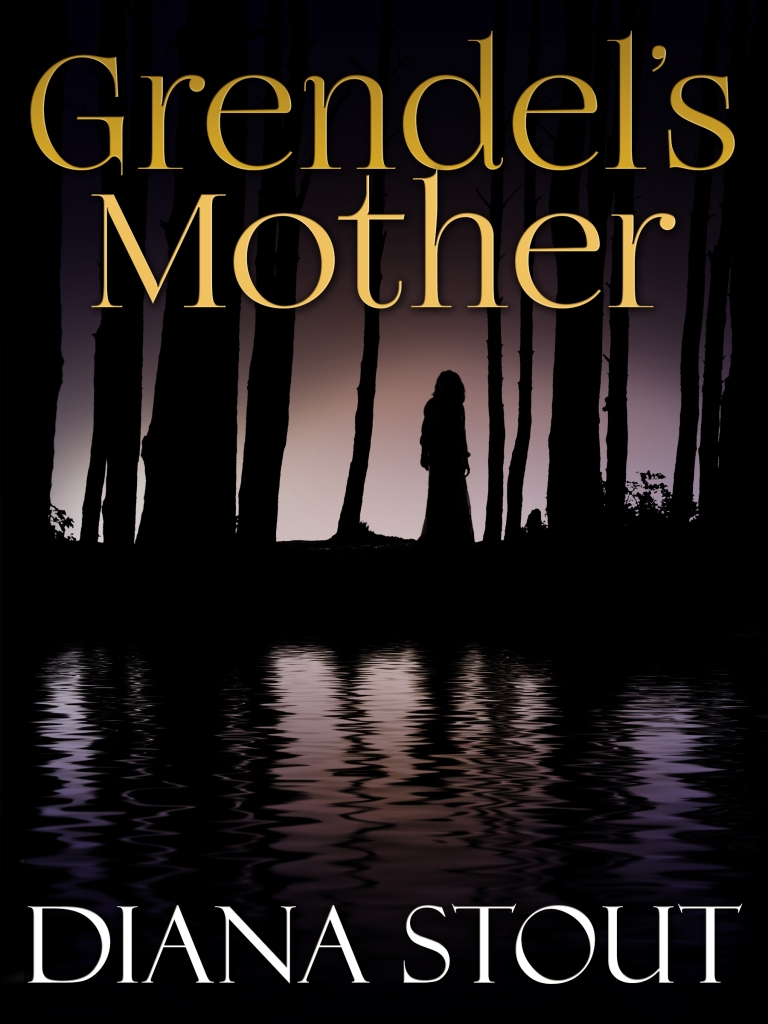
Grendel’s Mother became a novel and my first indie publication. To date, it’s still my most favorite book that I’ve written and published so far.

***

Purpose: To share and encourage. Writers can express doubts and concerns without fear of appearing foolish or weak. Those who have been through the fire can offer assistance and guidance. It’s a safe haven for insecure writers of all kinds!

Posting: The first Wednesday of every month is officially Insecure Writer’s Support Group day. Post your thoughts on your own blog. Talk about your doubts and the fears you have conquered. Discuss your struggles and triumphs. Offer a word of encouragement for others who are struggling. Visit others in the group and connect with your fellow writer – aim for a dozen new people each time – and return comments. This group is all about connecting!

How to Write When Struggling – Part II

Making Changes Can Make a Difference

Writers write in the best of times: when they’re healthy, working full-time, parenting, maintaining their homes, special celebratory events, births, and socializing.

They write in the worst of times: when ill, laid off, dealing with toxic neighbors or family, moving, and deaths.

And then there are the anormal times, such as the one we’re currently dealing with: Covid-19.

Up until now, I’ve been able to write through anything. I’ve written in playgrounds, noisy coffee shops, airports, and complete silence. I’ve written through two divorces, several moves, even the loss of jobs. I’ve written when sick with colds, fevers, stomach cramps, aching limbs, short-term migraines, and other ailments. However, having the flu for the third time in six weeks, three-day migraines I used to have, and vertigo have been the exceptions. Anytime my eyes are affected or when I’ve been lain out flat from an illness wishing for death, the actual task of putting words on paper or screen becomes non-existent.

One would think that during this current pandemic, especially while in lockdown, writers would be celebrating this huge chunk of solitary time, time they’ve wished for.

Surprisingly, despite the fact that I’m a full-time writer, I discovered I was struggling. So were many of my writer friends, plus thousands of other writers who are in my online writing groups.

For the second time in my life, I found myself facing depression even though my life wasn’t changing much. The things that changed for me were meeting friends and other writers in person and book club meetings.

While I’m not an expert on depression, from what I’ve read and researched, my depression came from loss. A loss of routine. The loss of physical connections. For me, the pandemic was a profound distraction, not to mention the fear of getting the virus.

Even though it was heartening to learn I wasn’t alone, it didn’t my problem.

After struggling through March and April of little writing or even the ability to concentrate on the most mundane of things, like paying bills or doing laundry, and feeling like every little task was a monster chore, I was ready for a mental spring cleaning.

I wanted to write again, and now, I am. So, what changed?

1) Recognizing Concentration Limits

During this pandemic, my ability to concentrate for long periods of time diminished greatly. I discovered if I did 15-45 minute sprints, I could do 1-3 sprints a day and write about 300-700 words per sprint, depending on the material I was writing.

2) Obtaining Accountability

I’ve always tracked my writing: how many words, how long, the tasks completed. Now, I’ve added an accountability partner. We check in with each other in the morning with either a live chat or a Messenger message, naming our goal(s) for the day. Then, we check in with each other in the evening, reporting what we’ve done.

Most of the time, we’re making forward progress.

On the days, where we did next to nothing, we acknowledge that we’re allowed. We’re exhausted, been injured, or just needed a day off.

The accountability works because 1) we’re verbalizing our goals and 2) we’re cheering each other on with positivity. It makes us want to do more!

3) Making Good Food choices

Since learning a year ago that I had a pile of allergies. celiac disease, and a high inflammatory rate, I changed my diet in big ways: avoiding the allergen foods and eliminating all grain, dairy, and sugar. I was doing well: losing weight and reduced my inflammatory rate to near zero. In fact, when I had one minor surgical procedure done last fall, the doctor expressed surprised at how fast the wound had healed. Additionally, all my aches, pains, and psoriasis had disappeared.

In February, I started cheating with just a couple foods. Then in March, April, and May, I jumped into the rabbit hole of unhealthy eating. No restrictions. All my previous comfort foods were back: ice cream, mac and cheese, cereal, sweets, and bread.

By June I was paying for those dalliances. All the previous ailments had returned and I was suffering, including gaining back all the weight I had lost.

Now, I’m eliminating all foods that are poisonous to my body again. I’m feeling better and I’m losing weight…again. The returned aches and pains are disappearing.

4) Connecting with Family and Friends

With all my writing meetings and weekend write-ins getting cancelled, online meetings became the next best thing. We can talk, laugh, and share our screens as we talk about the craft and continue to help each other with writing and publishing issues.

In fact, our monthly meeting this past Saturday was an all-day online write-in. We met in the morning, checked in a couple hours later, and then, checked in at the end of the allotted time. Everyone had met or were close to meeting the goals they had set for the day.

Online meetings, whether with one person or a group, have made a huge difference. I feel connected again.

5) Limiting Social Media

I’ve discovered the more I’m on social media reading the posts, comments, and tweets, the more likely I am to become angry, frustrated, or depressed about things I have no control over other than reposting, retweeting, writing a letter to my Congressional Representative, donating money, or venting to a friend. In the end, all of these things keep me engaged in obstacles to my writing. It’s one thing to stay informed; it’s another to spend hours learning nothing new.

—

The one change that has made the biggest difference for me has been the writing sprints, writing in short periods of time. Even during our recent online all-day write-in, I found that I couldn’t sit there for two hours at a time. I had to do a sprint, get up do a chore like load the washer or get the mail, then do another sprint, another chore, another sprint, and so forth. By the end of the day, I had written 3941 new words on my WIP.

Forward progress indeed!

A Writing Dream

The Insecure Writer’s Support Group

July 1 question – There have been many industry changes in the last decade, so what are some changes you would like to see happen in the next decade?

A Writing Dream

Ideally, I would love to be able to think of a scene and that scene getting typed up grammatically correct and formatted perfectly just by my thinking it. Diction would be okay if I didn’t have to insert period, comma, new paragraph, and so forth.

Given all that, I don’t see it happening…

When I first started writing, I would read about various writing retreats – homes that had been turned into a permanent writer’s retreat, where a writer could come for a week, two weeks, or a month at a time and just write.

Ernest Hemingway had his own retreat in Key West. Something like that could work. Or, a castle in England, Wales, or Ireland; yes, that could work, too.

In my mind’s eye, though, I see a big rambling Victorian-like house with a large wrap-around porch, with someone cooking the meals, someone else cleaning the rooms, gardener, and general maintenance person. And best of all, a setting that I’d never get tired of. Mountains in the background, a lake, large river, or even an ocean in the foreground, with the house up on a bluff out of rising waters’ way.

All I’d have to do is mentor, teach, and write.

Yup, if I ever become successful enough where I’m able to have my own private retreat and a writer’s retreat where I could teach and pay forward everything I’ve ever learned and bring in other writers to teach…that would be ideal. The last thing on my bucket list.

Of course, you did notice that my literary success has to come first, right?

Posting: The first Wednesday of every month is officially Insecure Writer’s Support Group day. Post your thoughts on your own blog. Talk about your doubts and the fears you have conquered. Discuss your struggles and triumphs. Offer a word of encouragement for others who are struggling. Visit others in the group and connect with your fellow writer – aim for a dozen new people each time – and return comments. This group is all about connecting!

Runes – An Ancient Oracle Tool: It’s All Been Rune’d

Once again, Keri Kruspe has written a fantastic post for my blog. I was over the moon reading this post because it spoke to me. Many times I’ve tried to use runes and Keri, through this post, has shown me why I want to continue and has provided the perfect book to achieve rune usage.

Runes – An Ancient Oracle Tool

by Keri Kruspe

Keri Kruspe - Runes 1

IT’S ALL BEEN RUNE’D

Recently I’ve taken the plunge and jumped into the Instagram pool.

Hey, that’s no small feat for me.

As I’ve mentioned in previous blogs, social media and I have a tentative relationship. I resisted adding yet another quiver in my communication arsenal, but at the urging of many of my (younger) friends, I decided to look into the matter.

Keri Kruspe - Runes 2 phone appsEarlier in the year, I paid for a training program that included how to set up Instagram for authors and what was best to post (and when to post). So, I took an afternoon off and immersed myself into the hows and whys of this social beast.

One of the main suggestions the training gave was to have specific tropes to share – things that might be of interest to others instead of advertising my books all the time (boring!). Instantly I thought of sharing one of my favorite meditative techniques – consulting an ancient tool handed down to me by my favorite aunt about twenty years ago. In order to explain why the runes mean so much to me, I’d like to share a little bit about the woman who taught them to me.

My Aunt Jeanette was a formidable woman

Keri Kruspe - Runes 3 her auntMy Aunt Jeanette was a formidable woman, someone who was way ahead of her time. She was my father’s older sister by eighteen months and ended up taking care of him when their mother deserted the family when he was a young preteen. Then, at the ripe old age of fifteen, she entered into her first marriage. I say first because the woman was married eleven times. The funny thing was she only had one child…out of wedlock…by a married man…in the 1940s.

Even though she was married often, I barely remember her with any partner. She was one of those women from the sixties who was dressed to the teeth…bouffant hairdo, nails polished and manicured, her make-up model perfect. Living in Nevada, my family worked in the casino business, and she proudly told me that she was one of the first female pit bosses in Las Vegas – probably around the 1960s.

Then, around when she turned forty-nine, she took a 180-degree turn in her life. She quit her job, her house, her perfect image, and left Nevada and her family to live in Hawaii. There she lived for the next twenty-five years. To make a living, she took various jobs – from being a greeter at the airport (complete with leis) to a metaphysical minister.

As a Metaphysical minister, she began to read tarot cards and would draw a rune at the end of her card reading. The purpose, she informed me, was to aid the Spiritual Warrior…the one whose goal was self-change.

The Runes

The runes are a tool to keep one on course, on track for strengthening your intuition.

You see, the runes are used as an instrument for getting in touch with a part of yourself that knows everything. It’s a method of guidance and self-counseling used to assist us in navigating the unfamiliar waters we find ourselves in.

Using the runes is like consulting an Oracle.

An Oracle does not give you instruction as what to do next, nor does it predict the future. It points your attention to those hidden fears and motivations that shape where you are headed in your life.

Once you acknowledge what those might be, it directs your attention to inner choices that may be the most important elements in deciding what you choose your future to be.

When she taught me how to use these aids, I really needed the help.

I was going through a rough divorce and found myself a single parent with a toddler, a tweenie and a fourteen-year-old. Being able to get in touch with that part of myself that had been buried for years was a godsend. I firmly believe my ability to go into silence and contemplate the suggestions the readings gave helped to ground me and keep me sane.

A brief history lesson on the runes…

Keri Kruspe - Runes 4 vikingLegend has it the runes are a gift from Odin, the principal divinity in the pantheon of the Norse Gods.

Believed to be even older than the New Testament, they are akin to the Tarot and the Chinese Book of Changes. The runes were commonly used in Iceland during the late Middle Ages.

Unfortunately, the wisdom of those rune masters died, never having written their divinations down nor did they pass their experiences orally. Little is left of the original Viking practice except for stones, sagas, and far-flung runic lore. What we do know is to those who created the runes, the earth and all created things were alive.

To celebrate that fact, runes were carved into pieces of hardwood, incised on metal or cut into leather stained with pigment. There are twenty-four runes, plus one later innovation – the blank rune – the Unknowable. It is the rune of total trust and can be interpreted as exciting evidence of life’s progression.

How I Use the Runes

The rune cards I use on Instagram belonged to my aunt. She preferred the cards those while I have always felt a kinship to the actual stones. I keep the stones loose in a pouch and every morning, I let my mind go blank to open myself to receive what I should meditate on for the day.

I reach into the pouch, and a stone will let itself be known – hard to explain…it gets warm and my fingers automatically reach for it. I will then consult the book, The Book of Runes by Ralph H. Blum. The interpretations in his book are laid out clearly and in a loving manner. Easy enough to use and understand.

My aunt has been gone for several years now. Not a day goes by that I don’t miss telling her what was going on in my life.

I know she’d be thrilled I’ve finally realized my dream of becoming a published author…something she encouraged me to do since I was twelve. To celebrate her life as well as the teachings she gave, I proudly include her cards with my stones.Keri Kruspe - Runes 5 Keri with her aunt

See…I did listen. Thanks, Auntie.


About Keri – Author of otherworldly romantic adventures” Stories of heroines who aren’t afraid to take a chance on life…or love.

Keri Kruspe PicAward-winning author, Keri Kruspe, writes otherworldly romantic adventures for readers who want to fall in love among the stars. Her lifelong fascination with the unexplained phenomena started at a young age when she discovered Sci-fi/paranormal stories. Then in her late teens, she stumbled on historical romances and fell in love with them too. When the two genres merged on the page, she finally found her passion.

A native Nevadan, Keri resides with her family in the wilds of Northwest Michigan where she enjoys the stark change in seasons and the pleasures each one brings. An avid reader, Keri loves an enjoyable bottle of red wine, a variety of delicious foods and watching action/adventure movies…usually at the same time. You can find her most days immersed in her fantasy world on her latest novel while foot tappin’ to classic rock. When not absorbed in her writing, Keri works alongside her husband in building their dream home or discovering intelligent life in America in their travels. Visit her website for all the fun news, updates, and a FREE novella!