Tag Archives: #WritingLife

Home

She looks at me like I’m old news. I’ve seen that look before, just before she got rid of her favorite high heels and those sneakers that had supported her forest walks and trips to the zoo. Unlike before when there used to be replacements, now their spots remain empty.  

At one time, I was untouched and unblemished, fully fur-line with bright, spunky fur that totally embraced her icy cold feet.

Now my fur is worn and flattened, disheveled as if caught in a bad whirlwind of a muddy storm. My insides are still warm and I’ll admit I’m tired, but I’m still functional. So what if I have a few worn-down spots? Inside and out. My soles are like steel now. Hardened and experienced.

She sighs every time she slips into me. Her worry lines disappearing. How can any replacement provide that same level of comfort? It would take any replacement months, probably even a year before they’d hear that same sigh.

Doesn’t she realize I’m home?

How can she throw away home?

How to Write When Struggling – Part II

Making Changes Can Make a Difference

Writers write in the best of times: when they’re healthy, working full-time, parenting, maintaining their homes, special celebratory events, births, and socializing.

They write in the worst of times: when ill, laid off, dealing with toxic neighbors or family, moving, and deaths.

And then there are the anormal times, such as the one we’re currently dealing with: Covid-19.

Up until now, I’ve been able to write through anything. I’ve written in playgrounds, noisy coffee shops, airports, and complete silence. I’ve written through two divorces, several moves, even the loss of jobs. I’ve written when sick with colds, fevers, stomach cramps, aching limbs, short-term migraines, and other ailments. However, having the flu for the third time in six weeks, three-day migraines I used to have, and vertigo have been the exceptions. Anytime my eyes are affected or when I’ve been lain out flat from an illness wishing for death, the actual task of putting words on paper or screen becomes non-existent.

One would think that during this current pandemic, especially while in lockdown, writers would be celebrating this huge chunk of solitary time, time they’ve wished for.

Surprisingly, despite the fact that I’m a full-time writer, I discovered I was struggling. So were many of my writer friends, plus thousands of other writers who are in my online writing groups.

For the second time in my life, I found myself facing depression even though my life wasn’t changing much. The things that changed for me were meeting friends and other writers in person and book club meetings.

While I’m not an expert on depression, from what I’ve read and researched, my depression came from loss. A loss of routine. The loss of physical connections. For me, the pandemic was a profound distraction, not to mention the fear of getting the virus.

Even though it was heartening to learn I wasn’t alone, it didn’t my problem.

After struggling through March and April of little writing or even the ability to concentrate on the most mundane of things, like paying bills or doing laundry, and feeling like every little task was a monster chore, I was ready for a mental spring cleaning.

I wanted to write again, and now, I am. So, what changed?

1) Recognizing Concentration Limits

During this pandemic, my ability to concentrate for long periods of time diminished greatly. I discovered if I did 15-45 minute sprints, I could do 1-3 sprints a day and write about 300-700 words per sprint, depending on the material I was writing.

2) Obtaining Accountability

I’ve always tracked my writing: how many words, how long, the tasks completed. Now, I’ve added an accountability partner. We check in with each other in the morning with either a live chat or a Messenger message, naming our goal(s) for the day. Then, we check in with each other in the evening, reporting what we’ve done.

Most of the time, we’re making forward progress.

On the days, where we did next to nothing, we acknowledge that we’re allowed. We’re exhausted, been injured, or just needed a day off.

The accountability works because 1) we’re verbalizing our goals and 2) we’re cheering each other on with positivity. It makes us want to do more!

3) Making Good Food choices

Since learning a year ago that I had a pile of allergies. celiac disease, and a high inflammatory rate, I changed my diet in big ways: avoiding the allergen foods and eliminating all grain, dairy, and sugar. I was doing well: losing weight and reduced my inflammatory rate to near zero. In fact, when I had one minor surgical procedure done last fall, the doctor expressed surprised at how fast the wound had healed. Additionally, all my aches, pains, and psoriasis had disappeared.

In February, I started cheating with just a couple foods. Then in March, April, and May, I jumped into the rabbit hole of unhealthy eating. No restrictions. All my previous comfort foods were back: ice cream, mac and cheese, cereal, sweets, and bread.

By June I was paying for those dalliances. All the previous ailments had returned and I was suffering, including gaining back all the weight I had lost.

Now, I’m eliminating all foods that are poisonous to my body again. I’m feeling better and I’m losing weight…again. The returned aches and pains are disappearing.

4) Connecting with Family and Friends

With all my writing meetings and weekend write-ins getting cancelled, online meetings became the next best thing. We can talk, laugh, and share our screens as we talk about the craft and continue to help each other with writing and publishing issues.

In fact, our monthly meeting this past Saturday was an all-day online write-in. We met in the morning, checked in a couple hours later, and then, checked in at the end of the allotted time. Everyone had met or were close to meeting the goals they had set for the day.

Online meetings, whether with one person or a group, have made a huge difference. I feel connected again.

5) Limiting Social Media

I’ve discovered the more I’m on social media reading the posts, comments, and tweets, the more likely I am to become angry, frustrated, or depressed about things I have no control over other than reposting, retweeting, writing a letter to my Congressional Representative, donating money, or venting to a friend. In the end, all of these things keep me engaged in obstacles to my writing. It’s one thing to stay informed; it’s another to spend hours learning nothing new.

—

The one change that has made the biggest difference for me has been the writing sprints, writing in short periods of time. Even during our recent online all-day write-in, I found that I couldn’t sit there for two hours at a time. I had to do a sprint, get up do a chore like load the washer or get the mail, then do another sprint, another chore, another sprint, and so forth. By the end of the day, I had written 3941 new words on my WIP.

Forward progress indeed!

It’s Read an eBook Week – March 1-7: What are you reading?

The Insecure Writer’s Support Group (#IWSG)

Rather than answer the March 4 question posed by the group, I’ve chosen to write about this week’s national recognition on eReading.

It’s Read an eBook Week – March 1-7: What are you reading?

 Already, we’re into the third month of a new year. A year where I was going to do more writing and be more organized with my reading.

I have three shelves of double-stacked to-be-read (TBR) books. These are the remainders from last year’s thinning from fives shelves, where I got rid of books I knew I’d never read simply because my tastes have changed over time.

My TBR pile, though, isn’t going down quickly enough to suit me. I think I read only three of them last year, and I have just as many books on my Kindle, which I haven’t touched lately.

And now today, I learned that this week, March 1-7, is Read an eBook Week. Did you know that?

Are you like me with a huge assortment of books on your eReader?

So, here I am again, revisiting my wanting to do better.

And I am. One book at a time.

Right now, I’m finishing Mrs. Poe by Lynn Cullen. An excellent novel about Mrs. Francis Osgood, a poet who fell in love with Edgar Allan Poe and he with her. Osgood, too, became friends with his wife, Virginia, his first cousin whom he married when she was 13 and he was 26. A petite woman who behind the beautiful skirts and seemingly gentile manners was a conniving, jealous creature who wished harm on others, especially Mrs. Osgood–or was she?

Mrs. Poe has been a book difficult to put down. I highly recommend it including the notes at the end of the book.

Now finished, I need to dig into my TBR pile again. What other goodies lurk there for my reading pleasure?

So, what are you reading? Did it come out of your TBR pile?

***

Insecure Writers Support Group BadgePurpose: To share and encourage. Writers can express doubts and concerns without fear of appearing foolish or weak. Those who have been through the fire can offer assistance and guidance. It’s a safe haven for insecure writers of all kinds!

Posting: The first Wednesday of every month is officially Insecure Writer’s Support Group day. Post your thoughts on your own blog. Talk about your doubts and the fears you have conquered. Discuss your struggles and triumphs. Offer a word of encouragement for others who are struggling. Visit others in the group and connect with your fellow writer – aim for a dozen new people each time – and return comments. This group is all about connecting!

Pictures Worth More Than a Thousand Words

I’m one of those writers who finds stories everywhere: from conversations, articles I’ve read, seeing something in nature, from words a character in another story utters, from looking outside my window, from songs, from reading a list of poisons, visiting websites on history, and so forth.

The ideas that have lasted over decades, though, have come from pictures. Ironically, I still haven’t written a story from those ideas. Yet. I suspect because the ideas are still formulating.

I have two postcards propped against some books on a shelf, which I look at every time I’m sitting at my desk. Their inspiration is a dark mystery or even darker suspense/thriller. I found them in San Francisco in 1989 while attending a writer’s conference. On Halloween night in 1998, I started writing a screenplay where I scared myself so much, I put it away and haven’t returned to it since. Though, I haven’t stopped thinking about it. It’s time to get it back out and finish it!

During my first marriage, when decorating parties were the trend, I bought this set of three pictures in the 70s. They remind me of the English cottages and countryside, where I think of other times. They’ve hung on my office or bedroom wall in every home I’ve lived, and I look at them every day. A time travel always comes to mind that ties into a song that came out in the 70s, too. Every time I hear the song, the plot becomes more developed. It’s time I write that story, too!

So, why aren’t I sharing these pictures with you? I will when I write the stories. I wouldn’t want to give everything away right now, would I?

***

Insecure Writers Support Group BadgePurpose: To share and encourage. Writers can express doubts and concerns without fear of appearing foolish or weak. Those who have been through the fire can offer assistance and guidance. It’s a safe haven for insecure writers of all kinds!

Posting: The first Wednesday of every month is officially Insecure Writer’s Support Group day. Post your thoughts on your own blog. Talk about your doubts and the fears you have conquered. Discuss your struggles and triumphs. Offer a word of encouragement for others who are struggling. Visit others in the group and connect with your fellow writer – aim for a dozen new people each time – and return comments. This group is all about connecting!

It All Began With a Book Report

The Insecure Writer’s Support Group

 January 8 question – What started you on your writing journey? Was it a particular book, movie, story, or series? Was it a teacher/coach/spouse/friend/parent? Did you just “know” suddenly you wanted to write?

 It All Began With a Book Report

 I often quip that I began writing because it was cheaper than seeing a psychiatrist. That statement isn’t far from the truth because that’s when I began writing in earnest due to life’s frustrations. My real start, though, occurred a decade earlier.

In a tenth grade English class when I was fifteen, I had a book report assignment. We could write about a character, the plot, or the setting. I was reading James Michener’s Hawaii at the time and was enamored with his writing, especially the many pages where he detailed the setting, the formation of the islands. I wrote about the setting in about 100 words or so. I remember getting an A- for content and a B+ for grammar. It was the A- I couldn’t believe. I reread what I wrote and was surprised at how lyrical, how detailed my words were. I wrote that?

It didn’t sound like me, and yet it was me. A me that many didn’t know about. Plus, the writing was way better than anything I’d ever written before.

Rereading my words, I remembered the sensation of being taken to another place, a magical place I now recognize as the zone. Up until that time, the zone usually occurred when I was reading. Where I could be transported into a different time, a different place, where the world would fade away.

Looking back at that time now, I find it interesting that 1) neither parent ever read that report, let alone any of my other assignments (EVER.), and 2) that no one saw my fascination with words (mostly reading at that point) where they could help me move into a career that would have suited me better, far better than the path of secretary and bookkeeper, both of which I was good at. I didn’t hate the jobs, but I didn’t love them either. The jobs were a means to an end—earnings to pay the bills. Later, though, those skills would lead me into academia, which I did love.

Through the next fifty years after high school, I would write a lot, in various genres, for various audiences, and in various media. Since my creation of Sharpened Pencils Productions LLC, I have been publishing two books a year.

I have a lot of catching up to do.

So many projects, so little time.

*****

After much pondering and consideration for her New Year’s list of 2020 projects, which includes finishing the last six of the seven Laurel Ridge novellas (covers below), Diana has chosen to finish a grammar handbook, an academic nonfiction text, and a historical screenplay based on a true event.

Insecure Writers Support Group Badge

Purpose: To share and encourage. Writers can express doubts and concerns without fear of appearing foolish or weak. Those who have been through the fire can offer assistance and guidance. It’s a safe haven for insecure writers of all kinds!

Posting: The first Wednesday of every month is officially Insecure Writer’s Support Group day. Post your thoughts on your own blog. Talk about your doubts and the fears you have conquered. Discuss your struggles and triumphs. Offer a word of encouragement for others who are struggling. Visit others in the group and connect with your fellow writer – aim for a dozen new people each time – and return comments. This group is all about connecting!

The One Trait Every Writer Needs

The One Trait Every Writer Needs

Originally posted on June 25, 2014 on my Only for the Brave blog, I offer this advice again. It’s advice that never gets old.

This trait is the one trait that finally saw me getting my first novel published. Originally, I had said if I wasn’t published with a novel by the time I turned 40, I would quit. At 40, I was so close, I couldn’t quit. At 42, I published my first book.

It’s a trait no writer should be without.

The one trait a writer can’t be without is PERSISTENCE.

The persistent writer:

    1. Submits their work.
    2. Accepts rejection. (It’s not personal).
    3. Accepts criticism.
    4. Wants criticism because they know growth occurs when mistakes are pointed out.  Plus, criticism means the writer engaged the reader, of if nothing else, hit a nerve.
    5. Pays attention to the details.
    6. Rewrites or revises, and rereads for polishing again.
    7. Resubmits.

And, repeats steps 6 & 7 repeatedly until SUCCESS (acceptance/publication) is finally achieved.

Runes – An Ancient Oracle Tool: It’s All Been Rune’d

Once again, Keri Kruspe has written a fantastic post for my blog. I was over the moon reading this post because it spoke to me. Many times I’ve tried to use runes and Keri, through this post, has shown me why I want to continue and has provided the perfect book to achieve rune usage.

Runes – An Ancient Oracle Tool

by Keri Kruspe

Keri Kruspe - Runes 1

IT’S ALL BEEN RUNE’D

Recently I’ve taken the plunge and jumped into the Instagram pool.

Hey, that’s no small feat for me.

As I’ve mentioned in previous blogs, social media and I have a tentative relationship. I resisted adding yet another quiver in my communication arsenal, but at the urging of many of my (younger) friends, I decided to look into the matter.

Keri Kruspe - Runes 2 phone appsEarlier in the year, I paid for a training program that included how to set up Instagram for authors and what was best to post (and when to post). So, I took an afternoon off and immersed myself into the hows and whys of this social beast.

One of the main suggestions the training gave was to have specific tropes to share – things that might be of interest to others instead of advertising my books all the time (boring!). Instantly I thought of sharing one of my favorite meditative techniques – consulting an ancient tool handed down to me by my favorite aunt about twenty years ago. In order to explain why the runes mean so much to me, I’d like to share a little bit about the woman who taught them to me.

My Aunt Jeanette was a formidable woman

Keri Kruspe - Runes 3 her auntMy Aunt Jeanette was a formidable woman, someone who was way ahead of her time. She was my father’s older sister by eighteen months and ended up taking care of him when their mother deserted the family when he was a young preteen. Then, at the ripe old age of fifteen, she entered into her first marriage. I say first because the woman was married eleven times. The funny thing was she only had one child…out of wedlock…by a married man…in the 1940s.

Even though she was married often, I barely remember her with any partner. She was one of those women from the sixties who was dressed to the teeth…bouffant hairdo, nails polished and manicured, her make-up model perfect. Living in Nevada, my family worked in the casino business, and she proudly told me that she was one of the first female pit bosses in Las Vegas – probably around the 1960s.

Then, around when she turned forty-nine, she took a 180-degree turn in her life. She quit her job, her house, her perfect image, and left Nevada and her family to live in Hawaii. There she lived for the next twenty-five years. To make a living, she took various jobs – from being a greeter at the airport (complete with leis) to a metaphysical minister.

As a Metaphysical minister, she began to read tarot cards and would draw a rune at the end of her card reading. The purpose, she informed me, was to aid the Spiritual Warrior…the one whose goal was self-change.

The Runes

The runes are a tool to keep one on course, on track for strengthening your intuition.

You see, the runes are used as an instrument for getting in touch with a part of yourself that knows everything. It’s a method of guidance and self-counseling used to assist us in navigating the unfamiliar waters we find ourselves in.

Using the runes is like consulting an Oracle.

An Oracle does not give you instruction as what to do next, nor does it predict the future. It points your attention to those hidden fears and motivations that shape where you are headed in your life.

Once you acknowledge what those might be, it directs your attention to inner choices that may be the most important elements in deciding what you choose your future to be.

When she taught me how to use these aids, I really needed the help.

I was going through a rough divorce and found myself a single parent with a toddler, a tweenie and a fourteen-year-old. Being able to get in touch with that part of myself that had been buried for years was a godsend. I firmly believe my ability to go into silence and contemplate the suggestions the readings gave helped to ground me and keep me sane.

A brief history lesson on the runes…

Keri Kruspe - Runes 4 vikingLegend has it the runes are a gift from Odin, the principal divinity in the pantheon of the Norse Gods.

Believed to be even older than the New Testament, they are akin to the Tarot and the Chinese Book of Changes. The runes were commonly used in Iceland during the late Middle Ages.

Unfortunately, the wisdom of those rune masters died, never having written their divinations down nor did they pass their experiences orally. Little is left of the original Viking practice except for stones, sagas, and far-flung runic lore. What we do know is to those who created the runes, the earth and all created things were alive.

To celebrate that fact, runes were carved into pieces of hardwood, incised on metal or cut into leather stained with pigment. There are twenty-four runes, plus one later innovation – the blank rune – the Unknowable. It is the rune of total trust and can be interpreted as exciting evidence of life’s progression.

How I Use the Runes

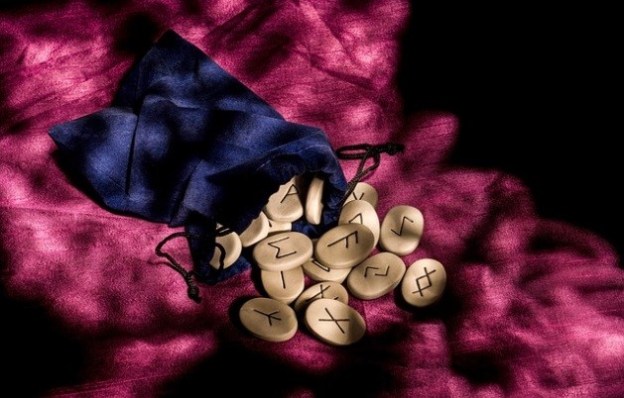
The rune cards I use on Instagram belonged to my aunt. She preferred the cards those while I have always felt a kinship to the actual stones. I keep the stones loose in a pouch and every morning, I let my mind go blank to open myself to receive what I should meditate on for the day.

I reach into the pouch, and a stone will let itself be known – hard to explain…it gets warm and my fingers automatically reach for it. I will then consult the book, The Book of Runes by Ralph H. Blum. The interpretations in his book are laid out clearly and in a loving manner. Easy enough to use and understand.

My aunt has been gone for several years now. Not a day goes by that I don’t miss telling her what was going on in my life.

I know she’d be thrilled I’ve finally realized my dream of becoming a published author…something she encouraged me to do since I was twelve. To celebrate her life as well as the teachings she gave, I proudly include her cards with my stones.Keri Kruspe - Runes 5 Keri with her aunt

See…I did listen. Thanks, Auntie.


About Keri – Author of otherworldly romantic adventures” Stories of heroines who aren’t afraid to take a chance on life…or love.

Keri Kruspe PicAward-winning author, Keri Kruspe, writes otherworldly romantic adventures for readers who want to fall in love among the stars. Her lifelong fascination with the unexplained phenomena started at a young age when she discovered Sci-fi/paranormal stories. Then in her late teens, she stumbled on historical romances and fell in love with them too. When the two genres merged on the page, she finally found her passion.
A native Nevadan, Keri resides with her family in the wilds of Northwest Michigan where she enjoys the stark change in seasons and the pleasures each one brings. An avid reader, Keri loves an enjoyable bottle of red wine, a variety of delicious foods and watching action/adventure movies…usually at the same time. You can find her most days immersed in her fantasy world on her latest novel while foot tappin’ to classic rock. When not absorbed in her writing, Keri works alongside her husband in building their dream home or discovering intelligent life in America in their travels. Visit her website for all the fun news, updates, and a FREE novella!

Guest blogger – Keri Kruspe, Part II

As a follow up to Keri’s August 21, 2019 post as a guest blogger, where she talked about the things she wished she’d known before publishing her first book, in today’s post, she talks about the things she did right.

On the Other Hand…things I’ve done right

An Opinion By Keri Kruspe

In my last article, I thoughtfully discussed (okay…I whined) about my frustrations on what I would do differently in launching my writers’ career. Having admitted my mistakes and oopsies, it’s only fair I switch gears and talk about what I felt I did right.

To give some perspective, here is a brief history of how I got here.

Ten years ago, when I finally got off my keister and wrote my first full-length. It was a long one, around 100,000 words. I poured my heart and soul into that story. While it was a sci-fi romance (the genre I currently write-in), I took out my frustrations on the devastating thing that happened to me in my secular career in the banking industry. I had been let go from a company that I had worked for 21 years. I’d grown up at that bank, rising in the ranks to end up a VP in charge of the retail department. I had 300 employees reporting to my direct line.

Then unexpectantly, I got laid off. Depression hit me hard and heavy. To make matters worse, those who I thought were close friends either betrayed me or dropped me like the trash took out itself. Through the shake-up, I learned who my true friends were and found love and acceptance within my family.

But the best thing that helped me overcome my depression was to write that book. In it, I turned the villains in my life into clowns and enjoyed the various ways I killed them off or humiliated them. Ahhh…being a writer has so many perks!

Keri Kruspe - villians

With my novel in my hot little hands, I just knew someone would snap up my masterpiece and I’d be on my way to working as a writer full time.

Long story short, that didn’t happen. I had no idea what was wrong or where to turn to make it right. It took another ten years for me to try again in a more serious vein.

With clear hindsight, I can now share what I’ve done right since then to launch my career as an independent author:

THE JOURNEY IS BETTER WITH FRIENDS

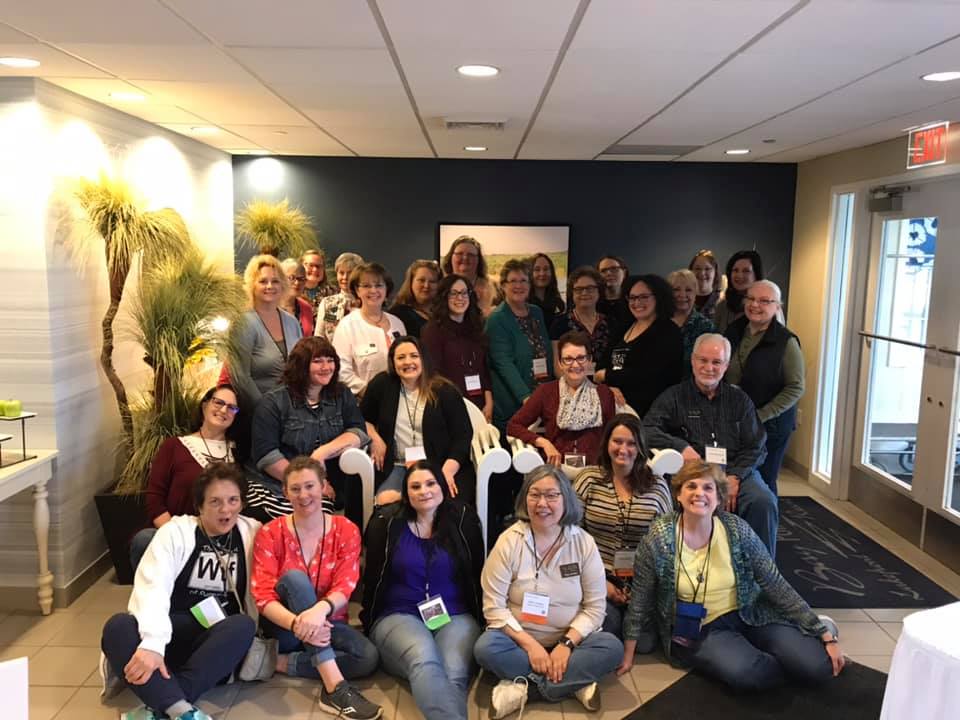
MMRWA REtreat 2019 group photo - original

Members of my Mid-Michigan Romance Writers of America chapter, taken while on their 2019 Retreat From Harsh Reality

When I started again in 2016 to write my novel, I realized going it alone was not the thing to do. As with many author’s, I’m a solitary creature who likes to rely on myself and not depend on others. I thought I could do everything on my own.

But, it didn’t take long to realize what I had done before wasn’t going to work (remember the definition of insanity…). I needed help from other people. I’d been a member of Romance Writers of America since 2008 but didn’t do much with it. Using that as a starting point, I reached out to some of my peers and begun to explore and develop contacts.

TRAINING

Indie publishing was starting to hit its stride when I wrote that first novel in 2008. From what I understand, there wasn’t a lot help around for writers to find their way into self-publishing. Today, there are numerous tools and assistance out there just for the asking.

When I gathered up the courage to ask someone to read my novel, she let me know it needed a lot of work. Especially on Point of View (POV).

I couldn’t understand it. I was an avid reader (my average is 100 books a year and counting!) and writing came second nature to me. After pulling my conceited head out of my rear end, I admitted I needed to dive deep into my chosen craft. To do that, I had to spend the money to get an education. While some classes were free with RWA, to get a better handle on what I was trying to do, I needed something more. I needed a mentor or mentors. That’s where the deeper training comes in. For a personal touch, I found the Barany School of Fiction. Their courses, as well as the bi-monthly online meetings, are a godsend.

The other training I did correctly was to find a course that went step-by-step on what to do once my novel was finished. I needed to know how, when, and where to create and market my book. There are numerous paths to choose from, all you have to do is a little research to find what works best for you. I encourage everyone to go out and look for it.

Keri Kruspe - extra trainingEXTRA TRAINING

I call this section extra because it involves using your downtime to your advantage. For me, that meant using the time where I couldn’t be on the computer but had free time to listen. An example – it takes me a half an hour to get ready for work in the morning (putting on makeup, doing my hair, getting dressed). I used to listen to the TV or music, but now I’ll tune in to a podcast, a class, book, or anything audio that involves being an author.

I’ll do the same when I’m in my car going to work. Here is an extra hour a day that I can continue to listen to what I started that morning.

FARMING OUT WHAT I HATE TO DO

There are certain things in my new career I’ve found I didn’t have time or talent to learn in the beginning. I wanted to spend my time learning how to write before figuring out Photoshop. So, using my contacts, I’ve found someone to do my covers. I also hired a writer’s admin to tweak my website (I did learn the preliminaries on creating it and do the upkeep myself) and to format my novels. I can format, but I confess I hate doing it.

Also, I don’t think a writer should have the final edit on their work. That is a no-brainer for me. While beta/advance readers are wonderful, you still should hire a professional editor. I did and even though it was expensive, having the polished novel was well worth it.

FINAL THOUGHTS

Keri Kruspe - final thoughts.jpgOne of the best things I’m doing as a new author is writing this guest post. I love how I can take a subject that’s bugging me and put it on paper. I hope I’m allowed to keep doing it for a while. After all, writing is my profession of choice.

So…far warning world! I’m in this for the long haul.

***************

Keri Kruspe Pic

Keri Kruspe, author of Otherworldly Romantic Adventures – writing about feisty heroines who aren’t afraid to take chances in life or love.

Keri has been an author since the age of twelve and has always been fascinated with otherworldly stories that end in Happily Ever After. Her current sci-fi romance trilogy, An Alien Exchange (winner 2018 SPF Galaxy award) had its first release winter 2018. The story continues with D’zia’s Dilemma and concludes with Ki’s Redemption.

A native Nevadan, Keri resides with her family in the wilds of Northwest Michigan where she enjoys the stark change in seasons and the pleasures each one brings. An avid reader, Keri loves an enjoyable bottle of red wine, a variety of delicious foods and watching action/adventure movies…usually at the same time. You can find her most days immersed in her fantasy world on her latest novel while foot tappin’ to classic rock. When not absorbed in her writing, Keri works alongside her husband in building their dream home or discovering intelligent life in America in their RV. Join the fun and sign up for her mailing list at www.kerikruspe.com

In a writing galaxy far, far away…

The Insecure Writer’s Support Group

 September 4 question – If you could pick one place in the world to sit and write your next story, where would it be and why?

 In a writing galaxy far, far away…

There are so many places I could list, but after mulling over the question, there’s one that keeps floating to the top of the list.

That one place in the world would need to be a mountaintop where the air is crisp, the skies clear, where the Milky Way shines brightly and the moon brighter still. Where I could look out, across the valley and see lights of civilization, tucked against the mountains, yet far enough away that its daily chaos wasn’t imposed upon me. Where a lake or river spread widely across the rest of that valley disappearing into the sunset between the peaks. Where there were still enough trees to roost and feed the birds and where nature’s creatures roamed freely without fear.

The why? Isn’t it obvious?

Insecure Writers Support Group BadgePurpose: To share and encourage. Writers can express doubts and concerns without fear of appearing foolish or weak. Those who have been through the fire can offer assistance and guidance. It’s a safe haven for insecure writers of all kinds!

Posting: The first Wednesday of every month is officially Insecure Writer’s Support Group day. Post your thoughts on your own blog. Talk about your doubts and the fears you have conquered. Discuss your struggles and triumphs. Offer a word of encouragement for others who are struggling. Visit others in the group and connect with your fellow writer – aim for a dozen new people each time – and return comments. This group is all about connecting!

Failures – Part IV: 7 Lessons of Failure as a Writer

This blog was originally published April 4, 2018, on my Only for the Brave blog, which has been eliminated as I decided to merge the two blogs. Because failure is an important part of success for writers and everyone else, I felt it was worthwhile repeating this post, this series on failure.

*****

7 Lessons of Failure as a Writer

People look at me and see success. Published in multiple media, in multiple genres, with various awards. With an MFA and a Ph.D., too, but there have been many failures along the way.

I have failed so many times I’ve lost count, from beginning, middle, and end.

In the beginning, I couldn’t get anything published. I tried big publications, national publications, regional, and small publications. All submissions boomeranged back. Once in a while, I’d get a handwritten note at the bottom of the mimeographed rejection, saying, I like your voice, or Please submit to us in the future. I learned from others these handwritten notes were excellent rejections because they were encouraging, that I needed do as suggested.

Only after a friend read a couple of my rejected essays and said, “This sounds like Erma Bombeck,” did I realize I needed to approach our local newspaper with a suggestion for a weekly or monthly column. Success! A six-month trial became a five-year career start.

Lesson #1 – If you can’t start big, start small.

When I turned to fiction writing, specifically romance, I already had a number of magazine articles and short story publications. I was reading a romance book a day, thinking how hard can it be? Over time, I found out. I wrote four books, all getting rejections. Even a published writer friend was amazed at the rejections, saying, “It’s like you’re standing on a cliff with only the back of your heels touching. Why aren’t falling off that cliff?”

The most devastating rejections occurred with an editor writing, “I just bought a book like yours last week.” So close, yet so far away.

At 37, I had been writing romances for nine years. I vowed that if I wasn’t published by the time I turned 40, I would quit.

I turned 40. More small magazine publications, but no books. I was getting closer, though. I was winning awards and placing in contests. I had an agent. Then I lost the agent, and then a second one. They were trying to put me into a publishing box I didn’t want to climb into. They were trying to make me into a specific kind of writer that I wasn’t and didn’t want to become.

At 42, I finally published my first book. Two more book publications quickly followed.

Lesson #2 – Don’t quit. Success will come but in its own time. Quit only if you truly have no more interest in pursuing that endeavor. Ever.  

About that time, I turned to scriptwriting. Producers were impressed with my book publications. While I did option one script to a producer for six months for no money, the option ran out. He wanted to renew for another six months, again with no money. I said no. About every two years after that, he would call me, asking what I’d done with the script. I knew I had a good story. (I’m in the process of rewriting and publishing that script now.)

In the meantime, I developed relationships with another five producers, all who loved my writing but couldn’t say yes to my scripts. It became a matter of trying to find the right material. They wanted me to submit anything and everything I was writing.

Lesson #3 – Rejections can be a yes.

One of my first book submissions was a colossal failure. The Senior Editor wrote:

Thank you for submitting BOOK TITLE for our review. We have found that your manuscript does not fit the requirements for PUBLISHER LINE. It is too melodramatic, based on trite misunderstandings among the characters as well as contrived circumstances. Sincerely . . .

So, she tore down the plot and conflict, the characters, the dialogue, and the…wait, there was no comment regarding the setting. Oh, wow, she liked the setting!

I used that setting in another book, with a similar conflict, different plot, different characters, and different dialogue. It sold and was published.

Going back to that rejected manuscript later, I could see that the editor was right.

The writing was horrible.  At least, she saved me from that humiliation. I had mixed tenses, multiple ping-pong points of view, mixed metaphors, wordiness, too much telling, and too many details that added nothing to the story or to the characters. The book was boring.

I should have burned the book, but I didn’t. I started looking at my writing from an editor’s point of view, and that’s when the real learning began.

Lesson #4 – Learn from your mistakes.

Never compare yourself to another writer. Not by their sales numbers, the number of books sold, how fast they can write, how few drafts they have to write, by their having an agent, or being traditionally published.

When you compare yourself to others, you’ll always be a failure.

Ironically, what you don’t see is that others are probably comparing themselves to you and feeling like failures.

Lesson #5 – Don’t compare yourself to others. Ever.

Their journey is not yours. Yes, some get lucky when they are young. Some get lucky with their first book. Some get lucky winning the highest awards. Some get lucky with their self-published book, earning thousands of dollars.

When I published my first book, I was in the right place at the right time. I had a once-in-a-lifetime opportunity to talk to an editor, actually being the first writer to talk to this editor, an editor looking to publish romances. He said, “If you know of anyone who has a manuscript, send them my way.”  When I told him that I had one, he invited me to send it.

He rejected it! Then asked if I had anymore. I did, I sent it, and he published it.

Lesson #6 – Luck is nothing more than a preparedness meeting opportunity.

I’ll never forget a writer who was angry about some contest scores she’d received. When I told her it wasn’t personal, she said, “It’s personal to me!”

I’ll admit that early in my writing career, rejections felt personal. When I started coming back to the rejection and analyzed what was being said more closely, I realized that everything said was true. So, how could it be personal? That criticism was helpful, meant to show me that I had areas that needed improvement.

Here’s the thing: As a writer, you can’t make it personal, all about you. I learned to step back and look at it from their point of view. If I’d been that agent, producer, publisher, reader, etc., I probably would have done the same thing.

Stepping into someone else’s shoes is how you don’t make it personal.

Lesson #7 – Rejections, failures, and criticism aren’t personal.

Failure means what you’re currently doing isn’t working.

That’s it. Nothing more. Nothing personal.

Step back. Rethink what you’re doing. Rethink the path you’re taking.

Then make a change.

Here’s the real secret. No two writers ever arrive at their level of success by taking the same path. It’s different for each and every one of us.

What’s your path going to look like?