
Category Archives: #IWSG

Getting Back to Normal – But What Does Normal Look Like?

The Insecure Writer’s Support Group

July 7 question – What would make you quit writing?

Getting Back to Normal – But What Does Normal Look Like?

My answer to the question of What would make you quit writing? is simple: my death. Or, being incapacitated to the point I can’t see, can’t type, can’t think.

That said, I did struggle with writing recently. My son-in-law died of Covid-19 on April 29.

At first, I resisted the writing—it was hard to start again—but thanks to the weekly Zoom write-in meetings I had with a group of writers, I was able to find that familiar joyful rhythm again.

The promotions, though… Since April, I’ve not been doing any—not for my books or for my writer friends. I couldn’t even perform a simple retweet.

Every time I tried to do any kind of promotion for my books, I struggled and ended up walking away from it all. I’d purposefully delete the emails with links to share, so I didn’t have to deal with it.

I realized in answering the question for today’s blog that something had to change. I didn’t like the monstrous time I’d spent in the past, promoting with little results to show for it. I wasn’t looking forward to doing it again.

Wanting to put the joy of writing back into the writing and why I do it in the first place, I had to dig down deep. Here’s what I came up with:

  1. I want to depend on and work toward more word-of-mouth advertising, where fans share my books and my self-created promos on social media. If it doesn’t happen, so be it. If it happens slowly, so be it.
  2. I want to become more connected in online writing groups where I can share my experience and knowledge. Even if I get back nothing in return. I’m paying forward the help I’ve received over the years.
  3. I want to spend more time writing, teaching, and coaching than I do promoting.
  4. I want to become part of the 5% of authors who write more than 12 books,[1] where everyone else with fewer books has quit writing. I’ve got 9 so far. When I’m finished with my novella series, I’ll have 15. I’m working on getting them finished.
  5. I acknowledge that being an author—traditional or indie published—is a long game, even though I’ve been writing for 45 years.
  6. I will no longer look at my $15-25 per month royalties as sad, but as progress in this long game from where I started at $0 with the creation of my production company in 2015, and which became a new direction/life for me, a reinvention actually.
  7. I will remind myself upon learning of another author’s promotional success that while it works for them, that doesn’t mean it’ll work for me. I will focus, instead, on those methods that DO work for me. I’ll concentrate on a few methods rather than on many.
  8. I want to thank those who subscribed to my newsletter and have stayed because I have something to offer them.
  9. I want to thank those who subscribed to my newsletter and then unsubscribed because I wasn’t a good fit for them. I’m ecstatic that they gave me a try, because…
  10. I want followers who are genuinely interested in my work and me. I want to have earned that follow.

If putting joy back into my writing is my mission statement, then these ten points are my vision statement, specific steps to make that mission statement a reality.

Based on my vision, I don’t see me quitting anytime soon. In fact, after finishing this blog and scheduling it to publish, I went and did some retweets. The next step is to schedule some of my own promotional posts.

Nope, quitting isn’t on my radar anytime soon.

*****
Purpose: To share and encourage. Writers can express doubts and concerns without fear of appearing foolish or weak. Those who have been through the fire can offer assistance and guidance. It’s a safe haven for insecure writers of all kinds!

Posting: The first Wednesday of every month is officially Insecure Writer’s Support Group day. Post your thoughts on your own blog. Talk about your doubts and the fears you have conquered. Discuss your struggles and triumphs. Offer a word of encouragement for others who are struggling. Visit others in the group and connect with your fellow writer – aim for a dozen new people each time – and return comments. This group is all about connecting!


[1] Jane Friedman’s Electric Speed email newsletter, June 26, 2021.

7 Good—and not so good—Reasons Why I Shelve First Drafts

The Insecure Writer’s Support Group

The question being asked this month for June 2, 2021: For how long do you shelve your first draft, before reading it and re-drafting? Is this dependent on your writing experience and the number of stories/books under your belt?

7 Good—and not so good—Reasons Why I Shelve First Drafts

From the beginning of my writing career, I was always shelving first drafts for various reasons. They are:

  1. I start a new project with great enthusiasm and after writing the initial idea, I run out of steam.
  2. A new idea pops up, so I desert anything else I’m working on to pursue that new dream: see #1.
  3. Once I perform the initial writing, create an outline, and research everything I’ll need, I finish the first draft fast. In the process, I discover holes in my plotting, characterization, or that I need more research.
  4. A major life event occurs, demanding all writing stops.
  5. I’ve finished that first draft and am not ready to begin the revision process. I need a break.
  6. Because I can.
  7. Procrastination. I just don’t want to.

Some projects get shelved by design, the rest…okay only #4 gets shelved because I have no control over the situation.

The longest a project has been shelved and which is still in the running—23 years so far.

The shortest shelf time for a fully finished first draft was for 10 years, but the totally writing time in that period was about 2 years. Each time I thought I had a finished draft, I discovered I really didn’t. It was shelved several times before reaching fully finished status.

Smaller projects, like short essays, are usually shelved for a few days to a week or two, simply for proof-reading concerns, but these don’t count. It’s usually the much longer projects that get shelved for any real duration.

My Lauren Ridge romance novella series I’m working on had the first story published in 2017. I’ve been picking away at the remaining 6 stories ever since. I just finished editing and proof-reading #2, giving it 6 final reads. It’ll be shelved as I work on #3.

I’m determined this is the year I’ll get past all these first drafts that have been shelved for this series and publish the darn thing.

Only to turn to another project that has been shelved with either a partial or full first draft.

And, so it goes.

Shelved first drafts . . . waiting to be finished and/or polished.

******

Purpose: To share and encourage. Writers can express doubts and concerns without fear of appearing foolish or weak. Those who have been through the fire can offer assistance and guidance. It’s a safe haven for insecure writers of all kinds!

Posting: The first Wednesday of every month is officially Insecure Writer’s Support Group day. Post your thoughts on your own blog. Talk about your doubts and the fears you have conquered. Discuss your struggles and triumphs. Offer a word of encouragement for others who are struggling. Visit others in the group and connect with your fellow writer – aim for a dozen new people each time – and return comments. This group is all about connecting!

Reader Surprise & Reader Expectation(s)

The Insecure Writer’s Support Group

The question being asked this month for May 2021 is: Has any of your readers ever responded to your writing in a way that you didn’t expect? If so, did it surprise you?

Reader Surprise & Reader Expectation(s)

While I like to think that not much surprises me anymore, there have been two times when I was surprised by what a reader asked or expressed.

The first time:

Upon learning I was an author, the individual asked, “Have I read anything you’ve written?”

I’ll leave you with that one for a second. (Are you laughing yet?)  I wanted to laugh but didn’t. I stared for short moment, thinking, how do I answer that one? I came up with:

“Since I don’t know what you’ve read, I have no idea.”

He blinked a few times. I’m not sure if he realized what he’d actually asked or not. Thankfully, someone else was already talking about something else.

The second time:

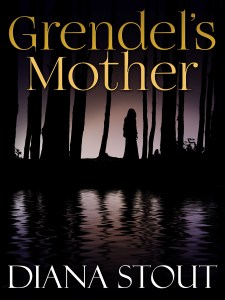
A reviewer responded to my novel, Grendel’s Mother, a book where I gave voice and a backstory to a character from Beowulf who previously had no voice. I stayed true to Beowulf and all incidents regarding Grendel, his mother, and Beowulf’s interaction with them.

Even someone who hasn’t read Beowulf can still read and enjoy Grendel’s Mother. It’s a stand-alone novel.

The reviewer’s comment essentially was, “I’d like to see a sequel.”

Say what? Did you actually read my story? Truly, an impossible feat considering the events at the end of my story. Because the review was online, I didn’t respond, as a good author shouldn’t.

As I was telling someone later about this comment, they said, “Well, couldn’t there be a sequel with Grendel’s children?”

I continue to be surprised.


Purpose: To share and encourage. Writers can express doubts and concerns without fear of appearing foolish or weak. Those who have been through the fire can offer assistance and guidance. It’s a safe haven for insecure writers of all kinds!

Posting: The first Wednesday of every month is officially Insecure Writer’s Support Group day. Post your thoughts on your own blog. Talk about your doubts and the fears you have conquered. Discuss your struggles and triumphs. Offer a word of encouragement for others who are struggling. Visit others in the group and connect with your fellow writer – aim for a dozen new people each time – and return comments. This group is all about connecting!


Risk-Taking Writers

The Insecure Writer’s Support Group

The question being asked this month for April 2021 is: Are you a risk-taker when writing? Do you try something radically different in style/POV/etc. or add controversial topics to your work?

Risk-Taking Writers

Something I’ve noticed over the years about writers and their writings: the more risks the writer takes, the better the odds of selling that work.

Even though publishers and agents say they’re looking for XYZ, which is usually the new and different story that’s become a blockbuster or best-selling sensation, wanting to ride the wave of popularity for that kind of story, what they’re really looking for is something that hasn’t been done before, because that’s exactly what that XYZ story has done

When I started writing Grendel’s Mother, I knew I was taking a risk. Purposefully. My vision was that Grendel’s Mother would be read in English literature classrooms, alongside Beowulf, and I saw Grendel’s Mother, too, as a commercial entity much like Clan of the Cave Bear. I was amazed how other writers with no real authority—meaning as publishers, purchasers of manuscripts—told me that I had to choose; it couldn’t be both. And yet, many of the current fictional bestsellers are both. Did they not recognize or understand the difference of literary books from commercials books?

I wrote and published it anymore. The readers are in two camps, most appear to like it. Some don’t, but then they didn’t like Clan of the Cave Bear either.

As writers, we take risks every day, exposing ourselves, even if minute pieces of ourselves, in our stories.

As writers, we take risks knowing we’ll draw both the fans who love our work and the critics who will tear it apart. Not liking some while others love it is pure human nature. There are lots of books that I don’t like, but I also recognize I don’t have to like everything. We’re not meant to agree on everything.

As writers, we take risks when writing against the norm, then being told by non-writers and specific genre writers that it can’t be done, whether it’s the subject matter, the POV, the tense used, or the type of character.

I do it anyway. I don’t listen to the noise.

I write what interests me. Some ideas are risky, some not; but I’ve noticed that the riskier the idea, the more excited I become about the writing.

Innovators are risk takers. Innovators push the boundaries, and an innovative writer will push the boundaries of genre, style, characterization, narrative, plot, and even punctuation. They follow their own vision regardless of trends.

It’s that how new trends start?


Purpose: To share and encourage. Writers can express doubts and concerns without fear of appearing foolish or weak. Those who have been through the fire can offer assistance and guidance. It’s a safe haven for insecure writers of all kinds!

Posting: The first Wednesday of every month is officially Insecure Writer’s Support Group day. Post your thoughts on your own blog. Talk about your doubts and the fears you have conquered. Discuss your struggles and triumphs. Offer a word of encouragement for others who are struggling. Visit others in the group and connect with your fellow writer – aim for a dozen new people each time – and return comments. This group is all about connecting!

What Motivates My Reading Choices?

The Insecure Writer’s Support Group

The question being asked this month for March is: Everyone has a favorite genre or genres to write. But what about your reading preferences? Do you read widely or only within the genre(s) you create stories for? What motivates your reading choice?

What Motivates My Reading Choices?

When I was a teenager, I loved reading big fictional stories like Gone with the Wind, Hawaii, Forever Amber, and mysteries, especially those with ghosts.

In my 20s, I added romances, historical fiction, gothics, and everything nonfiction: different cultures, science, how-to everything but especially on how-to improve myself mentally, emotionally, and psychologically. How-to write, how-to raise children, how-to get along with difficult people, how to understand men, how to grow better gardens, how-to make repairs on just about anything. Mysteries and nonfiction outpaced everything I read, though. All of these genres continued through my 30s.

In my 40s, I was reading everything to do with screenwriting: about craft, how to pitch, how to write treatments, and so forth, and reading lots of other scripts. As I had four, sometimes five, different part-time jobs, plus taking care of the house and the family, plus I was writing whenever I wasn’t working, I had little time for any real recreational reading.

In my 50s, I was reading textbooks and the classics, poetry, and any other literature assigned. I was back in school, taking piles of literature classes, and writing lots of papers. I was too tired to read much of anything not assigned. Though, I will admit, during vacations and holidays when the homework was done, I would read about mystics, being an intuitive, how to grow my psychic skills, about dragons and faeries. I took a year-long class that met once a month that unlocked and place in the forefront my intuitive skills that had been there all along and had been revealing themselves in the past decades.

I will say that my own writing changed immensely because of those classics and all the other literature assigned, which I never would have picked up on my own. As a result, both my writing skills and my literature knowledge went broader and deeper, at the same time.

Now in my 60s, I’m in a library book club where I’m reading literary best-sellers, and I’ve returned to my first real love—mysteries. I’m still reading the nonfiction books where I can raise my vibrational energy, grow my psychic abilities, and about science where other entities can live beside us—it really is all about the vibrational energies.

I continue to be fascinated with dragons and faeries and have a huge collection of books about both. Since I’ve written a book that has a dragon—Grendel’s Mother—even though she, the dragon, doesn’t have a huge role, I’m planning a book that features faeries as a culture living amongst humans and having to connect with them…for reasons of…well, I’m not revealing that plotline right now. <wink>

Because I know too much about how mysteries are constructed, I love a good mystery that can surprise me and keep me hooked page after page. They’re rare books.

I loved reading The Martian. That book was a page turner for me. I loved the science. Another page turner is Pretty Little Wife, a mystery with a twist because you know who did it right away. The problem is that the body disappeared and now even the killer doesn’t know what happened.

Normally, I’ll skip to the end of any book to see how it ends and then I’m analyzing the plot as I read to learn of its creation. Pretty Little Wife was the first book in a long time where I didn’t skip to the end. I wanted to be surprised.

***

Purpose: To share and encourage. Writers can express doubts and concerns without fear of appearing foolish or weak. Those who have been through the fire can offer assistance and guidance. It’s a safe haven for insecure writers of all kinds!

Posting: The first Wednesday of every month is officially Insecure Writer’s Support Group day. Post your thoughts on your own blog. Talk about your doubts and the fears you have conquered. Discuss your struggles and triumphs. Offer a word of encouragement for others who are struggling. Visit others in the group and connect with your fellow writer – aim for a dozen new people each time – and return comments. This group is all about connecting!

Friendships Built Through Blogging

The Insecure Writer’s Support Group

The question being asked this month for February is: Blogging is often more than just sharing stories. It’s often the start of special friendships and relationships. Have you made any friends through the blogosphere?

Friendships Built Through Blogging

I know a lot of writers who do blogs tours, but I’m not one of them with the exception of this particular blog. I joined this one because of a friend’s recommendation. While I’ve been a guest on a few blogs here and there, mostly I was a guest helping a friend who had a sudden cancellation in their schedule and needed someone to fill the hole quickly.

One blogger, with whom I’ve developed an online friendship, publishes blogs written by the authors per her questions and then, she writes her own review in a separate blog. I’m totally amazed at her devotion to read the books and review them all with a short summary and a thorough explanation of what she likes about the book, along with her rating.

I’ve belonged to another group of writers for several years, but this group is about sharing our promotions, and over that time, I’ve gotten to know several of the members.

My claim is that it takes about three years to build a solid friendship. That theory appears to hold true both for online and in-person friendships alike. We may not be best friends but we’re no longer just acquaintances either. We’re more like friend-acquaintances. Willing to share tips, advice, and our experiences, whereas we might not be willing to do the same with acquaintances. At least, that’s been my experience.

Purpose: To share and encourage. Writers can express doubts and concerns without fear of appearing foolish or weak. Those who have been through the fire can offer assistance and guidance. It’s a safe haven for insecure writers of all kinds!

Posting: The first Wednesday of every month is officially Insecure Writer’s Support Group day. Post your thoughts on your own blog. Talk about your doubts and the fears you have conquered. Discuss your struggles and triumphs. Offer a word of encouragement for others who are struggling. Visit others in the group and connect with your fellow writer – aim for a dozen new people each time – and return comments. This group is all about connecting!

Six Reasons That Will Make Me Stop Reading Your Book

The Insecure Writer’s Support Group

The question being asked this month is: Being a writer, when you’re reading someone else’s work, what stops you from finishing a book/throws you out of the story/frustrates you the most about other people’s books?

Six Reasons That Will Make Me Stop Reading Your Book

1) Punctuation and Grammar errors – I can live with a few errors here or there, but to have errors on every page? No.

2) Shallow characters – I don’t want to experience characters as if I’m watching them on stage and I’m in the back row seats, watching from a distance. I want to experience the characters as if I’m in their skin, feeling what they’re feeling. Characters with depth have wounds, secrets, and don’t talk on the nose. I love characters who banter and use subtext, meaning they may be talking about eating a hot fudge sundae, but what they’re really talking about is their relationship… or lack of one.

3) Plot holes – I can suspend my disbelief easily enough to go along with the character’s world, but I don’t like being yanked out of the reading and the story several times especially in the beginning because of the lack of inconsistencies or feasibilities given the world that was created.

4) Backstory – There’s nothing worse than having to slog through pages and pages of backstory before the action starts. I want a story that starts at the moment when the main character’s world changed. I want backstory that’s provided in small crumb-like reveals sprinkled here and there either through dialogue or a sentence or two of introspection that explains a character’s motivation.

5) Lack of research – I’m one of those readers who knows a little about a lot. If something doesn’t sound right, I’ll research it. For example, one author was using a zippered valise twenty years before zippers were invented. Another author had a character shooting a certain brand of rifle several years before its existence.

6) Telling – I’m one of those readers who wants action and dialogue. I enjoy fast reads because they keep me hooked, turning the pages, and not wanting to put the book down until I’m finished. If I’m able to put down the book because I’m bored, there’s a good chance I won’t be picking it up again. Showing is about eliminating wordiness, strings of little words, adverbs and adjectives, and using great verbs, instead.

Every now and then, I’ll find a great book that tells more than it provides action and has huge chunks of backstory, but those books are rare and they’re often award-winning books. Recently, such a book for me was Achille’s Song. Its characters made up for the huge chunks of backstory, and the story’s subject matter–Troy, mythology, and an untypical love affair—kept me hooked, along with the writer’s voice, which was lyrical and beautiful.

Give me a well-proofed, well-researched book with lots of action, no plot holes, characters that makes me want to know them better and experience their stories alongside them, great dialogue, and scenes that makes me laugh aloud, cry, sigh, or give me goosebumps, and I’ll finish your book. In fact, I could become your fan forever.

Purpose: To share and encourage. Writers can express doubts and concerns without fear of appearing foolish or weak. Those who have been through the fire can offer assistance and guidance. It’s a safe haven for insecure writers of all kinds!

Posting: The first Wednesday of every month is officially Insecure Writer’s Support Group day. Post your thoughts on your own blog. Talk about your doubts and the fears you have conquered. Discuss your struggles and triumphs. Offer a word of encouragement for others who are struggling. Visit others in the group and connect with your fellow writer – aim for a dozen new people each time – and return comments. This group is all about connecting!

The Reasons Why I Write What I Write

The Insecure Writer’s Support Group

November 4 question – Albert Camus once said, “The purpose of a writer is to keep civilization from destroying itself.” Flannery O’Conner said, “I write to discover what I know.” Authors across time and distance have had many reasons to write. Why do you write what you write?

The Reasons Why I Write What I Write

I write because I have to. I need to share. I need to express. I need to get it out of me—it being the need to vent, to give advice, to share something I’ve learned, or just to share a simple observation.

I write because I need to get all that stuff out of my head. The irony is that the more I write, getting it out, more of it flows in!

I write because I have people—characters—and topics, asking me, When is it MY turn? I’m surrounded by a crowd, all clamoring for attention.

My reasons for writing are that simple. So many ideas, so little time.

—

Insecure Writers Support Group BadgePurpose: To share and encourage. Writers can express doubts and concerns without fear of appearing foolish or weak. Those who have been through the fire can offer assistance and guidance. It’s a safe haven for insecure writers of all kinds!

Posting: The first Wednesday of every month is officially Insecure Writer’s Support Group day. Post your thoughts on your own blog. Talk about your doubts and the fears you have conquered. Discuss your struggles and triumphs. Offer a word of encouragement for others who are struggling. Visit others in the group and connect with your fellow writer – aim for a dozen new people each time – and return comments. This group is all about connecting!

Characteristics of the Working Writer

The Insecure Writer’s Support Group

October 7 question – When you think of the term working writer, what does that look like to you? What do you think it is supposed to look like? Do you see yourself as a working writer or aspiring or hobbyist, and if latter two, what does that look like?

Characteristics of the Working Writer

I’ve been a working writer since I was 26 years old with a newborn and a toddler. From the beginning, my goal was to earn an income from my writing. That made me different from the hobbyist writer.

According to IRS, a hobbyist writes for pleasure, for fun, not to make a profit. The working writer is trying their best to earn an income. The IRS has nine factors to judge whether you are a hobbyist or a working writer:

Question:  How do you distinguish between a business and a hobby?

Answer:  In making the distinction between a hobby or business activity, take into account all facts and circumstances with respect to the activity. A hobby activity is done mainly for recreation or pleasure. No one factor alone is decisive. You must generally consider these factors in determining whether an activity is a business engaged in making a profit:

  • Whether you carry on the activity in a businesslike manner and maintain complete and accurate books and records.
  • Whether the time and effort you put into the activity indicate you intend to make it profitable.
  • Whether you depend on income from the activity for your livelihood.
  • Whether your losses are due to circumstances beyond your control (or are normal in the startup phase of your type of business).
  • Whether you change your methods of operation in an attempt to improve profitability.
  • Whether you or your advisors have the knowledge needed to carry on the activity as a successful business.
  • Whether you were successful in making a profit in similar activities in the past.
  • Whether the activity makes a profit in some years and how much profit it makes.
  • Whether you can expect to make a future profit from the appreciation of the assets used in the activity.

An additional determination is whether the writer keeps separate bank accounts of business versus personal and if records are kept regarding their hours, projects, and submissions.

Five-hundred hours is the dividing line between hobbyist and working writer, too, and whether these hours are documented. How do I know?

When filling out a Schedule C through Turbo Tax, I was asked the question: did you work 500 hours this tax year in this business?

Five hundred hours per year equals just under 10 hours per week or almost 42 hours per month.

A working writer makes time or schedules writing time.

In my opinion, all three types of writers attend conferences, read how-to books, and ask questions, and love to talk about writing.

This list is what I believe are the differences:

Aspiring Writer

  • thinks about writing
  • doesn’t keep business records
  • asks questions in any group, thus doesn’t do any of their own research to learn the answers
  • are quite active in online groups
  • writes a little

Hobbyist Writer

  • writes when feels inspired, which means not every day
  • doesn’t keep good business records
  • likes to talk about writing
  • asks questions of other writers in those group of their genre, has done some research but relies on the other writers’ responses

Working Writer

  • writes nearly every day or per a planned schedule
  • writes even when not inspired; they know they’ll be in the zone soon.
  • writes even when sick, a loved one has died, divorcing, or some other life event has appeared in their life. They find solace in their writing.
  • has reams and files of their work even if not published
  • usually not in various online forums; if they are, they rarely read the posts or respond; they’re busy writing!

Purpose: To share and encourage. Writers can express doubts and concerns without fear of appearing foolish or weak. Those who have been through the fire can offer assistance and guidance. It’s a safe haven for insecure writers of all kinds!

Posting: The first Wednesday of every month is officially Insecure Writer’s Support Group day. Post your thoughts on your own blog. Talk about your doubts and the fears you have conquered. Discuss your struggles and triumphs. Offer a word of encouragement for others who are struggling. Visit others in the group and connect with your fellow writer – aim for a dozen new people each time – and return comments. This group is all about connecting!

Wishful Beta Partner Thinking

The Insecure Writer’s Support Group

September 2 question – If you could choose one author, living or dead, to be your beta partner, who would it be and why?

This question has to be one of easiest ever. No thinking required. If I could choose another writer, living or dead, as my beta partner, it would have to be screenwriter Aaron Sorkin. He authored TV’s The West Wing, and movies The American President and A Few Good Men just to name a couple.

The advice he provides through his class on MasterClass is incredible and bound to help make any writer’s work better, whether for the screen or the page.

***

Purpose: To share and encourage. Writers can express doubts and concerns without fear of appearing foolish or weak. Those who have been through the fire can offer assistance and guidance. It’s a safe haven for insecure writers of all kinds!

Posting: The first Wednesday of every month is officially Insecure Writer’s Support Group day. Post your thoughts on your own blog. Talk about your doubts and the fears you have conquered. Discuss your struggles and triumphs. Offer a word of encouragement for others who are struggling. Visit others in the group and connect with your fellow writer – aim for a dozen new people each time – and return comments. This group is all about connecting!