
Category Archives: #IWSG

Writing Highs and Lows

The Insecure Writer’s Support Group

The question for this month is:  It’s the best of times; it’s the worst of times. What are your writer highs (the good times)? And what are your writer lows (the crappy times)?

Writing Highs and Lows

In the beginning…

It was a good thing I didn’t know of the lows that were to come because those lows could have fractured my early naive passion for wanting to be an author.

As it was, I started with my own insecure low, not believing I could write a novel. That I needed to start small and work my way up.

So, I did, starting with magazine articles and short stories (pre-internet days) and a newspaper column, traveling a path that today has me as an indie publisher.

The highs are:

  • Seeing my name in print, my words on the page.
  • Getting a phone call early on in my career from a complete stranger, an older gentleman from Oklahoma who shared my husband’s first name and my former last name, and who wanted my help in finding his own inspiration based on my inspirational article he’d just read.
  • Learning of readers who look forward to my next book or who just read one of my books and liked/loved it.
  • Helping other writers, sharing with them what I’ve learned.
  • Opening a box of newly published books. Opening those boxes never gets old.
  • Seeing my book on a library or bookstore shelf.
  • Being driven to write the next story, with characters following me around, plots wanting further development, and projects clamoring to be finished.
  • Sending a finished project out into the universe.
  • Being alone in my workspace and being surrounded by books. This was a vision I always had from the beginning.
  • Being able to have a day job that embraced my writing passion. It happened when I became a professor of writing.

In the early days, I saw rejections as a low. Today, I view rejections as paths of not where I want to be or go. The rejection simply means my work isn’t a good fit for that publisher or producer. Nothing more, nothing less.

Likewise, if I don’t place well in a contest, that simply means that there were different stories that grabbed the judges’ attention more. It didn’t mean that my work sucked. Only that it didn’t fit what they were looking for or enjoyed reading.

Today, the lows are:

  • Needing more reviews. The few I have are GREAT! Sadly, to deal with a platform’s algorithms, I need more of them.
  • Wanting more sales. While I’m okay with not being a best-selling author yet, more sales would indicate that I’m reaching more readers, which is my ultimate goal. With so many books out there today, it’s a big ocean we authors are sailing within.
  • Needing to hire an assistant. One of the tasks of writing I prefer not to do is all of the promotional work that is required. I’d rather turn that over to a creative assistant, allowing my time to develop new stories and just write.
  • Wishing I lived closer to more writers. Lately, I’ve dreamed of owning a big Victorian house with a wrap-around porch, which I could turn into a writer’s retreat haven, a place where I could mentor and coach, and where I could other writers who are looking for an inspiration landscape in which to write. Where I could be surrounded by writers more often than not.

In the end, some of my lows aren’t really lows but are wishes, instead. Even though I’ve achieved many of my dreams, I’m still dreaming. Are you?

*****
Purpose: To share and encourage. Writers can express doubts and concerns without fear of appearing foolish or weak. Those who have been through the fire can offer assistance and guidance. It’s a safe haven for insecure writers of all kinds.

Posting: The first Wednesday of every month is officially Insecure Writer’s Support Group day. Post your thoughts on your own blog. Talk about your doubts and the fears you have conquered. Discuss your struggles and triumphs. Offer a word of encouragement for others who are struggling. Visit others in the group and connect with your fellow writer – aim for a dozen new people each time – and return comments. This group is all about connecting.
Behind the Scenes and Plans Gone Awry

The Insecure Writer’s Support Group

The question for this month is:  Have any of your books been made into audio books? If so, what is the main challenge in producing an audiobook?

Because none of my books have been made into audiobooks yet, I’m unable to answer this question.

Instead, I’m bringing you up-to-date on what I’ve been working on considering I went silent in publications for a couple years.

In the beginning, there was going to be an anthology with seven authors, each writing a separate story. The continuing thread was going to be a car that is fished out of the community’s lake in Book 1 and then appeared in every book in some way.

We had planned on the characters being friends, former sweethearts, and classmates with a few newcomers who would become involved in new relationships.

At the time, only a few of us had published a novel-length romance. An editor told us that because we were all relatively unknown, no one would publish the book. The internet was relatively new and online publishing was not yet born. Writers were dependent on agents and traditional publishers.

Moving forward two decades later, I was cleaning and culling my electronic files and came across my story contribution that had been shelved.

That’s when I had a Eureka! moment. What if *I* wrote the entire series?

Hence, the Laurel Ridge Novella series was born. I kept the car thread, made the time period 15 days for the entire series, kept a few of the careers, and created my own characters and storylines.

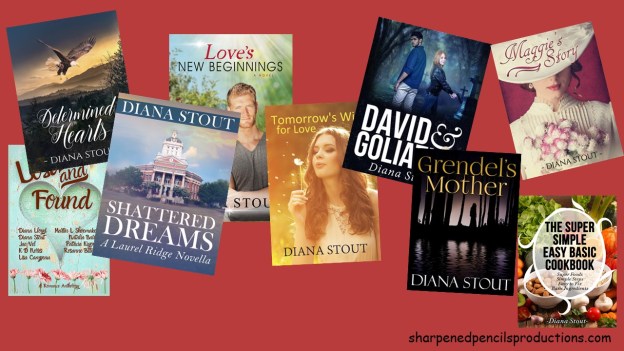
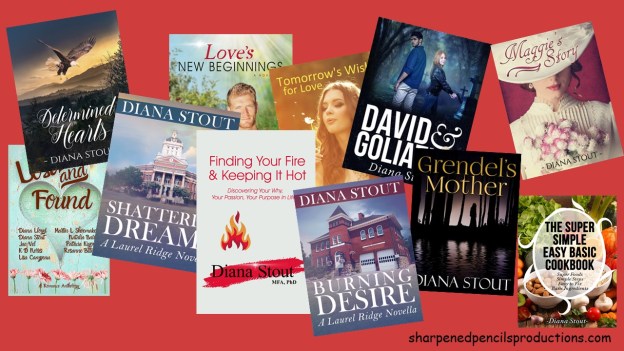
The stories take place 12 years after high school graduation. Shattered Dreams, a second chance at love story for high school sweethearts Mason and Shelley who broke up right after graduation, was published in 2016.

Working on the entire series before publishing the second book to ensure there weren’t any timeline snafus took longer than I had planned, plus life got in the way multiple times and in multiple heart-wrenching ways.

Also, while working on the series, I was publishing other books, too:  an anthology I edited and published through Amazon for a writer’s group as a fund-raising event, reprinting three romances, publishing a screenplay, a cookbook, and most recently the first of a series of how-to books, Finding Your Fire & Keeping It Hot: Discover Your Why, Your Passion, Your Purpose in Life. I began teaching again, too.

But now, I’m happy to report that Burning Desire, Book 2 in the series is available for pre-order!!! To be published May 3, 2022.

Hopefully, if all goes well, Arrested Pleasures, Book 3 will be published two months after that, with a new book in the series published every other month, taking us into 2023.

I’m crossing my fingers!

Wish me luck!

*****

Purpose: To share and encourage. Writers can express doubts and concerns without fear of appearing foolish or weak. Those who have been through the fire can offer assistance and guidance. It’s a safe haven for insecure writers of all kinds.

Posting: The first Wednesday of every month is officially Insecure Writer’s Support Group day. Post your thoughts on your own blog. Talk about your doubts and the fears you have conquered. Discuss your struggles and triumphs. Offer a word of encouragement for others who are struggling. Visit others in the group and connect with your fellow writer – aim for a dozen new people each time – and return comments. This group is all about connecting.

The Struggle for a Decision

The Insecure Writer’s Support Group

The first Wednesday of every month is officially Insecure Writer’s Support Group day with a purpose to share and encourage. Writers are offered a question to answer each month or to write a block of their own.

This month’s question – Have you ever been conflicted about writing a story or adding a scene to a story? How did you decide to write it or not?

The Struggle for a Decision

My biggest writing conflict occurred over non-fictional material. From the start of my writing career, I wanted to help other writers.

Back then, the problem was that I was young, didn’t have any writing education other than a journalism class, and most of my publications—mostly nonfiction—appeared in magazines.

Fast forward to where I traditionally published several books, to where the internet happened and exploded with teaching opportunities, to where a local college asked me to teach writing craft classes, to where I got the education I had craved and was able to combine a career with my passion of writing, where I taught university-level composition classes.

And then, upon retirement, I became an indie publisher, finally able to work on and produce some of the many projects I had started so long ago. (And am still continuing that work!)

After a couple years, though, I found myself in conflict. I wanted to teach creative writing classes again. Or, should I just write the classes up as short how-to books?

In the end, I’m doing both. The decision was made.

I just finished teaching a Time Management for Writers class and will be teaching a master class from the same website this August based on the book I just published: Finding Your Fire & Keeping It Hot: Discovering Your Why, Your Passion, Your Purpose in Life. (Students will receive a free copy. Other class details TBA.)

This book is the first of my how-to series and while the books address writing issues, some of the topics apply to non-writers as well. This first book is an excellent resource for anyone wanting to find and reach their life’s dream based on a passion, a fire within.

As a new release, the first book in a series that I dreamed about writing for a long time, and which is now tied to a two-week class by the same title, I couldn’t be more excited!

NEW RELEASE!!!!!

Support for Writers

The Insecure Writer’s Support Group

February 2 question – Is there someone who supported or influenced you that perhaps isn’t around anymore? Anyone you miss?

Support for Writers

Throughout my writing career, I’ve had some terrific supporters. The best.

I’ve named them before in past blogs and posts: friends, other writers, librarians, bookstore owners.

The group we can’t forget, though, are the readers. You as a reader provide the best kind of support when you buy our books and leave reviews.

I love your reviews.

There is nothing like a word-of-mouth review or testimonial, but written reviews, on Goodreads or Amazon are gold and help other readers find us.

Thank you for your support.

*****

urpose: To share and encourage. Writers can express doubts and concerns without fear of appearing foolish or weak. Those who have been through the fire can offer assistance and guidance. It’s a safe haven for insecure writers of all kinds.

Posting: The first Wednesday of every month is officially Insecure Writer’s Support Group day. Post your thoughts on your own blog. Talk about your doubts and the fears you have conquered. Discuss your struggles and triumphs. Offer a word of encouragement for others who are struggling. Visit others in the group and connect with your fellow writer – aim for a dozen new people each time – and return comments. This group is all about connecting.

Any Regrets?

The Insecure Writer’s Support Group

January 5 question – What’s the one thing about your writing career you regret the most? Were you able to overcome it?

Any Regrets?

This month’s question was easy to answer at first with an answer of, I have no regrets because to have regrets means I wouldn’t be where I am today.

But…and, that’s where I started thinking about my writing career as a whole.

Knowing what I know now, would I do things differently if I was starting over?

In a heartbeat!

Of course, that means starting over when young and relatively free of all obligations and ties.

  • I’d move out to Hollywood.
  • I’d become a script reader.
  • I’d become active in screenwriting organizations.
  • I’d get a degree in screenwriting rather than playwriting.
  • I’d find my genre early.
  • And, most importantly, I’d treat my writing like a job—meaning work it like a job—despite any day jobs I’d no doubt have to take in the beginning.

The question now becomes, do I want to reincarnate, coming back where I choose parents this time who are already in the movie-making business?

Hmmm, that sounds like a great story idea!

I wonder if that life would have had any regrets?

*****

Purpose: To share and encourage. Writers can express doubts and concerns without fear of appearing foolish or weak. Those who have been through the fire can offer assistance and guidance. It’s a safe haven for insecure writers of all kinds.

Posting: The first Wednesday of every month is officially Insecure Writer’s Support Group day. Post your thoughts on your own blog. Talk about your doubts and the fears you have conquered. Discuss your struggles and triumphs. Offer a word of encouragement for others who are struggling. Visit others in the group and connect with your fellow writer – aim for a dozen new people each time – and return comments. This group is all about connecting.

Six Reasons Why Writing Is Like Christmas

The Insecure Writer’s Support Group

December 1 question – In your writing, what stresses you the most? What delights you?

Six Reasons Why Writing Is Like Christmas

Writing a book, like Christmas, is a major event. One that takes planning and a lot of forethought if we’re going to produce a product that goes off without a hitch. Both writing and Christmas can equal amounts of stress and delight.

Reason #1 – the idea

It all begins with that first idea.

For writers, it begins with genre, theme, a character, a plot’s beginning or ending, or even a scene in the middle of the book. Sometimes it begins with a what if question.

For Christmas, it generally begins with what am I going to get everyone?

Reason #2 – the planning

For writers who are plotters, the idea becomes an outline. For writers who are pantsers, there is no planning; their idea takes form as the writing occurs, and if they’re lucky, they don’t go wandering down any primrose paths that force them to backtrack to where they got away from the story’s journey. (The Christmas equivalent of having to return a purchased gift and changing your mind about it.)

For Christmas, this is where the planners’ stress begins in thinking about where to find that perfect present. The equivalent of pantsers at Christmas are those who shop with no list or wait until Christmas Eve to start.

Reason #3 – the execution (doing)

For writers, enthusiasm for the initial idea takes the writer only so far. After that more planning or just gutting it out is required—getting through the dreaded sagging middle. This is where procrastination is heavy, where avoidance is practiced to an art.

For Christmas, this is where writers will turn, most happily, allowing that writing procrastination to continue by performing legitimate tasks of the masses because there’s a definitive deadline: shopping, backing, decorating, wrapping, and drinking lots of hot chocolate. (Did I just synopsize a Hallmark Christmas movie?)

Reason #4 – the gathering

For writers, the gathering occurs as characters come together and start driving the plot toward the story’s conclusion. They gather because of a crime, a dead body, a family celebration where long-time secrets are revealed, and other plots of conflict and stress. So many gatherings, so many activities.

For Christmas, the gathering of presents needing to be wrapped occurs, then the gathering of people’s schedules and arranging the details of trips to Granny’s house or to the beach for a family Christmas vacation.

Reason #5 – the waiting

Anticipation builds.

For indie writers who have submitted the book, the wait for final acceptance of the uploaded file begins, and if accepted, then the wait to official publication—one to three days. For traditional writers, they’ve submitted the book to their agent/publisher and are now awaiting the final yes of publication, which could be anywhere from a few weeks to over a year, depending on the publisher’s schedule.

For Christmas, kids can hardly wait for Santa to arrive. Parents, grandparents, other relatives, and friends are eager for the gathering of people, football games, and the way-more-than-we-needed food. And of course, some just can’t wait for the holiday to be over with, already.

Reason #6 – the big day

For writers, the big day is when that box filled with newly published copies of the book arrives, and it’s opened with excitement and joyous sounds of delight about how pretty it looks. All that hard work culminated into this tangible object that has the writer’s name stamped on the cover and spine.

For Christmas, it’s about the wrappings quickly ripped and shredded revealing the surprise inside to squeals of joy and delight. All followed by the smells and tastes of traditional meals and chatter around the table.

For me, when my high school best friend, Sharon, received her copy of my first indie-published book before I received mine, posting this picture online with obvious excitement, it was just like Christmas. A big day for both of us.

*****

Purpose: To share and encourage. Writers can express doubts and concerns without fear of appearing foolish or weak. Those who have been through the fire can offer assistance and guidance. It’s a safe haven for insecure writers of all kinds.

Posting: The first Wednesday of every month is officially Insecure Writer’s Support Group day. Post your thoughts on your own blog. Talk about your doubts and the fears you have conquered. Discuss your struggles and triumphs. Offer a word of encouragement for others who are struggling. Visit others in the group and connect with your fellow writer – aim for a dozen new people each time – and return comments. This group is all about connecting.

Drafts, Titles, & Blurbs, Oh My!

The Insecure Writer’s Support Group

November 3 question – What’s harder to do, coming up with your book title or writing the blurb?

Drafts, Titles, & Blurbs, Oh My!

Writing on some days flows easily. Most days not so much; it feels like I’m writing junk. And then, there are far too many days when writing is a struggle fest. Those are the days when I just have to get it done because of a deadline.  

Writing first drafts is the part I like doing the least. It’s a real chore. Often, I’m just gutting it out, with the goal of writing it quickly. FAST!

I much prefer editing. Usually. Well, at least until I’m editing the same story for the fifth time or more. Most fiction regardless of length takes on average about eight rewrites, revisions, and polishing. The highest number was 49 drafts, but that was for my cookbook. All because of the many technicalities that required uniformity.

You may be asking, aren’t rewrites and revisions the same thing?

No, they’re not. Rewriting encompasses rearranging, removing, and adding. A revision is about smaller matters: looking at the sentence structure, choosing the right words, right tense, and correcting other grammar and punctuation issues. The polishing draft is about fixing all errors and getting the formatting correct.

So, everything—books, articles, short stories, even poems—goes through the four-draft process: first draft, rewrite, revise, polish. Thankfully the first draft is a one go-through only. The rewrite can take several drafts, as does the revision, and polishing drafts.

This month’s question refers to the smallest parts of writing a book: the title and blurb. For me, they’re the easiest to write and the most fun, even though they go through the four-draft process, as well.

When coming up with titles, I start with the exercise of what I call Brainstorming 20, an exercise I’ve taught to students and teach to other writers.

Here’s a partial list brainstormed by a group. Recognize what they were looking for?

Awful

Flabby

Snoopy

Scrappy

Hoppy

Weepy

Cranky

Sneezy-Wheezy

Hungry

Lazy

Dumpy

Thrifty

Nifty

Shifty

Woeful

Doleful

Wistful

Soulful

Helpful

Goopy

Gabby

Blabby

Silly

Dippy

Graceful

Neurtsy

Gloomy

Sappy

Crabby

Daffy

Tearful

Gaspy

Busy

Dizzy

Snappy

Hotsy

Jaunty

Puffy

Strutty

Biggy

Biggy-Wiggy

Jumpy

Chesty

Biggo-Eggo

Sneezy, Dopey, Happy, Grumpy, Sleepy, Bashful, and Doc were part of the list, too, the final characters chosen for the 1934 movie, Snow White and the Seven Dwarfs. Are you noticing how some of the names became later comic characters?

I do the same thing when looking for a title; I create a list of 20. The first ten are easy. The next five start becoming a combo of different words from the first ten. The last five are usually more of a struggle but start expressing what I’m really looking for. These last five are also the most original.

As for the blurb, it’s about coming up with an elevator pitch, a one-line summary, which then I can expand with a few more sentences.

Coming up with a title and a blurb can take several days, even a week, and I enjoy writing them immensely.

Are your brainstorming methods anything like mine?

*****

Purpose: To share and encourage. Writers can express doubts and concerns without fear of appearing foolish or weak. Those who have been through the fire can offer assistance and guidance. It’s a safe haven for insecure writers of all kinds.

Posting: The first Wednesday of every month is officially Insecure Writer’s Support Group day. Post your thoughts on your own blog. Talk about your doubts and the fears you have conquered. Discuss your struggles and triumphs. Offer a word of encouragement for others who are struggling. Visit others in the group and connect with your fellow writer – aim for a dozen new people each time – and return comments. This group is all about connecting.

Coloring Outside the Lines

The Insecure Writer’s Support Group

October 6 question – In your writing, where do you draw the line, with either topics or language?

Coloring Outside the Lines

Throughout my entire writing career, the only time I considered writing inside the acceptable lines was when I was writing to market. Meaning, I needed to follow the guidelines of the publisher.

Once I started screenwriting, the characters dictated their language, their behavior. And, once I began publishing as an indie author, there were and are no limits.

Speaking of limits, lately, there’s been a movement of blasting authors who write outside of their culture, where it’s said that a white author can’t write about black characters, that unless you’re Latino, you can’t write characters from that heritage, or where a romance book with a fictional character who participated in a massacre can’t redeem himself by the end of the book. That none of these books are worthy of earning awards, either.

Historic events are filled with tragedy and flawed people who made horrendous mistakes. History usually recorded only information about the winners. Today, many of us are learning about these horrible historic events that were never taught in school, that were swept under the nasty carpet of racism.

Just because I’m a white woman that doesn’t mean I can’t research and immerse myself in a culture or ask questions for understanding of another’s thinking or motivation. If we do our research well, we can betray others different from ourselves. And, we can write about locations we’ve never visited.

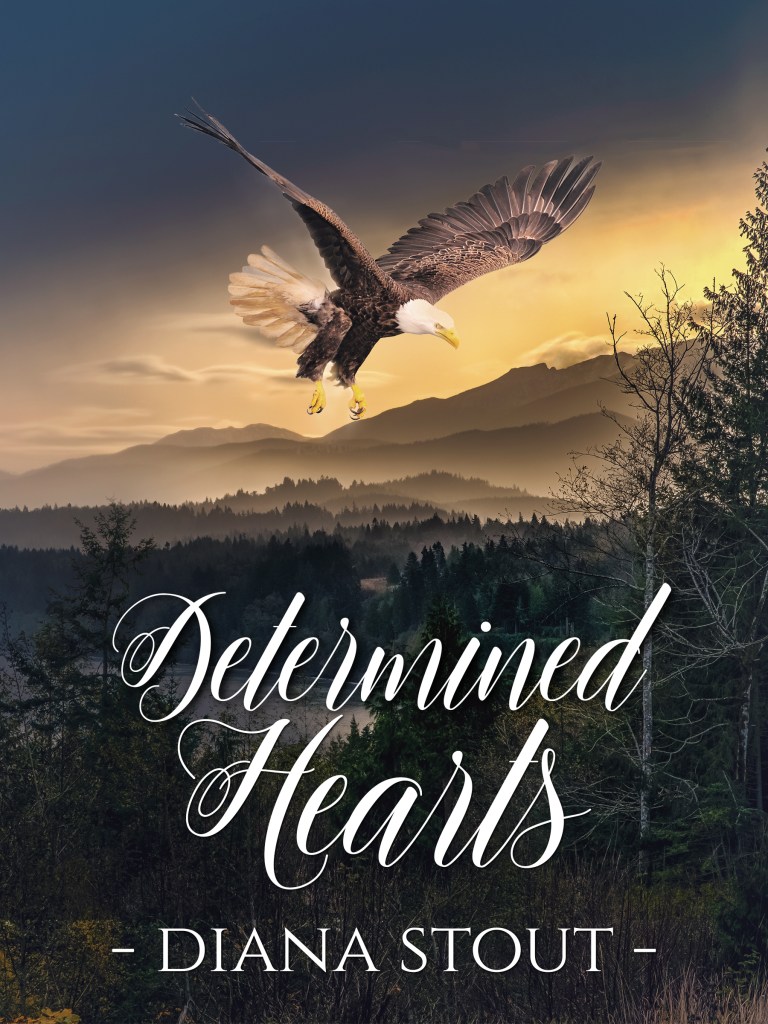
When I first published Determined Hearts, which was originally published as The Man on the Romance Cover, a reader asked me when I had last been to Idaho, in particular the Snake River Valley region, which is the setting of the book. When I replied that I’ve never been there, she said, “You’d never know it. Your details were spot on.” Her praise told me that I’d done my research.

If writers are told they can only write about that which they experience and know firsthand, then libraries would have to empty their shelves.

As a romance writer, how can women—the majority of that genre’s authors—write from the male view of point?

How can a mystery writer write about murder unless they’ve murdered? How can a sci-fi author write about living on another planet without having traveled in space?

The tipping point of ridiculousness has been reached.

Coloring outside the lines has always been the hallmark of innovative creativity and fantastic new movements, albeit some criticism, too, which always comes from those who believe we writers need to color inside the lines.

We’re in one of those coloring-outside-the-lines times, now, where a few are trying to dictate the many.

How limiting. How narrow-minded. How sad. How infuriating.

*****

Purpose: To share and encourage. Writers can express doubts and concerns without fear of appearing foolish or weak. Those who have been through the fire can offer assistance and guidance. It’s a safe haven for insecure writers of all kinds!

Posting: The first Wednesday of every month is officially Insecure Writer’s Support Group day. Post your thoughts on your own blog. Talk about your doubts and the fears you have conquered. Discuss your struggles and triumphs. Offer a word of encouragement for others who are struggling. Visit others in the group and connect with your fellow writer – aim for a dozen new people each time – and return comments. This group is all about connecting!

Six Paths of Writer Success

The Insecure Writer’s Support Group

September 1 question – How do you define success as a writer? Is it holding your book in your hand? Having a short story published? Making a certain amount of income from your writing?

Six Paths of Writer Success

While most people believe a writer’s success is by how many books are sold and the money they make, it’s not the only way to identify writer success. There are multiple ways to measure that success. These are a few that I’ve identified.

Path #1: Financial Success – This is the measurement stick most people—readers, critics, and other writers—use to determine if a writer is successful or not. Are they a best-selling author? Did they make the New York Times list? Did they receive a huge advancement?

Path #2: Review Success – The number of reviews readers leave can be a huge measure of success if the bulk of the reviews are positive. Getting notes and messages from fans is always a thrill. It’s the equivalent of Sally Field’s award-winning speech of “They like me!”

My best friend from high school who got a copy of my book a couple days before I got my copies! She’s one of my biggest fans!

Path #3: Word-of-Mouth Success – There’s no better measure of a writer’s project than it getting a lot of reader word-of-mouth promotion. Nothing can top it. Word of mouth praise sells books. And, there’s nothing more fun than seeing friends of my friends stating, “She’s a good writer,” or “I love her writing!”

Path #4: Publication Success – Before writers could become indie publishers, a writer’s success was hinged solely by being accepted by an agent or editor. The only other option open for writers to publish without an agent or editor back then was to use a vanity press, where the writer paid to have the book published, and then the author would go out and peddle the book. It worked for Robert James Waller who self-published his book, The Bridges of Madison County. He filled his trunk with copies and drove across the country giving them away, seeking out radio stations for live interviews.

With the advent of the eBook, independent publishing (self-publishing, indie publishing) became possible. That avenue became a game changer for many writers, including me, even though I had been traditionally published in the 1990s with three of these books, which I retitled and have republished. Today, any writer can get their book(s) published and in any format: print, e-Book, audible, large print, and so forth.

To date, I’ve published eight books and edited a ninth that included one of my short stories, publishing it for a writer’s group that I belong to.

Path #5: Film Rights Success – The dream of any writer of fiction is to see their story on the screen—big or small. I keep hoping and keep writing the scripts.

Path #6: Journey Success – This measure of success is all about self-satisfaction. The first time a writer pens The End, it is a huge achievement of a dream becoming reality. And then, opening a box and seeing a stack of my newest release never gets old. Ever. (Three such past boxes being opened.)

Currently, as I come to the end of writing a how-to nonfiction book and am finishing the small-town romance series I’ve been working on for the last few years, I’m enjoying how my fire is directing and driving me toward my desk every day.

Watching the words pile up, getting into the writing zone, and watching the hours fade into each day’s end are self-satisfying beyond words. Amazingly so. There is no other emotion or feeling like it.

I love all these various moments and events of success. How could I not?

*****

Purpose: To share and encourage. Writers can express doubts and concerns without fear of appearing foolish or weak. Those who have been through the fire can offer assistance and guidance. It’s a safe haven for insecure writers of all kinds!

Posting: The first Wednesday of every month is officially Insecure Writer’s Support Group day. Post your thoughts on your own blog. Talk about your doubts and the fears you have conquered. Discuss your struggles and triumphs. Offer a word of encouragement for others who are struggling. Visit others in the group and connect with your fellow writer – aim for a dozen new people each time – and return comments. This group is all about connecting!

The Writer’s Journey Recommendation

The Insecure Writer’s Support Group

August 4 question – What is your favorite writing craft book? And why?

The Writer’s Journey Recommendation

Ever since its publication in 1992 when I bought the book, my recommendation is and always has been Christopher Vogler’s The Writer’s Journey: Mythic Structure for Storytellers & Screenwriters.

Syd Field’s book, Screenplay published in 1979, introduced me to the structural three acts of screenwriting. Vogler’s book built upon it, showing where the emotions, conflict, and character goal (internal and external) take place and how they drive the plot forward within that three-act structure, using twelve important plot points.

Anyone since then who has developed a seemly new structure has basically used Vogler’s model but has renamed the plot points or provided something that made the new model unique.

For example, one structure has 22 steps. Popular right now is the story line with 14 beats. Another one has 15 beats. There’s always a new method coming out, all shiny and bright. But, it’s still the same information with the same foundation, just renamed, offering new insight.

While most of these other models are good and many find worthwhile, none hold the same esteem and respect that The Writer’s Journey did and still does for me.

*****

Purpose: To share and encourage. Writers can express doubts and concerns without fear of appearing foolish or weak. Those who have been through the fire can offer assistance and guidance. It’s a safe haven for insecure writers of all kinds!

Posting: The first Wednesday of every month is officially Insecure Writer’s Support Group day. Post your thoughts on your own blog. Talk about your doubts and the fears you have conquered. Discuss your struggles and triumphs. Offer a word of encouragement for others who are struggling. Visit others in the group and connect with your fellow writer – aim for a dozen new people each time – and return comments. This group is all about connecting!