Category Archives: Persistance

The One Trait Every Writer Needs

The One Trait Every Writer Needs

Originally posted on June 25, 2014 on my Only for the Brave blog, I offer this advice again. It’s advice that never gets old.

This trait is the one trait that finally saw me getting my first novel published. Originally, I had said if I wasn’t published with a novel by the time I turned 40, I would quit. At 40, I was so close, I couldn’t quit. At 42, I published my first book.

It’s a trait no writer should be without.

The one trait a writer can’t be without is PERSISTENCE.

The persistent writer:

    1. Submits their work.
    2. Accepts rejection. (It’s not personal).
    3. Accepts criticism.
    4. Wants criticism because they know growth occurs when mistakes are pointed out.  Plus, criticism means the writer engaged the reader, of if nothing else, hit a nerve.
    5. Pays attention to the details.
    6. Rewrites or revises, and rereads for polishing again.
    7. Resubmits.

And, repeats steps 6 & 7 repeatedly until SUCCESS (acceptance/publication) is finally achieved.

Guest blogger – Keri Kruspe, Part II

As a follow up to Keri’s August 21, 2019 post as a guest blogger, where she talked about the things she wished she’d known before publishing her first book, in today’s post, she talks about the things she did right.

On the Other Hand…things I’ve done right

An Opinion By Keri Kruspe

In my last article, I thoughtfully discussed (okay…I whined) about my frustrations on what I would do differently in launching my writers’ career. Having admitted my mistakes and oopsies, it’s only fair I switch gears and talk about what I felt I did right.

To give some perspective, here is a brief history of how I got here.

Ten years ago, when I finally got off my keister and wrote my first full-length. It was a long one, around 100,000 words. I poured my heart and soul into that story. While it was a sci-fi romance (the genre I currently write-in), I took out my frustrations on the devastating thing that happened to me in my secular career in the banking industry. I had been let go from a company that I had worked for 21 years. I’d grown up at that bank, rising in the ranks to end up a VP in charge of the retail department. I had 300 employees reporting to my direct line.

Then unexpectantly, I got laid off. Depression hit me hard and heavy. To make matters worse, those who I thought were close friends either betrayed me or dropped me like the trash took out itself. Through the shake-up, I learned who my true friends were and found love and acceptance within my family.

But the best thing that helped me overcome my depression was to write that book. In it, I turned the villains in my life into clowns and enjoyed the various ways I killed them off or humiliated them. Ahhh…being a writer has so many perks!

Keri Kruspe - villians

With my novel in my hot little hands, I just knew someone would snap up my masterpiece and I’d be on my way to working as a writer full time.

Long story short, that didn’t happen. I had no idea what was wrong or where to turn to make it right. It took another ten years for me to try again in a more serious vein.

With clear hindsight, I can now share what I’ve done right since then to launch my career as an independent author:

THE JOURNEY IS BETTER WITH FRIENDS

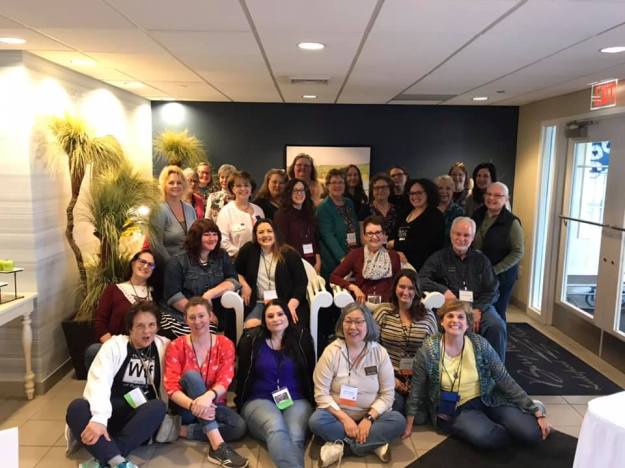
MMRWA REtreat 2019 group photo - original

Members of my Mid-Michigan Romance Writers of America chapter, taken while on their 2019 Retreat From Harsh Reality

When I started again in 2016 to write my novel, I realized going it alone was not the thing to do. As with many author’s, I’m a solitary creature who likes to rely on myself and not depend on others. I thought I could do everything on my own.

But, it didn’t take long to realize what I had done before wasn’t going to work (remember the definition of insanity…). I needed help from other people. I’d been a member of Romance Writers of America since 2008 but didn’t do much with it. Using that as a starting point, I reached out to some of my peers and begun to explore and develop contacts.

TRAINING

Indie publishing was starting to hit its stride when I wrote that first novel in 2008. From what I understand, there wasn’t a lot help around for writers to find their way into self-publishing. Today, there are numerous tools and assistance out there just for the asking.

When I gathered up the courage to ask someone to read my novel, she let me know it needed a lot of work. Especially on Point of View (POV).

I couldn’t understand it. I was an avid reader (my average is 100 books a year and counting!) and writing came second nature to me. After pulling my conceited head out of my rear end, I admitted I needed to dive deep into my chosen craft. To do that, I had to spend the money to get an education. While some classes were free with RWA, to get a better handle on what I was trying to do, I needed something more. I needed a mentor or mentors. That’s where the deeper training comes in. For a personal touch, I found the Barany School of Fiction. Their courses, as well as the bi-monthly online meetings, are a godsend.

The other training I did correctly was to find a course that went step-by-step on what to do once my novel was finished. I needed to know how, when, and where to create and market my book. There are numerous paths to choose from, all you have to do is a little research to find what works best for you. I encourage everyone to go out and look for it.

Keri Kruspe - extra trainingEXTRA TRAINING

I call this section extra because it involves using your downtime to your advantage. For me, that meant using the time where I couldn’t be on the computer but had free time to listen. An example – it takes me a half an hour to get ready for work in the morning (putting on makeup, doing my hair, getting dressed). I used to listen to the TV or music, but now I’ll tune in to a podcast, a class, book, or anything audio that involves being an author.

I’ll do the same when I’m in my car going to work. Here is an extra hour a day that I can continue to listen to what I started that morning.

FARMING OUT WHAT I HATE TO DO

There are certain things in my new career I’ve found I didn’t have time or talent to learn in the beginning. I wanted to spend my time learning how to write before figuring out Photoshop. So, using my contacts, I’ve found someone to do my covers. I also hired a writer’s admin to tweak my website (I did learn the preliminaries on creating it and do the upkeep myself) and to format my novels. I can format, but I confess I hate doing it.

Also, I don’t think a writer should have the final edit on their work. That is a no-brainer for me. While beta/advance readers are wonderful, you still should hire a professional editor. I did and even though it was expensive, having the polished novel was well worth it.

FINAL THOUGHTS

Keri Kruspe - final thoughts.jpgOne of the best things I’m doing as a new author is writing this guest post. I love how I can take a subject that’s bugging me and put it on paper. I hope I’m allowed to keep doing it for a while. After all, writing is my profession of choice.
So…far warning world! I’m in this for the long haul.

***************

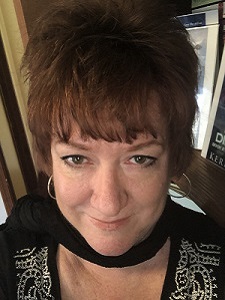
Keri Kruspe Pic

Keri Kruspe, author of Otherworldly Romantic Adventures – writing about feisty heroines who aren’t afraid to take chances in life or love.

Keri has been an author since the age of twelve and has always been fascinated with otherworldly stories that end in Happily Ever After. Her current sci-fi romance trilogy, An Alien Exchange (winner 2018 SPF Galaxy award) had its first release winter 2018. The story continues with D’zia’s Dilemma and concludes with Ki’s Redemption.

A native Nevadan, Keri resides with her family in the wilds of Northwest Michigan where she enjoys the stark change in seasons and the pleasures each one brings. An avid reader, Keri loves an enjoyable bottle of red wine, a variety of delicious foods and watching action/adventure movies…usually at the same time. You can find her most days immersed in her fantasy world on her latest novel while foot tappin’ to classic rock. When not absorbed in her writing, Keri works alongside her husband in building their dream home or discovering intelligent life in America in their RV. Join the fun and sign up for her mailing list at www.kerikruspe.com

Failures – Part IV: 7 Lessons of Failure as a Writer

This blog was originally published April 4, 2018, on my Only for the Brave blog, which has been eliminated as I decided to merge the two blogs. Because failure is an important part of success for writers and everyone else, I felt it was worthwhile repeating this post, this series on failure.

*****

7 Lessons of Failure as a Writer

People look at me and see success. Published in multiple media, in multiple genres, with various awards. With an MFA and a Ph.D., too, but there have been many failures along the way.

I have failed so many times I’ve lost count, from beginning, middle, and end.

In the beginning, I couldn’t get anything published. I tried big publications, national publications, regional, and small publications. All submissions boomeranged back. Once in a while, I’d get a handwritten note at the bottom of the mimeographed rejection, saying, I like your voice, or Please submit to us in the future. I learned from others these handwritten notes were excellent rejections because they were encouraging, that I needed do as suggested.

Only after a friend read a couple of my rejected essays and said, “This sounds like Erma Bombeck,” did I realize I needed to approach our local newspaper with a suggestion for a weekly or monthly column. Success! A six-month trial became a five-year career start.

Lesson #1 – If you can’t start big, start small.

When I turned to fiction writing, specifically romance, I already had a number of magazine articles and short story publications. I was reading a romance book a day, thinking how hard can it be? Over time, I found out. I wrote four books, all getting rejections. Even a published writer friend was amazed at the rejections, saying, “It’s like you’re standing on a cliff with only the back of your heels touching. Why aren’t falling off that cliff?”

The most devastating rejections occurred with an editor writing, “I just bought a book like yours last week.” So close, yet so far away.

At 37, I had been writing romances for nine years. I vowed that if I wasn’t published by the time I turned 40, I would quit.

I turned 40. More small magazine publications, but no books. I was getting closer, though. I was winning awards and placing in contests. I had an agent. Then I lost the agent, and then a second one. They were trying to put me into a publishing box I didn’t want to climb into. They were trying to make me into a specific kind of writer that I wasn’t and didn’t want to become.

At 42, I finally published my first book. Two more book publications quickly followed.

Lesson #2 – Don’t quit. Success will come but in its own time. Quit only if you truly have no more interest in pursuing that endeavor. Ever.  

About that time, I turned to scriptwriting. Producers were impressed with my book publications. While I did option one script to a producer for six months for no money, the option ran out. He wanted to renew for another six months, again with no money. I said no. About every two years after that, he would call me, asking what I’d done with the script. I knew I had a good story. (I’m in the process of rewriting and publishing that script now.)

In the meantime, I developed relationships with another five producers, all who loved my writing but couldn’t say yes to my scripts. It became a matter of trying to find the right material. They wanted me to submit anything and everything I was writing.

Lesson #3 – Rejections can be a yes.

One of my first book submissions was a colossal failure. The Senior Editor wrote:

Thank you for submitting BOOK TITLE for our review. We have found that your manuscript does not fit the requirements for PUBLISHER LINE. It is too melodramatic, based on trite misunderstandings among the characters as well as contrived circumstances. Sincerely . . .

So, she tore down the plot and conflict, the characters, the dialogue, and the…wait, there was no comment regarding the setting. Oh, wow, she liked the setting!

I used that setting in another book, with a similar conflict, different plot, different characters, and different dialogue. It sold and was published.

Going back to that rejected manuscript later, I could see that the editor was right.

The writing was horrible.  At least, she saved me from that humiliation. I had mixed tenses, multiple ping-pong points of view, mixed metaphors, wordiness, too much telling, and too many details that added nothing to the story or to the characters. The book was boring.

I should have burned the book, but I didn’t. I started looking at my writing from an editor’s point of view, and that’s when the real learning began.

Lesson #4 – Learn from your mistakes.

Never compare yourself to another writer. Not by their sales numbers, the number of books sold, how fast they can write, how few drafts they have to write, by their having an agent, or being traditionally published.

When you compare yourself to others, you’ll always be a failure.

Ironically, what you don’t see is that others are probably comparing themselves to you and feeling like failures.

Lesson #5 – Don’t compare yourself to others. Ever.

Their journey is not yours. Yes, some get lucky when they are young. Some get lucky with their first book. Some get lucky winning the highest awards. Some get lucky with their self-published book, earning thousands of dollars.

When I published my first book, I was in the right place at the right time. I had a once-in-a-lifetime opportunity to talk to an editor, actually being the first writer to talk to this editor, an editor looking to publish romances. He said, “If you know of anyone who has a manuscript, send them my way.”  When I told him that I had one, he invited me to send it.

He rejected it! Then asked if I had anymore. I did, I sent it, and he published it.

Lesson #6 – Luck is nothing more than a preparedness meeting opportunity.

I’ll never forget a writer who was angry about some contest scores she’d received. When I told her it wasn’t personal, she said, “It’s personal to me!”

I’ll admit that early in my writing career, rejections felt personal. When I started coming back to the rejection and analyzed what was being said more closely, I realized that everything said was true. So, how could it be personal? That criticism was helpful, meant to show me that I had areas that needed improvement.

Here’s the thing: As a writer, you can’t make it personal, all about you. I learned to step back and look at it from their point of view. If I’d been that agent, producer, publisher, reader, etc., I probably would have done the same thing.

Stepping into someone else’s shoes is how you don’t make it personal.

Lesson #7 – Rejections, failures, and criticism aren’t personal.

Failure means what you’re currently doing isn’t working.

That’s it. Nothing more. Nothing personal.

Step back. Rethink what you’re doing. Rethink the path you’re taking.

Then make a change.

Here’s the real secret. No two writers ever arrive at their level of success by taking the same path. It’s different for each and every one of us.

What’s your path going to look like?

Should’a…Could’a…Would’a…

Today, I have a guest blogger.

Keri Kruspe, fellow writer and friend, writes this blog and shares with you her experiences as a first-time author and what she wished she had known beforehand. I wish I had known, too.

SHOULD’A…COULD’A…WOULD’A… 

What I wished I’d done differently

By Keri Kruspe

Now that I’ve gotten more than six months of being an indie author under my belt, I wanted to take a step back to see what (if anything) I would have done differently to start my publishing career.Keri Kruspe - what should I do list png

The short answer is yes…yes, I would do a couple of things differently if I could do it all over again. In order to give a clear reason as to why I say that, let’s take a look at where I was back in October of 2018 when I launched my first novel.

Back then, I had to start everything from scratch–

  • Website (you mean I need my own…?)
  • Media Presence (i.e. Facebook/Twitter/Pinterest – which ones – how do I use them?)
  • Author email
  • Author Brand (Brand…what in the world…)
  • Decide to go “wide” or “KU” (huh?)
  • What software to use to format for electronic readers as well as paperback (never heard of epub…mobi…again huh?)
  • Newsletter or blog
    • Create your newsletter subscribers (where in world would they come from?)
  • How do I find an editor who will work with me? What about a proofreader – do I need both or more?
  • Where do I find a good cover artist for my genre (heh…I read/write in a genre?)

More importantly – where in the world do I go to learn how to do all of this??

Instead of diving deep into each one, I thought I’d give an overview of what I strongly feel I’d like to do different if I could go back into time and have a do-over.

WIDE OR KU?

Ah, the ago-old question. In all of the training I’ve taken, the overwhelming answer you get is, “it’s up to you…it’s a personal decision.” A very nice, safe, gentle non-answer that doesn’t help much.

So, here’s my two cents worth: If I only had one book to release starting out – I’d do KU first.

Let me explain.

When I started as a new author, I had A LOT to learn (see above). I figured, no big deal, why not go wide and reach not only Amazon customers, but everyone else in the universe as well. Why get stuck for 90 days in only one vendor – I planned to release the other books right after the first.

Well, things didn’t work out quite that way. Because of my inexperience, I didn’t realize how much time it took to get each novel ready (and I’m talking about after I’ve written it and done my own “due diligence” in editing it on my own).

Because I had so much to learn and do – if I’d gone with Amazon exclusive with the first one, I would have gotten a little “boost” in launching my book – plus have a little extra “time” to learn the ropes while I got the other books ready. I could have stayed there for 90 days, and by then at least my second book would be ready and I might have gone wide then if I wanted to.

READER MAGNET  Keri Kruspe - reader magnet

In all the “noise” of trying to get advice on what makes a successful author (by noise I mean, training, websites, various advice on social media) the one that stands out the most is you have to have a healthy mailing list (okay, had to admit I didn’t know what a mailing list/reader magnet was until after I launched by first book). And in order to get that list, you need to over a “reader magnet.” Which, loosely defined is a prize your readers gets when they join your mailing list.

There were several suggestions on what to offer for a reader magnet: a book in a series (ack – only had one book…so this was a “no go”) or a short story or even something exclusive to what I was writing. So, I used my “writers bible”, something I created about the universe of my trilogy. It was a thirty-page “encyclopedia” with various info of my characters and the aliens (the trilogy is a sci-fi romance). Should work…right?

Wrong.

Seven months after my launch, I only have 40 subscribers on my list. If I could have this “do-over” I’d have a short story reader magnet ready to go before I launched my book. Because I thought my little catalog would be a good incentive, I waited until three months into my publishing career to rethink the whole thing.

So, taking a deep breath, I pulled out an old short story (around 35,000 words) I wrote ten years ago and gave it a complete overhaul. I’m hoping to release it in July and then start a mailing list campaign (fingers crossed). My goal is reaching at least 100 subscribers by the end of the year.

Wish me luck.

VARIOUS STUFF

Keri Kruspe - cluttered desk pngIn hindsight (don’t you love hindsight?…it’s always so spot on…), I wouldn’t have tried to learn everything at once. It’s so hard to figure out how to make a website from scratch while learning the ins-and-outs on how to create/maintain several social media business accounts. Add to that how to effectively create visual ads (Canva and BookBrush are my friends). Also, how do you make those ads profitable? What makes them profitable?

Let’s not mention that at the same time I had to learn how to polish my writing skills (this includes eliminating my unnecessary adverbs/filler words and creating an in-depth point of view for my characters).

What I should have done was finish learning my writing craft first. This may or may not include working with an editor. Then I would have mastered these skills one at a time (instead of trying to do them all at once) and I would do it in this order:

  • Hire a reputable cover artist
  • Find appropriate editors
  • Design and create my website
  • Sign up for an EMS (email mailing service) and produce a landing page with my reader magnet ready to go.
  • Learn how to upload/format my books (including paperback)
  • Discover how to upload formatted book onto the appropriate retailers (i.e. Amazon, Barns & Nobel, etc)
  • Marketing – this could include making ads (and how to determine if they’re viable). How to join/create a blog tour, and/or newsletter swaps. Let’s not forget social media. Learn when and how to use them.

WRAP UP  Keri Kruspe - Resuts Excuses

Okay..whew..got my frustrations out. Now that I’ve finished venting, what’s next?

Now it’s catch-up time. My trilogy is out in the world and it’s time to create a new story. I’m getting back into the habit of reaching my writing goal every day. As I mentioned before, I want to finish working on my reader magnet and start the campaign to increase my subscription list. Still trying to master making ads and monitoring them. I’m sure I’ll be working on that for the rest of my career.

As for the “should’a” part of this article, well, wallowing in regrets isn’t quite my style. I’d rather learn from my “mistakes” and move on. If my experience helps others, that makes me happy. Please keep in mind this disclaimer…what I’ve written is only my opinion. There’s no guarantee what I think should have worked better actually would. You know what they say about opinions…everyone has one!

*****

Keri Kruspe PicKeri Kruspe, author of Otherworldly Romantic Adventures – writing about feisty heroines who aren’t afraid to take chances in life or love.

Keri has been an author since the age of twelve and has always been fascinated with otherworldly stories that end in Happily Ever After. Her current sci-fi romance trilogy, An Alien Exchange (winner 2018 SPF Galaxy award) had its first release winter 2018. The story continues with D’zia’s Dilemma and concludes with Ki’s Redemption.

A native Nevadan, Keri resides with her family in the wilds of Northwest Michigan where she enjoys the stark change in seasons and the pleasures each one brings. An avid reader, Keri loves an enjoyable bottle of red wine, a variety of delicious foods and watching action/adventure movies…usually at the same time. You can find her most days immersed in her fantasy world on her latest novel while foot tappin’ to classic rock. When not absorbed in her writing, Keri works alongside her husband in building their dream home or discovering intelligent life in America in their RV. Join the fun and sign up for her mailing list at www.kerikruspe.com


Failures – Part III

To continue my “Failures” series, this post was originally published on my Only for the Brave blog on January 9, 2018.  And now, I’ve added more thoughts.

Failure According to Sue Grafton

As I considered my next blog in this series, I came across this article in my mailbox and thought I would inject a small part of it here, between my writings, because Sue Grafton confirms what I wrote about in “Failures Part II,” in that we learn by failing.

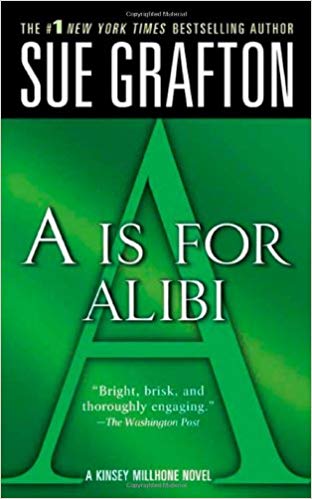
Sue is the best-selling and award-winning author of the famous alphabet murder mystery series, with Kinsey Millhone as the protagonist: A is for Alibi, B is for Burglar, C is for Corpse…

Here are Sue’s own words about what constitutes success and why failing is important. The source link for her quoted words is below.

What has made you so successful?

I hope it is because I try to be honest, and I try not to sell anything. I just try to let the work take care of itself….

What advice do you have for newer writers?

My big gripe about newer writers is they’re not willing to put the time in. Somebody’ll write one book and they’re asking me who my agent and my editor are, and I’m thinking, Don’t you worry, sweetheart, you’re not any good yet. Give yourself time to get better. Writing is really hard to master. You learn by failing over and over, but a lot of people don’t care for that, thanks. I always wish new writers the greatest good fortune. It’s a helluva journey—I’ll tell you that.

“You learn by failing over and over.”  She’s also confirming that if we write a good story, the writing will sell itself.

Reading her words, I’m being reminded once again, and again by an expert writer, that I need not focus on the selling but that I need to focus on the writing.

No amount of advertising can sell a mediocre book. However, a great story will sell itself because readers can’t help but tell others how great it is. There’s no advertising like word-of-mouth advertising. Recommendations are priceless.

—

Guest Column. “W Is for Writer: A 2010 interview with Sue Crafton (1940=2017).” Web blog post. There are No Rules. Writer’s Digest, 31 Dec. 2017. Web. 9 Jan 2018.

http://www.writersdigest.com/editor-blogs/there-are-no-rules/interviews/w-writer-2010-interview-sue-grafton-writers-digest

Failures – Part II

This blog was originally published December 27, 2017, on my Only for the Brave blog, which is being eliminated as I decided to merge the two blogs. Because failure is an important part of succeeding for writers, I felt it was worthwhile reprinting the series about failure here.

*****

My last post provided a list of successful people who failed early in their careers. Did you see it? If not, you may want see it or revisit the list for inspiration. It’s quite an eye-opening list. (Failures: Part I)

But let’s focus on how we fail and how we need to fail in order to learn.

Consider babies learning to walk. They fall down a lot! No baby ever gets up and starts running. They practice.

Kids learn a sport through practice. After school, on weekends, during games, alone, with others.

Most anyone who plays a musical instrument, do so because they practiced. Same with dancers, painters, anyone learning an art, or a trade. They practice. (I say most because there can be the savant that amazes everyone.)

 Failure Is Part of Practice

We learn when we’re frustrated, when we’re unhappy.

Let that sink in for a moment.

—

We learn when something is hard, when it requires our full attention, our full determination.

We learn most when we fail.

In failure, we learn how to do it right. Edison said, “I learned 999 ways how not to create a light bulb.”

—

So, how does a writer move from failure to success?

  • Keep writing. Finished your first book? Great. Start writing a second one, while you edit the first. Finished your fifth? Great! Start writing the next one, while you edit, polish, submit, or consider making changes on the other three.
  • Be prepared to gets rejections. Maybe lots of them. I can paper the walls of my house with my rejections. Even the best writers still get them. Know that rejections are never personal. Your work just wasn’t a good match (think dating which leads to marriage) for that publication.
  • Enter contests. Placing in a contest is a sign that you’re writing is better than the average. However, different judges could have determined different results. Humbling, isn’t it?
  • Keep writing. Keep practicing.
  • Take classes. I’ve been writing for nearly forty years and I’m still taking class AND learning new things.
  • Get a degree in writing. Getting my BA in creative writing and then an MFA in drama were the best decisions I’ve ever made. One, because I was forced to embrace writers and readings I never would have chosen on my own, and second, the MFA allowed me to get a day job in my favorite passion and that job became fun! That education both broadened and deepened my writing skills.
  • Read everything, especially read outside your genre. Analyze what you read. Stop and think about that phrase you praise.
  • Write and experiment in different genres. If nothing else, try them just for the fun of it. I learned how to write better fiction by learning how to write scripts. I learned how to write better dialogue by writing plays.
  • Find your niche. Most find their niche in a single genre. I finally recognized that my niche is a variety of genres. When I began having success in romance writing, I became bored. I still write romance, but I write fantasy, nonfiction, and other genres, as well. Thus the romance writing is part of the spice again. Variety keeps all genres fun and interesting.
  • Keep writing. Keep practicing.
  • Learn about the business!!! I can’t stress this one enough. If you know the business, you’ll know when someone is trying to scam you.
  • Learn grammar. Yes, learn it. Find an expert who will teach you the rules. Otherwise, be prepared to spend lots of money to line editors who will fix your errors. It’s not a wasted skill. I wasn’t an expert when I began writing, but I became an expert by having to teach others. Seriously, the best way to learn something is to teach it.
  • Read articles, the how-to books, and then ask your questions. Don’t join a forum and ask questions that you could have easily found the answers to.
  • Join writing groups. If nothing else, find a few people and start your own group. There’s nothing more inspiring than meeting with people who talk your language.
  • Find beta readers. People who will read your work and provide honest feedback. Like finding a marriage partner, agent, or editor, it could take a while to find good beta readers. They shouldn’t be relatives or best friends, however, unless they have a degree in English.
  • Become a beta reader yourself. You’ll learn lots by reading the writings of others. You’ll see your mistakes in their work. And you’ll probably discover that you’re writing is better than you thought.

And above all, keep writing. Keep practicing.

If you still keep failing, remember Edison’s lesson of finding 999 ways not to do something. He had to keep changing his process 999 times until he found his success on his 1000th try. Nine hundred-ninety-nine times. Are you willing to go that distance?

Do you have the ability to change up what isn’t working? To put in the hours of practice?

If you do, then you’ll preserve your way to success . . . eventually.

Happy writing!

Making a Difference

Have you ever uttered, “Why bother? It won’t make a difference,” or something like that?

Yeah, I have. Lots of times.

When I started writing and putting my work out in the public forum, I figured few would read my writing, but make a difference? Nah.

Every now and then, a person here and there would contact me via the phone or USPS (pre-Internet), telling me how my published piece affected them that day. As a blessing. As something they needed to hear. As something that made them think. As a reminder. Or, as pure entertainment that took them away from their problem(s) for a bit of time.

I didn’t think too much of those incidences as they were few and far between, though they did make me smile, and I’d put them in my scrapbook. I still didn’t believe I was making a difference. Me? From small town U.S.A.? Who the heck was I to think I could make a difference?

Years later, I started teaching. I watched as students became unblocked. They told me how they were loving writing again or loved writing for the first time ever. That they now understood grammar and punctuation better. Or, how the teacher from grade school or high school who had told them that they’d never be a writer had done them a disservice.

Because of an earlier experience during my bachelor’s degree where I was shown that I was plagiarizing, despite what I had been taught in high school, I became more and more interested in the subject, discovering it was huge problem but little publicized. I started teaching my students on how to avoid plagiarism because I saw them making the same mistake I had made. I wanted plagiarism to never be an issue for them, because not knowing was never an accepted excuse; being accused of plagiarism had and still has dire consequences.

At the time, I had a co-worker who said about my focus on helping students avoid plagiarism and taking the concern university-wide, “Why are you trying to hard? It’s not like you’re going to change the world.”

I forged ahead anyway, because I cared.

My students showed me I was making a difference via their papers. They told me, too. At least, I was making a difference in a small area of the world: my classrooms.

And then later, I graduated with my last degree having written a dissertation, Teaching Students About Plagiarism: What It Looks Like and How It Is Measured, that I chose to make as a free publication, because of the research discovery I made regarding two major studies. One study was pre-Internet, the other post-Internet, where the percentage of actual plagiarism had not changed, which countered those who said the Internet was to blame. That discovery begged the question that became my book’s topic. In publishing the book, I asked to received a monthly summary of its activity.

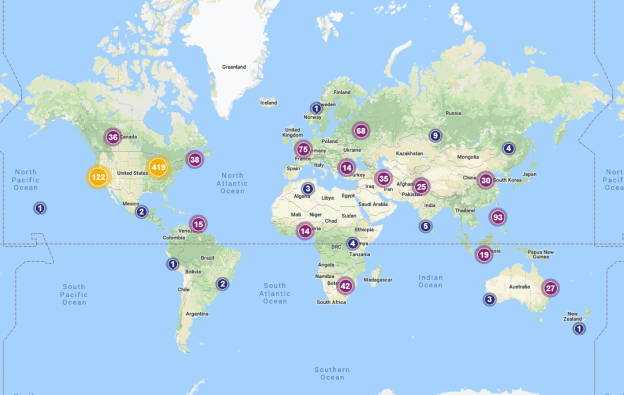
The book was published in June 2013. To date it has been downloaded 1,499 times to 246 different educational, commercial, organizational, governmental, military, and library institutions in 81 different countries across both North and South America, Europe, Asia, and Australia.

Had I not requested that monthly summary, I would have never known the extent of its reach.

Have I made a difference? I’d like to think so, both as a writer and as a scholar in this case.

Believe it or not, we all make a difference, regardless of our field of work or where we live: as parents, teachers, military, fire, police, utilities, clerks, assistants, medical, artists, entertainers, rescue, therapists, non-profits, neighbors, communities, and as citizens.

We ALL make a difference and in many different ways throughout our individual lifetimes.

One of the ways where I’ve made a difference just happens to show up on a world-wide map.

So, to those of you who have others trying to stomp on your dreams, your ambitions, your goals, your work…

Ignore the noise and follow your own path.

Down the Rabbit Hole a.k.a. Life’s Little Hiccups & Big Booms

I’m behind in my writing.

Again.

I wish I could say that I don’t know how it happens, but I do.

While I accuse Life of sticking out its foot and tripping me so that I’ll look funny with arms flailing as I attempt to regain my balance and where other times I just fall badly, needing time to get back up and recover, it’s a lie.

Small trip-ups have been flat tires, weather issues that mess up my plans, tripping over my feet and bruising my shin and skinning my knee, bumping into furniture corners, dropping dishes of food on the floor, forgetting to pay a bill on time…

Big Booms occur when there’s a huge life-event for someone close to me such as an illness or death, where my computer is having major issues that take days to fix, or being in a multi-car accident that totals my car.

One thing I do know is that Life loves to mess up my plans. No, that’s not true either. Life has no emotions, no feelings. Life has no purpose, no goal, no intention.

Life just is.

A rabbit hole where our time escapes us in a reality of unrealism.

During the last six weeks, I’ve been dealing with an illness of my own creation, the worst kind of rabbit hole. Because of allergies, I’m no longer able to eat dairy foods. Of. Any. Kind.

Goodbye pizza, my beloved. Goodbye favorite comfort foods of lasagna, spaghetti, macaroni & cheese.

Ice cream!?  NO! You can’t leave! How will I survive without you?

It was that love of ice cream that got me in trouble. I didn’t just eat it once. I ate it five days in a row! Feeling no consequences, I was safe, right?

Wrong.

After much consultation, blood tests, and journaling what I ate and reactions, my rabbit hole unreality now consists of avoiding foods that are processed; all foods that I’m allergic to (tomatoes, garlic, vanilla, pork, hazelnut, raspberries, blueberries, casein, cow’s milk, pineapple, cauliflower, coffee, cashew, lemon, salmon, pear, orange, peas, green pepper, kidney bean, paprika, cod, flounder, cola nut, peanut, pecan, and sesame); all sugar except raw honey and pure maple syrup; and all grains, first because of the gluten that I have to avoid, and because I believe our grains are saturated with poisons that have been eliminated in every other country except ours.

To sum it up, I have a leaky gut and six months ago, my body’s inflammation level was at 20%. Today, my inflammation is down to just over 4%. I suspect most of that inflammation was in my gut. And, I was feeling great.

Well, at least I did until I consumed that daily week-long ice cream agenda.

Stupid me.

So, how did these past six weeks become a rabbit hole because I ate ice cream? Quite simply, my body reacted, culminating from an allergic reaction to what I thought was bronchitis. Even the doctor thought so when I went in after four weeks trying to control an uncontrollable cough. The prescription was steroids.

Two weeks later, I went to my regular doctor and discovered it wasn’t bronchitis at all. It was an infected sinus that required an antibiotic, not steroids.

For that six weeks, day after day I lay there, a couch potato with no energy, not even for reading, just thinking about my writing, or rather the lack of it as I felt as if I had become a professional procrastinator.

No one could help me. Only I had the power to climb out of this rabbit hole.

Life isn’t going to rest on its laurels and leave me without trip-ups and big booms.

At the end of my rabbit-hole journey, I’ve learned two things:

First, good health can’t be taken for granted. If I choose to eat stupidly in the future, I will have a stupid outcome. There’s no more thinking that this will be a test. Maybe there’s a chance…  No! The results are in; the food is forbidden.

Second, my writing can’t be taken for granted either. That if I want to write, I have to choose to write. During those major rabbit-hole BOOMS!, I will consider what I learned during my rabbit-hole summer, which I originally posted last fall.

Overall, however, there is no white knight, er white rabbit that I can follow.

It’s all on me.

—

My Rabbit Hole Summer – originally published October 2, 2018, Only for the Brave blog

Where did the summer go?

Here it is, the beginning of October, solidly into fall, and as I look back at this past year, I feel that I have nothing to show for it. What did I do all that time?

More accurately, I know what I didn’t do. Writing.

I thought about writing a lot. I talked about it even more.  And, I took a number of classes to learn how to become a better writer.  So, I guess, there is that. I did learn a lot through the various classes. Rebecca (Becca) Syme’s class, Writing Better Faster was just what I needed to get me out of my slump.

In her class, I discovered the big reason why I wasn’t writing. I’ve learned that major life-events shut down my creative process.  While I can edit, polish, and get a manuscript formatted, it’s impossible for me to create new words on a new project, meaning getting a first draft done is extremely difficult.

When I think back over other life-events when I wasn’t writing, I remember my sister dying while I was writing my dissertation, which was technical, non-fiction writing, not creative by any means. Because the writing was non-creative and I had a deadline, I was able to bury myself into the task. At the time, I felt like she was always with me, looking over my shoulder as I worked because it as the type of writing she would have done, which were non-fiction journalism pieces. She was really good at it.

Becca’s class was a month-long class and included taking three psychological-type personality tests, which I had done two previously at work and the last through another recent class.  Using those results and meeting with Becca one-on-one through Skype, I discovered there was a logical reason for my so-called writing silence over the summer, in fact for the past year. Where I was activity driven to clean out files, both electronic and paper, clean out and reorganize my bookshelves, go through the stacks of magazines and read piles of articles I’d saved, and other such activities. Another life-event had occurred.

What made Becca’s class special is that she took these test results, which in business was used to see how I fit in with my peers, and she attached them toward my writing. She was able to tell me what my best writing styles and techniques were and how I should use them to become a better writer and/or a faster writer!

For someone who likes to know the why behind anything, I was hoping for some aha moments and I got them. Several in fact. The biggest aha moment was the one I shared above. When I learned that, I stopped beating myself up, and stopped thinking I had been lazy.

Now, I’m better able to plan my schedule based on my new-realized strengths and can easily deal with the other tasks that received major procrastination. I now know how to deal with them.

Are you interested in finding out how you can become a better and/or faster writer? Becca gives classes every other month.

To join the class, go here: https://www.margielawson.com/product/oct-2018-write-better-faster

If you’d rather be notified about an upcoming class, here’s that link: https://forms.aweber.com/form/54/2064782054.htm

Here’s the link to sign up for her newsletter: https://forms.aweber.com/form/83/26292183.htm

As to my writing: I’m happy to report that over the weekend I finished the first draft of Burning Desire, the second of my Laurel Ridge novellas. And I’m now developing the characters for Arrested Pleasures, the third story in the series.

Woohoo!

—

March 30, 2019 Update: Arrested Pleasure‘s first draft is written, and the characters and plots for the remaining four novellas in the series have been developed.

Looks like I might not be as behind as I thought. 🙂