Tag Archives: #writingcommunity

An introduction

Asked to write an introduction to a Facebook writer’s group recently, Not wanting to write the usual intro composed of achievement, instead, I wrote…

She steps out from the center of the crowd, several dozen individuals all clamoring for individual attention. She’s listening, waiting for that one voice to stand out. Those standing closest to her, whisper. She nods, acknowledging. They are the once-was, having passed through that thin veil of death. Some guide, some want messages passed on to those still alive. Some are waiting (for her), others are hoping to get another chance (will they return to reunite?). The others–the shouters–clamor that their story be told. It’s their turn. She listens for that one voice that will provide that missing element that will raise their story above all others, providing her with that hook, that aha element that connects the character/story tissues.

She is Diana. The eclectic mystic, intuitive, observant, learner. The writer who follows her goosebumps, knowing they are the true path toward that shiny golden Oscar. The deciders had loved her voice but the projects presented weren’t quite the fit they sought. “But, send us everything you write,” they instructed.

So close.

Then, as life does, interference jungled that path and took her to the land of depth and breadth. She emerged the wiser, with creds and authority. And now, she has returned to the land of creation, embracing the cacophony of voices all clamoring for individual attention as she chooses the next story, the unfolding adventure that mysteriously and magickly arises from the synapses mist and fog, listening to those who have gone before and point the way.

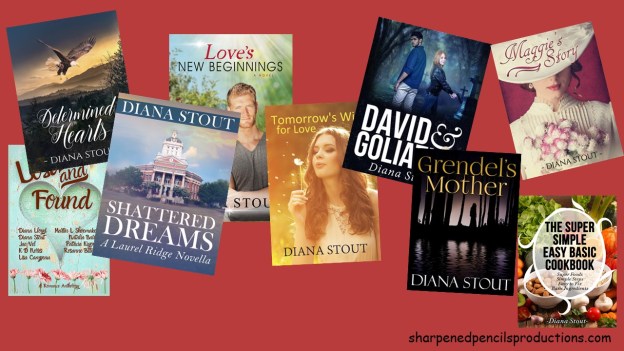
To learn more about Diana’s portfolio, awards, presentations, blogs, and more, visit her website, the center of the wheel from which all paths, like spokes of the wheel, extend.

 www.sharpenedpencilsproductions.com

The Secret of Writing: Why You Want At Least Four Drafts

Even though I’d been writing for nearly thirty years and writing various drafts, it wasn’t until I returned to school, learning how to teach college composition that I discovered the different drafts each had a name and a purpose.

Once I started following the nature of each draft, I found my writing changed. Surprisingly, I was writing faster, better, and with less confusion.

In summary, writing is all about the rewriting. The act of writing is all about the first draft. The drafts that follow are about editing, with each editing draft pertaining to a certain set of editing details.

Personally, I don’t know of any writer—student or pro—whose work is publishable or ready for grading with only one draft.

So, what are these four different drafts and what purpose does each one serve?

THE FIRST DRAFT

This draft is the first completed draft where pure writing takes place, where creativity is at work. You want to write this draft quickly. Stream of consciousness is the best way to describe this draft.

Plotters will follow their outline as they write this draft. Pansters just let the writing flow with no thought of an outline, let alone knowing how the story will end.

Holes are allowed, as are misspellings, incorrect grammar, and wordiness. The rule in writing a first draft is to never go back and fix anything. All fixes will occur in the following drafts.

To stop and fix anything while writing this first draft means you are stopping the creative process and are now in editing mode, which is an entirely different skill set and is guaranteed to stop the creative process in its tracks.

Have you ever been writing where it’s gone fairly smooth, and then suddenly, you realize something isn’t right, so you stop to look back at what you wrote before, only to start writing again only to find that you can’t? That you lost your train of thought? That the creativity is gone?

Yup, that’s because you went from the skill set of creative writing to the skill set of editing. They’re two different modes of writing from two different parts of the brain—one is creative and one is technical. You can be in one or the other but not both at the same time.

When writing your first draft, the goal is to stay in the creative brain, so no editing allowed!

THE SECOND DRAFT: the Rewrite

This draft is where the big rewriting occurs. It’s about organization and high order concerns where you’re moving paragraphs and pages around, where you’re making major additions and deletions. This draft is about making sure you have a theme and a thesis statement for nonfiction. That you have a great beginning hook for fiction. That your meaning is clear, that the writing contains originality with a consistent flow of your idea, where you’re not wandering around aimlessly.

THE THIRD DRAFT: the Revision

This draft still pertains to high orders but in a smaller fashion. Now, you’re looking at paragraphs and sentence structure. Are the paragraphs too long? Not long enough? Is a deeper point of view needed? Are you telling or showing? Does the paragraph move the story or theme forward, does it reveal character or their motive? Does everything make sense?

This draft deals with wordiness, repetition, word choice, parallelism, voice, and use of tense (consistency).

For college papers, this draft is about checking the citations, as well. Are any missing? Are the citations correct? Is the paraphrasing correct? Are quotes being used correctly? Are all graphics cited and with captions?

Don’t be surprised if your work is still changing quite a bit at this point. Generally, this is the draft that can have multiple drafts. Why? Because you keep finding things to change.

THE FOURTH DRAFT: the Polishing

This draft is where the polishing occurs, where the low-order concerns are addressed: punctuation, grammar, and formatting.

Polishing is everything. Don’t be misled thinking that because these issues are called low-order concerns that they’re not important. They’re highly important and can make the difference between a sloppy manuscript, paper, or résumé and one that looks professionally finished.

*****

While I’m able to write a first draft fairly fast now, I can have several rewrite drafts, half a dozen revision drafts, and several polishing drafts. Once I finally stop finding errors, that’s when I know the manuscript is finished.

It’s not unusual for my manuscripts and screenplays to have a minimum of a dozen or more total drafts before they’re ready for publication. It’s these editing drafts where I spend the most time.

So, how many drafts does your work go through before you’re ready to submit?
Six Reasons Why Writing Is Like Christmas

The Insecure Writer’s Support Group

December 1 question – In your writing, what stresses you the most? What delights you?

Six Reasons Why Writing Is Like Christmas

Writing a book, like Christmas, is a major event. One that takes planning and a lot of forethought if we’re going to produce a product that goes off without a hitch. Both writing and Christmas can equal amounts of stress and delight.

Reason #1 – the idea

It all begins with that first idea.

For writers, it begins with genre, theme, a character, a plot’s beginning or ending, or even a scene in the middle of the book. Sometimes it begins with a what if question.

For Christmas, it generally begins with what am I going to get everyone?

Reason #2 – the planning

For writers who are plotters, the idea becomes an outline. For writers who are pantsers, there is no planning; their idea takes form as the writing occurs, and if they’re lucky, they don’t go wandering down any primrose paths that force them to backtrack to where they got away from the story’s journey. (The Christmas equivalent of having to return a purchased gift and changing your mind about it.)

For Christmas, this is where the planners’ stress begins in thinking about where to find that perfect present. The equivalent of pantsers at Christmas are those who shop with no list or wait until Christmas Eve to start.

Reason #3 – the execution (doing)

For writers, enthusiasm for the initial idea takes the writer only so far. After that more planning or just gutting it out is required—getting through the dreaded sagging middle. This is where procrastination is heavy, where avoidance is practiced to an art.

For Christmas, this is where writers will turn, most happily, allowing that writing procrastination to continue by performing legitimate tasks of the masses because there’s a definitive deadline: shopping, backing, decorating, wrapping, and drinking lots of hot chocolate. (Did I just synopsize a Hallmark Christmas movie?)

Reason #4 – the gathering

For writers, the gathering occurs as characters come together and start driving the plot toward the story’s conclusion. They gather because of a crime, a dead body, a family celebration where long-time secrets are revealed, and other plots of conflict and stress. So many gatherings, so many activities.

For Christmas, the gathering of presents needing to be wrapped occurs, then the gathering of people’s schedules and arranging the details of trips to Granny’s house or to the beach for a family Christmas vacation.

Reason #5 – the waiting

Anticipation builds.

For indie writers who have submitted the book, the wait for final acceptance of the uploaded file begins, and if accepted, then the wait to official publication—one to three days. For traditional writers, they’ve submitted the book to their agent/publisher and are now awaiting the final yes of publication, which could be anywhere from a few weeks to over a year, depending on the publisher’s schedule.

For Christmas, kids can hardly wait for Santa to arrive. Parents, grandparents, other relatives, and friends are eager for the gathering of people, football games, and the way-more-than-we-needed food. And of course, some just can’t wait for the holiday to be over with, already.

Reason #6 – the big day

For writers, the big day is when that box filled with newly published copies of the book arrives, and it’s opened with excitement and joyous sounds of delight about how pretty it looks. All that hard work culminated into this tangible object that has the writer’s name stamped on the cover and spine.

For Christmas, it’s about the wrappings quickly ripped and shredded revealing the surprise inside to squeals of joy and delight. All followed by the smells and tastes of traditional meals and chatter around the table.

For me, when my high school best friend, Sharon, received her copy of my first indie-published book before I received mine, posting this picture online with obvious excitement, it was just like Christmas. A big day for both of us.

*****

Purpose: To share and encourage. Writers can express doubts and concerns without fear of appearing foolish or weak. Those who have been through the fire can offer assistance and guidance. It’s a safe haven for insecure writers of all kinds.

Posting: The first Wednesday of every month is officially Insecure Writer’s Support Group day. Post your thoughts on your own blog. Talk about your doubts and the fears you have conquered. Discuss your struggles and triumphs. Offer a word of encouragement for others who are struggling. Visit others in the group and connect with your fellow writer – aim for a dozen new people each time – and return comments. This group is all about connecting.

Coloring Outside the Lines

The Insecure Writer’s Support Group

October 6 question – In your writing, where do you draw the line, with either topics or language?

Coloring Outside the Lines

Throughout my entire writing career, the only time I considered writing inside the acceptable lines was when I was writing to market. Meaning, I needed to follow the guidelines of the publisher.

Once I started screenwriting, the characters dictated their language, their behavior. And, once I began publishing as an indie author, there were and are no limits.

Speaking of limits, lately, there’s been a movement of blasting authors who write outside of their culture, where it’s said that a white author can’t write about black characters, that unless you’re Latino, you can’t write characters from that heritage, or where a romance book with a fictional character who participated in a massacre can’t redeem himself by the end of the book. That none of these books are worthy of earning awards, either.

Historic events are filled with tragedy and flawed people who made horrendous mistakes. History usually recorded only information about the winners. Today, many of us are learning about these horrible historic events that were never taught in school, that were swept under the nasty carpet of racism.

Just because I’m a white woman that doesn’t mean I can’t research and immerse myself in a culture or ask questions for understanding of another’s thinking or motivation. If we do our research well, we can betray others different from ourselves. And, we can write about locations we’ve never visited.

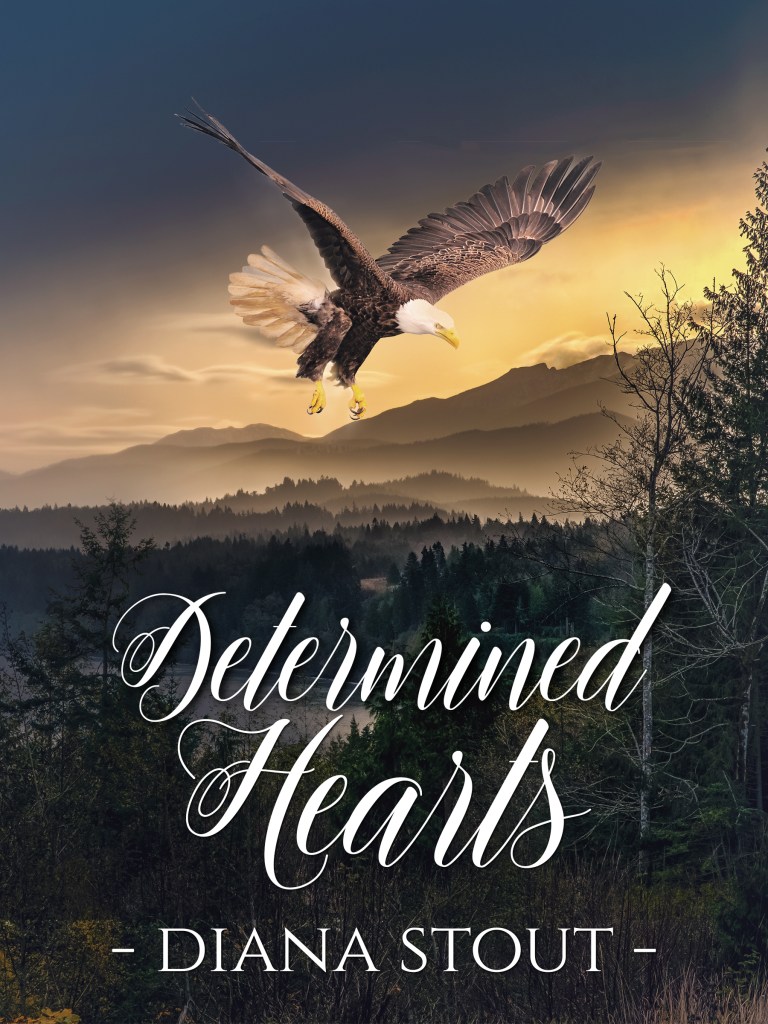
When I first published Determined Hearts, which was originally published as The Man on the Romance Cover, a reader asked me when I had last been to Idaho, in particular the Snake River Valley region, which is the setting of the book. When I replied that I’ve never been there, she said, “You’d never know it. Your details were spot on.” Her praise told me that I’d done my research.

If writers are told they can only write about that which they experience and know firsthand, then libraries would have to empty their shelves.

As a romance writer, how can women—the majority of that genre’s authors—write from the male view of point?

How can a mystery writer write about murder unless they’ve murdered? How can a sci-fi author write about living on another planet without having traveled in space?

The tipping point of ridiculousness has been reached.

Coloring outside the lines has always been the hallmark of innovative creativity and fantastic new movements, albeit some criticism, too, which always comes from those who believe we writers need to color inside the lines.

We’re in one of those coloring-outside-the-lines times, now, where a few are trying to dictate the many.

How limiting. How narrow-minded. How sad. How infuriating.

*****

Purpose: To share and encourage. Writers can express doubts and concerns without fear of appearing foolish or weak. Those who have been through the fire can offer assistance and guidance. It’s a safe haven for insecure writers of all kinds!

Posting: The first Wednesday of every month is officially Insecure Writer’s Support Group day. Post your thoughts on your own blog. Talk about your doubts and the fears you have conquered. Discuss your struggles and triumphs. Offer a word of encouragement for others who are struggling. Visit others in the group and connect with your fellow writer – aim for a dozen new people each time – and return comments. This group is all about connecting!

Six Paths of Writer Success

The Insecure Writer’s Support Group

September 1 question – How do you define success as a writer? Is it holding your book in your hand? Having a short story published? Making a certain amount of income from your writing?

Six Paths of Writer Success

While most people believe a writer’s success is by how many books are sold and the money they make, it’s not the only way to identify writer success. There are multiple ways to measure that success. These are a few that I’ve identified.

Path #1: Financial Success – This is the measurement stick most people—readers, critics, and other writers—use to determine if a writer is successful or not. Are they a best-selling author? Did they make the New York Times list? Did they receive a huge advancement?

Path #2: Review Success – The number of reviews readers leave can be a huge measure of success if the bulk of the reviews are positive. Getting notes and messages from fans is always a thrill. It’s the equivalent of Sally Field’s award-winning speech of “They like me!”

My best friend from high school who got a copy of my book a couple days before I got my copies! She’s one of my biggest fans!

Path #3: Word-of-Mouth Success – There’s no better measure of a writer’s project than it getting a lot of reader word-of-mouth promotion. Nothing can top it. Word of mouth praise sells books. And, there’s nothing more fun than seeing friends of my friends stating, “She’s a good writer,” or “I love her writing!”

Path #4: Publication Success – Before writers could become indie publishers, a writer’s success was hinged solely by being accepted by an agent or editor. The only other option open for writers to publish without an agent or editor back then was to use a vanity press, where the writer paid to have the book published, and then the author would go out and peddle the book. It worked for Robert James Waller who self-published his book, The Bridges of Madison County. He filled his trunk with copies and drove across the country giving them away, seeking out radio stations for live interviews.

With the advent of the eBook, independent publishing (self-publishing, indie publishing) became possible. That avenue became a game changer for many writers, including me, even though I had been traditionally published in the 1990s with three of these books, which I retitled and have republished. Today, any writer can get their book(s) published and in any format: print, e-Book, audible, large print, and so forth.

To date, I’ve published eight books and edited a ninth that included one of my short stories, publishing it for a writer’s group that I belong to.

Path #5: Film Rights Success – The dream of any writer of fiction is to see their story on the screen—big or small. I keep hoping and keep writing the scripts.

Path #6: Journey Success – This measure of success is all about self-satisfaction. The first time a writer pens The End, it is a huge achievement of a dream becoming reality. And then, opening a box and seeing a stack of my newest release never gets old. Ever. (Three such past boxes being opened.)

Currently, as I come to the end of writing a how-to nonfiction book and am finishing the small-town romance series I’ve been working on for the last few years, I’m enjoying how my fire is directing and driving me toward my desk every day.

Watching the words pile up, getting into the writing zone, and watching the hours fade into each day’s end are self-satisfying beyond words. Amazingly so. There is no other emotion or feeling like it.

I love all these various moments and events of success. How could I not?

*****

Purpose: To share and encourage. Writers can express doubts and concerns without fear of appearing foolish or weak. Those who have been through the fire can offer assistance and guidance. It’s a safe haven for insecure writers of all kinds!

Posting: The first Wednesday of every month is officially Insecure Writer’s Support Group day. Post your thoughts on your own blog. Talk about your doubts and the fears you have conquered. Discuss your struggles and triumphs. Offer a word of encouragement for others who are struggling. Visit others in the group and connect with your fellow writer – aim for a dozen new people each time – and return comments. This group is all about connecting!

The Writer’s Journey Recommendation

The Insecure Writer’s Support Group

August 4 question – What is your favorite writing craft book? And why?

The Writer’s Journey Recommendation

Ever since its publication in 1992 when I bought the book, my recommendation is and always has been Christopher Vogler’s The Writer’s Journey: Mythic Structure for Storytellers & Screenwriters.

Syd Field’s book, Screenplay published in 1979, introduced me to the structural three acts of screenwriting. Vogler’s book built upon it, showing where the emotions, conflict, and character goal (internal and external) take place and how they drive the plot forward within that three-act structure, using twelve important plot points.

Anyone since then who has developed a seemly new structure has basically used Vogler’s model but has renamed the plot points or provided something that made the new model unique.

For example, one structure has 22 steps. Popular right now is the story line with 14 beats. Another one has 15 beats. There’s always a new method coming out, all shiny and bright. But, it’s still the same information with the same foundation, just renamed, offering new insight.

While most of these other models are good and many find worthwhile, none hold the same esteem and respect that The Writer’s Journey did and still does for me.

*****

Purpose: To share and encourage. Writers can express doubts and concerns without fear of appearing foolish or weak. Those who have been through the fire can offer assistance and guidance. It’s a safe haven for insecure writers of all kinds!

Posting: The first Wednesday of every month is officially Insecure Writer’s Support Group day. Post your thoughts on your own blog. Talk about your doubts and the fears you have conquered. Discuss your struggles and triumphs. Offer a word of encouragement for others who are struggling. Visit others in the group and connect with your fellow writer – aim for a dozen new people each time – and return comments. This group is all about connecting!

Going Wide…Maybe

I can be so stupid sometimes.

Up until now, all of my eBooks have been published on Amazon and through their Amazon Select program, which means it’s sold exclusively through Amazon’s Kindle Unlimited (KU) program. Instead of buying books, those Amazon readers who pay a monthly fee get to read it and any other books they desire for no other charge.  

Up until now, half of my eBook royalties have come from pages getting read. The other option author have to sell their eBooks would be to go wide, which means remove it from KU, though I can still sell it on Amazon as an eBook and selling it through additional distributors. The best places that my research revealed and was highly approved of by other authors was to use Draft2Digital (D2D) and Smashwords, the latter only because D2D doesn’t distribute to it. D2D does distribute to digital stores: Barnes & Noble, Kobo, Apple, Tolino, and Vivlio; the subscription service of Scribd; and Kobo plus territories: Belgium, Netherlands, and Canada.

But, which eBook(s) did I want to start with, experiment with? I did some investigative research. One of my books, Grendel’s Mother, does extremely well with pages read and eBooks purchased through Amazon. My romances: Love’s New Beginnings, Tomorrow’s Wishes, and Determined Hearts do not. So, it had to be one of these latter three.

When you put an eBook into KU, you do so for 90 days. I’ve always chosen to have that 90 days renewed automatically. This time, I unclicked that auto-renewal box for the first one that would renew: Love’s New Beginnings.

Then, I went to D2D and uploaded the book. I put in my desired publication date, which would be the day after it came out of KU. I pushed the publish button thinking it wouldn’t publish until my indicated date.

To my horror, the book published immediately as a preorder book! No, no, no! Turn it off, turn it off!  

I scurried like a frantic squirrel in the road with an oncoming car: where to go?

Ten minutes later, I saw the panic button I needed to push. It said DELIST. I clicked on it. Immediately, my book was delisted. No more preorders.

A huge sigh of relief.

The day it was free from KU came and went. I kept checking D2D to see how the book was doing.

No sales. Nothing.

What??? How can that be? I had the publishing date correct.

Today, two weeks and a day later, I went back into D2D to check on the book. Still no sales. And then, I saw it.

DELISTED

Stupid! You have to republish it!

I pushed the publish button. Everything turned green. Yay.

Teaching again…

Squeeeeeee! I’m going to be teaching again!

The class is Time Management for Writers; and actually, the class is applicable for anyone who struggles with managing their time. The principles and science are the same for everyone, regardless of their career or goal(s) they’re trying to reach.

The class takes place February 1-25, 2022, via email. Registration is located on the WritersUniv.com web. Click here for details.

Anytime I’ve been able to teach anything about writing—whether it’s creative writing or the business of writing, regardless of genre—I’m having a good time.

I enjoy sharing information. I especially enjoy watching the light bulb reactions that my students and participants have when they get it.

I enjoy watching empowerment happen. The expressions of joy I’ve witnessed is inspirational. I always smile watching someone’s confidence rise because they’re mastering a skill they never thought they had or were told they never would have.

I enjoy learning from others. I learn as much from my students and workshop/roundtable participants as they learn from me! I’ve even been corrected from time to time. After all, information is not always static. Improvements and new information are made and found all the time.

I’m even toying with setting up some live Zoom meetings, where I teach creative writing/business writing in two-hour workshops. Maybe even set-up some free Q&A/discussion sessions. There are so many writing topics that could be covered! What do you think?

Home

She looks at me like I’m old news. I’ve seen that look before, just before she got rid of her favorite high heels and those sneakers that had supported her forest walks and trips to the zoo. Unlike before when there used to be replacements, now their spots remain empty.  

At one time, I was untouched and unblemished, fully fur-line with bright, spunky fur that totally embraced her icy cold feet.

Now my fur is worn and flattened, disheveled as if caught in a bad whirlwind of a muddy storm. My insides are still warm and I’ll admit I’m tired, but I’m still functional. So what if I have a few worn-down spots? Inside and out. My soles are like steel now. Hardened and experienced.

She sighs every time she slips into me. Her worry lines disappearing. How can any replacement provide that same level of comfort? It would take any replacement months, probably even a year before they’d hear that same sigh.

Doesn’t she realize I’m home?

How can she throw away home?

A Necessary Evil: Feeding the Writer

A Necessary Evil: Feeding the Writer…with a Chicken & Stuffing Casserole

I’m one of those writers who wants to go into the kitchen and ten minutes later be eating a solid meal. Second to that, I’m good with a dish that I can cook and still be eating several days later.

While I’m a decent cook, it’s not my passion. Nor, do I like being in the kitchen every day. Every few days is my preference. Cooking for one makes that easy to do.

Now that I’ve been diagnosed with celiac (can’t eat gluten), with a long list of allergies that includes all dairy products, (No more butter? NO!), finding substitutes for my beloved pre-celiac dishes has been a challenge. Thankfully more companies are producing gluten-free and dairy-free products.

(I highly recommend Country Crock’s Plant Butter made from almonds. It spreads like butter and even better, it tastes like butter!)

One such product that I discovered just before Thanksgiving was Savory Stuffing by Aleia. While I still miss the traditional crouton stuffing, this one tastes pretty good. Aleia has a box of plain stuffing croutons, as well.

I’m now using this savory stuffing, along with traditional stuffing ingredients and chicken to create a one-pan, one-dish meal.

The thing is, this recipe can work for anyone. Just substitute your preferred croutons and butter for mine, plus you can use more or less vegetables as desired. I like lots, so I actually use more than the recommended 1 cup.

My gluten-free, dairy-free recipe:

  • 1 box Aleia Savory Stuffing mix
  • 1 cup chopped carrots
  • 1 cup chopped celery (I’ve discovered I can freeze chopped celery!)
  • 1 cup chopped onion
  • 5 T Almond Plant butter
  • 1.5 cups of chicken – I use whatever is handy: canned or leftover cooked
  • 2 cups of chicken or vegetable stock
  • Salt & Pepper to taste

Melt the butter in a large frying pan. Saute the carrots, celery, and onion until the onion is translucent and the vegetables are tender.

Mix everything in a large bowl, until the stuffing is moistened and all is thoroughly mixed. Pour into a baking dish.

Bake at 350, covered with foil, for 20 minutes.

If you want a crispy crust, bake for about 15 minutes, remove the foil and bake for another 10 minutes or until top is crusty to your preference.

To serve up as leftovers, dish desired amount into a bowl, add some chicken gravy and heat in the microwave for about 1-2 minutes or until hot.

***

I had two bowls of this dish tonight, barely making a dent of the total amont. I now have leftovers for the rest of the week. And, I’m willing to eat this for both lunch and dinner if it means not having to fix anything else for the week, adding a salad here and there, along with eggs for breakfast. 

How about you? Do you have a favorite dish you like to make while you’re writing that allows you to forget about cooking for a few days?